Science & TechnologyS


Clock

Mummies by demand: Three thousand year-old mummy discovered in Egypt

Archaeologists have discovered the 3,000-year-old mummy of a high priest to the god Amun in the southern city of Luxor, antiquities supremo Zahi Hawass told the official MENA news agency on Saturday.

The 18th Dynasty mummy of Sennefer was unearthed in a tomb in the Valley of the Kings -- one of the most famous archaeological sites in the world -- by a team from Britain's Cambridge University.

"The mummy was found in tomb 99 in the Valley of the Kings on the west bank of Luxor," Hawass said.

Magnify

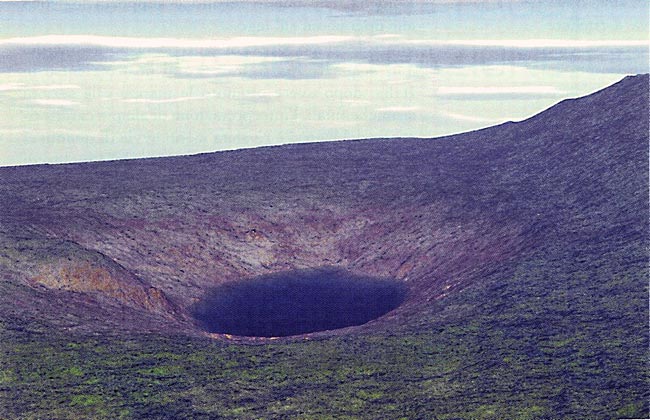
Has a Tunguska Crater Been Found?

Here's a story that just hit our radar screen, and we wanted to share the news immediately rather than wait for further facts to come out. In the online journal Terra Nova, a team of Italian researchers led by marine geologist Luca Gasperini reports on what may be the missing Tunguska impact crater.

Comment: Here is the conclusion of the study cited above:
Cheko, a small lake located 8 km from the alleged epicentre of the 1908 Tunguska Event, has an unusual funnel-like bottom morphology, with 50 m maximum water-depth near the center and a 0.16 depth-to-diameter ratio. This morphology is different from that of subarctic Siberian thermokarst lakes, and is also hard to be accounted for other 'normal' Earth-surface tectonic or erosion/deposition processes, but is compatible with the impact of a cosmic body. Based on diameter, depth and morphology of the lake crater, and assuming that the impacting object was an asteroid, a mass of 1.5 × 10⁶ kg (10 m diameter) was estimated for the projectile. However, this estimate is probably too large, because the crater was enlarged by permafrost melting and release of H2O, CH4 and other volatiles induced by the impact into a soggy ground. The projectile that formed Lake Cheko might have been a fragment of the main body that exploded in the atmosphere 5 - 10 km above ground. A prominent reflector observed in seismic reflection profiles 10 m below the bottom at the center of the lake indicates a sharp density/velocity contrast, compatible with either the presence of a fragment of the body, or of material compacted by the impact. Drilling could solve this dilemma.


Coffee

NASA looks for break in weather to land shuttle

NASA looked to Mother Nature for guidance on Friday as it sought for a second day to bring space shuttle Atlantis and seven astronauts home from a two-week-long mission.

The U.S. space agency said weather would decide if Atlantis lands at Kennedy Space Center in Florida or at back-up site Edwards Air Force Base in California.

Magic Wand

Mathematics reveals genetic pattern of tumor growth

Using mathematical theory, UC Irvine scientists have shed light on one of cancer's most troubling puzzles - how cancer cells can alter their own genetic makeup to accelerate tumor growth. The discovery shows for the first time why this change occurs, providing insight into how cancerous tumors thrive and a potential foundation for future cancer treatments.

UCI mathematicians Natalia Komarova, Alexander Sadovsky and Frederic Wan looked at cancer from the point of view of a tumor and asked: What can a tumor do to optimize its own growth? They focused on the phenomenon of genetic instability, a common feature of cancer in which cells mutate at an abnormally fast rate. These mutations can cause cancer cells to grow, or they can cause the cells to die.

The scientists found that cancerous tumors grow best when they are very unstable in early stages of development and become stable in later stages. In other words, tumors thrive when cancerous cells mutate to speed up malignant transformation, and then stay that way by turning off the mutation rate.

Network

Internet Fails in 5 Latin Countries

Accidental damage to an undersea fiber-optics cable left millions of people without Internet service in five Latin American countries, the cable's owner said Thursday.

In Colombia, as many as 45 percent of Internet users were left with limited or no connection. Problems were also reported in Panama, Venezuela, Costa Rica and Nicaragua.

Network

Hacker penetrates Pentagon email system

A hacker penetrated an unclassified Pentagon email system, prompting authorities to take as many 1,500 accounts offline, defense officials said Thursday.

"Elements of the OSD unclassified e-mail system were taken offline yesterday afternoon due to a detected penetration," US Defense Secretary Robert Gates said, using an acronym for the Office of the Secretary of Defense.

"A variety of precautionary measures are being taken. We expect the system to be online again very soon," Gates said.

Between 1,000 and 1,500 users of the system were taken offline, a defense official said.

On Wednesday, a congressional panel disclosed that hackers also have succeeded in penetrating computers at the Department of Homeland Security, the lead government agency in providing security against cyber attack.

Snowman

The smallest piece of ice reveals its true nature

Collaborative research between scientists in the UK and Germany (published in this week's Nature Materials) has led to a breakthrough in the understanding of the formation of ice. Dr Angelos Michaelides of the London Centre for Nanotechnology (formerly of the Fritz-Haber Institut der Max-Planck Gesellschaft in Berlin) and Professor Karina Morgenstern of the Leibniz University Hannover have combined experimental observations with theoretical modelling to reveal with unprecedented resolution the structures of the smallest pieces of ice that form on hydrophobic metal surfaces.

The results provide information about the process of ice nucleation at a molecular level and take science a significant step closer to understanding the mysterious process through which ice forms around microscopic dust particles in the upper atmosphere. Because this is the basis of cloud formation, knowing how different particles promote ice formation is crucial for climate change models.

The authors began by cooling down a metallic surface to 5 degrees above absolute zero (around - 268 Celsius) at which temperature it was possible to "trap" and obtain images of the smallest possible pieces (hexamers) of ice using a scanning tunnelling microscope (STM). The hexamer - the simplest and most basic "snow flake" - is composed of just six water molecules. Other ice nanoclusters containing seven, eight and nine molecules were also imaged.

Wolf

Ice Age extinction claimed highly carnivorous Alaskan wolves

The extinction of many large mammals at the end of the Ice Age may have packed an even bigger punch than scientists have realized. To the list of victims such as woolly mammoths and saber-toothed cats, a Smithsonian-led team of scientists has added one more: a highly carnivorous form of wolf that lived in Alaska, north of the ice sheets.

Wolves were generally thought to have survived the end-Pleistocene extinction relatively unscathed. But this previously unrecognized type of wolf appears to have vanished without a trace some 12,000 years ago.

The study, which will be published in the June 21 online issue of Current Biology, combined genetic and chemical analyses with more conventional paleontological study of the morphology, or form, of the fossilized skeletal remains. This multifaceted approach allowed the researchers to trace the ancient wolves' genetic relationships with modern-day wolves, as well as understand their role in the ancient ecosystem.

"Being able to say all of those things - having a complete picture - is really unusual," said lead author Jennifer Leonard, a research associate with the Smithsonian Genetics Program, and currently at Uppsala University in Sweden.

Network

Homeland Security Reports Computer Hacker Breaches

The Homeland Security Department, the lead U.S. agency for fighting cyber threats, suffered more than 800 hacker break-ins, virus outbreaks and other computer security problems over two years, senior officials acknowledged to Congress.

In one instance, hacker tools for stealing passwords and other files were found on two internal Homeland Security computer systems. The agency's headquarters sought forensic help from the department's own Security Operations Center and the U.S. Computer Emergency Readiness Team it operates with Carnegie Mellon University.

In other cases, computer workstations in the Coast Guard and the Transportation Security Administration were infected with malicious software detected trying to communicate with outsiders; laptops were discovered missing; and agency Web sites suffered break-ins.

Health

Influence of GM-Soya on the posterity of Rats

Scheme of experiments.
Investigations of the influence of GM-soya (Roundup Ready, RR) on Wistar rats and first posterity were performed. Rat females received additionally to the diet the soya flour (5-7 g for each rat) two weeks before mating, during mating, pregnancy and lactation: traditional soya and GM-soya (Roundup Ready, RR). Group of rats, which received only diet without any food additives, was considered as the control group. The weight, size and mortality of rat kids were analyzed.