A 500-year old mystery surrounding the centre-piece of the alchemists' lab kit has been solved by UCL (University College London) and Cardiff University archaeologists.
Since the Middle Ages, mixing vessels - or crucibles - manufactured in the Hesse region of Germany have been world renowned because of their ability to withstand strong reagents and high temperatures.
Previous work by the team has shown that Hessian crucibles have been found in archaeological sites across the world, including Scandinavia, Central Europe, Spain, Portugal, the UK, and even colonial America. At the time, many people tried to reproduce them but always failed.
Now, writing in Nature, the researchers reveal using petrographic, chemical and X-ray diffraction analysis that Hessian crucible makers made use of an advanced material only properly identified and named in the 20th century.
A group of University scientists have proposed a controversial new theory about the end of the last ice ageFor the record, they're not crazy.
But they do admit their theory is out there.

|
| ©Ryan Heidt
|
| Two University researchers theorize that a comet may have hit North America about 13,000 years ago, causing an end to several species of animals near the end of the last ice age.
|
1,700-year-old curse tablet to god Maglus invokes destruction of cloak-pilferer.
An ancient curse aimed at a thief is one of a number of treasures to be unveiled to the public for the first time, following the largest archaeological excavation the city of Leicester has ever seen.
Over the past three years, a team of up to 60 archaeologists from University of Leicester Archaeological Services has been working on a number of sites in the city. Almost 9% of Leicester's historic core has been subject to investigation in some form, giving new insights into the appearance and development of the Roman and medieval towns.
One of the most interesting finds from a site on Vine Street was a 'curse' tablet - a sheet of lead inscribed in the second or third century AD and intended to invoke the assistance of a chosen god. It has been translated by a specialist at Oxford University, and reads:
'To the god Maglus, I give the wrongdoer who stole the cloak of Servandus. Silvester, Riomandus (etc.) ... that he destroy him before the ninth day, the person who stole the cloak of Servandus...' Then follows a list of the names of 18 or 19 suspects. What happened to them is not recorded.
Before the discovery of this object, archaeologists only knew of the names of three or four of the inhabitants of Roman Leicester, so the find is of great significance.
U.S. federal court cites research, allows handwritten documents as evidence.
Computer scientists at the University at Buffalo have provided the first peer-reviewed scientific validation that each person's handwriting is individual, according to a paper that will be published in the Journal of Forensic Sciences in July.
The UB research was cited in an April 29th decision of the U.S. District Court for the Eastern District of Pennsylvania. That decision (U.S. v. Gricco) allows expert testimony concerning handwritten documents pertinent to the case to be presented.
Supported by a National Institute of Justice grant to develop computer-assisted handwriting-analysis tools for forensic applications, the results of the UB research could be significant for other court cases in which handwritten documents provide potentially relevant evidence.
Efforts to analyze handwriting in criminal or civil cases have involved obtaining samples of writing from potential suspects or witnesses and then comparing them with the handwriting in question. But several Supreme Court decisions, such as Daubert v. Merrell Dow, require that all expert testimony, including testimony about document examination, must meet scientifically rigorous criteria. Because few, if any, objective criteria have existed for handwriting analysis, testimony concerning handwritten documents often has not been admitted in testimony.
The rapid roll-out of television on mobile phones across Europe took a key step forward on Thursday with EU member states supporting an industry standard for the bloc.

|
| ©Unknown
|
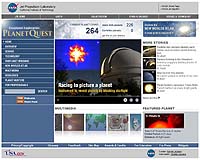
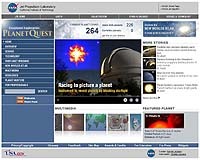
More than 260 planets have already been discovered orbiting other stars, and new ones are found almost every month. Having trouble keeping track? Help is on the way. NASA's Jet Propulsion Laboratory, Pasadena, Calif., has revamped its award-winning PlanetQuest website with improved tools to help users stay on top of the latest discoveries.
|
| ©NASA/JPL
|
| Partial view of PlanetQuest's redesigned website.
|
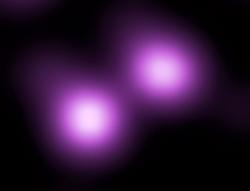
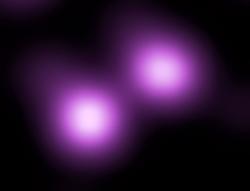
Explosions are almost always cool, and supernovae are some of the most spectacular and violent explosions in the Universe. In 2006, the supernova SN 2006gy wowed scientists with a light show that was 10 times as luminous as the average supernova, challenging the traditional model of exactly how an exploding star creates a supernova. Astronomers suspect that the cause is the repeated production of antimatter in the core of the star.
|
| ©NASA
|
| SN 2006gy and the core of it's home galaxy NGC 1260
|
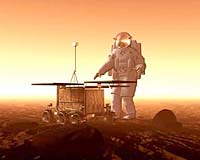
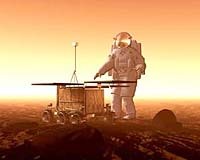
Russian scientists have completed the first stage of preparations for an experimental Mars mission simulation, Mars-500, a medical research institute announced on Thursday. The purpose of the main experiment, expected to begin in late 2008, is to simulate a space flight to Mars taking into account all ramifications, including a 250-day "trip" to the Red Planet, a 30-day period on its surface, and a 240-day return flight.
|
| ©Unkown
|
| Illustration only.
|
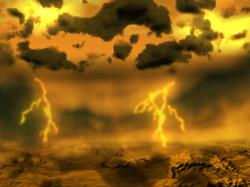
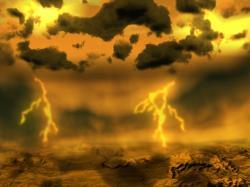
Venus is a hostile world, with high temperatures, intense pressures, and an atmosphere with sulphuric acid. The Russian spacecraft sent to explore it succumbed in mere hours. Well, now it appears that Venus is even more dangerous than previously imagined, with lightning flashing in the atmosphere.
|
| ©ESA
|
| Artist impression of lightening storms on Venus
|
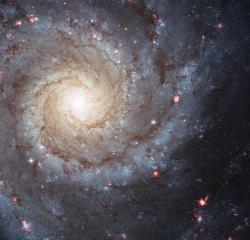
During many holidays, the folks working on NASA's Hubble Space Telescope try and find an image that captures the essence of the celebration. We've seen Christmas Tree clusters and spooky nebulae. To show their holiday spirit, the Hubble folks have released this beautiful image of the spiral galaxy M74. It's a stretch, I guess, but wow, what a picture.

|
| ©NASA
|
| M74 galaxy as viewed by the Hubble telescope
|