Science & Technology
It's difficult to put a number on the population of a species based on DNA alone, but less than a few hundred thousand of the archaic humans roamed Europe and Asia at any one time, says Adrian Briggs, an evolutionary geneticist at the Max Planck Institute for Evolutionary Anthropology in Leipzig. "There never were million and millions of Neanderthals," he told New Scientist.
That conclusion isn't exactly Earth-shattering. Archaeological digs suggest that Neanderthals hardly lived in megacities, and the mitochondrial genome sequence from one individual found in Croatia also hints at low population sizes.
But the new findings represent the most detailed look at Neanderthal genetic diversity yet published.

The solar wind, shown here in a plot of data from the Ulysses spacecraft, flows away from the sun at a million miles per hour and is heated by a "turbulent cascade."
"The energy source is turbulence," says co-author Melvyn Goldstein, chief of the Geospace Physics Laboratory at NASA's Goddard Space Flight Center, Greenbelt, Md. "The sun heats the solar wind by stirring it up."
It's a bit like stirring your coffee--in reverse. When you stir your morning cup of Joe, the coffee cools off. But when the sun stirs the solar wind, the solar wind heats up.
Consider the coffee. When you stir it with a spoon, the stirring produces swirls and vortices in the liquid. The vortices fragment into smaller and smaller eddies until, at the smallest scales, the motions dissipate and the energy turns into heat. Because energy cascades down from the large swirls to the smaller ones, the process is called a turbulent cascade.
Theoretically, the turbulent cascade should heat the coffee. Real coffee cools off, however, because the act of stirring brings warm coffee from the depths of the cup into contact with cooler air above. Cool air absorbs the heat - the heat the coffee had to begin with plus the heat you added by stirring - and you can take a sip without scalding yourself.
Chemistry and chemical biology professor Zhen Huang and his lab were able, for the first time, to manipulate methyl and phosphate groups of molecules in DNA that has been altered to contain selenium in order to bring them close enough together to form hydrogen bonds.
Such interactions may reduce the energy needed for a process called DNA duplex separation, thereby playing a role in the unwinding of DNA, which must happen in order for the genetic code to be copied and transcribed during cell replication and transcription. The research also helps to explain how energy is used in the process, Huang said.
Following the MSN headline was a slide show of photos of nine world leaders with paragraphs accompanying each, describing just how undemocratic and power hungry they all are. All of the leaders bar two are from Latin America or East Asia, reflecting the racist sentiment that the "West" is democratic perfection. Also, perhaps just a coincidence, East Asia and Latin America are regions with some of the strongest open source software movements.
Scientists found the evidence in amber, sticky tree sap that hardens into a deep, yellow, rock-hard fossil - like the amber that scientists in Jurassic Park used to snare dino DNA. Led by Akino Jossang, the scientists studied amber found near Paris. The shocker? The type of tree that produces this amber grows today only in the Amazon rainforest!
The ancient ancestor of this tropical tree died out long ago. However, the scientists used clever detective work to find its modern plant relative. They discovered a chemical called quesnoin in their amber samples. While lots of trees produce different types of amber, only the Amazon tree produces amber containing quesnoin.
Now, a pair of Penn State scientists has discovered that this sex chromosome, the Y chromosome, has evolved at a much more rapid pace than its partner chromosome, the X chromosome, which both males and females carry. This rapid evolution of the Y chromosome has led to a dramatic loss of genes on the Y chromosome at a rate that, if maintained, eventually could lead to the Y chromosome's complete disappearance. The research team, which includes Associate Professor of Biology Kateryna Makova, the team's leader, and National Science Foundation Graduate Research Fellow Melissa Wilson, will publish its results in the 17 July 2009 issue of the journal PLoS Genetics.
With knowledge of present day technology, the scientists predict that within 50 years androids will be able to speak in human-like voices, identify spoken words with precision, answer questions from a body of textual information, walk and run in a human-like motion, display realistic facial expressions, and detect others' emotions through visual processing.

PNNL's introduction of a metal-organic heat carrier, or MOHC, in the biphasic fluid may help improve thermodynamic efficiency of the heat recovery process. This image represents the molecular makeup of one of several MOHCs.
The goal is to enable power generation from low-temperature geothermal resources at an economical cost. In addition to being a clean energy source without any greenhouse gas emissions, geothermal is also a steady and dependable source of power.
Writing in Friday's (June 17) edition of the journal Science, researchers report that this shift is being driven by three principles that are emerging from cross-disciplinary work: learning is computational, learning is social, and learning is supported by brain circuits linking perception and action that connect people to one another. This new science of learning, the researchers believe, may shed light into the origins of human intelligence.

Researchers collected this micrometeorite in the vicinity of CONCORDIA station in central Antarctica (Dome C, 73°S, 123°E)
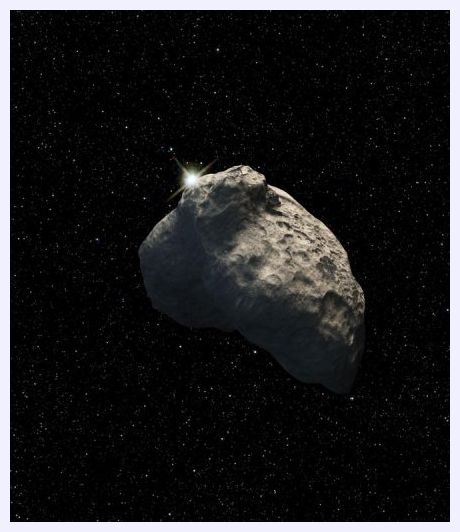
The team used numerical simulations to show that some comet-like objects residing in a disk outside the original orbit of the planets were scattered across the solar system and into the outer asteroid belt during a violent phase of planetary evolution.
Usually, the solar system is considered a place of relative permanence, with changes occurring gradually over hundreds of millions to billions of years. New models of planet formation indicate, however, that at specific times, the architecture of the solar system experienced dramatic upheaval.
In particular, it now seems probable that approximately 3.9 billion years ago, the giant planets of our solar system -- Jupiter, Saturn, Uranus and Neptune -- rearranged themselves in a tumultuous spasm. "This last major event of planet formation appears to have affected nearly every nook and cranny of the solar system," says lead author Dr. Hal Levison of SwRI.