Science & TechnologyS


Display

Scroogle resurrected once again

Private Google scraper in SCO-like refusal to die

Scroogle has once again returned from the dead, continuing to serve up its privacy-friendly Google search results after another programming tweak from founder Daniel Brandt.

Brandt and the not-for-profit Scroogle have been scraping Google search results since 2002, allowing netizens to use Mountain View's search engine without being tracked by the company. But in May, after Google removed an interface page where Brandt was scraping results, the service went offline. It returned a day later, as Brandt tapped a slightly different interface, only for this interface to vanish as well.

Info

Digital World Rewiring Our Brains

iPhone
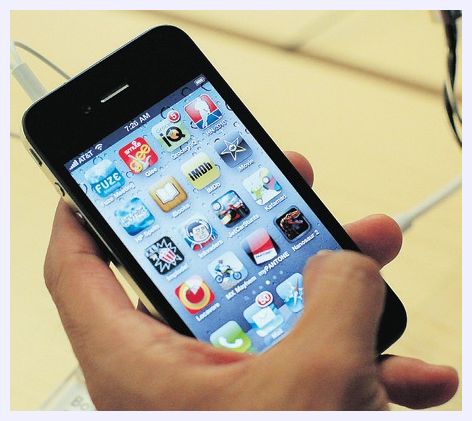
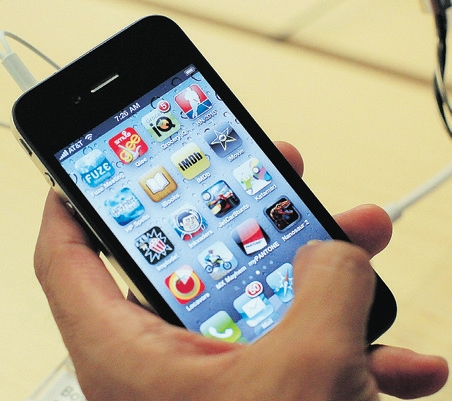
© Reuters, For Canwest News ServiceDevices such as the iPhone may actually be changing the way we think.
"Sup? Lst wknd wz gr8. Cw2cu agn . . . ttyl!"

A message from outer space or a text about a fun weekend and the promise to touch base soon? If you're a digital immigrant -- Statistics Canada says only 27 per cent of Canadians don't text, tweet and Google away their hours -- chances are, it sounds like a foreign language spoken by a generation you can't fathom.

But according to prominent American neuroscientist Dr. Gary Small, this lack of understanding is more than just a generation gap. In fact, spurred by the technological web of mobile phones, computers, the Internet and video games, we are in the midst of what he calls "a brain gap," in which the younger generation doesn't just look and sound different; their brains are rapidly evolving to such an extent they actually function differently, too.

"Because of the current technological revolution," says Small, author of iBrain: Surviving the Technological Alteration of the Modern Mind (HarperCollins, 2009), "our brains are evolving right now -- at a speed like never before."

And it's starting at a very early age. While every human is born with the same circuitry, give or take some genetic variations, "studies show that our environment moulds the shape and function of our brains, as well, and it can do so to the point of no return," he says.

In fact, by adolescence, 60 per cent of the brain's synapses, or connection sites between cells, have been pruned to suit dominant learning experiences. In other words, for "digital natives" who have grown up with constant, daily exposure, technology stimulates brain cells and neurotransmitter release, sparking the evolution of new neural pathways -- and weakening old ones.

Laptop

Reverse engineer extracts Skype crypto secret recipe

VoIP service mulls legal action

Cryptoanalysts have published what they claim is the secret recipe behind a Skype encryption algorithm.

A group of code breakers led by Sean O'Neil reckon they have successfully reverse engineered Skype's implementation of the RC4 cipher, one of several encryption technologies used by the consumer-oriented VoIP service. The proprietary encryption technology is used by the VoIP service to protect communications exchanged between its its clients and severs. It also restricts what clients can access the service, a restriction Skype had plans to ease with the upcoming publication of an API.

Even if independent research proves that the proprietary RC4 algorithm has been exposed it doesn't follow that Skype is open to eavesdroppers, not least because the service uses a variety of encryption techniques.

Satellite

Rosetta snaps views of asteroid Lutetia

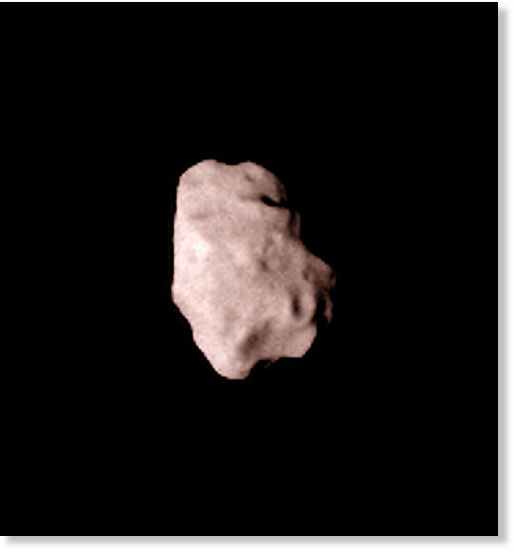
Europe's comet-chasing Rosetta spacecraft flew less than 2,000 miles from asteroid Lutetia Saturday, capturing the first sharp images of the 80-mile-wide object between the orbits of Mars and Jupiter.
Image
© ESA/Max Planck Institute for Solar System Research for OSIRIS Team MPS/UPD/LAM/IAA/RSSD/INTA/UPM/DASP/IDA

The closest approach occurred at 1610 GMT (12:10 p.m. EDT), and Rosetta's cameras took about 400 pictures of the asteroid during the flyby.

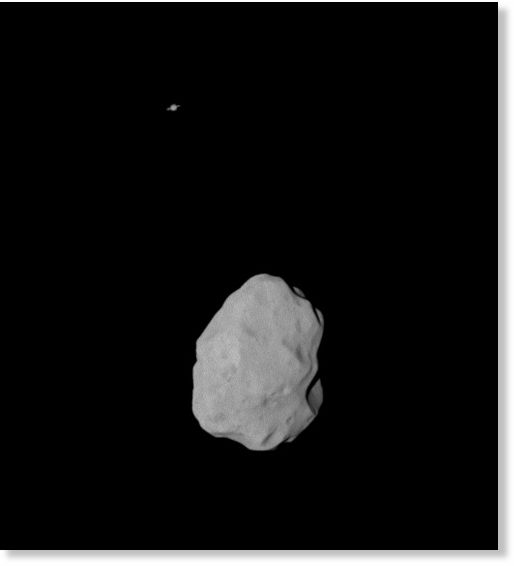
These pictures were collected by Rosetta's OSIRIS imaging instrument, beginning at a range of 50,000 miles from Lutetia.

The second picture shows Lutetia and Saturn in the image frame,
Image
© ESA/Max Planck Institute for Solar System Research for OSIRIS Team MPS/UPD/LAM/IAA/RSSD/INTA/UPM/DASP/IDA

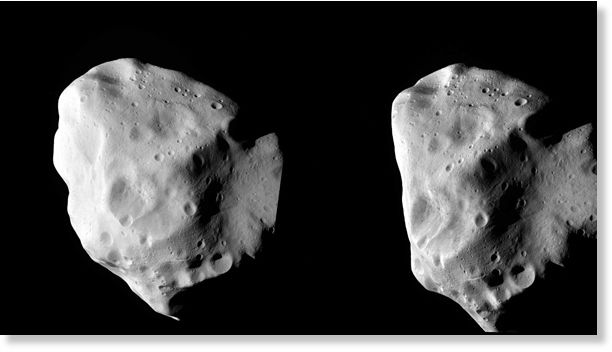
and the third shot shows a pair of images taken less than two minutes before Rosetta's closest approach to the asteroid.
Image
© ESA/Max Planck Institute for Solar System Research for OSIRIS Team MPS/UPD/LAM/IAA/RSSD/INTA/UPM/DASP/IDA

Telescope

Regulus and Venus Conjunction

Image
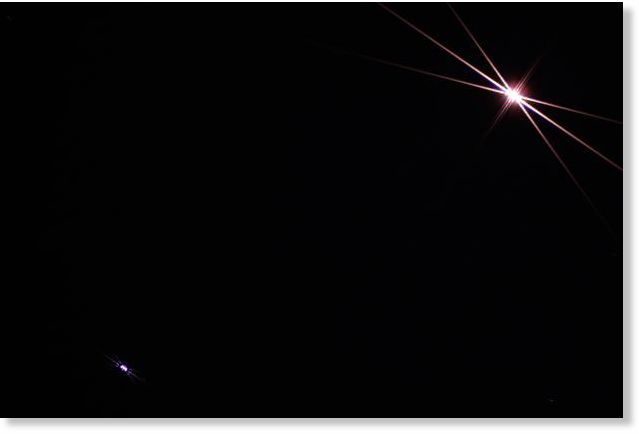
© David HoughManaged to get this happy snap this evening - lots of high and low cloud about which shows in the images of Regulus and Venus. Taken with a 127ed refractor and a cooled modified Canon 40D
Look west at sunset. Venus is passing by 1st magnitude star Regulus; they're only a little more than a degree apart. Bright Venus catches the eye first. As the glow of sunset fades, Regulus pops out of the twilight a little below Venus. The view through binoculars is superb.

Sun

C3 Solar Flare - Sunspot 1087

Magnetic fields overlying sunspot 1087 became unstable and erupted yesterday. The explosion emitted a bright flash of UV light (a C3-class solar flare) and hurled a massive plume of hot plasma away from the sun. Click on the image to watch the action unfold:

Sun

South Pacific Total Eclipse This Weekend

It's every vacationer's dream: You stretch out on a white sandy beach for a luxurious nap under the South Pacific sun. The caw of distant gulls wafts across the warm sea breeze while palm fronds rustle gently overhead. You take it all in through half-closed eyes.

Could Paradise get any better? This weekend it will.

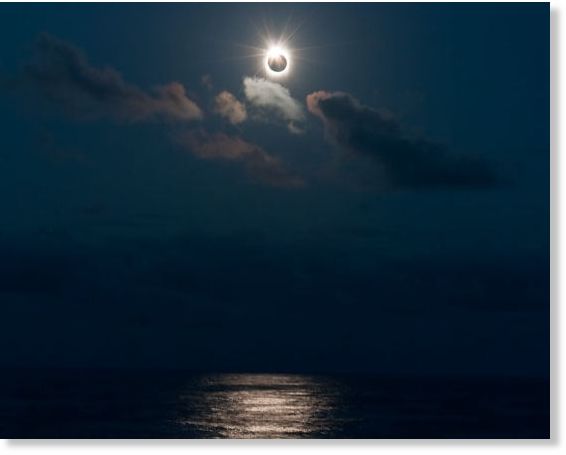
On Sunday, July 11th, the new Moon will pass directly in front of the sun, producing a total eclipse over the South Pacific. The path of totality stretches across more than a thousand miles of ocean, making landfall in the Cook Islands, Easter Island, a number of French Polynesian atolls, and the southern tip of South America:

Image
© Alan Dyer Shooting from the Cook Islands, astrophotographer Alan Dyer recorded this South Pacific eclipse on July 22, 2009.

Radar

Scientists develop 'fake' genetically-engineered blood for use on the battlefield

Image
U.S. soldiers carry a wounded soldier in Iraq. The breakthrough could help provide enough blood for battlefield transfusions
American scientists have developed 'artificial' blood that could soon be used to treat wounded soldiers in battle.

The genetically-engineered blood is created by taking cells from umbilical cords and using a machine to mimic the way bone marrow works to produce mass quantities of usable units of red blood cells.

Known as 'blood pharming' the programme was launched in 2008 by the Pentagon's experimental arm, Darpa, to create blood to treat soldiers in far-flung battlefields.

The firm Arteriocyte, which received $1.95 million for the project, has now sent off its first shipment of O-negative blood to the food and drugs watchdog in the US, the FDA.

Info

New Group of Moons Found Orbiting Saturn

Saturn New Moon
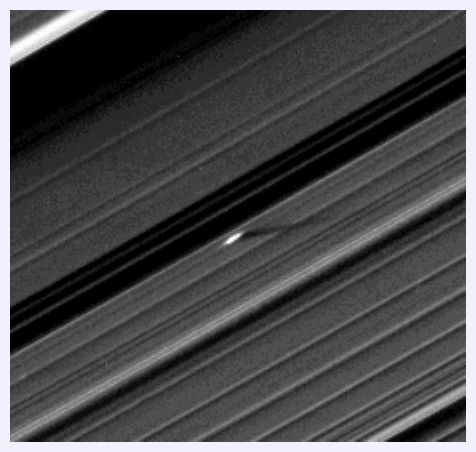
© NASA/JPL/Space Science InstituteMaternity bump -- moonlet in tow in Saturn's A ring.
Curious how planets can form from disks of gas and dust? Well, the rings of Saturn are serving scientists as a living laboratory to better understand the process.

Astronomers have been able to use the Saturn-orbiting Cassini spacecraft to track what are believed to be half-mile wide moons embedded in the planet's outermost dense ring, known as the A ring. The moonlets were found by perturbations they are creating in the structure of the ring, which is about 30 feet thick. The moonlets' gravitational grip is causing 1,600-foot long shoots of material above and below ring, reports Matthew Tiscareno, a Cassini scientist at Cornell University, in this week's issue of Astrophysical Journal Letters.

Scientists estimate there are dozens of these extremely long propeller-like features toward the outer edge of Saturn's A ring and have been tracking 11 of them for four years -- the first time a disk-embedded object has ever been tracked anywhere.

Einstein

QuakeFinder -- Could This Unusual Pattern of Southern California Earthquakes Offer the Clue Scientists Were Looking For?

CA Earthquake
© Market Wire

Palo Alto, CA - Following the earthquake at Borrego Springs in Southern California on the 7th of July, scientists at QuakeFinder -- a humanitarian organization conducting research into pre-earthquake electromagnetic signals with the aim of developing an early warning system -- immediately analyzed the data collected from their sensors. While more data is being retrieved from the magnetometer's hard drive for further analysis, there appears to be some prior magnetic pulse activity present before the magnitude 5.4 event.

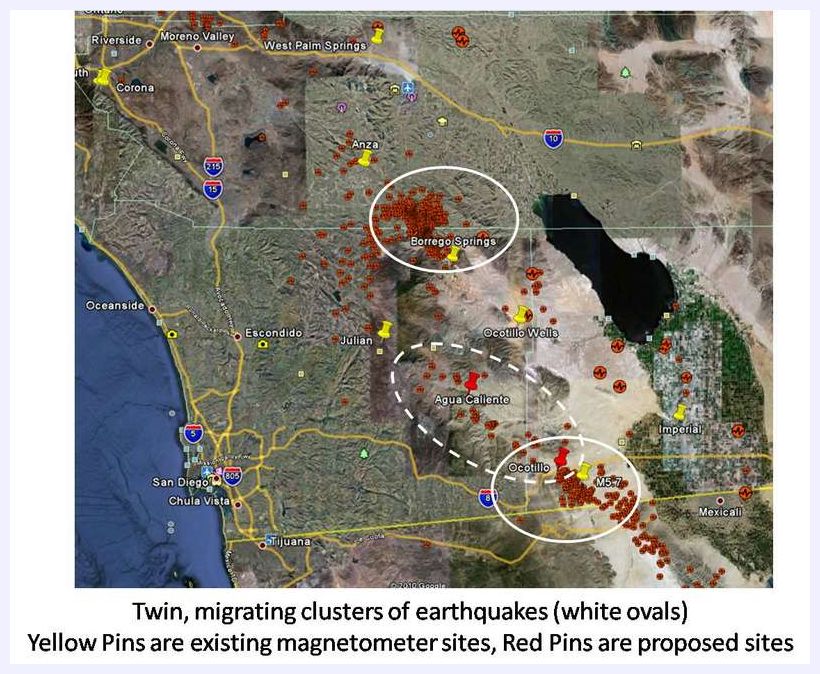
The Borrego Springs area is located on the San Jacinto fault and had been active for several weeks through a cluster of small quakes, parallel to another small cluster of quakes at Ocotillo -- 55 miles to the southeast along the Elsinore fault. While both may be indications of a stress migration from the recent Easter Sunday earthquake in Baja, Mexico, QuakeFinder offers further elaboration.

"The aftershocks (or pre-shocks) are migrating up towards both the San Jacinto and Elsinore faults as the stress is relieved in one area, and then migrates up to adjacent fault segments," says Tom Bleier, head of QuakeFinder.

"However, Borrego and the Mexican border area clusters may not be where the real action is in the near future. The San Jacinto segment is already covered with three of our sites at Ocotillo Wells, Borrego Springs, and Anza, Ca. If there is a larger quake at the fringe of these clusters where the stress is still building, the existing and new sites may detect the same magnetic pulsations that were observed two weeks prior to the 2009 Alum Rock, Ca. M5.4 earthquake, and the 2010 Tacna, Peru events where QuakeFinder instruments were present. This could offer significant data towards the validation of existing research."