Science & TechnologyS


Bizarro Earth

Blind Science: Humans in the Midst of Causing Planet's Sixth Mass Extinction

Image
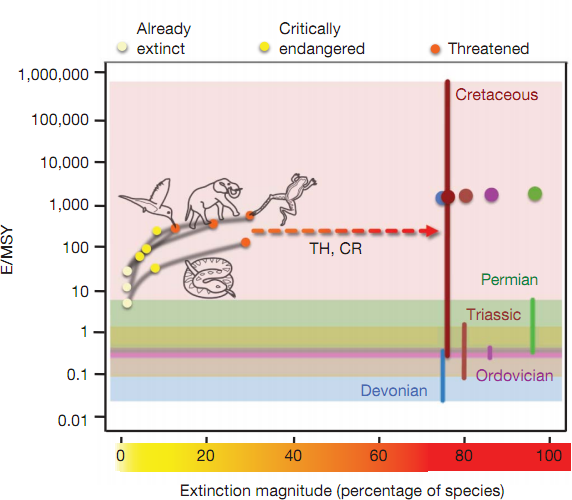
© Nature/University of California, BerkleyWe're slowly creeping towards levels of mass extinction (see lines to the right), according to a recent study. Only five mass extinctions have occurred in the Earth's history and this one would the first caused directly by man.
Evolution will likely overcome the role of humanity, but pressure is unlike any in history

A mass extinction is a world-changing event. In order to qualify, 75 percent of species must be eliminated within a "short" period (between a few hundred thousand years to a few million years).

This has only happened five times in history, and according to researchers at the University of California, Berkley, it's happening a sixth time. This time, they claim humans are to blame.

The worst mass extinction in history occurred during the Permian Period, when most land species perished. While that won't likely happen, the majority of non-domesticate large land species may perish over the next a thousand years if mankind doesn't change its behavior, according to the researchers.

Anthony Barnosky, the curator of the Museum of Paleontology at UC Berkeley and another co-author of the study, comments that species go extinct today just as they have always. However, the real question is, "Is the pace of extinction we're seeing today over these short time intervals usual or unusual?"

Comment: For a better perspective as to why most of the above doesn't ring true, you are invited to read the following articles:

Cyclones, Earthquakes, Volcanoes And Other Electrical Phenomena

Fire and Ice: The Day After Tomorrow

Procession of the Damned: Mass Bird and Fish Deaths Turning Up Everywhere

Global Warming And The Corruption Of Science


Beaker

Human Astrocytes Used to Repair Spinal Cord Injuries in Rats

Researchers are working to apply the cells to human models
Image
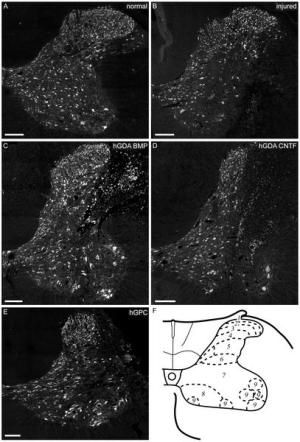
© Stephen DaviesBMP transplants provide protection of spinal cord neurons while CNTF transplants do not

Researchers from the University of Colorado School of Medicine and the University of Rochester Medical Center have found a way to repair damage to the nervous system of rats and help restore their locomotor function as well through the use of a particular type of human cell.

Chris Proschel, Ph.D., study leader and assistant professor of genetics at the University of Rochester Medical Center, along with Stephen Davies, Ph.D., associate professor in the Department of Neurosurgery at the University of Colorado School of Medicine, and a team of researchers, have discovered a human cell that is produced from stem cells and placed into spinal cord-injured rats in order to repair nerve damage and restore certain functions.

The type of human cells used were human astrocytes, which are support cells in the central nervous system. These particular human astrocytes used were generated from stem cells called human fetal glial precursor cells, which were isolated and exposed to signaling molecules that instructed "different astrocytic cell fate." This process, which consisted of switching on or off signals in cells, created two types of human astrocytes -- BMP (bone morphogenetic protein) and CNTF (ciliary neurotrophic factor). One of the astrocytes was able to aid in the recovery of rats with spinal cord injuries while the other did not.

Powertool

Michelangelo's David 'could collapse due to high-speed train building'

Image
Michelangelo's statue of David is at risk of being toppled by the construction of a high-speed railway line beneath Florence because of his flimsy ankles.

The statue is riddled with tiny cracks, particularly in the ankles of the boy warrior, and could collapse as a result of vibrations from the 1.4 billion euro project, which is due to start in the summer.

The threat of serious damage being done to one of the world's most famous statues has prompted calls for it to be moved to a purpose-built museum away from the construction work.

"The tunnel will pass about 600 meters (2,000ft) from the statue of David, the ankles of which, it is well known, are riddled with micro-fissures. If it's not moved before digging begins, there is a serious risk that it will collapse," said Fernando De Simone, an expert in underground engineering.

The cracks in the marble are mostly in David's left ankle and in the carved tree stump which bears part of the statue's weight.

Rocket

Inglorious take-off for NASA's research satellite as it plunges into the sea

Image
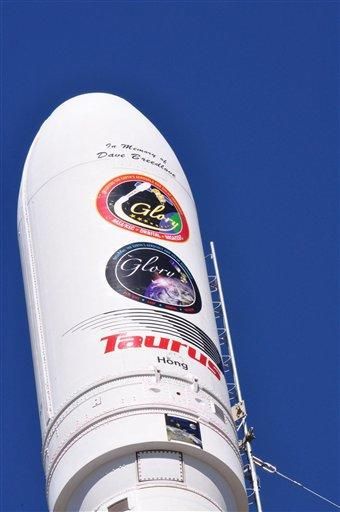
© AP Photo/NASAThis image provided by NASA shows the encapsulated Glory spacecraft sitting atop the Taurus XL rocket and awaiting launch on the pad at Vandenberg Air Force Base's Space Launch Complex in Calif., Feb. 22, 2011. Vandenberg Air Force Base officials say the Taurus XL rocket carrying NASA's Glory satellite lifted off about 2:10 a.m. PST Friday from the base. However the fairing surrounding the Glory spacecraft failed to separate properly preventing the spacecraft from reaching orbit.
For the second time in two years, a rocket glitch sent a NASA global warming satellite to the bottom of the sea Friday, a $424 million debacle that couldn't have come at a worse time for the space agency and its efforts to understand climate change.

Years of belt-tightening have left NASA's Earth-watching system in sorry shape, according to many scientists. And any money for new environmental satellites will have to survive budget-cutting, global warming politics and, now, doubts on Capitol Hill about the space agency's competence.

The Taurus XL rocket carrying NASA's Glory satellite lifted from Vandenberg Air Force Base in California and plummeted to the southern Pacific several minutes later. The same thing happened to another climate-monitoring probe in 2009 with the same type of rocket, and engineers thought they had fixed the problem.

"It's more than embarrassing," said Syracuse University public policy professor Henry Lambright. "Something was missed in the first investigation and the work that went on afterward."

Igloo

Squishy ice shifts climate models, study says

Image
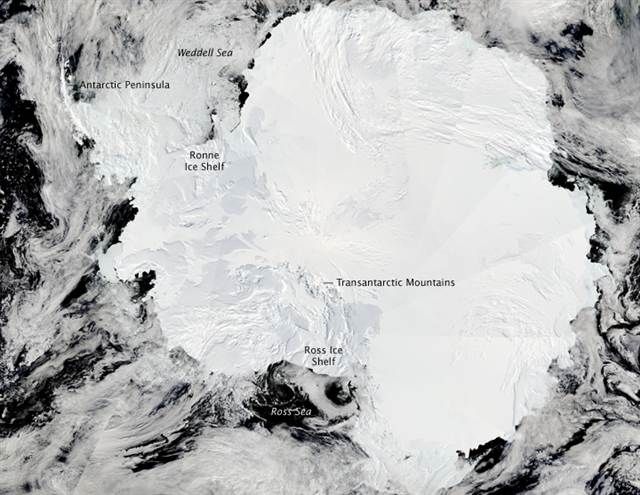
© NASAThis satellite view shows Antarctica, which is covered by two ice sheets divided by the Transnatarctic Mountains. A new study found that a plateau just east of the mountain range includes ice that thaws and freezes over time, changing the structure of the ice sheet.
Knowing how the massive ice sheets atop Antarctica and Greenland work is key to predicting how global warming could raise sea levels and flood coastal cities. But a new study upends what scientists thought they knew. It turns out it's not just ancient snow that makes up the ice sheets, but water deep under the sheets also thaws and refreezes over time.

To put it in non-scientific terms, lead scientist Robin Bell told msnbc.com, the study redefines "how squishy" the base of ice sheets can be. "This matters to how fast ice will flow and how fast ice sheets will change."

"It also means that ice sheet models are not correct," she said, comparing it to "trying to figure out how a car will drive but forgetting to add the tires. The performance will be very different if you are driving on the rims."

Reporting in this week's issue of the peer-reviewed journal Science, Bell and his team described how ice-penetrating radar peeled back two miles of ice a million years old in the center of Antarctica.

Sun

Reduced Solar Activity Could Hint at Future

Sunspots represent magnetic activity on the surface and interior of the sun and have a cycle that averages 11 years. The 2008 minimum was the lowest in a century.

As a result, solar flares were almost nonexistent, and solar extreme ultraviolet radiation was at low ebb.

When solar extreme ultraviolet activity is low, it causes the thermosphere of Earth's atmosphere to shrink, and the contraction that took place in 2008-09 was the greatest in nearly 50 years.

Due to decreased atmospheric drag, the shrinking thermosphere changed the orbits of satellites.

During the same interval, the solar wind pressure was the weakest in 50 years, following a decreasing trend that began in the 1990s.

The solar wind permeates the entire solar system and creates the heliosphere, a bubble of magnetism originating from the sun and inflated by the solar wind. The entire solar system is inside the magnetic bubble. It is the first line of defense against cosmic rays.

In 2009 cosmic rays increased 19 percent over the highest seen in the past 50 years. The atmosphere protects us, but the increase created a danger for astronauts and satellites.

A whole fleet of spacecraft is devoted to solar physics. Monitoring the sun's vibrating surface allows helioseismologists to probe the stellar interior.

An article published in Nature yesterday revealed a new computer model of the sun's interior showing that plasma currents deep inside the sun interfered with the formation of sunspots and prolonged the solar minimum.

Like Earth, the sun has surface currents that run from the equator to the poles, then plunge deep beneath the surface and travel back to the poles.

Info

Reading Earth's Magnetic History

Ferromanganese Crust
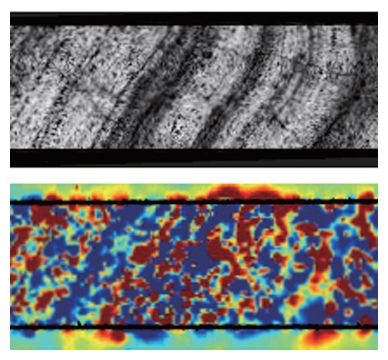
© Ben WeissA slice of ferromanganese crust from the Pacific Ocean was analyzed using the MIT team’s SQUID microscope. The top image shows a portion of the image of the slice taken with an electron microprobe. The second image shows the magnetized regions in the slice, with red areas showing one direction of magnetization and blue the opposite direction.

In order to date environmental events from Earth's history - such as meteorite impacts or climate change - geologists have long studied variations in slow-growing seafloor sedimentary rocks called ferromanganese crusts that build up in layers over the eons. The layers can be dated by various means, such as by analyzing radioactive isotopes, but those methods don't provide accurate dating on small scales: a millimeter of rock, for example, can include information that spans as much as hundreds of thousands of years.

Now, a new technique pioneered by researchers at MIT and in Japan provides a reliable way to date these "archives" of environmental changes with much finer precision.

Because the Earth's magnetic field flips to an opposite (north or south) orientation at random intervals, the layers of rock - which record the magnetic orientation at the time they formed - produce a kind of natural barcode that can be used for dating past geological changes. While the layers' scales differ greatly - in one formation, a given band may be kilometers thick, while in another it spans less than a millimeter - the relative thicknesses (one band twice as thick as the next, and so on) are the same. The spacing of these bands has been determined by studying the rapidly growing igneous rocks that form in midocean ridges where the Earth's crust grows rapidly, so the stripes there are broad and easy to measure and date.

Info

They Came From Mars

Mars
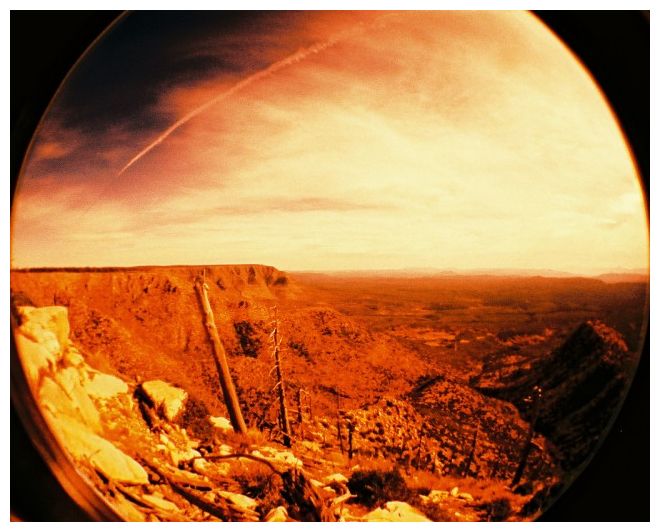
© Kevin Dooley, flickrIs this what Mars used to look like?

Christopher Carr thinks Martians invaded Earth a few billion years ago. If the research scientist from Massachusetts Institute of Technology is right, these Martians were tiny, and they came on rocks instead of spaceships. Their journey would have begun with the explosive BANG! of a meteorite smashing the red planet and sending boulders hurtling into space. Sheltered within the boulders, microbial Martians could have survived the frigid, irradiating darkness of space, as well as the fiery entry into Earth's atmosphere and subsequent crash landing.

It may sound far-fetched, Carr acknowledges, but it's not impossible. And the theory has been gaining support in recent years.

Mars and Earth have exchanged nearly a billion tons of rock over time. Now Carr wants to see if they've exchanged life as well. That's why his research team at MIT is building a DNA-detecting machine for possible use on a 2018 Mars rover. If they can get the instrument rover-ready, its findings could knock down half of what we think we know about life on Earth. Finding DNA on Mars would mean the planet held life - maybe still does - and that we're probably related to it.

Even more tantalizingly, most rocks travel from Mars to Earth; it's harder to knock stuff off of Earth because of its stronger gravity and thick atmosphere. So finding DNA on Mars could mean that life on Mars spawned life on Earth.

"It's an interesting thing to try," said Steven Squyres, a Cornell University planetary scientist and lead scientist for NASA's Mars Exploration Rover Project.

Although no one has ever looked for DNA on Mars before, NASA has spent decades exploring whether life ever took hold there. Past methods approached the search broadly: assuming Mars' life would have evolved independently from life on Earth, scientists sought molecules that could be general to all life. So instead of looking for DNA - the molecule that defines life here - they've looked for geology and climates conducive to life and for molecules like methane that can be formed from decaying organic matter.

Evil Rays

Earth's Inconstant Magnetic Field, or NASA's Version of "Move Along, Nothing to See Here"

Image
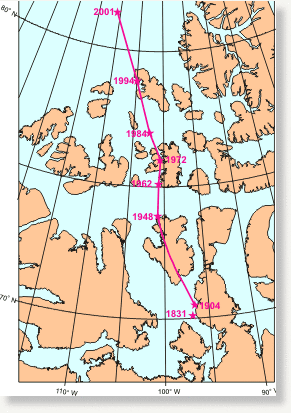
© Geological Survey of Canadahe movement of Earth's north magnetic pole across the Canadian arctic, 1831--2001.
Our planet's magnetic field is in a constant state of change, say researchers who are beginning to understand how it behaves and why.

Every few years, scientist Larry Newitt of the Geological Survey of Canada goes hunting. He grabs his gloves, parka, a fancy compass, hops on a plane and flies out over the Canadian arctic. Not much stirs among the scattered islands and sea ice, but Newitt's prey is there--always moving, shifting, elusive.

His quarry is Earth's north magnetic pole.

At the moment it's located in northern Canada, about 600 km from the nearest town: Resolute Bay, population 300, where a popular T-shirt reads "Resolute Bay isn't the end of the world, but you can see it from here." Newitt stops there for snacks and supplies--and refuge when the weather gets bad. "Which is often," he says.

Scientists have long known that the magnetic pole moves. James Ross located the pole for the first time in 1831 after an exhausting arctic journey during which his ship got stuck in the ice for four years. No one returned until the next century. In 1904, Roald Amundsen found the pole again and discovered that it had moved--at least 50 km since the days of Ross.

Target

Scientists Slam 'Moonman' Earthquake Predictor

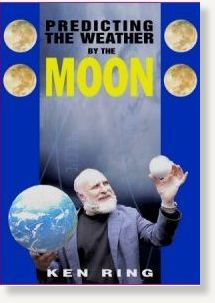
Ken Ring
© Gothic ImageKen Ring
New Zealand scientists have rounded on a quasi-mystic mathematician known as the "Moonman" who claims he predicted the devastating Christchurch earthquake by studying the moon.

Ken Ring, the author of books linking the moon with weather patterns, says he accurately forecast the February 22 tremor, which left about 240 people feared dead, in a Valentine's Day tweet.

"Potential earthquake time for the planet between 15th-25th, especially 18th for Christchurch, +/- about 3 days," Ring tweeted on February 14. "Short... and sharp."

Now traumatised residents are fearful after another Ring prediction: that Christchurch -- hit by two major quakes in the past six months, along with thousands of aftershocks -- will suffer another big tremor in the coming days.

"I'm hoping he's wrong, but we're going down to our holiday house for the week just in case," said schoolteacher Kirsty Carruthers. "It'll help take our minds off things, and it can't hurt to get away."

Ring maintains the risk of another quake is high because the moon is now unusually close to the Earth, exerting a strong gravitational pull.