Science & TechnologyS


Sheeple

Major Farm Animal Cloning Project Cancelled Due to Disease and Deaths

Image
© freefromharm.org
After 13 years of studying how to prevent abnormalities in cloned animals, AgResearch has ended its cloning project because too many of the animals died.

AgResearch is a New Zealand based company that has spent more than a decade trying to perfect the cloning of animals for use in scientific and medical research.

Their cloning trials tried to create: animals that produced a type of "super milk", sheep that were resistant to eczema, pregnant sheep that wanted to eat more food, and special proteins to be used in human medications.

Sun

Space sleuths solve riddle of missing sunspots

Image
© Unknown
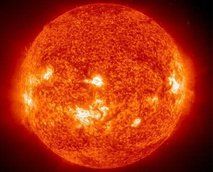
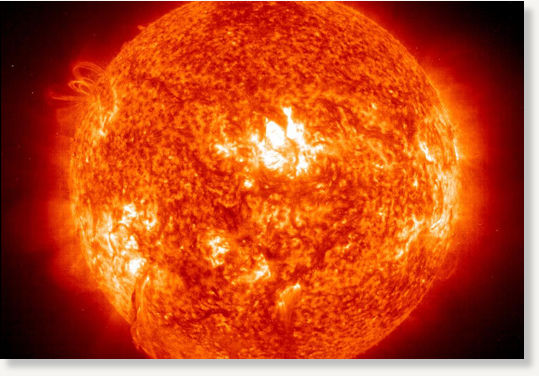
Paris - Space scientists on Thursday said they could explain why spots disappeared off the face of the Sun for two years, a mystery that had challenged a mainstream theory about our star.

The years 2008 and 2009 were marked by a near-absence of sunspots, which reflected an unusually long period of low solar activity.

Astronomers were perplexed, for at that time the Sun was supposed to be building towards the climax of an 11-year cycle that has big implications for life on Earth.

Sunspots are highly magnetised globs of charged particles called plasma on the solar surface.

Rocket

Ark Heritage: The First Space Ark


Ark Heritage is the first-of-its-kind spacecraft, designed to transport a capsule containing DNA samples of our planet and electronic files of the Earth inhabitants, an invaluable testament to the human civilization. DNA samples of 5000 individuals, 300-400 animal and plant spices will be stored inside the first compartment of the capsule in a special way, enabling their integrity and a smooth voyage across the ocean of infinity. Later, this unique data may be used to recreate the image of life on Earth in its entirety. Earth inhabitants' photo, video and audio files, stored in the Data Storage, will be placed into the second compartment of the capsule. Over a million people will be able to send files with information on their lives aboard Ark Heritage. The most prominent musical masterpieces, motion pictures, images of nature and inhabitants of the Earth, images of places of cultural and historical significance and other information on the values of our epoch will be sent to space.

The main objective of the scientific expedition is to send the Solar Sail propelled Ark Heritage spacecraft beyond the boundaries of the Solar system. Once a sufficient speed level has been reached, Ark Heritage will leave the Solar system first, then the boundaries of our Galaxy and finally - fly into the outer space. Flight data will be continuously transmitted by the spacecraft back to Earth.

Throughout its entire space voyage, Ark Heritage will carry priceless material, containing unique information on the human civilization, its history, culture and facts of life on Earth.

The Users of the web-site participate in the Mission by nominating and voting for human candidates, animal, plant and other living organism species, whose DNA samples will be ultimately sent with the Ark Heritage Mission.

Sun

Mysterious case of missing sunspots solved

Image
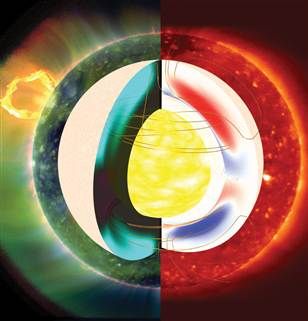
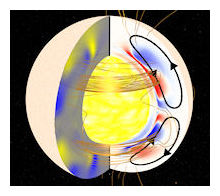
© NASA/Goddard/SDO-AIA/JAXA/Hinode-XRTThis collage shows magnetic fields in the interior of the sun simulated using a solar dynamo model.
The source of a mysterious drought of sunspots in recent years apparently originated beneath the star's solar skin, investigators find.

Sunspots are dark, cooler regions on the surface of the sun dominated by intense magnetic fields. These are the seats of storms of charged particles that generate beautiful auroras on Earth, but can also ravage electronics in space, affect air travel over polar regions, and zap power grids on Earth.

"Sunspots have been more or less continuously observed since Galileo trained his telescope on the sun in the early 17th century," said astrophysicist Dibyendu Nandi at the Indian Institute of Science Education and Research in Kolkata, who led the study.

The sun periodically sees an ebb and flow in the number of sunspots, a cycle that lasts approximately 11 years. However, near the end of Solar Cycle 23, which peaked in 2001, solar activity entered an unusually long "minimum" with a large number of days without sunspots and a very weak polar magnetic field.

"One has to go back almost 100 years to find a solar minimum with a larger number of spotless days," Nandi explained.

However, this drought ultimately did end in 2009. The sun is currently in its next weather cycle, Solar Cycle 24.

Info

Best of the Web: Where's Tyche, the 9th planet? Getting the full story

Solar System
© Ars Technica

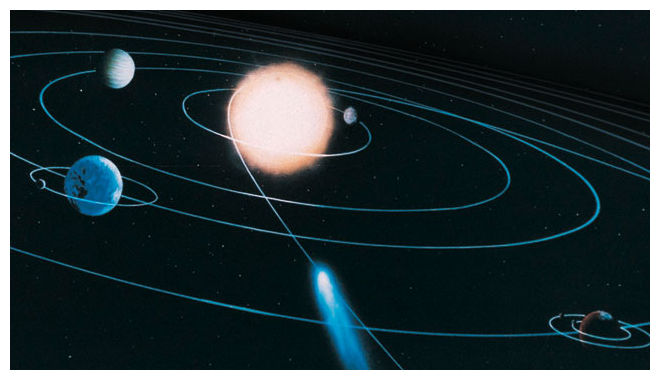
On February 14th, the UK's Daily Mail reported the possible discovery of a planet four times bigger than Jupiter and lurking in the outer solar system. From there, the story quickly spread like a wildfire on the Internet, seeing coverage by mainstream outlets including the Huffington Post and TIME online. The tone of various news stories varied from "Tyche, Giant Hidden Planet, May Exist In Our Solar System" (The Huffington Post) to "Astronomers Question Existence of Solar System's Mystery Planet Tyche" (Fox News). So, is there really a new planet lying out there?

The original research article was published in the February issue of the international planetary science research journal Icarus by John Matese and Daniel Whitmire of the University of Louisiana at Lafayette. It was titled "Persistent evidence of a jovian mass solar companion in the Oort cloud."

Question

Has The Earth's Sixth Mass Extinction Already Arrived?

Sixth Extinction
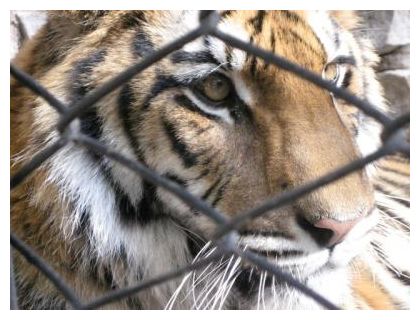
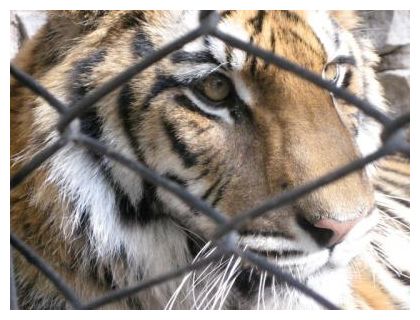
© Anthony Barnosky, UC BerkeleyTigers are one of Earth's most critically endangered species. Extinction of the majority of such species would indicate the sixth mass extinction is in our near future.

With the steep decline in populations of many animal species, from frogs and fish to tigers, some scientists have warned that Earth is on the brink of a mass extinction like those that occurred only five times before during the past 540 million years. Each of these 'Big Five' saw three-quarters or more of all animal species go extinct.

In a study to be published in the March 3 issue of the journal Nature, University of California, Berkeley, paleobiologists assess where mammals and other species stand today in terms of possible extinction, compared with the past 540 million years, and they find cause for hope as well as alarm.

"If you look only at the critically endangered mammals - those where the risk of extinction is at least 50 percent within three of their generations - and assume that their time will run out, and they will be extinct in 1,000 years, that puts us clearly outside any range of normal, and tells us that we are moving into the mass extinction realm," said principal author Anthony D. Barnosky, UC Berkeley professor of integrative biology, a curator in the Museum of Paleontology and a research paleontologist in the Museum of Vertebrate Zoology.

"If currently threatened species - those officially classed as critically endangered, endangered and vulnerable - actually went extinct, and that rate of extinction continued, the sixth mass extinction could arrive within as little as 3 to 22 centuries," he said.

Nevertheless, Barnosky added, it's not too late to save these critically endangered mammals and other such species and stop short of the tipping point. That would require dealing with a perfect storm of threats, including habitat fragmentation, invasive species, disease and global warming,

"So far, only 1 to 2 percent of all species have gone extinct in the groups we can look at clearly, so by those numbers, it looks like we are not far down the road to extinction. We still have a lot of Earth's biota to save," Barnosky said. "It's very important to devote resources and legislation toward species conservation if we don't want to be the species whose activity caused a mass extinction."


Info

Researchers Crack the Mystery of the Missing Sunspots

Great Conveyor Belt
© Andrés Muñoz-Jaramillo of the Harvard CfA. In this artistic cutaway view of the sun, the Great Conveyor Belt appears as a set of black loops connecting the stellar surface to the interior.

In 2008-2009, sunspots almost completely disappeared for two years. Solar activity dropped to hundred-year lows; Earth's upper atmosphere cooled and collapsed; the sun's magnetic field weakened, allowing cosmic rays to penetrate the Solar System in record numbers. It was a big event, and solar physicists openly wondered, where have all the sunspots gone?

Now they know. An answer is being published in the March 3rd edition of Nature.

"Plasma currents deep inside the sun interfered with the formation of sunspots and prolonged solar minimum," says lead author Dibyendu Nandi of the Indian Institute of Science Education and Research in Kolkata. "Our conclusions are based on a new computer model of the sun's interior."

For years, solar physicists have recognized the importance of the sun's "Great Conveyor Belt." A vast system of plasma currents called 'meridional flows' (akin to ocean currents on Earth) travel along the sun's surface, plunge inward around the poles, and pop up again near the sun's equator. These looping currents play a key role in the 11-year solar cycle. When sunspots begin to decay, surface currents sweep up their magnetic remains and pull them down inside the star; 300,000 km below the surface, the sun's magnetic dynamo amplifies the decaying magnetic fields. Re-animated sunspots become buoyant and bob up to the surface like a cork in water - voila! A new solar cycle is born.

For the first time, Nandi's team believes they have developed a computer model that gets the physics right for all three aspects of this process--the magnetic dynamo, the conveyor belt, and the buoyant evolution of sunspot magnetic fields.

Telescope

Hawaii Approves Plan for Giant Telescope Atop Dormant Volcano

Thirty Meter Telescope
© Thirty Meter TelescopeAn artist's illustration of the Thirty-Meter Telescope atop the volcanic peak of Mauna Kea in Hawaii.

A telescope that will be one of the largest in the world has been given the green light to be built atop a dormant Hawaiian volcano.

The Hawaiian government's Department of Land and Natural Resources has granted a permit to the University of Hawaii to build and operate the $1.3 billion Thirty Meter Telescope (TMT) on Mauna Kea, a 13,803-foot (4,207-meter) volcanic peak on Hawaii's Big Island.

The permit, which was approved Friday (Feb. 25), is the final step in a multi-year vetting process that took the project's cultural and environmental impacts into account, TMT officials said.

"The Thirty Meter Telescope has worked diligently during the past three years to design an observatory that would minimize its environmental and cultural impact," Sandra Dawson, TMT's Manager of Hawaii Community Affairs, said in a statement. "The TMT project also fulfills the requirements outlined in the recently approved Comprehensive Management Plan for Mauna Kea."

Black Cat

Cats Adore, Manipulate Women

Image
© Unknown
Cats attach to humans, and particularly women, as social partners, and it's not just for the sake of obtaining food.

The bond between cats and their owners turns out to be far more intense than imagined, especially for cat aficionado women and their affection reciprocating felines, suggests a new study.

Cats attach to humans, and particularly women, as social partners, and it's not just for the sake of obtaining food, according to the new research, which has been accepted for publication in the journal Behavioural Processes.

The study is the first to show in detail that the dynamics underlying cat-human relationships are nearly identical to human-only bonds, with cats sometimes even becoming a furry "child" in nurturing homes.

Telescope

Solar Experts Detect Waves in Giant Magnetic Holes the Size of the UK

Image
© SOHOThe chromosphere of the solar atmosphere. Bright patches correspond to concentrated magnetic flux.
Massive waves in giant magnetic holes on the surface of the Sun have been discovered for the first time by solar scientists from the University of Sheffield and Queen´s University Belfast, something that will bring experts a step closer to unlocking the secrets of the Sun.

The Sun is interwoven by a complex network of magnetic field lines that are responsible for a large variety of fascinating features that can be seen in the solar atmosphere. Large, dark regions, which look like holes on the Sun´s surface, mark out areas where the magnetic field breaks through from the Sun´s deep, boiling interior and rises into the very hot solar atmosphere, which is over a million degrees. The largest of these dark regions are often called sunspots and have been studied since their discovery from as early as 364 BC.

Led by Professor Robertus von Fay-Siebenburgen, Head of the Solar Physics and Space Plasma Research Centre (SP2RC) at the University of Sheffield, the team studied a magnetic region of the Sun much smaller than a sunspot, however its size was still many times greater than the size of the UK.

Their research, which was published this week in Astrophysical Journal, has shown that the magnetic hole they observed, which is also known as a pore, is able to channel energy generated deep inside the Sun, along the magnetic field to the Sun´s upper atmosphere. The magnetic field emerging through the pore is over 1,000 times stronger than the magnetic field of Earth.The energy being transported is in the form of a very special form of waves, known as 'sausage waves´ which the scientists were able to observe using a UK-built solar imager known as ROSA (Rapid Oscillations of the Solar Atmosphere), which was designed by Queen´s University Belfast and is in operation at the Dunn Solar Telescope, Sacramento Peak, USA. This is the first direct observation of 'sausage waves´ at the solar surface. The magnetic hole is seen to increase and decrease in size periodically which is a characteristic feature of the 'sausage wave.´