Science & TechnologyS


Laptop

Google Revamps to Fight Cheaters

google robot
© unknownGoogle has changed its search algorithm in an effort to filter out data from "content farms" in search results.
Google Inc., long considered the gold standard of Internet search, is changing the secret formula it uses to rank Web pages as it struggles to combat websites that have been able to game its system.

The Internet giant, which handles nearly two-thirds of the world's Web searches, has been under fire recently over the quality of its results. Google said it changed its mathematical formula late Thursday in order to better weed out "low-quality" sites that offer users little value. Some such sites offer just enough content to appear in search results and lure users to pages loaded with advertisements.

Google has changed its search algorithm in an effort to filter out data from "content farms" in search results. Marcelo Prince, Jessica Vascellaro and Simon Constable discuss how this affect site rankings and revenues for businesses.

Google generates billions of dollars from advertising linked to its search engine, whose influence as a front door to the world's online content and commerce continues to grow by the year. Google's power over the fortunes of so many other companies has made it a target of competitor complaints. It has also faced government investigations, including scrutiny by regulators in the U.S. and Europe.

Sun

'Monster' Solar Storm Erupts On the Sun

The sun unleashed a powerful flare Thursday (Feb.24) that - while not the strongest solar storm ever seen - let loose a massive wave of magnetic plasma in a dazzling display.

The solar flare kicked up a huge, twisting tendril of plasma that scientists call a solar prominence. NASA's Solar Dynamics Observatory recorded the flare in an eye-catching video, with mission scientists calling the eruption a "monster prominence."


"Some of the material blew out into space and other portions fell back to the surface," NASA scientists wrote in a statement released Friday (Feb. 25).

Dazzling sun flare

Thursday's solar flare was the latest in a series of strong sun storms this month. Scientists classified it as an M3.6 Class solar storm. NASA described the solar eruption as a "rather large-sized flare."

Scientists use a three-class system to measure the strength and intensity of solar flares. The most powerful sun storms are Class X - a Class X2.2 solar flare erupted on Feb. 14. Class M solar storms are medium strength but still powerful, according to a NASA description. The weakest types of solar flares are Class C storms.

Igloo

Science Censorship: Real Climate faces libel suit

Gavin Schmidt
© Christy Field/OtherGavin Schmidt, a Nasa climate modeller, claims E&E has 'effectively dispensed with substantive peer review'.

Prominent blog run by climate scientists could be sued by E&E after accusing the journal of 'shoddy' peer review

Real Climate, a prominent blog run by climate scientists, may be sued by a controversial journal in response to allegations that the its peer review process is "shoddy."

Gavin Schmidt, a climate modeller and Real Climate member based at Nasa's Goddard Institute for Space Studies in New York, has claimed that Energy & Environment (E&E) has "effectively dispensed with substantive peer review for any papers that follow the editor's political line." The journal denies the claim, and, according to Schmidt, has threatened to take further action unless he retracts it.

"This is an insult, and what's more it's not true," says Sonja Boehmer-Christiansen, the editor of E&E and an emeritus reader at the University of Hull's department of geography. Every paper that is submitted to the journal is vetted by a number of experts, she said. But she did not deny that she allows her political agenda to influence which papers are published in the journal. "I'm not ashamed to say that I deliberately encourage the publication of papers that are sceptical of climate change," said Boehmer-Christiansen, who does not believe in man-made climate change.

Comment: Perhaps Global Warming advocates have forgotten that their position constitutes a political agenda too?

Global Warming And The Corruption Of Science


Bizarro Earth

Scientists Find Increase In Microearthquakes After Chilean Quake

By studying seismographs from the earthquake that hit Chile last February, earth scientists at the Georgia Institute of Technology have found a statistically significant increase of microearthquakes in central California in the first few hours after the main shock. The observation provides an additional support that seismic waves from distant earthquakes could also trigger seismic events on the other side of the earth. The results may be found online in the journal Geophysical Research Letters.

It has been well known that microearthquakes can be triggered instantaneously by distant earthquakes. However, sometimes the triggered events could occur long after the passage of the direct surface waves that take the shortest path on the earth surface. There are several other explanations out there about how such delayed triggering occurs. Some involve the redistribution of pore fluids and triggered a seismic creep, while others simply consider them as aftershocks of the directly triggered events. But the group from Georgia Tech found something different.

"From our research, we've concluded the delayed triggering that occurs in the first few hours after an earthquake could be caused by multiple surface waves traveling back and forth around the earth multiple times," said Zhigang Peng, assistant professor in the School of Earth and Atmospheric Sciences at Georgia Tech.

Magic Hat

Sci-Fi-Style Invisible Cloaking Device Technology Here Now

Image
Eugene, Oregon - Other than the usual yelling from University of Oregon "Ducks" football and basketball fans, it's unusual to hear loud cheers on campus coming from someplace like the school's computer labs; but, that changed today with news from England about a UFO-style cloaking device that may allow objects and people to disappear and then reappear in a different location.

The cloaking device that's turning things invisible was developed by scientists at Birmingham University in England, and recently announced by British media as "a crystal that can exploit light refraction on demand." Birmingham University chief scientist Dr. Shuang Zhang, who announced the discovery, has compared this new technology as something "we'll be using in the future."

Zhang, who's appearing all over the Internet and other media discussing his team's discovery, used an example of a submarine that could be completely "cloaked" by this new technology and "virtually invisible to known technology."

Cow Skull

US: Casper College Unveils Big Dinosaur Discovery

Image
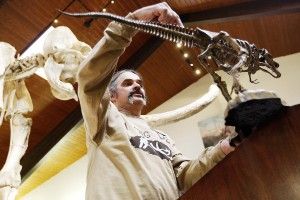
© Tim Kupsick/Casper Star-TribuneJ.P. Cavigelli, field operations specialist for the Tate Museum
Wyoming - Meet Lee Rex: one of the biggest carnivores to roam the earth, his teeth as big as bananas.

Well, now he consists of about 20 bones collected from private land north of Lusk. But think of what he could be.

With more digging, this Tyrannosaurus rex has the potential to be among the most complete T-rexes ever discovered. Someday, he'll move into the Tate Geological Museum at Casper College, gracing the same hall as Dee the Mammoth, the largest Columbian mammoth mounted in North America. If the two were ever to be displayed side by side, Lee Rex would be just a bit bigger.

The Tate introduced Lee on Wednesday at a press conference underneath Dee's right tusk. The T-rex will give the museum another chance to "display a fossil found in Wyoming that will stay in Wyoming," said Walter Nolte, Casper College president.

Telescope

Flashback Mystery Heavenly Body Discovered - Possibly as Large as Jupiter

Image
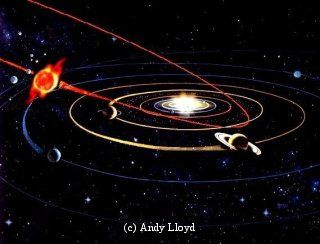
© Andy Lloyd
December 30, 1983, Friday, Final Edition

A heavenly body possibly as large as the giant planet Jupiter and possibly so close to Earth that it would be part of this solar system has been found in the direction of the constellation Orion by an orbiting telescope aboard the U.S. infrared astronomical satellite.

So mysterious is the object that astronomers do not know if it is a planet, a giant comet, a nearby "protostar" that never got hot enough to become a star, a distant galaxy so young that it is still in the process of forming its first stars or a galaxy so shrouded in dust that none of the light cast by its stars ever gets through.

Telescope

New Record! Telescope Finds 19 Asteroids in One Night

PS1 Observatory
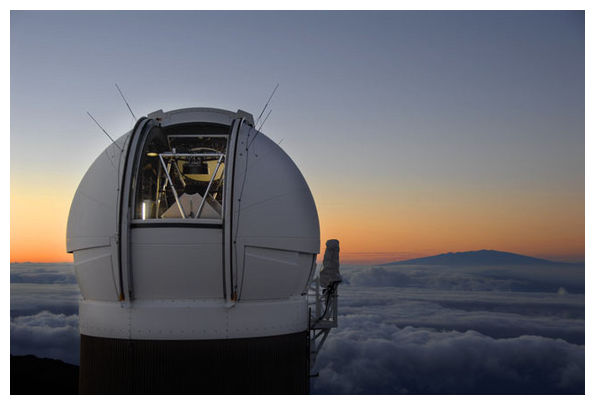
© Rob RatkowskiThe PS1 Observatory on Haleakala, Maui just before sunrise.

A telescope high atop a volcano peak in Hawaii has set a new asteroid-hunting record: 19 space rocks discovered in one night, the most ever by a single telescope, astronomers say.

The Pan-STARRS PS1 telescope, located at the summit of Maui's Haleakala volcano, set the mark on Jan. 29, discovering 19 near-Earth asteroids. Two of the space rocks have orbits that will bring them extremely close to our planet in the next 100 years, so scientists will be keeping an eye on them, researchers said.

"This record number of discoveries shows that PS1 is the world's most powerful telescope for this kind of study," Nick Kaiser of the University of Hawaii, head of the Pan-STARRS project, said in a statement Thursday (Feb. 24). "NASA and the U.S. Air Force Research Laboratory's support of this project illustrates how seriously they are taking the threat from near-Earth asteroids."

Better Earth

South Africa: The World's Oldest Water?

New evidence bolsters the notion that deep saline groundwaters in South Africa's Witwatersrand Basin may have remained isolated for many thousands, perhaps even millions, of years.

The study, recently accepted for publication in Chemical Geology, found the noble gas neon dissolved in water in three-kilometre deep crevices.

Footprints

Walking cactus discovered in China

Image

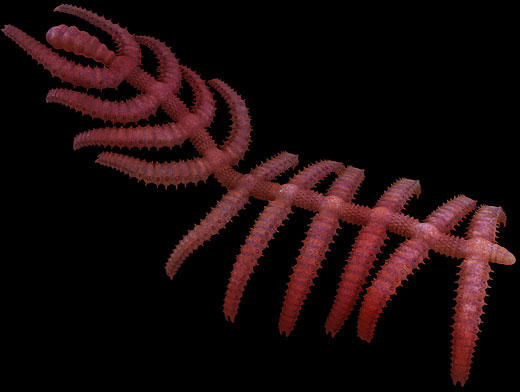
Walking cactus: Scientists have discovered what researchers are calling the missing link in China. The strange-looking walking cactus is thought to be the link between worm-like creatures and arthropods like spiders.

Fossils of a 10-legged wormy creature that lived 520 million years ago may fill an important gap in the history of the evolution of insects, spiders and crustaceans.

The so-called walking cactus belongs to a group of extinct worm-like creatures called lobopodians that are thought to have given rise to arthropods. Spiders and other arthropods have segmented bodies and jointed limbs covered in a hardened shell.

Before the discovery of the walking cactus, Diania cactiformis, all lobopodian remains had soft bodies and soft limbs, said Jianni Liu, the lead researcher who is affiliated with Northwest University in China and Freie University in Germany.