Science & TechnologyS


Attention

Facebook will soon share users' phone numbers and addresses with 3rd parties

Image
© Jeff Chiu/AP)
It's been a while since we've had an uproar over Facebook's handling of its users personal information, so we suppose the time is ripe.

So cue the online outrage: Facebook announced today in a letter to Congress that the social-media platform is moving forward with plans to give third parties access to user information, such as phone numbers and home addresses.

Robot

Australian utility evaluates EV charging kit

Plug your 'leccy cars into Ergon

Laptop

Chemists create current-bearing plastic

Polymer breakthrough points way to cheaper PCs

Chemists have found a new way of producing plastic that conducts electricity, potentially paving the way to cheaper, more robust and er, more plasticky computers.

Polymer electronics isn't new, and the printed electronics business is reckoned to be worth around $2bn, although not all the printing goes onto polymers. But with all the attention lavished upon nanotubes, the more mundane research breakthroughs can be overlooked.

A team led by Professors Paul Meredith and Ben Powell at the University of Queensland, Associate Professor Adam Micolich of the University of New South Wales School of Physics and UNSW doctoral student Andrew Stephenson used an ion beam to "tune" the plastic film.

"In theory, we can make plastics that conduct no electricity at all or as well as metals do - and everything in between," says Stephenson.

Evil Rays

Immaterials: Light painting WiFi

The city is filled with an invisible landscape of networks that is becoming an interwoven part of daily life. WiFi networks and increasingly sophisticated mobile phones are starting to influence how urban environments are experienced and understood. We want to explore and reveal what the immaterial terrain of WiFi looks like and how it relates to the city.


Immaterials: light painting WiFi film
by Timo Arnall, Jørn Knutsen and Einar Sneve Martinussen.

Info

Arctic Changes and an Ancient Extinction

Arctic Research
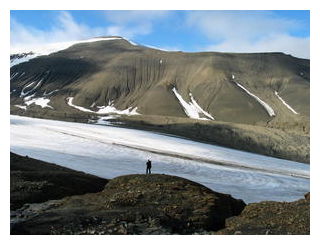
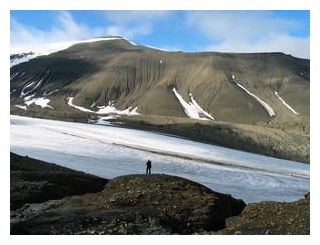
© National Oceanography CentreFieldwork in Spitsbergen.
Scientists are unravelling the environmental changes that took place around the Arctic during an exceptional episode of ancient global warming.

Newly published results from a high-resolution study of sediments collected on Spitsbergen represent a significant contribution to this endeavour. The study was led by Ian Harding and John Marshall of the University of Southampton's School of Ocean and Earth Science (SOES), based at the National Oceanography Centre, Southampton, United Kingdom.

Around 56 million years ago there was a period of global warming called the Paleocene - Eocene Thermal Maximum (PETM), during which global sea surface temperatures increased by approximately 5°C.

The warming of the oceans led to profound ecological changes, including the widespread extinction of many types of foraminifera, tiny single-celled organisms with distinctive shells. Plankton that had previously only prospered in tropical and subtropical waters migrated to higher latitudes. Similar changes occurred on the land, with many animals and plants extending their distributions towards the poles.

"Although environmental changes associated with the PETM at low- to mid-latitude settings and high southern latitudes are well documented, we know less about these changes at high northern latitudes," explained Harding.


Bug

First U.S. Scientist to Die of Plague in 50 Years Worked in Labs with 'Harmless' Bacteria

Image
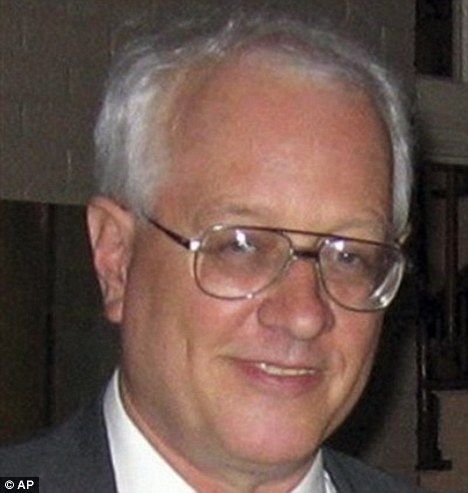
© APDead: Chicago genetics and cell biology professor Malcolm Casadaban, 60, is the first U.S. scientist to die after contracting the plague in 50 years
A scientist died after becoming the first American researcher to contract the plague in 50 years, it has been revealed.

Malcolm Casadaban, 60, was working with a weakened form of the plague's bacteria thought to be harmless to humans when he died in September 2009, a report said.

The University of Chicago genetics and cell biology professor's work with the live bacteria was not even noted when he fell ill and he followed proper safety protocols.

Dr Casadaban was researching the chain of events that happens when a person is made sick by the bacteria Yersinia Pestis, which are behind the plague.

The bubonic plague, which killed at least a third of the population of medieval Europe in the 14th century, still infects more than 2,000 people annually worldwide today.

But the weakened bacteria have never previously been linked to human illness and are not covered by strict safety measures that regulate studying other deadly germs.

Chalkboard

Life on Mars, the second law of thermodynamics and the date the world will end, by Professor Brian Cox

Image
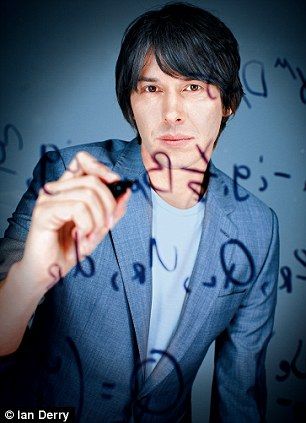
© Ian Derry'I want people to have an emotional response to science, because that's what I have,' said Brian Cox

He looks more like a pop star than a particle physicist (but then he did have a No1 hit single). But how did Britain's top TV scientist go from touring alongside Take That to working on the Large Hadron Collider?

Scientists shouldn't look like this. They should have wild hair like Einstein or wild eyes like Patrick Moore, not amble into the room looking as if they've just come off stage at Glastonbury. But this is Professor Brian Cox, known as the 'rock-star scientist' and described by People magazine as the World's Sexiest Quantum Physicist, a title that makes him sigh.

'They were doing an A to Z of desirable people and needed to put someone in the Q category. Who else could it be?'

Star

Dark Energy: Astronomers Inch Toward Solving Space Riddle

Image
© NASA / ESA / JPL-Caltech / Yale / CNRS
You've probably never heard of a galaxy known as NGC 6264, and you've surely never given it a whole lot of thought. But the distant star cluster has just provided astronomers with new insight into one of the most mysterious forces in the universe.

To understand that force even a little, think about the last time you threw a baseball straight up in the air. What happened was what will always happen as long as you live on earth: gravity made the ball slow, stop and fall back to the ground. If you were born on the planet Krypton and landed here as a baby, the ball would reach escape velocity and shoot into outer space.

Astronomers trying to understand the history of the universe have long thought of galaxies as huge, shiny baseballs. They were flung outward about 13 billion years ago, in the Big Bang; that's why the universe is expanding. But whether they would someday stop and reverse direction under their mutual gravity or keep going forever wasn't clear. To figure it out, two teams of observers decided more than a decade ago to look deep into the cosmic past, by comparing the velocity of extremely distant galaxies with that of closer ones. The farther you peer into space, the farther you peer back in time, and so if the more remote galaxies are flying apart faster than the close ones, that means the slowdown has already begun. If not, it will probably never happen.

Chalkboard

How Stone Age man kept his pores clean... in the SAUNA

The remains of a 4,500-year-old sauna have been discovered by archaeologists excavating a Stone Age temple.

They unearthed the foundations of the building at Marden Henge, near Devizes in Wiltshire.

Located close to the River Avon, the neolithic 'sauna' was in a key position overlooking a ceremonial area at the site.

English Heritage's Jim Leary said: 'The building brings to mind the sweat lodges of the native North Americans and the reason for that sauna or sweat lodge interpretation is that the floor plan was utterly dominated by a large hearth - so large in fact there does not appear to be any space for living, cooking or doing anything much at all.

'It is also located very close to the River Avon and would have had a ready source of water, which is a necessary criteria for a sweat lodge.

'If it was a sweat lodge then perhaps one could envisage it being used for purification ceremonies within the henge.

'Unfortunately we'll never know exactly what it was for - that's the nature of archaeology.'

Marden Henge, which has no standing stones, is located on a line which connects stone circles at Stonehenge and Avebury but remains a mystery for archaeologists.

Some believe the huge Stonehenge megaliths were stored there after being dragged from Avebury.

Stop

NASA's Robert Braun: No Americans Beyond Low Earth Orbit for a Decade

Image
NASA Chief Technologist Robert Braun suggested that it would take at least a decade to develop a rocket and a space craft capable of taking American astronauts beyond low Earth orbit. Officially, both are supposed to be operational by 2016.

Braun made this assessment to an audience at the Kennedy Space Center on the occasion of the last liftoff of the Discovery space shuttle. NASA has already suggested the 2016 deadline cannot be met by 2016 within the proposed budget. Congress, however, has expressed disbelief in NASA's claims.

The suspicion is NASA is slow walking the development of the Orion space craft and the shuttle-derived heavy-lift launcher that could take American astronauts to destinations such as an Earth approaching asteroid, the moon and ultimately to Mars. That is because the project was one that was imposed upon NASA by Congress and was not part of the Obama administration original space policy.

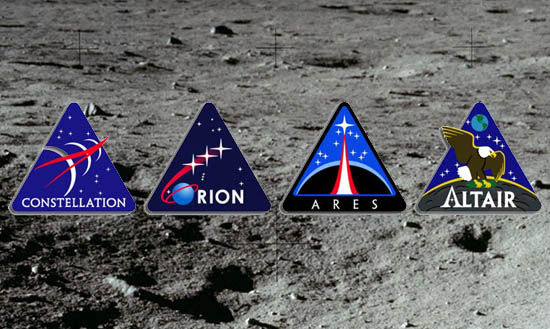
Over a year ago, the Obama administration canceled the Constellation space exploration program. During the subsequent political fire storm, Congress wrote language into the NASA Authorization Bill ordering NASA to build two of the elements of Constellation, the Orion deep space craft and a shuttle derived heavy lift launcher and set at deadline for 2016.