Science & TechnologyS


Telescope

Dual Interpretations: Milky Way's Outer Fringe of Stars Sparks Disagreement

Image
© Bullock & Johnston (2005)HOW MANY HALOS? A simulation of halo formation by the accretion of large numbers of galaxies.
It's well known that the Milky Way is a spiral galaxy, a swirl of stars in an extended, many-armed disk. But the structure of the galaxy is far from two-dimensional. Above and below those familiar spiral arms is a lesser-known feature, a spherical swarm of stars that makes up a halo around the disk.

For decades the presence of the halo has prodded astronomers to ask big questions about its nature: How is it structured? How do stars in the halo compare with disk stars such as our sun, or to stars elsewhere in the halo? And just how did the halo get there? In recent years a group of astronomers has suggested an answer to some of those big questions by drawing on a large telescopic survey of the sky.

The halo, they have concluded, is composed of at least two distinct populations of stars, with different chemical makeups and different orbits. One group of stars, dubbed the inner halo, generally orbits closer to the galactic center, and its members tend to contain more heavy elements such as iron than do stars farther out. (Halo stars as a whole are depleted in these heavy elements, relative to stars in the galactic disk.) Stars of the outer halo occupy somewhat wider orbits around the galactic center, contain lower levels of heavy elements, and - unlike the inner halo - tend to follow retrograde orbits, circling the Milky Way in a direction counter to the rotation of the galactic disk.

Eye 1

Mind-Controlled Skateboard is Literally Powered by Your Thoughts


You don't have to be Professor X or Yoda to control the Board of Imagination with your mind. This futuristic skateboard by Chaotic Moon Labs can read your brain waves and take you to where you want to go, even if you're not a mutant or a Jedi.

Chaotic Moon Labs originally created a motion-control skateboard equipped with Microsoft Kinect that can turn your hand into a steering wheel. People loved the aptly-named Board of Awesomeness so much that it eventually broke down after being taken for numerous test drives (including the 2012 Consumer Electronics Show in January). Instead of rebuilding it, they decided to enhance and redesign it to become the even more amazing invention known as the Board of Imagination

Info

Body's 'Doomsday Clocks' Count Down to Death, or Cancer

Telomeres
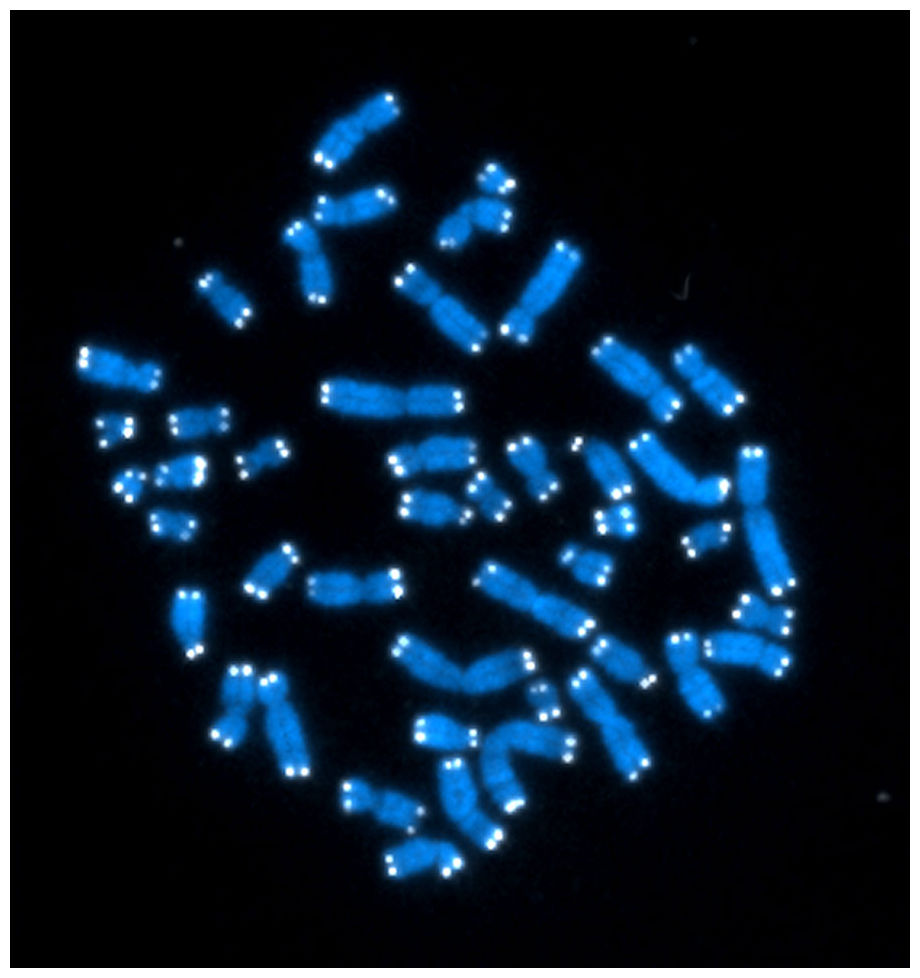
© Hesed Padilla-Nash and Thomas Ried, National Institutes of HealthThe 46 human chromosomes are shown in blue, with the telomeres appearing as white pinpoints. The DNA has already been copied, so each chromosome is actually made up of two identical lengths of DNA, each with its own two telomeres.

Every cell in your body has its own Doomsday Clock, ticking down the number of times it can safely divide. This clock takes the form of a cap on the ends of each chromosome, called a telomere. Like the plastic aglets on the tips of shoelaces, telomeres keep the chromosome from fraying. However, they get shorter every time the cell splits.

When the telomeres have shrunk to a certain point, the cell can go one of two ways. It's supposed to die. But in the case of cancer, the cell keeps living. If scientists could make drugs to control telomeres, they could perhaps treat diseases of aging as well as cancer.

Telomeres Aplenty

Researchers have known since the 1930s that telomeres cap chromosomes, but it was not until the 1970s that they figured out what those caps are made of. The scientists who first described telomere composition, led by Elizabeth Blackburn at the University of California, San Francisco, needed a rich source of telomeres to study. They found it in a pond-dwelling organism called Tetrahymena. This critter is made of just one cell, and it's covered in little projections called cilia that give it a fuzzy appearance under the microscope. But for telomere researchers, it's what's inside the cell that counts: approximately 20,000 chromosomes, each with telomeres on their ends. Human cells, in contrast, have a mere 46 chromosomes.

Blackburn, Carol Greider of Johns Hopkins University in Baltimore, and Jack Szostak of Harvard Medical School in Boston shared the Nobel Prize in physiology or medicine in 2009 for their National Institutes of Health-funded research on telomeres.

Syringe

US: UC San Diego Develops Injectable Hydrogel for Cardiac Tissue Repair

What's unique about the hydrogel is that it can be injected via catheter
Image
© UC San Diego Jacobs School of EngineeringLiquid hydrogel

A new hydrogel meant to repair tissue damage after a heart attack has been developed and tested by University of California - San Diego scientists.

Karen Christman, study leader and professor in the Department of Bioengineering at UC San Diego, along with a team of researchers, have successfully developed an injectable hydrogel that can treat tissue damage after a heart attack.

"It helps to promote a positive remodeling-type response, not a pro-inflammatory one in the damaged heart," said Christman.

The hydrogel is made of cardiac connective tissue. The connective tissue is eliminated of its heart muscle cells through a cleansing process, and then it is freeze-dried and milled into a powder-like material. The powder is then made into a fluid that can be injected directly into the heart tissue.

When the liquid enters the body, human body temperature turns it into a porous gel that manipulates cells into repopulating areas where damaged cardiac tissue is located. The hydrogel helps repair the tissue and could even prevent further damage.

What's unique about the hydrogel is that it can be injected via catheter as well, which is less invasive and does not require anesthesia or surgery.

The hydrogel has already been tested on rats. In rat models, the gel was not rejected and it did not cause arrhythmic heart beating. Usually cardiac therapies are designed to be tested on animals like pigs, which have hearts sized similarly to humans. However, these therapies usually aren't suited for catheter use. However, the fact that the rats reacted positively to the gel catheter shows that it could be useful for humans one day.

This study was published in the Journal of the American College of Cardiology.

Sherlock

Total disconnect from reality, or shall we say, Solar System: Earth may have a 'pulse' every 60 million years that's been causing mysterious mass extinctions

Image
© Unknown
A mysterious cycle of booms and busts in marine biodiversity over the past 500 million years could be tied to a 'pulse of the Earth' - a periodic uplifting of continents that results in the seas being too shallow for species to survive in, according to a new study.

Researchers at the University of Kansas believe evidence for these uplifts lie in the increased amounts of an element found in the continental crust that they've subsequently detected in marine fossils whenever mass extinctions have occurred.

The fact that the element, strontium-87, is suddenly appearing in the oceans means that there must have been sudden huge tectonic movements that the researchers believe played havoc with marine life.

Comment: What is it about scientists who forget that our planet is not in isolation ward? The fact is, we are part of a Cosmic cyclic system, that brings our way periodic calamities and evolutionary boosts in form of bombardments from space or other related phenomena. In this case, a periodic 'pulse of the Earth' would be a "symptom" and not a "cause".

Read the following articles to learn more:
Tunguska, Psychopathy and the Sixth Extinction
Survival of the Fittest of the Luckiest: Cosmic Catastrophes and The Evolution of Life
The Golden Age, Psychopathy and the Sixth Extinction
Extinction, Metamorphosis, Evolutionary Apoptosis, and Genetically Programmed Species Mass Death


Info

Gendered Grammar Linked to Global Sexism

Language Gender
© Lim Yong Hian, ShutterstockMandarin Chinese, as spoken, is a genderless language, meaning the pronoun for both "he" and "she" sounds the same. English is a natural gender language, meaning there are special pronouns for each gender, but nouns are gender-free.

Languages in which nouns are given male or female status are linked to gender inequality, according to a new study that compares languages and equality across the globe.

Surprisingly, though, languages with no gender at all - where even "he" and "she" are represented by the same word - are associated with the most gender inequality, perhaps because people automatically categorize gender-neutral references as male.

"These are aspects of language that seem very mundane and seem like they wouldn't make a difference," said study researcher Jennifer Prewitt-Freilino, a psychologist at the Rhode Island School of Design. "But more and more research that is starting to come out looking at grammatical gender and language suggests that it has more of an impact than you would think."

Info

Wacky Physics: New Uncertainty About the Uncertainty Principle

Electron
© DreamstimeThe uncertainty principle posits, for instance, that if you make a measurement to find out the exact position of an electron around an atom, you will only be able to get a hazy idea of how fast it's moving.

One of the most often quoted, yet least understood, tenets of physics is the uncertainty principle.

Formulated by German physicist Werner Heisenberg in 1927, the rule states that the more precisely you measure a particle's position, the less precisely you will be able to determine its momentum, and vice versa.

The principle is often invoked outside the realm of physics to describe how the act of observing something changes the thing being observed, or to point out that there's a limit to how well we can ever really understand the universe.

While the subtleties of the uncertainty principle are often lost on nonphysicists, it turns out the idea is frequently misunderstood by experts, too. But a recent experiment shed new light on the maxim and led to a novel formula describing how the uncertainty principle really works.

Magnify

Mind Blowing Animations of Unseeable Biology

We have no ways to directly observe molecules and what they do -- Drew Berry wants to change that. At TEDxSydney he shows his scientifically accurate (and entertaining!) animations that help researchers see unseeable processes within our own cells.


The movie is available to view with subtitles in 17 languages HERE.

Pocket Knife

Single-atom transistor is perfect

Image
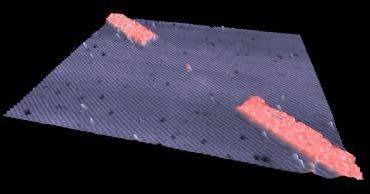
© ARC Centre for Quantum Computation and Communication, at UNSW.This is a single-atom transistor: 3D perspective scanning tunnelling microscope image of a hydrogenated silicon surface. Phosphorus will incorporate in the red shaded regions selectively desorbed with a STM tip to form electrical leads for a single phosphorus atom patterned precisely in the center.
In a remarkable feat of micro-engineering, UNSW [University of New South Wales] physicists have created a working transistor consisting of a single atom placed precisely in a silicon crystal.

The tiny electronic device, described today in a paper published in the journal Nature Nanotechnology, uses as its active component an individual phosphorus atom patterned between atomic-scale electrodes and electrostatic control gates.

This unprecedented atomic accuracy may yield the elementary building block for a future quantum computer with unparalleled computational efficiency.

Until now, single-atom transistors have been realized only by chance, where researchers either have had to search through many devices or tune multi-atom devices to isolate one that works.

"But this device is perfect", says Professor Michelle Simmons, group leader and director of the ARC Centre for Quantum Computation and Communication at UNSW. "This is the first time anyone has shown control of a single atom in a substrate with this level of precise accuracy."

Telescope

Cold and Spellbinding: An Alignment of Planets

Note to sky watchers: Put on your winter coats. What you're about to read might make you feel an uncontrollable urge to dash outside. The brightest planets in the solar system are lining up in the evening sky, and you can see the formation - some of it at least - tonight.

Go out at sunset and look west. Venus and Jupiter pop out of the twilight even before the sky fades completely black. The two brilliant planets surrounded by evening blue is a beautiful sight.