Science & TechnologyS


Einstein

Franken-Physics: Atoms Split in Two & Put Back Together

Splitting Atoms
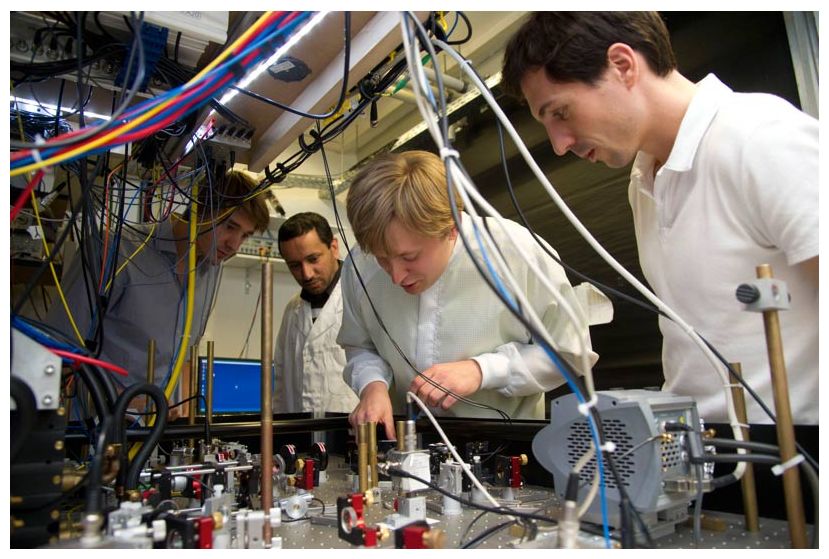
© University of BonnA team of scientists was able to "split" an atom into its two possible spin states, up and down, and measure the difference between them even after the atom resumed the properties of a single state.
Physicists have just upped their ante: Not only have they split atoms but, even trickier, they've put them back together.

Their secret? Quantum physics. A team of scientists was able to "split" an atom into its two possible spin states, up and down, and measure the difference between them even after the atom resumed the properties of a single state.

The research wasn't just playtime for quantum physicists: It could be a steppingstone toward the development of a quantum computer, a way to simulate quantum systems (as plant photosynthesis and other natural processes appear to be) that would help solve complex problems far more efficiently than present-day computers can.

The team at the University of Bonn in Germany did a variation on the famous double-slit experiment, which shows how ostensibly solid particles (atoms, electrons and the like) can behave like waves. The researchers found that they could send an atom to two places at once, separated by 10 micrometers (a hundredth of a millimeter - a huge distance for an atom).

Double slits

In the classic double-slit experiment, atoms are fired at a wall with two breaks in it, and they pass through to the other side, where they hit a detector, creating the kind of interference pattern expected from a wave. If atoms behaved the way we intuitively expect particles to behave, they should emerge out of one slit or the other, with no interference pattern. As more and more atoms passed through the slits, there should be a cluster of them around the two points behind the slits.

Since this is quantum mechanics, that's not what happens.

Instead, there's an interference pattern that shows peaks and valleys. The atoms behave like light waves. The atom is in two places at once.

But if you try to see the atom in one or both places, it "collapses" into one, as the act of observing it determines its fate; hence, the interference pattern disappears.

Info

Unraveling the Bonobo's Genome, and its Secrets

Bonobo
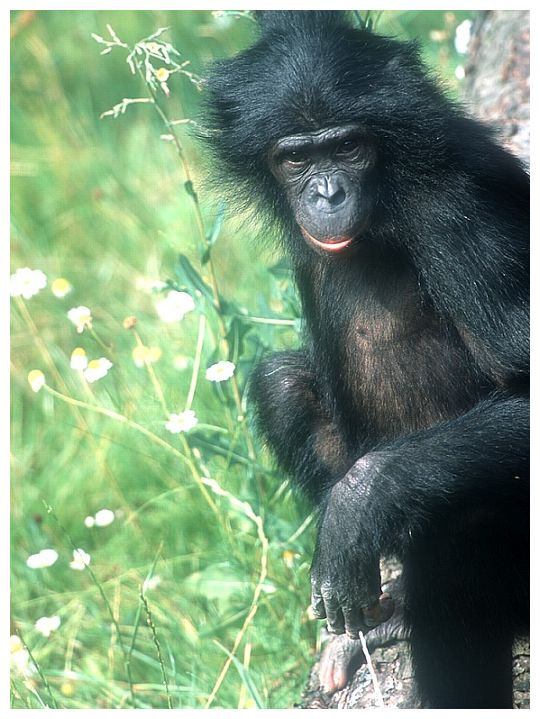
© Michael SeresUlindi, a female bonobo from Leipzig Zoo.

Ulindi, a female bonobo at the Leipzig Zoo in Germany, has had her genome sequenced, researchers report today (June 13), making bonobos the last of the great apes to have their genomes mapped. The resulting genetic code may help unlock the secrets that separate humans - physically, intellectually and behaviorally - from our closest primate relatives.

Bonobos are often seen as the chimpanzee's peaceful cousin. The two primates look very similar and are very closely related, but for some reason chimps resolve conflicts with war while bonobos prefer sex to resolve arguments. Previous studies have also shown that bonobos are more generous with food than chimps are.

"Bonobos and chimpanzees are very different in their behaviors," study researcher Kay Pruefer, of the Max Planck Institute for Evolutionary Anthropology, in Germany, told LiveScience. "While we are not yet able to look at the genome and know why that is, it's important to know the differences between bonobos and chimpanzees to tease apart what genes might be responsible for that."

Ulindi's genetic map

What stood out for the researchers were the genetic similarities found between humans and both chimps and bonobos.

They found that the Ulindi's genome is about 99.6 percent identical to the chimpanzee genome and 98.7 percent identical to the human genome - basically they are just as related to humans as chimpanzees, which have about 1.3 percent of their genome different than ours.

However, a stretch of DNA that covers about 1.5 percent of Ulindi's genome matches more closely with the genome of humans than to their closer genetic relative the chimps. The chimps, on the other hand, have a different section of the genome that's more similar to humans than to bonobos.

"There are certain parts of the human genome where you can see the humans are more closely related to bonobos than chimpanzees and other parts where they are more closely related to chimps than bonobos," Pruefer said. "This is a much larger amount than we previously thought."

Question

New Secret Passages Discovered in Carlsbad Caverns

Lechuguilla Cave
© Derek BristolA large, newly found room in Lechuguilla Cave called Munchkin Land. Note the caver standing on a rock, for scale.
Despite being explored for more than a century, Carlsbad Caverns National Park still hides more passages.

A team exploring the park's Lechuguilla Cave, the deepest cave in the continental United States, climbed over 410 feet (125 meters) into a high dome in early May.

Upon reaching the top, lead climber James Hunter discovered a maze of previously unknown passages, pits and large rooms. The team named it Oz.

One of the newly discovered pits, dubbed Kansas Twister, is 510 feet (155 m) tall, making it the largest vertical expanse yet discovered in the caverns. It's about half as high as New York City's Chrysler Building or Chicago's Sears Tower.

The cavers use laser distance meters to measure the height from the floor to their final rope anchor.

A large room, which they named Munchkin Land, measured 600 feet (183 m) long, 100-150 feet (30-46 m) wide, and 75-150 feet (23-46 m) tall.

Lechuguilla Cave is known worldwide for its large rooms, unusual minerals, massive and fragile cave formations, and scientific importance. This discovery heralds new areas for physical and scientific exploration.

Magic Wand

Inner ear may hold key to ancient primate behavior

Aegyptopithicus Semicircular Canals
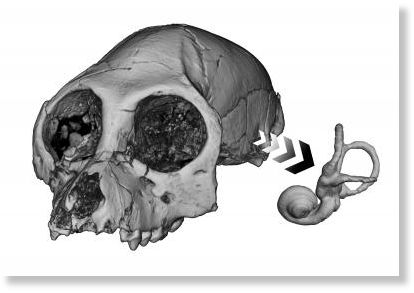
© Tim Ryan, Penn StateThis is a three-dimensional reconstruction of the cranium and semicircular canals from the fossil anthropoid primate Aegyptopithecus zeuxis. The specimen is courtesy of the Egyptian Geological Museum and Division of Fossil Primates, Duke Lemur Center.
CT scans of fossilized primate skulls or skull fragments from both the Old and New Worlds may shed light on how these extinct animals moved, especially for those species without any known remains, according to an international team of researchers.

The researchers looked at the bony labyrinth in fossil remains and compared them to CT scans previously obtained from living primate species. The bony labyrinth of the inner ear is made up of the cochlea -- the major organ of hearing -- the vestibule and the three semicircular canals which sense head motion and provide input to synchronize movement with visual stimuli.

"Almost in every case where there is a fossilized skull, the semicircular canals are present and well preserved," said Timothy Ryan, assistant professor of anthropology, geosciences and information sciences and technology, Penn State. "They are embedded in a very dense part of the skull and so are protected."

Normally, researchers assess the locomotor behaviors of extinct animals, including primates, by examining limb bones. However, frequently the only fossilized remains found are from the head. By comparing the semicircular canals of extinct species to those of existing species, the researchers could determine if the extinct animals moved with agility -- leaping like monkeys or lemurs or swinging from limb to limb like gibbons -- or travelled more slowly like baboons or gorillas.

They could make this determination because the size of the three semicircular canals is closely related to their sensitivity.

Airplane

X37-B returning from year-long secret mission

Image
© U.S. Air Force
A Boeing-built unmanned space shuttle that has been in orbit for a year on a secret U.S. Air Force mission is expected to land this week, possibly Wednesday.

The experimental Boeing X-37B Orbital Test Vehicle was launched in March 2011. The Air Force has not revealed the nature of the mission.

A spokesman for Vandenberg Air Force Base, Calif., told ABC News the spacecraft's first landing availability is Wednesday, but weather or technical conditions could delay that. The landing window extends through June 18.

During its first flight in 2010, the X-37B stayed in orbit 225 days.

According to Boeing, the X-37B is designed to operate in low-earth orbit, 110 to 500 miles above the Earth at 17,500 miles per hour. At 29-feet long and with a wingspan of 14 feet, 11 inches, the X-37B is approximately one-fourth the size of one of the retired space shuttles.

Info

Large Eruptions Could Eat Away at Ozone Layer

Apoyo Caldera
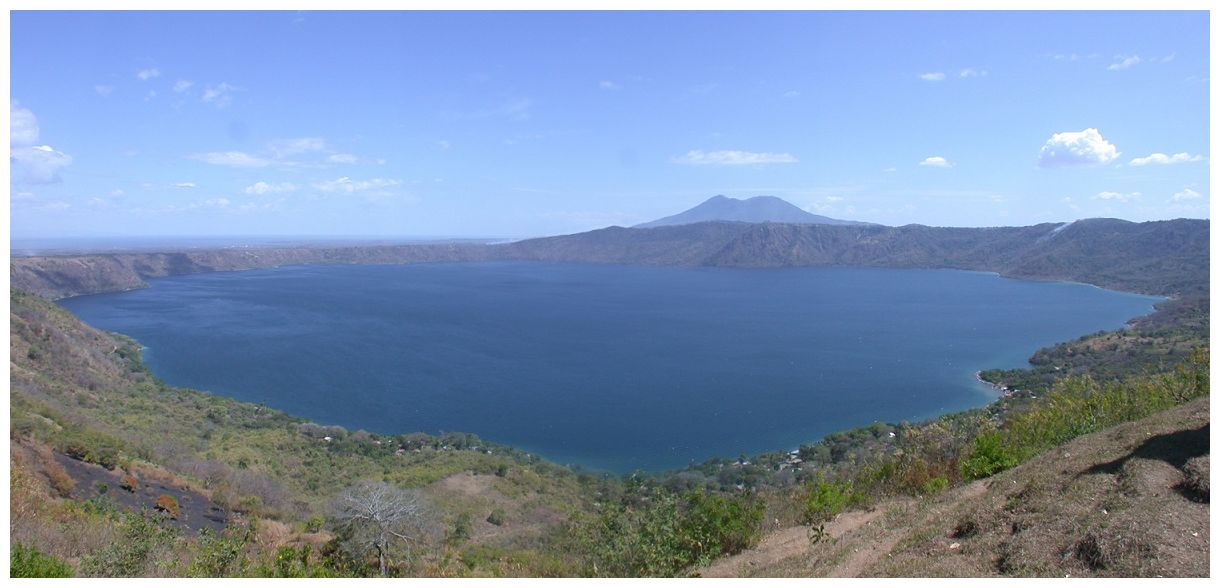
© Steffen KutterolfThe Apoyo Caldera in Nicaragua was the site of a major volcanic eruption 24,500 years ago. New research suggests the eruption, and others like it, could have released gases that temporarily depleted the ozone layer.
A large eruption in the volcanically active region of Central America could release enough ozone-depleting gases to significantly thin the ozone layer for several years, researchers announced today (June 12).

Such a volcanic eruption could double or triple the current levels of the chemical elements bromine and chlorine in the stratosphere, the upper atmosphere layer where ozone gas protects us from ultraviolet radiation, the researchers calculated, based on the levels of these chemicals released from 14 volcanoes in Nicaragua over the past 70,000 years. The researchers presented their work at a scientific conference in Iceland.

Bromine and chlorine need an electron to become stable, and can easily rip it off passing molecules, like ozone. They are gases that "love to react - especially with ozone," study researcher Kirstin Krüger, a meteorologist with GEOMAR in Kiel, Germany, explained in a statement. "If they reach the upper levels of the atmosphere, they have a high potential of depleting the ozone layer."

Eye 1

Smart meters are 'massive surveillance' tech - privacy supremo

smart meters
© turn.org
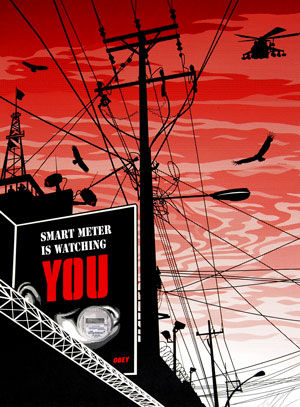
The European Data Protection Supervisor has warned that smart meters are a significant privacy threat and wants limits on the retention and use of customer data before it's too late.

The EDPS is an independent authority figure tasked with identifying where EU policies might represent a risk to privacy. He reckons next-generation meters, which precisely monitor electricity use within homes, are a very likely candidate unless his concerns are addressed ahead of time.

Peter Hustinx, who fills the role with the assistance of Giovanni Buttarelli, admits there are advantages of smart metering, but warns that the technology will "also enable massive collection of personal data which can track what members of a household do within the privacy of their own homes". He pulls up examples of baby monitors and medical devices, which have identifiable patterns of energy consumption and could therefore be used to monitor what people are doing.

Health

How Infection Can Lead to Cancer

One of the biggest risk factors for liver, colon or stomach cancer is chronic inflammation of those organs, often caused by viral or bacterial infections. A new study from MIT offers the most comprehensive look yet at how such infections provoke tissues into becoming cancerous.

The study, which is appearing in the online edition of Proceedings of the National Academy of Sciences the week of June 11, tracked a variety of genetic and chemical changes in the livers and colons of mice infected with Helicobacter hepaticus, a bacterium similar to Helicobacter pylori, which causes stomach ulcers and cancer in humans.

The findings could help researchers develop ways to predict the health consequences of chronic inflammation, and design drugs to halt such inflammation.

Chalkboard

New Molecules Important for Vision and Brain Function Identified

In a pair of related studies, scientists from the Florida campus of The Scripps Research Institute have identified several proteins that help regulate cells' response to light -- and the development of night blindness, a rare disease that abolishes the ability to see in dim light.

In the new studies, published recently in the journals Proceedings of the National Academy of Sciences (PNAS) and The Journal of Cell Biology, Scripps Florida scientists were able to show that a family of proteins known as Regulator of G protein Signaling (RGS) proteins plays an essential role in vision in a dim-light environment.

"We were looking at the fundamental mechanisms that shape our light sensation," said Kirill Martemyanov, a Scripps Research associate professor who led the studies. "In the process, we discovered a pair of molecules that are indispensible for our vision and possibly play critical roles in the brain."

Chalkboard

Keeping Pace: Walking Speed May Signal Thinking Problems Ahead

A new study shows that changes in walking speed in late life may signal the early stages of dementia known as mild cognitive impairment (MCI). The research is published in the June 12, 2012, print issue of Neurology®, the medical journal of the American Academy of Neurology.

"In our study, we used a new technique that included installing infrared sensors in the ceilings of homes, a system designed to detect walking movement in hallways," said study author Hiroko Dodge, PhD, with Oregon Health and Science University in Portland and a member of the American Academy of Neurology. "By using this new monitoring method, we were able to get a better idea of how even subtle changes in walking speed may correlate with the development of MCI."