Science & TechnologyS


Network

FBI Fights to Continue Snooping After New Internet Protocol Unveiled

Image
With the recent unveiling of the newest Internet protocol system, trillions upon trillions of devices are being paved access to the Internet for the unforeseeable future. And right on cue, the FBI is already up in arms over IPv6.

With computing devices around the globe already switching from the current Internet protocol system, IPv4, the US Federal Bureau of Investigation is predictably picking a fight with the biggest names in cyberspace to ensure that the FBI and other agencies across North America will be able to inch themselves into the personal Web surfing habits of citizens across the world. Now requests from the FBI to ready a system to easily snoop through Internet traffic has proponents of IPv6 and industry reps alike scrambling to make sense of the feds' demands.

Under the original and quickly antiquatiWg Internet protocol system, IPv4, only 4.3 billion computers, modems, smart phones and other wired devices can send and receive information through cyberspace. When the latest rollover to IPv6 is complete, however, 340 undecillion addresses (that's a lot) will be able to be assigned. On the plus side, trillions of more devices will able to be delivered information over the Internet. The FBI, however, wants to make sure that they can still catch cyber criminals and suggest that they might have to insist that the private sector aids them in their future endeavors.

Life Preserver

Million-year-old water found under Maryland

Some of the water under Maryland is older than a million years, the first such ancient groundwater found along the Atlantic Coast, the U.S. Geological Survey reports.

The oldest water was found in the deepest parts of the upper Patapsco aquifer, with shallower groundwater tens of thousands to hundreds of thousands of years old, according to a new study by the USGS, the Maryland Geological Survey and the Maryland Department of the Environment. The aquifer provides freshwater for the region east of Washington and Baltimore.

X

Google: Government Censor Requests Are Alarming

Image
© Google™
On Monday Google said that it has released data showing government requests to remove blog posts and videos, and requests to hand over user information made from July to December 2011. The info, according to Google, is alarming.

Unlike the traffic and copyright sections of its Transparency Report which are refreshed in near-real time, the government's section is only updated in six-month increments because "it's a people-driven manual process." However this latest release raises some concerns by Google.

"This is the fifth data set that we've released," the company said. "And just like every other time before, we've been asked to take down political speech. It's alarming not only because free expression is at risk, but because some of these requests come from countries you might not suspect -- Western democracies not typically associated with censorship."

Google started releasing government-related data in 2010, adding annotations with some of the more interesting stories behind the numbers. Since the beginning, Google has noticed that government agencies from different countries would sometimes ask Google to remove political content that users had posted on its services. There was hope that the request trend was merely a temporary deviation from the norm, but five data sets later, Google realizes it's not.

Comment: Playing both sides? On one hand Google can say, "free expression is at risk", on the other - compliance.


Eye 1

Facebook Acquires Israeli Facial Recognition Company

facial recognition
© BBCIncreasingly facial recognition is picking out people in a crowd
Facebook, the largest repository of pictures anywhere and at any time in history, has acquired an Israeli company, called face.com, that makes facial recognition technology. Neither company disclosed the sale price nor the other terms of the deal.

It is not entirely unexpected. Facebook has used the Israeli company for two years to identify and "tag" who is who on the social network. Face.com's last product was an application that allows users to click a picture of their Facebook "friends" and tag it automatically before posting it on Facebook; for now, it works only on the iPhone.

That alone is alluring for Facebook: Its users upload 300 million pictures a day at last count, but identifying pictures of Facebook friends on mobile devices, which is the next frontier for Facebook, is not as easy as it is on computers.

Chalkboard

Natural Exposure to Gamma Rays in Background Radiation Linked to Childhood Leukemia

New findings demonstrate that there are small effects of radiation even at very low doses.

A small but statistically significant link between risk of childhood leukemia and the gamma rays we are all exposed to from our natural environment has been detected in an Oxford University-led study.

Exposure to gamma rays from natural sources in the environment isn't something that can readily be altered, but the study adds to our understanding of the small cancer risks associated with other low doses of radiation, such as from medical X-rays and CT scans.

Guidelines on exposure to low doses of radiation have largely been based on estimated risks from models using data from Japanese survivors of the atomic bombs, where radiation exposures were brief and very much higher. As a result, there have been some long-standing uncertainties about the extrapolation of these risks to low radiation doses.

Laptop

Scientists Create First Genetically Evolved Chip Material

There may be an unexpected solution for the challenge of shrinking transistor sizes.
Image
© UnknownLukmaan Bawazer

Researchers at the University of California, Santa Barbara, say they have succeeded in growing new mineral architectures by "directing the evolution" silicateins, which are the proteins responsible for the formation of silicon skeletons in marine sponges. For the first time, it was shown that it is possible to develop the enzymatic synthesis of a semiconductor using genetic engineering and molecular evolution. The implication? Companies may be able to use DNA information to develop their own "specialized" materials.

The key to the research was the use of silicateins, which are genetically encoded and are used as a blueprint for the creation of silica skeletons. According to the UCSB researchers, the process is very similar to the way animal and human bones are formed. In their study, polystyrene microbeads coated with specific silicateins were "put through a mineralization reaction by incubating the beads in a water-in-oil emulsion that contained chemical precursors for mineralization." As the silicateins reacted with the dissolved metals, "they precipitated them, integrating the metals into the resulting structure and forming nanoparticles of silicon dioxide or titanium dioxide." The result was the creation of a silicatein gene pool that enabled the researchers to pick silicateins with the specific properties they were looking for.

"This genetic population was exposed to two environmental pressures that shaped the selected minerals: The silicateins needed to make materials directly on the surface of the beads, and then the mineral structures needed to be amenable to physical disruption to expose the encoding genes," said Lukmaan Bawazer, the author a corresponding paper that is published in the current issue of the journal Proceedings of the National Academy of Sciences.

"The beads that exhibited mineralization were sorted from the ones that didn't, and then fractured to release the genetic information they contained, which could either be studied, or evolved further."

Bawazer said that he is now trying to evolve the research result into a functional device.

Nuke

Zealots of the Atom: The Nuclear Cult

atomic explosion
© n/a
Nuclear scientists and engineers embrace nuclear power like a religion. The term "nuclear priesthood" was coined by Dr. Alvin Weinberg, long director of Oak Ridge National Laboratory, and the laboratory's website proudly notes this. It's not unusual for scientists at Oak Ridge and other U.S. national nuclear laboratories to refer to themselves as "nukies." The Oak Ridge website describes Weinberg as a "prophet" of "nuclear energy."

This religious, cultish element is integral to a report done for the U.S. Department of Energy in 1984 by Battelle Memorial Institute about how the location of nuclear waste sites can be communicated over the ages. An "atomic priesthood," it recommends, could impart the locations in a "legend-and-ritual...retold year-by-year." Titled "Communications Measures to Bridge Ten Millennia," the taxpayer-funded report says: "Membership in this 'priesthood' would be self-selective over time."

Currently, Allison Macfarlane, nominated to be the new head of the U.S. Nuclear Regulatory Commission, says she is an "agnostic" on nuclear power - as if support or opposition to atomic energy falls on a religious spectrum. Meanwhile, Gregory Jaczko, the outgoing NRC chairman, with a Ph.D. in physics, was politically crucified because he repeatedly raised safety concerns, thus not revering nuclear power enough.

Years ago, while I was working on a book about toxic chemicals, the publisher asked that I find someone who worked for a chemical company and get his or her rationale. I found someone who had been at American Cyanamid, the pesticide manufacturer, who said he worked there to better support his growing family financially.

But when it comes to nuclear power, it's more than that - it's a religious adherence. Why? Does it have to do with nuclear scientists and engineers being in such close proximity to power, literally? Is it about the process through which they are trained - in the U.S., many in the nuclear navy and/or in the insular culture of the government's national nuclear laboratories? These laboratories, originally under the Atomic Energy Commission and now the Department of Energy and managed by corporations, universities and scientific entities including Battelle Memorial Institute, grew out of the World War II Manhattan Project crash program to build atomic bombs. After the war, the laboratories expanded to pursue the development of all things nuclear. And is it about nuclear physics programs at universities serving as echo chambers?

Whatever the causes, the outcome is nuclear worship.

Rocket

China Launches Rocket Carrying its First Female Astronaut

Liu Yang
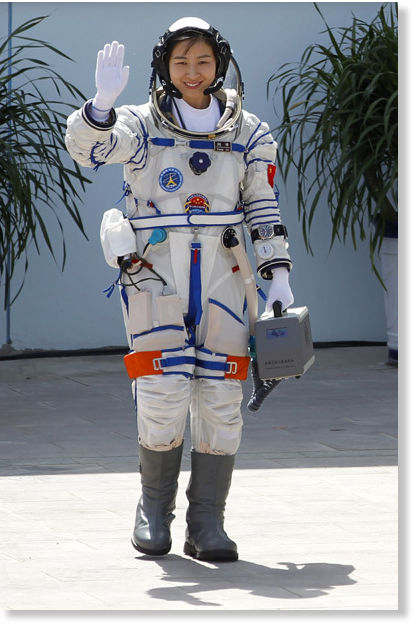
© Ng Han Guan/The Associated Press China's first female astronaut, Liu Yang, waves during the send-off ceremony.
It might not be a giant step for mankind, but Saturday's launch of a piloted space capsule known as Shenzhou-9 marks China's breakthrough into the exclusive club once made up only of the United States and Russia.

And as far as womankind is concerned, there is another first. One of the three astronauts in the capsule is a woman, 33-year-old Liu Yang, the first Chinese woman in space.

Shenzhou-9 was launched at 6:37 p.m (local time) against a vivid blue sky from the Jiuquan space station at the edge of the Gobi Desert. Televised nationally, the launch prompted a round of applause in the command center as the capsule separated from its carrier rocket and entered orbit.

"Today's successful launch is a great first step," said CCTV host Kang Hui. "I hope the astronauts will bring us more good news like this in the coming days."

The trickiest part of the mission will come when the capsule docks with the Tiangong 1 space module, a prototype of a space station about the size of a school bus, which is orbiting about 213 miles above Earth. The docking is expected Monday.

Laptop

Microsoft buys 800+ Patents from AOL

Image
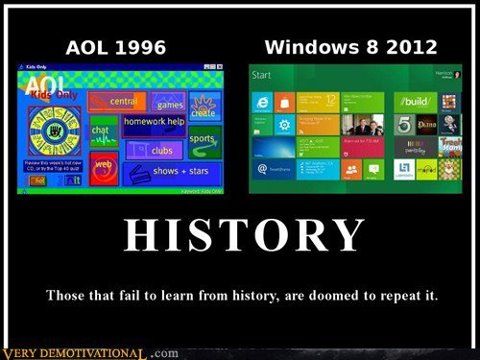
© verydemotivational.comMicrosoft has to buy patents for new Operating system?
Microsoft is one step closer to ruling the world.

Contributing to Microsoft's quest to rule the world AND defeat Google's Android all in one fell swoop, AOL announced on Friday that it completed its $1.056 billion patent transaction with Microsoft.

According to Friday's announcement, the Redmond company now commands over 800 patents and their related patent applications. The company also now has a non-exclusive license to AOL's retained patent portfolio for aggregate proceeds of $1.056 billion in cash.

"The closing of this transaction represents another major step for AOL in increasing value for our shareholders," said Tim Armstrong, Chairman and CEO. "As our track record has shown, you should expect us to continue our momentum of creating and unlocking shareholder value through continued operational improvements and executing on our strategy."

AOL said that the transaction is expected to clear the way for the company to return more value to its shareholders while highlighting the AOL Board's commitment to enhancing value. The close will also enable AOL to continue to aggressively execute on its strategy to create long-term shareholder value.

"As a part of the transaction AOL also received a license to the patents being sold to Microsoft. AOL continues to hold a significant patent portfolio of over 300 patents and patent applications spanning core and strategic technologies, including advertising, search, content generation/management, social networking, mapping, multimedia/streaming, and security among others," the company said on Friday.

Microsoft agreed back in April to buy more than 800 patents and obtain non-exclusive license over 300 additional patents from AOL. The company's retained portfolio of patents are related to core and strategic technologies including advertising, search, content generation/management, social networking, mapping, multimedia/streaming, and security among others.

Question

'Echoes' of the Big Bang Misinterpreted?

Big Bang_1
© NASA, G. Verschuur
Seeing is believing, except when you don't believe what you see.

This is according to veteran radio astronomer Gerrit Verschuur, of the University of Memphis, who has an outrageously unorthodox theory that if true, would turn modern cosmology upside down.

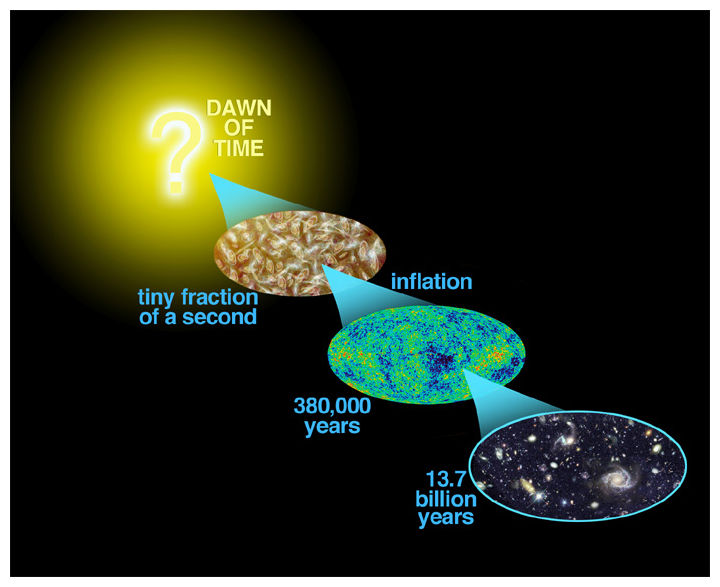
He proposes that at least some of the fine structure seen in the all-sky plot of the universe's cosmic microwave background is really the imprint of our local interstellar neighborhood. It has nothing to do with how the universe looked 380,000 years after the Big Bang, but how nearby clouds of cold hydrogen looked a few hundred years ago.

The idea is so unbelievable that it's little wonder that cosmologists have largely ignored his work that has been published over the last few years.

"Science is supposed to be about the excitement of making new discoveries. But this discovery terrifies me," he told reporters at the recent meeting of the American Astronomical Society in Anchorage, Alaska.

Verschuur's radio maps of hydrogen surrounding our local stellar neighborhood out to a few hundred light-years appear to have an uncanny match-up to the mottled structure of the cosmic microwave background that is 13.7 billion light-years away.