Science & TechnologyS


Info

New 'Doubly Magic' Atom of Tin Created

Experiment at GSI
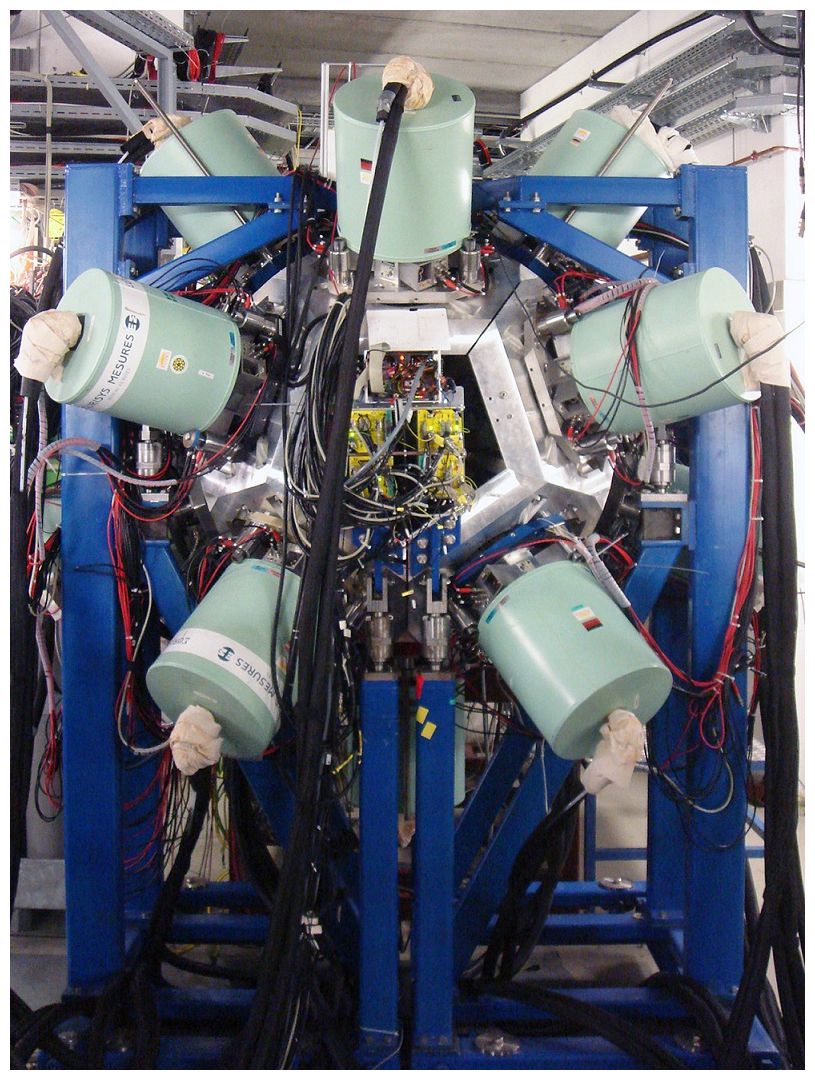
© Thomas Faestermann / TUMThis photo shows an experiment at GSI Helmholtz Centre for Heavy Ion Research in Darmstadt, Germany, where 105 liquid nitrogen-cooled gamma ray detectors observed new 'doubly-magic' tin atoms in a study reported in June 2012. The special atoms have magic numbers of 50 protons and 50 neutrons each, making them stable.
Tin, a material whose name is sometimes synonymous with "dull," has a secret side that's extraordinary, physicists say.

Scientists have succeeded in creating a new type of tin atom with "magic" properties and in studying it in more detail than ever before.

The nuclei of normal tin atoms are made of 50 protons and 62 neutrons, creating a stable substance called tin-112 (or 112Sn, which is the chemical symbol for tin).

However, scientists can make a special version of tin with exactly 50 protons and 50 neutrons, creating a "doubly magic" atom with equal numbers of its nucleus' ingredients. In the new study, physicists created this tin-100 and analyzed its decay to reveal some of its spectacular properties.

The researchers, led by Christoph Hinke of Germany's Technische Universität München, reported their findings in the June 21 issue of the journal Nature.

"They have achieved a significant leap forward in the study of the heaviest 'symmetrical doubly magic' nucleus," Michigan State University's Daniel Bazin, who wasn't involved in the new study, wrote in an accompanying essay in Nature.

"Composed of 50 protons and 50 neutrons, this nucleus is drawing the attention of nuclear physicists around the globe because of its unique location in the nuclear landscape."

The nuclei of atoms have shells in which protons and neutrons can be arranged, similar to the shells of electrons that orbit the nucleus. The first nuclear shell fits two protons, or two neutrons, while the next shell fits six, and so on.

When a nucleus has enough protons or neutrons to fill a shell, it is especially stable, and scientists call these numbers "magic."

Thus, two protons is a magic number, as is eight, because with eight a nucleus can fill both its first and second proton shells of two and six, respectively.

Bizarro Earth

Ancient Super-Eruption Larger Than Thought

A super-eruption of an Italian volcano that may have played a major role in the Neanderthals' fate was apparently even larger than thought, new research suggests.

For the new study, scientists investigated the Campi Flegrei caldera volcano in southern Italy. About 39,000 years ago, it experienced the largest volcanic eruption that Europe has seen in the last 200,000 years. This super-eruption may have played a part in wiping out or driving away Neanderthal and modern human populations in the eastern Mediterranean.

To learn more about this outburst, scientists measured 115 sites for the ash layer it laid down, known as Campanian Ignimbrite. They next analyzed this data with a 3D ash-dispersal computer model.

The researchers discovered the super-eruption behind the Campanian Ignimbrite would have spewed 60 to 72 cubic miles (250 to 300 cubic kilometers) of ash across 1.4 million square miles (3.7 million square km). This is twice to triple the previous estimate of the volume of ash spouted by the eruption.


Rocket

U.S. Rethinks Possible Competition with China in Space

Image
© historymartinez.files.wordpress.com
China's recent successful manned mission has started a space race debate

Now that China has successfully completed its first manned mission, the United States is worried that it may be left behind when it comes to space-related endeavors.

China initially launched its Tiangong 1 prototype space station module in September 2011 and linked its Shenzhou 8 spacecraft to it in November. Earlier this month, China completed its first manned mission to Tiangong 1 using its Shenzhou 9 spacecraft, which contained the country's first female astronaut.

With so many firsts under China's belt, the U.S. is getting a little worried. Some scientists, such as lunar geologist Paul Spudis say that China could renounce the 1967 Outer Space Treaty, which states that no one can claim national sovereignty in space. Spudis believes that potential resources on the moon, such as water, could tempt the country into renouncing the treaty.

Eye 1

'Checkpoint of the future' takes shape at Texas airport

Dallas
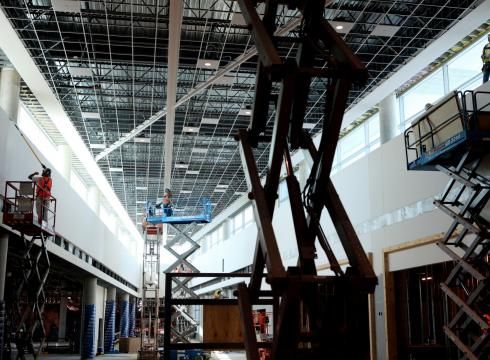
© USA TodayIn Dallas: Workers use lifts to construct a new gate at Love Field. Soon the airport will have one of the most state-of-the-art systems, including ticketing, security and gates featuring heavy video surveillance.
At a terminal being renovated here at Love Field, contractors are installing 500 high-definition security cameras sharp enough to read an auto license plate or a logo on a shirt.

The cameras, capable of tracking passengers from the parking garage to gates to the tarmac, are a key first step in creating what the airline industry would like to see at airports worldwide: a security apparatus that would scrutinize passengers more thoroughly, but less intrusively, and in faster fashion than now.

It's part of what the International Air Transport Association, or IATA, which represents airlines globally, calls "the checkpoint of the future."

The goal is for fliers to move almost non-stop through security from the curb to the gate, in contrast to repeated security stops and logjams at checkpoints.

After checking their luggage, passengers would identify themselves not with driver's licenses and paper boarding passes, but by scanning fingerprints or irises to prove they have an electronic ticket.

Info

Apple Patents Bizarre Identity Cloning Service That Will Help You Avoid Tracking

computer screen, monitor
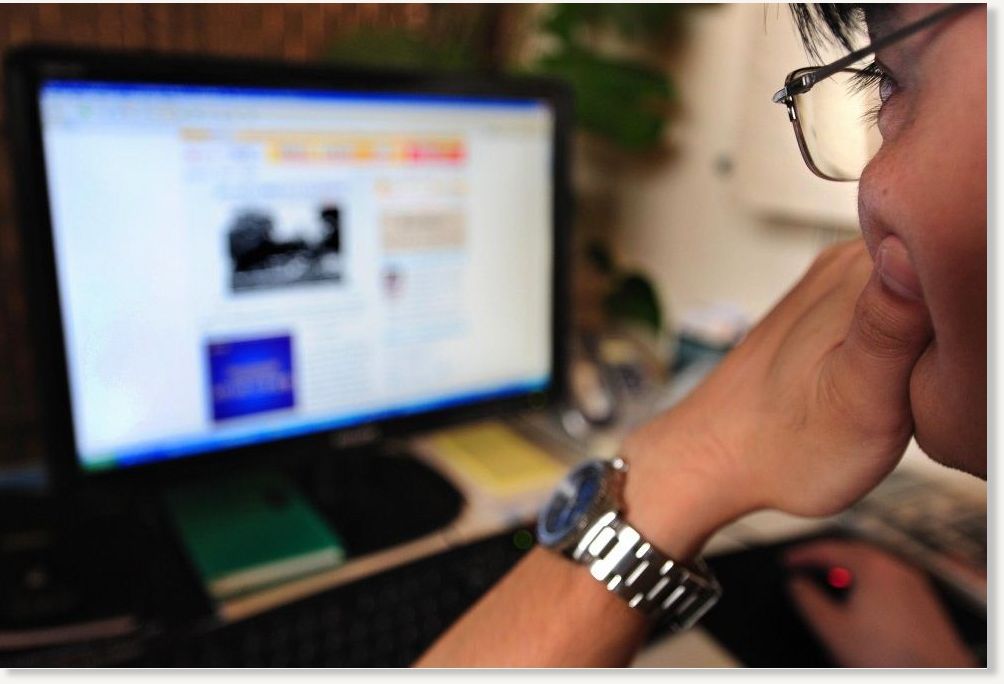
© Frederic J. Brown/AFP/Getty Images
Attention paranoid Internet privacy wahoos: Apple has just patented a new system that will help you avoid unwanted tracking. Basically, it creates an alternate identity which you pass off as yourself. Sound like Science Fiction? Yup, this is some straight up Multiplicity madness.

The technical ins and outs of the patent as reported by Patently Apple will give you a total headache, but here's what you need to know. When you're on the internet - or merely on a network - someone's basically always collecting information about you. You're being tracked for a whole host of reasons both nefarious and well-intentioned.

Satellite

NASA finds major ice source in Moon crater

Image
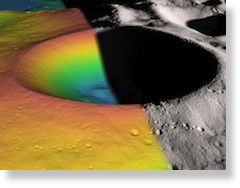
© NASA/Zuber, M.T. et al., Nature, 2012Elevation (left) and shaded relief (right) image of Shackleton, a 21-km-diameter (12.5-mile-diameter) permanently shadowed crater adjacent to the lunar south pole. The structure of the crater's interior was revealed by a digital elevation model constructed from over 5 million elevation measurements from the Lunar Orbiter Laser Altimeter.
NASA said its Lunar Reconnaissance Orbiter (LRO) spacecraft has found a crater - dubbed Shackleton -- on the south pole of the moon that may have as much as 22% of its surface covered in ice.

Shackleton, named after the Antarctic explorer Ernest Shackleton, is two miles deep and more than 12 miles wide and because of the Moon's tilt is always in the dark. Using laser light from LRO's laser altimeter NASA said found the crater's floor is brighter than those of other nearby craters, which is consistent with the presence of small amounts of ice. This information will help researchers understand crater formation and study other uncharted areas of the Moon, NASA said.

NASA said the LRO mapped Shackleton crater with unprecedented detail, and the laser light measured to a depth comparable to its wavelength, or about a micron. That represents a millionth of a meter, or less than one ten-thousandth of an inch. The team also used the instrument to map the relief of the crater's terrain based on the time it took for laser light to bounce back from the Moon's surface. The longer it took, the lower the terrain's elevation, NASA said.

Sun

Double Sunspot Flare Which Flattened Earth's Magnetic Field Leads to Aurora Borealis Spotted Over the U.S. as Far South as Nebraska and Iowa

  • Sun's high level of activity causing Earth to be buffeted by solar emissions
  • Outbursts over the weekend led to Northern Light displays across America
The sun is entering an unusually heavy period of solar activity, and the poor planet Earth is bearing the brunt of it.

Luckily for us earthlings, any disturbance we experienced from the latest outbursts were simply an extraordinary display of the aurora borealis, or the Northern Lights.

The spectacular lights display, caused by radiation hitting the upper reaches of our atmosphere, are not being true to their name after being seen as far south as Iowa, Nebraska and Maryland in the United States which, relative to Europe, are about as far South as southern Spain and the Mediterranean.
Image
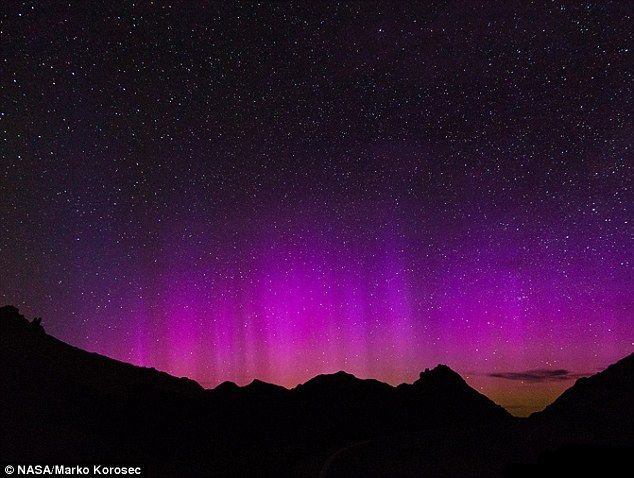
© NASA/Marko KorosecSolar flares: A European visitor to the Badlands, South Dakota, took these pictures of the aurora, much further south than they should be.
Image
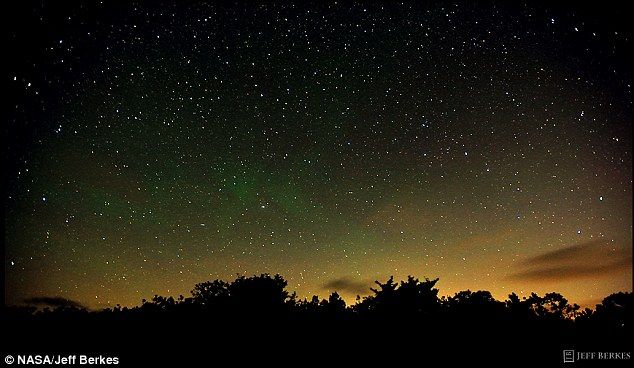
© NASA/Jeff BerkesAurora were seen as far south as Ocean City, Maryland. This photo was taken by a camper on the shores of Assateague Island, facing north.
Image
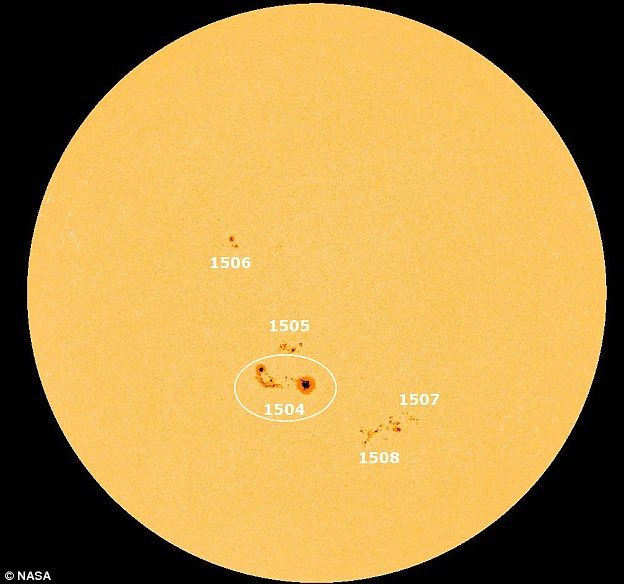
© NASAThe speckled face of the sun: These sunspots, particularly 1504, have peaked over the last few days.

Robot

USC Robots Get Touchy Feely with New BioTac Sensors

The robot is capable of deciphering 117 different materials using its finger

Researchers from the University of Southern California have created a robot that is capable of touch, and can also feel the difference between various textures.

Jeremy Fishel, a recent doctoral student at University of Southern California's Viterbi School of Engineering, along with biomedical engineering Professor Gerald Loeb, have built the specialized robot that is capable of identifying 117 different materials through advanced touch technology.

The robot uses BioTac sensors, which imitate the human fingertip and use an algorithm that allow them to use human methods for deciding which material is which. In addition, the sensors can tell which direction forces are applied as well as the temperature of the objects they're touching.

Info

Genetic Variants Build a Smarter Brain

Brain Scan
© Paul Thompson/UCLABrain gain. Brain scan data showing regions where two of the newly identified SNPs interact with each other to affect white matter tract integrity.
Researchers have yet to understand how genes influence intelligence, but a new study takes a step in that direction. An international team of scientists has identified a network of genes that may boost performance on IQ tests by building and insulating connections in the brain.

Intelligence runs in families, but although scientists have identified about 20 genetic variants associated with intelligence, each accounts for just 1% of the variation in IQ scores. Because the effects of these genes on the brain are so subtle, neurologist Paul Thompson of the University of California, Los Angeles, devised a new large-scale strategy for tackling the problem.

In 2009, he co-founded the ENIGMA Network, an international consortium of researchers who combine brain scanning and genetic data to study brain structure and function.

Earlier this year, Thompson and his colleagues reported that they had identified genetic variants associated with head size and the volume of the hippocampus, a brain structure that is crucial for learning and memory.

One of these variants was also weakly associated with intelligence. Those carrying it scored on average 1.29 points better on IQ tests than others, making it one of the strongest candidate intelligence genes so far.

The researchers have now used the same strategy to identify more genetic variants associated with brain structure and IQ. In the new study, they analyzed brain images and whole-genome data from 472 Australians, including 85 pairs of identical twins, 100 pairs of nonidentical twins, and their nontwin siblings.

They identified 24 genetic variations within six different genes, all of which were linked to differences in the structural integrity of major brain pathways. "We measured the insulation of the neural pathways," says Thompson. "This affects how fast nervous impulses are routed around the brain. If the pathways are insulted poorly, the brain functions less efficiently and is less resistant to disease."

Question

Surprise Aurora Australis


Skywatchers in Australia were treated to unexpected beautiful views of the Aurora Australis. This timelapse is by Alex Cherney in Flinders Victroia, Australia who captured auroral views on June 19th 2012 at 00:09-02:38 AEST, in between clouds and rain. Lovely.

Check out more images of the recent Aurora Australis at Ian Musgrave's Astroblog.