Science & TechnologyS


Question

A Mystery from Earth's Red-Hot Inner Core

Inner Core
© The New York Times
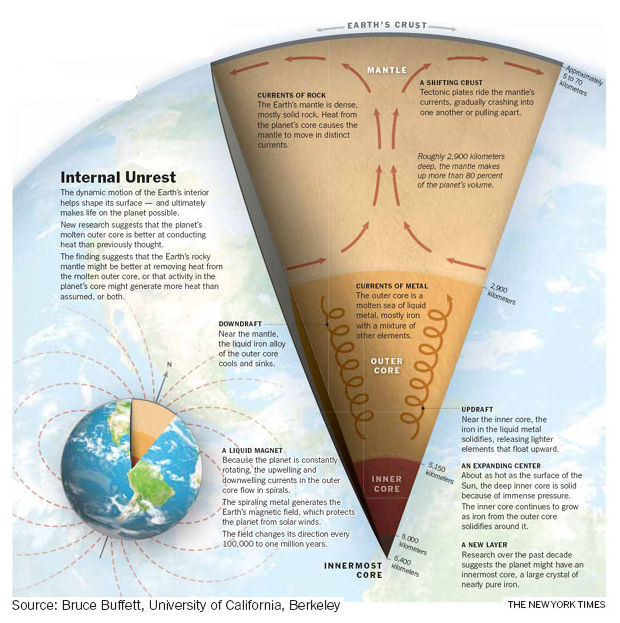
Geologists have long known that Earth's core, some 2,900 kilometers beneath our feet, is a dense, chemically laden ball of iron roughly the size of Mars. Pressures there bear down with the weight of 3.5 million atmospheres, and temperatures reach 5,538 degrees Celsius - as hot as the surface of the Sun. It's a place where iron is a fluid and a solid, and it spirals like liquid confetti.

The heat of Earth's inner core helps animate the tectonic plates above it, to build up mountains and gouge out seabeds. At the same time, the jostling of core iron generates Earth's magnetic field, which blocks dangerous cosmic radiation.

But reporting recently in the journal Nature, Dario Alfe of University College London and his colleagues presented evidence that iron in the outer layers of the core is wasting heat through conduction at two to three times the rate of previous estimates.

The theoretical consequences are far-reaching. The scientists say something else must account for the missing thermal energy in their calculations. They offer these possibilities:

The core holds more radioactive material, like potassium or thorium, than anyone had suspected, and its decay is giving off heat.

The iron of the innermost core is solidifying at a startlingly fast clip and releasing the latent heat of crystallization in the process.

The chemical interactions among the iron alloys of the core and the rocky silicates of the mantle are much fiercer and more energetic than previously believed.

"People are excited" by the report, Dr. Alfe said. "They see there might be a new mechanism going on."

Meteor

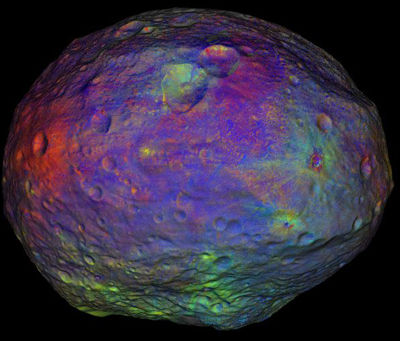
Dawn Mission Video Shows Vesta's Coat of Many Colors

Vesta composition
© NASA/JPL-Caltech/UCLA/MPS/DLR/IDA/PSI This animation of Vesta is made from images taken with Dawn's framing camera. Many of the images were taken at different viewing angles to provide stereo for use in determining the topography.
Pasadena, California - A new video from NASA's Dawn mission reveals the dappled, variegated surface of the giant asteroid Vesta. The animation drapes high-resolution false color images over a 3-D model of the Vesta terrain constructed from Dawn's observations. This visualization enables a detailed view of the variation in the material properties of Vesta in the context of its topography.

The video is available online at: http://www.jpl.nasa.gov/video/index.cfm?id=1085 .

The colors were chosen to highlight differences in surface composition that are too subtle for the human eye to see. Scientists are still analyzing what some of the colors mean for the composition of the surface. But it is clear that the orange material thrown out from some impact craters is different from the surrounding surface material. Green shows the relative abundance of iron. Parts of the huge impact basin known as Rheasilvia in Vesta's southern hemisphere, for instance, have areas with less iron than nearby areas.

Dawn has imaged the majority of the surface of Vesta with the framing camera to provide this 3-D map. While some areas in the north were in shadow at the time the images were obtained by the camera, Dawn expects to improve its coverage of Vesta's northern hemisphere with additional observations. Dawn's viewing geometry also prevented mapping of a portion of the mountain of the south pole.

Display

The Visionary of 1934: The scientist whose 'televised book' foretold the world wide web seven decades ago

internet Paul Otlet
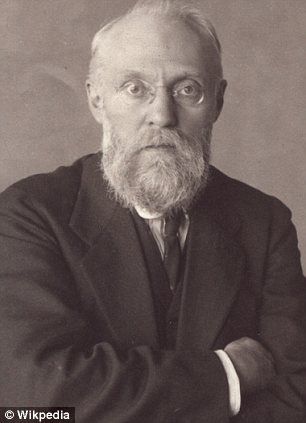
© WikipediaFather of the net? Paul Otlet, a Belgian scientist, may have foretold the internet in 1934
A scientist in the 1930s may have been decades ahead of his time when he suggested combining a telephone connection with a TV screen.

While many have difficulty remembering the world without the internet, it was nothing more than imagination in 1934, when Paul Otlet described what would become the information superhighway.

TechNewsDaily reported that during a discussion of the world wide web's past, present and future at the World Science Festival in New York City on Saturday, Otlet's name came up.

Otlet, a Belgian scientist and author who is already regarded as the father of information science, was on to something when he published his Treaties on Documentation.

Decades before the iPad, the Kindle, or even the computer screen, Otlet was devising a plan to combine television with the phone to send and spread information from published works.

Chalkboard

Full Moon Madness: Lunar cycle disrupts sensitive measurements at the Large Hadron Collider (as do fast trains and the waters of Lake Geneva)

large Hadron collider
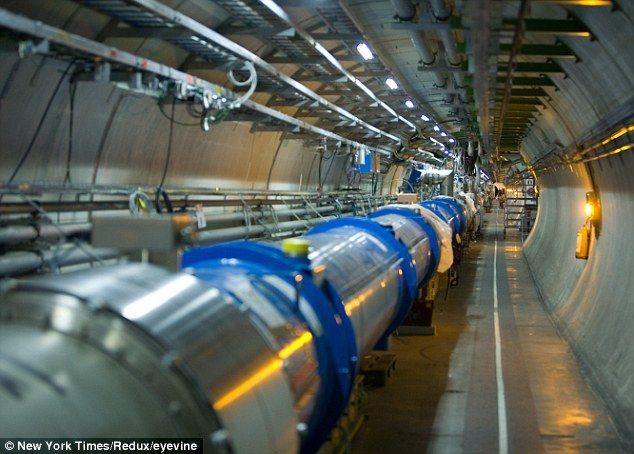
© New York Times/Redux/eyevineBig enough to matter: The collider, formed of superconducting magnets, stretches around 17miles or 27km - and is sensitive to the moon's gravity
The moon is known for its ability to impact on our tides, but it has been causing another effect over the last few years - disrupting experiments at the Large Hadron Collider.

The gravitational effect of the moon may be generally weak on our surface, but with the collider stretching out in a ring with a 16mile (27km) circumference, the effects are enough to be felt.

The scientific research facility on the Swiss-French border is picking apart neutrons and electrons while hunting for the elusive Higgs Boson particle, and technician Pauline Gagnon, working on the collider, blogged her surprise when she realised the cause for less 'particle collisions' were happening on her shift.

Laptop

Futuristic Computer Program Arrives Ahead of Computer

Quantum Computers
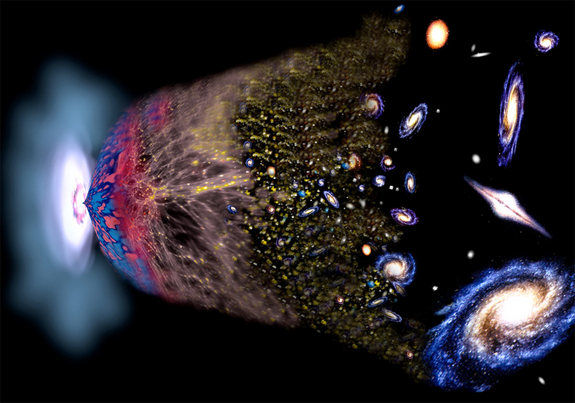
© David A. Aguilar/Harvard-Smithsonian Center for AstrophysicsThe new algorithm could be used on any quantum computer to model how the universe evolved after the Big Bang, a process far too complicated for today's computers to simulate. Shown here, an artist's concept of the history of the cosmos, beginning just after the Big Bang.
Quantum computers don't exist yet, but physicists already have a software program ready for them to use.

A group of scientists has designed an algorithm that they say could run on any future quantum computer to simulate all the possible interactions between two colliding particles.

The program could be used to model how the universe evolved after the Big Bang, when conditions cooled enough for the formation of subatomic particles called quarks, which then collided with each other to form protons and neutrons. Eventually, the first atoms were born.

The complexity of a particle's quantum properties makes these post-Big Bang interactions far too complicated for existing computers to simulate.

Scientists are hoping for the eventual creation of computers based on the principles of quantum physics. Such computers would use quantum processor switches that could exist in both "on" and "off" states simultaneously, enabling them to consider all possible solutions to a problem at once.

Quantum computers should be able to perform incredibly complex calculations at a small fraction of the time required by current technology.

Frog

Enormous Car-sized Turtle Fossil Found in Colombian Coal Mine

Turtle fossil
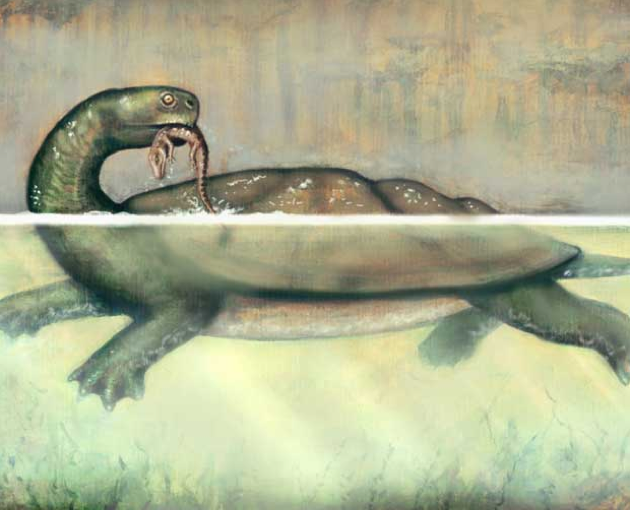
Carbonemys cofrinii, aka "coal turtle"
Remains of an enormous turtle, which was the size of a Smart Car, have been unearthed in a Colombian coal mine.

The shell alone of the 60-million-year-old turtle, Carbonemys cofrinii, aka "coal turtle," is large enough to be a small swimming pool. Its skull is roughly the size of a regulation NFL football.

The coal mine where it was found is part of northern Colombia's Cerrejon formation.

Meteor

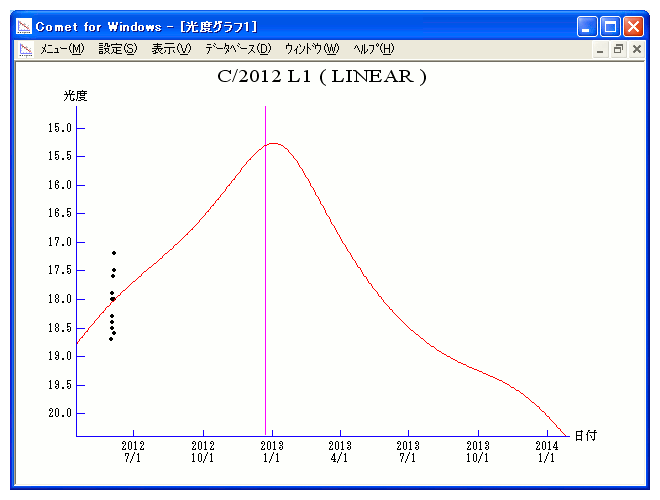
New Comet - C/2012 L1 (LINEAR)

Discovery Date: June 1, 2012

Magnitude: 19.0mag

Discoverer: Lincoln Laboratory Near-Earth Asteroid Research project

C/2012 L1
© Aerith NetMagnitude Graph
The orbital elements are published on M.P.E.C. 2012-L12.

Meteor

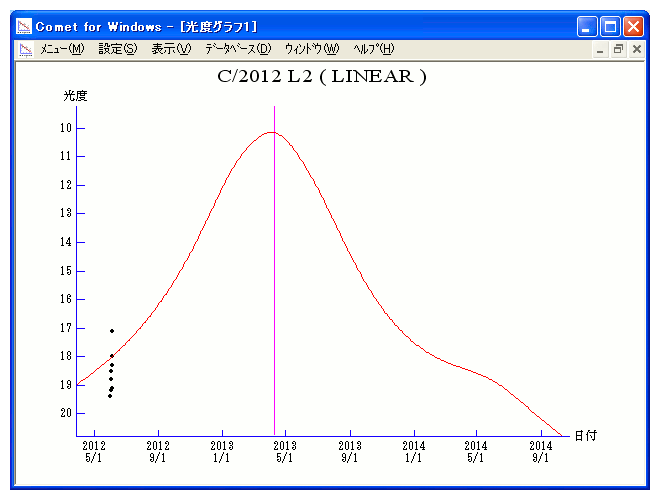
New Comet - C/2012 L2 (LINEAR)

Discovery Date: June 1, 2012

Magnitude: 19.4 mag

Discoverer: Lincoln Laboratory Near-Earth Asteroid Research project

C/2012 L2
© Aerith NetMagnitude Graph
The orbital elements are published on M.P.E.C. 2012-L13.

Rocket

NASA, Congress Reach Accord on Commercial Crew Program

Image
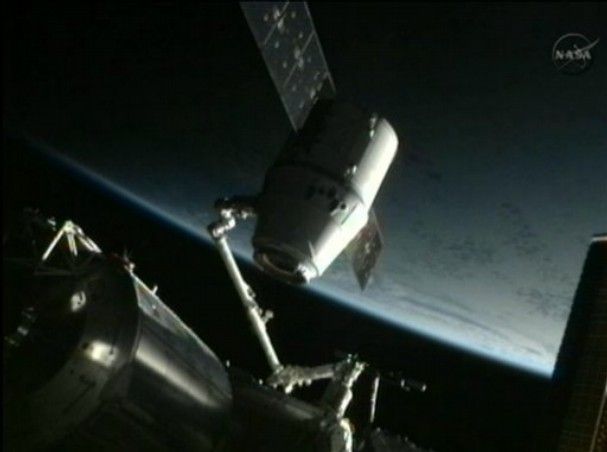
© NASAThe SpaceX Dragon capsule attached to the international space station with Earth in the background.
According to the Orlando Sentinel, NASA and Congress have reached a deal on how to proceed with the commercial crew program that provides government subsidies to pay for the development of private spacecraft.

NASA will pay for two commercial spacecraft and partially for a third

Rep. Frank Wolf, R-Va., the chairman of the House Commerce-Justice-Science Appropriations subcommittee that oversees NASA funding, has described the accord in a news release. NASA will select the number of competitors from the current four -- SpaceX, Boeing, Blue Origin and Sierra Nevada -- to two. A third competitor will be picked for partial funding as a fallback in case both of the main competing companies run into difficulties developing a space craft on time and on budget.

Congressional concerns addressed

Previously, according to Wolf's statement, Congress had been concerned NASA was funding too many companies with too little funds, therefore unacceptably exposing the American taxpayer. Originally, Congress had proposed NASA down select to two competitors, one main company to be fully funded and one fallback company to be partially funded in case of a failure of the main competing company.

Info

Americans' Heads Getting Bigger

Two Babies
© Paul Damien, National GeographicGeneration by generation, human heads may be growing (file picture).
Modern life may be going to your head.

It's not clear why - medicine? cars? supermarkets? - but the skulls of white Americans, and perhaps of other races and nationalities, have become slightly taller and roomier, according to new forensic research.

New measurements of hundreds of skulls of white Americans born between 1825 and the 1985 suggest that their typical noggin height has grown by about a third of an inch (eight millimeters).

It may not sound like much, but the growth translates to roughly a tennis ball's worth of new brain room.

"I can't guess the implications of this jump in cranial size, but other research shows a bigger cranium doesn't necessarily mean more intellect," said University of Tennessee biological anthropologist Richard Jantz, who presented the findings with colleagues at an American Association for Physical Anthropology meeting in April.