Science & TechnologyS


Question

Humans on Mars by 2023?


Reality TV goes to Mars! Dutch entrepreneur Bas Lansdorp is leading a group visionaries and businesspeople who want to send four humans to Mars by 2023, and they say they can achieve their goal at an estimated cost of $6 billion USD. How can they do it? By building it into a global media spectacle. And oh, by the way, this will be a one-way trip.

"Who would be able to look away from an adventure such as this one?" asks Lansdorp in his bio on the Mars One website. "Who wouldn't be compelled to watch, talk about, get involved in the biggest undertaking mankind has ever made? The entire world will be able to follow this giant leap from the start; from the very first astronaut selections to the established, independent village years later. The media focus that comes with the public's attention opens pathways to sponsors and investors."

As far as the one-way mission (a concept that Universe Today has written about extensively) the Mars One website notes, "this is no way excludes the possibility of a return flight at some point in the future."

Einstein

Exotic Particle More Mundane Than Thought, Physicists Say

EXO Machine
© EXOThis large copper cylindrical vessel is the Enriched Xenon Observatory 200's (EXO-200) time projection chamber, the part of the detector that contains the liquid xenon, isotopically enriched in xenon-136. The photo shows the chamber being inserted into the cryostat, which keeps the experiment at extremely low temperatures.
Sometimes, finding nothing is just as good as finding something.

Physicists have made the most sensitive measurements yet in the hunt for a rare event that could undermine the dominant theory of particle physics, and turned up zilch.

The scientists, who are searching for a rumored particle decay process called "neutrinoless double-beta decay," ran a finely tuned detector for almost seven months, and found no significant data to suggest the process occurs. That non-detection hints that exotic particles called neutrinos may be more mundane than some have thought.

"The result could only have been more exciting if we'd been hit by a stroke of luck and detected neutrinoless double-beta decay," Stanford University physicist Giorgio Gratta, spokesperson for the experiment, called the Enriched Xenon Observatory 200 (EXO-200), said in a statement.

The scientists recorded only one signal (or event) that might have represented neutrinoless double-beta decay occuring. "That means the background activity is very low and the detector is very sensitive. It's great news to say that we see nothing!" Gratta added.

Unstable atomic nuclei (the jumble of protons and neutrons that make up the core of atoms) will often lose a neutron in a process known as beta decay. The neutron turns into a proton by releasing an electron and a tiny particle called a neutrino.

Sometimes, two neutrons are lost in a process called double-beta decay, which usually releases two electrons and two antineutrinos (the antimatter partner particles of neutrinos). But scientists have also theorized that neutrinoless double-beta decay could occur, which would produce two electrons and no antineutrinos.

Info

Sequencing the Unborn

Fetus
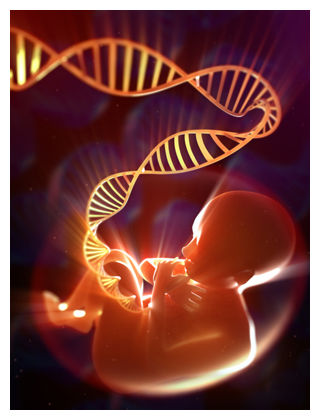
© Henrik Jonsson/iStockphotoLifeline. In future, fetal DNA circulating in the mother’s blood could be used to predict the child’s risk for many diseases.
What if you could read much of your child's medical future while it was still in the womb? Taking a major step toward that goal, one fraught with therapeutic potential and ethical questions, scientists have now accurately predicted almost the whole genome of an unborn child by sequencing DNA from the mother's blood and DNA from the father's saliva.

At the moment, prenatal diagnosis for a small number of genetic conditions is usually done from fetal cells that doctors capture from fluid in the womb (amniocentesis) or a snippet of placental tissue (chorionic villus sampling). But these methods, which require the insertion of a needle or tube into the womb or placenta, can cause miscarriages in about 1% of all cases.

In 1997, chemical pathologist Dennis Lo, now at the Chinese University of Hong Kong, discovered that roughly 10% of the cell-free DNA floating in a pregnant woman's blood stream stems from her fetus. In 2010 in a paper published in Science Translational Medicine, Lo's group showed that enough such fragments of fetal DNA are there to reconstruct the fetus's whole genome, and that it should be possible to use this DNA to test the unborn child for genetic diseases without exposing it to the risk of an invasive procedure. "The biggest advantage is that you are saving all those babies that would be lost," says Lo.

But it is tricky to distinguish fetal DNA in the blood from the mother's DNA. One strategy makes use of subtle genetic variations that exist between a mother's pairs of chromosomes. In most cases, for a particular genetic sequence on a specific chromosome, the variants from each pair should be represented equally in the woman's blood. But in an expectant woman, whose child has received only one variant as part of its genetic inheritance, her blood will contain a little more of that variant because of the free-floating fetal DNA. If the mother's patterns of genetic variants, or haplotypes, are known, statistics allow researchers to conclude what variants she passed on to her offspring. In 2010, Lo showed that with both parents' haplotypes known, it would be possible to predict the child's genome from the DNA in an expectant mom's blood.

Info

How Crows Recognize Individual Humans, Warn Others, and Are Basically Smarter Than You

Crow Experiment
© Tony Angell Gifts of the Crow: CrowDodge
The corvid family--a widespread group of birds made up most prominently of crows, ravens, and magpies--are no ordinary birds, with a brain-to-body-weight ratio and cognitive abilities equal to apes and dolphins. This excerpt, from the great new book Gifts of the Crow: How Perception, Emotion, and Thought Allow Smart Birds to Behave Like Humans, by John M. Marzluff and Tony Angell, details an experiment in which students and faculty at the University of Washington tried to discover if crows can recognize individual humans--and what they'd do with that information.

A couple of days before Valentine's Day 2006, students and professor donned grotesque masks - bold, heavily browed, reddish-orange cavemen - and captured seven crows on the University of Washington's campus. They tagged the ensnared crows with standard plastic and metal bracelets like those we had fit onto Light Blue, Dark Blue's legs and released them after only a few minutes.

On Valentine's Day John slipped into his Dick Cheney face and strolled across campus looking for crows to record their reactions. He found nine birds, and while one seemed a bit anxious and flew off calling, the others basically ignored him. The students were more reactive, as being Dick Cheney on a liberal college campus wasn't easy, but from the crows' perspectives Dick was just an average Joe.

Two days later, John left the Cheney mask in the lab and morphed once again into the caveman. He stepped outside his office building at 11:07, eager to learn whether the crows would remember the face of the man who had captured them earlier in the week. At 11:15, he found a crow near the student union building and began to approach. Immediately the bird flew into a tree and gave a series of harsh calls, flicked its tail, and stared directly down at him.

This scolding behavior, identical to how these rowdy birds typically address their natural predators, quickly attracted a second bird. The pair now cautiously eyed John and issued a real tongue lashing. The first scolding bird was unbanded - John had never even handled this aggressive beast. But the second bird wore bands, signaling that it had personally met the caveman a few days earlier. This bird had good reason to scold - the caveman was a proven threat. But the first bird could have known only secondhand about the dangerous caveman. Perhaps she had seen us catch and band her colleague. John continued his walk and in total encountered thirty-one crows, three of whom scolded him.

Sun

Atmospheric Dust? Rare 'floating rainbow' brightens sunset skies over southern China

A glowing cloud blossomed into a rainbow over southern China on 5 June, appearing at dusk over Wanning City in southern China in Hainan Province. The glowing 'rainbow' was spotted first by a child on a fishing boat, and captured by a local photographer.

The rare effect is created by light refracting off ice crystals in clouds, rather than water particles close to Earth, creating a 'flying' rainbow.

Image
© China FotoA glowing cloud appeared over southern China on 5 June, appearing at dusk over Wanning City in southern China in Hainan Provice

2 + 2 = 4

Are 'Coregasms' Replacing Intimate Relationships?

So-called "coregasms" are more common than anyone had imagined.

Image
© CorbisDespite attention in the popular media, little is known scientifically about exercise-induced orgasms.
The Gist
  • Orgasms tended to occur after multiple sets of crunches or some other abdominal exercise rather than after just a couple repetitions.
  • Exercise-induced orgasms may be one way for scientists, and women themselves, to learn about the process of orgasm.
Women may not need a guy, a vibrator, or any other direct sexual stimulation to have an orgasm, finds a new study on exercise-induced orgasms and sexual pleasure.

The findings add qualitative and quantitative data to a field that has been largely unstudied, according to researcher Debby Herbenick, co-director of the Center for Sexual Health Promotion at Indiana University. For instance, Alfred Kinsey and his colleagues first reported the phenomenon in 1953, saying that about 5 percent of women they had interviewed mentioned orgasm linked to physical exercise. However, they couldn't know the actual prevalence because most of these women volunteered the information without being directly asked.

Blackbox

The Discovery of Graphene in Space --Will it Unlock Secrets of the Big Bang & Black Holes?

Graphene has caused a lot of excitement among scientists since the extremely strong and thin carbon honeycomb-shaped material, just one atom thick, was discovered in 2004. In 2011, NASA's Spitzer Space Telescope spotted the signature of flat carbon flakes, called graphene, in space --the first-ever cosmic detection of the material -- which is arranged like chicken wire in flat sheets that are one atom thick.
Image
© ESO
The team of astronomers using Spitzer identified signs of the graphene in two small galaxies outside of our own, called the Magellanic Clouds, specifically in the material shed by dying stars, called planetary nebulae. The N 70 nebula shown above is a "Super Bubble" in the Large Magellanic Cloud (LMC image below), a satellite galaxy to the Milky Way system, located in the southern sky at a distance of about 160,000 light-years.

The infrared-sensing telescope also spotted a related molecule, called C70, in the same region - marking the first detection of this chemical outside our galaxy. According to the astronomers, the graphene and C70 might be forming when shock waves generated by dying stars break apart hydrogen-containing carbon grains.

Robot

DARPA Spends $7 Million On Robot Avatar Project

DARPA hopes to create real-life "Avatars" in the near future.
Image
© James Cameron/20 Century Fox/Ingenious Media

Science fiction fans and robot fanatics are familiar with the Defense Advanced Research Projects Agency of the United States Government (more familiarly known as DARPA). They are also familiar with James Cameron's largely successful movie, Avatar. When the two come together, the line between what is fiction and what is real gets blurred beyond all recognition.

Straight out of the movie, the agency has set aside a $7 million of its $2.8 billion budget to essentially create "autonomous bi-pedal machines" that a handling soldier is able to manipulate on the battlefield. This removes the soldier from the heat of battle, reducing real life casualties and adding a greater degree of safety when performing menial but essential tasks.

Some of these tasks include clearing buildings of enemy hostiles, handling the wounded on the field, and controlling other sentries in the area. DARPA robotics has certainly entertained the concept before, so creating unmanned ground troops may not be as impossible as it seems. While we certainly aren't expecting to see any Jake Sully-controlled giant blue aliens anytime soon, it'll definitely be interesting to see what DARPA comes up with in the following years.

Display

Scientists Stack Processor Cores on Top of Each Other

Image
© 40034_web3d cpu
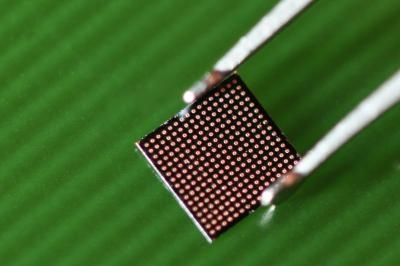
Future microprocessors could extend the idea of 3D transistors to entire 3D cores.

Scientists at the Ecole Polytechnique Fédérale de Lausanne (EPFL) said they have developed a chip that can integrate three or more processors that are stacked on top of each other. Today's processing cores are aligned horizontally.

According to Yusuf Leblebici, director of the Microelectronics Systems Laboratory (LSM) at EPFL, the processors are vertically connected through "several hundreds" of "very thin copper microtubes", commonly referred to as Through-Silicon-Vias (TSVs). "It's the logical next step in electronics development, because it allows a large increase in terms of efficiency," Leblebici said. He noted that more than 900 TSVs are "functioning simultaneously".

"This superposition reduces the distance between circuits, and thus considerably improves the speed of data exchange," added Yuksel Temiz, a researcher at LSM.

While presented at the 2012 Interconnection Network Architectures Workshop in Paris, Leblebici did not reveal further features of the technology, but noted that it is not ready for mass-production. At this time, he wants to make his research available to "a number of academic research teams for further development, before being commercialized."

Sun

Stunning Timelapse: Spacecraft Capture the Transit of Venus


Here's the entire 7-hour transit of Venus across the face of the Sun - shown in several views - in just 39 seconds, as seen by the Solar Dynamics Observatory on June 5, 2012. This view is in the 171 Angstrom wavelenth, so note also the the bright active region in the northern solar hemisphere as Venus passes over, with beautiful coronal loops visible. The transit produced a silhouette of Venus n the Sun that no one alive today will likely see again. With its specialized instruments SDO's high-definition view from space provides a solar spectacular!