Science & TechnologyS


Info

Dinosaurs Skinnier Than Previously Thought

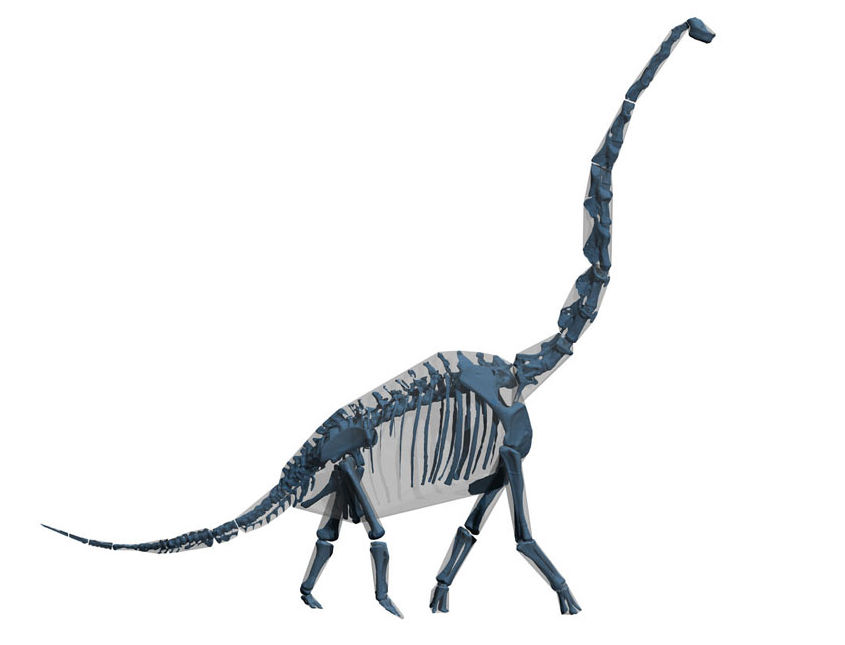
Brachiosaur
© William SellersThe Brachiosaur, once thought to weigh 176,370 pounds, is now believed to have weighed 50,706 pounds.
Dinosaurs were often hefty, but not as plump as previously thought.

A new study describes a new technique used to measure the weight and size of dinosaurs and other prehistoric animals. It could forever change museum exhibits, book illustrations, and other recreations of these now-extinct species. The study appears in the latest issue of Biology Letters.

"This is a huge help for any sort of reconstruction," lead author William Sellers told Discovery News. "We now have a number that suggests how much flesh to add to the bones and that should help people produce animals that are the right balance of too fat or too thin."

"This technique can also allow you to calculate the numbers you need for more sophisticated locomotor reconstructions, such as the running simulations we have produced in the past," added Sellers, who is based at the University of Manchester's Faculty of Life Sciences.

He and his team used lasers to measure the minimum amount of skin required to wrap around the skeletons of large modern animals that included reindeer, polar bears, giraffes and elephants. Doing this, the researchers noticed that the animals had almost exactly 21 percent more body mass than the minimum skeletal "skin and bone" wrap volume.

The formula was then applied to a giant Brachiosaur skeleton housed at Berlin's Museum für Naturkunde. Previous estimates of this dinosaur's weight have been as high as 176,370 pounds. This latest study, however, reduces the figure to just 50,706 pounds -- impressively weighty, but not nearly as heavy.

Question

Spooky glowing asteroid spotted in our solar system

Image
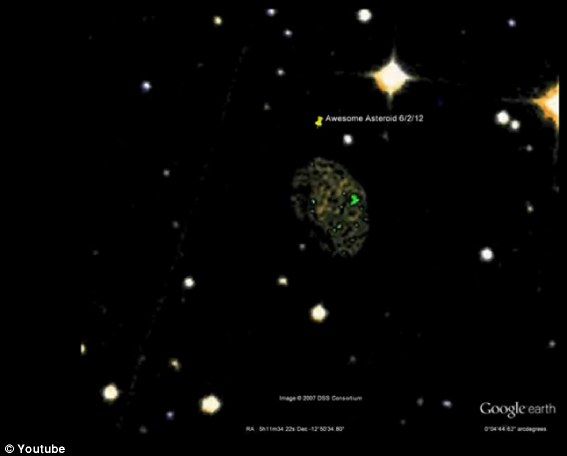
The asteroid - the co-ordinates of which are available below - was spotted by user planetkrejci in a video posted three days ago
A user has found a 'huge asteroid' while scanning the virtual heavens using Googly Sky.

Youtube user planetkrejci, who has investigated other anomalies on NASA pictures, claims the object - found using the Google website which transports the heavens to desktop computers and smartphones - is an asteroid which is heading towards Earth.

He says the asteroid - which, if real, has not been spotted by other scientists or astronomers - has only appeared recently on Google Sky, which receives updated images every few months.

Meteor

Team Setting Up Strategy For Hazardous NEOs

NEOs
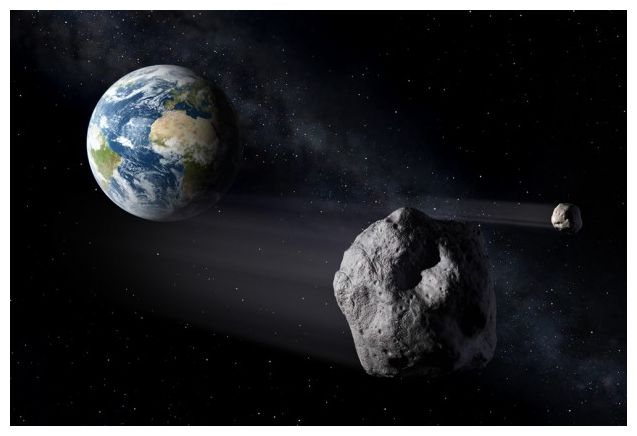
© ESA/Space Situational Awareness - Near Earth Objects, P. Carrill To deal with potentially hazardous Near Earth Objects (NEOs) that could strike the Earth, there is need to establish an effective international communications strategy. The Near Earth Object Media/Risk Communications Working Group Report has been issued by Secure World Foundation.
Scientists have gathered with other experts to create a strategy for potentially hazardous Near earth Objects (NEOs).

Nearly 40 scientists, reporters, risk communications specialists, and Secure World Foundation staff participated in a meeting in November last year to come up with a strategy for dealing with hazardous NEOs.

The report created by the team will be presented at the United Nations Committee on the Peaceful Uses of Outer Space (COPUOS) and its Action Team-14 on NEOs during the 55th session of the UN COPUOS being held in Vienna, Austria.

During the meeting, the group explored in detail the views of risk communication experts and experienced science journalists on the development of a successful communications strategy.

"A lot of attention is focused on the catastrophic damage a large asteroid could do if it collided with Earth," Dr. Michael Simpson, Executive Director of Secure World Foundation, said in a press release. "This report focuses on how to prevent the even greater damage we could cause ourselves by mis-communicating or failing to work together on a common response to the threat."

Info

Weird World of Quantum Physics May Govern Life

Quantum Mechanics
© agsandrew | ShutterstockThe bizarre rules of quantum mechanics may in fact enable many of life's fundamental processes, scientists say.
New York - The bizarre rules of quantum physics are often thought to be restricted to the microworld, but scientists now suspect they may play an important role in the biology of life.

Evidence is growing for the involvement of quantum mechanics in a wide range of biological processes, including photosynthesis, bird migration, the sense of smell, and possibly even the origin of life.

These and other mysteries were the topic of a panel lecture June 1 held here at the Kaye Playhouse at Hunter College, part of the fifth annual World Science Festival.

Quantum mechanics refers to the strange set of rules that governs the behavior of subatomic particles, which can travel through walls, behave like waves and stay connected over vast distances.

"Quantum mechanics is weird, that's its defining characteristic. It's funky and strange," said MIT mechanical engineer Seth Lloyd.

These oddities generally don't affect everyday macroscopic objects, which are thought to be too hot and wet for delicate quantum states to withstand. But it seems nature may have found ways to harness quantum mechanics to power some of its most complex and vital systems.

"Life is made out of atoms and atoms behave quantum mechanically," said cosmologist Paul Davies of Arizona State University. "Life has been around for a long time - 3.5 billion years on this planet at least - and there's plenty of time to learn some quantum trickery if it confers an advantage."

Sun

Historic Venus Transit - Next Transit 2117

No one reading this will still be alive the next time Venus crosses the sun in 2117. That makes today special. On June 5th at 3:09 pm PDT, the second planet begins its historic 7-hour transit of the solar disk. Observers on parts of all seven continents (map) will witness something like this:
Image
© David Finlay of Sydney, Australia (June 8, 2004)
The timing favors observers in the mid-Pacific where the sun is high overhead during the crossing. In the USA, the transit will be at its best around sunset. Creative photographers will have a field day imaging the swollen red sun "punctured" by the circular disk of Venus.

Meteor

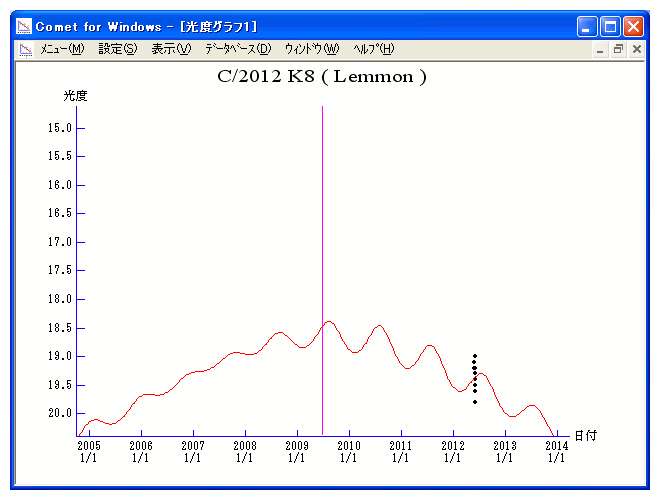
New Comet - C/2012 K8 (Lemmon)

Discovery Date: May 30, 2012

Magnitude: 19.5 mag

Discoverer: A. Gibbs (Mount Lemmon survey)

C/2012 K8
© Aerith NetMagnitude Graph
The orbital elements are published on M.P.E.C. 2012-L08.

Meteor

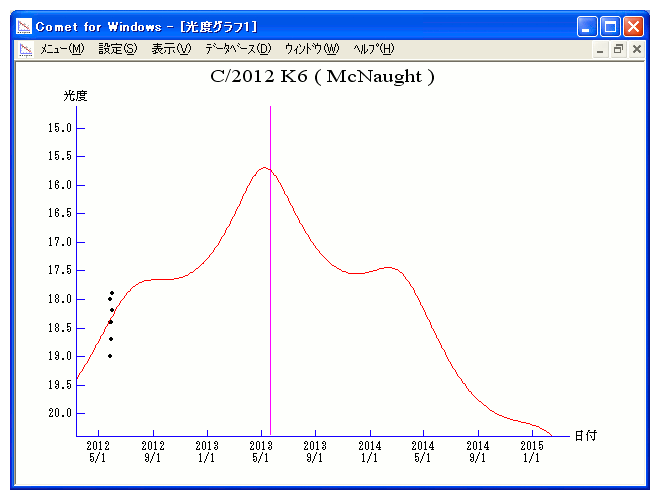
New Comet - C/2012 K6 (McNaught)

Discovery Date: May 27, 2012

Magnitude: 18.4 mag

Discoverer: Robert H. McNaught (Siding Spring)

C/2012 K6
© Aerith NetMagnitude Graph
The orbital elements are published on M.P.E.C. 2012-L04.

Arrow Up

A History of 'Real' Zombies

Zombie
© GettyA women dressed as a zombie in Sydney, Australia at The annual Zombie Walk which raises money for the Brain Foundation.
Zombies are all the rage these days -- on television, in movies, books and now in the news. Of course zombies aren't new -- they were co-opted decades ago by pop culture, especially in George Romero's 1968 classic zombie film Night of the Living Dead.

Or were they? Actually, notes Blake Smith, zombie aficionado and co-host of the monster-themed MonsterTalk podcast, "Though many people think of Night of the Living Dead as being all about zombies, Romero never called them zombies; he wanted them to be ghouls. The public called them zombies, so the name stuck."

Though many people treat the current "zombie apocalypse" as a fun pop culture meme, it's important to realize that some people believe zombies are very real. Haitian culture -- like many African cultures -- is heavily steeped in belief in magic and witchcraft. Belief in zombies is related to the Voodoo religion, and has been widespread throughout Haiti for decades. The existence of zombies is not questioned, though believers would not recognize the sensational, Hollywood brain-eating version that most Americans are familiar with.

Unlike today's malevolent movie zombies, the original Haitian zombies were not villains but victims. They are corpses who have been re-animated and controlled by magical means for some specific purpose (usually labor). Historically, fear of zombies was used as a method of political and social control in Haiti. Those people believed to have the magical power to zombify a person -- mainly witch doctors called bokors -- were widely feared and respected. Bokors were also believed to be in service of the Tonton Macoute, the brutal and much-feared secret police used by the oppressive Duvalier political regimes (1957-1984). Those who defied authorities were threatened with becoming the living dead - a concern not taken lightly.

In popular fiction there are several ways to destroy zombies (decapitations or gunshots to the head are popular), though according to Haitian folklore the goal is to release the person from his or her zombie state, not to outright kill the person. There are several ways to free a zombie; one is to feed the zombie salt; others say that if a zombie sees the ocean its mind will return and it will become self-aware and angry, trying to return to its grave.

So are zombies real? Many believe so, but evidence is scarce. There are a few supposed cases of real zombies, including a mentally ill man named Clairvius Narcisse, who in 1980 claimed that he had "died" in 1962, then become a zombie and forced to work as a slave on one of Haiti's sugarcane plantations. He offered no evidence of his claims, and could not show investigators where he had supposedly worked for almost twenty years.

Info

Artificial DNA Copies Just Like the Real Thing

Artificial DNA
© voyager624 | Shutterstock.comResearchers took images of natural DNA with man-made pieces inserted, to find how the body's DNA copy machine works with both the natural and artificial DNA building blocks. Their findings are a step toward creating partly synthetic living organisms.
The language of life is about to expand its vocabulary. An international team of researchers discovered that the body's copying machine for DNA works in the same way for manmade, artificial building blocks of DNA as it does for the natural kind.

If scientists find artificial DNA building blocks work well and are safe to use, the extra building materials could create DNA that codes for new molecules that the body can't make now. The artificial DNA could also form the basis of a partly synthetic organism.

The DNA code in living things is made of four different molecules, called bases, that are nicknamed A, T, C and G. In a double row of DNA, the bases always link up to each other in a specific way, with A's matching with T's and C's matching with G's. In 2008, a team of researchers created a third, artificial pair of DNA molecules made to match with each other, named NaM and 5SICS. In this new study, some of the same researchers used a technique called X-ray crystallography to take pictures of A, T, C, G, NaM and 5SICS while they were getting copied in a test tube.

DNA is an important bodily process that happens often, so that cells can pass their genetic information on to new cells that are created all the time, such as skin or blood cells that develop to replace old, worn-out cells.

After NaM and 5SICS were made, several other groups of researchers found that a natural strand of DNA with NaM and 5SICS added to it will still copy itself nearly as well as all-natural DNA. Scientists didn't know why it worked so well.

They worried they had somehow "tricked" the body's DNA copying machine, called DNA polymerase, said Floyd Romesberg, a chemist at the Scripps Research Institute in La Jolla, Calif. Romesberg was one of the principal inventors of NaM and 5SICS and was involved in this new study, published online yesterday (June 3) in the journal Nature Chemical Biology.

Laptop

IBM Says Practical Quantum Computers are Close

Image
© Unknown
IBM researchers claim they are now close to have access to basic technologies that would allow them to build a "minimum" quantum computer.

According to the company, scientists have found ways to retain the integrity of quantum bits (qubits) and reduce computation errors as a result. The solution appear to be superconducting qubits that are constructed via traditional silicon fabrication techniques and hold the potential to scale up to potentially thousands or millions of qubits one day.

"The quantum computing work we are doing shows it is no longer just a brute force physics experiment. It's time to start creating systems based on this science that will take computing to a new frontier," said IBM scientist Matthias Steffen, who manages the IBM Research team that works on quantum computing systems. The vision of quantum computing is to enable computers to do "millions of computations at once" with a single qubit. According to IBM, a 250-qubit system "contains more bits of information than there are atoms in the universe." In contrast to a traditional bit, which can either have the value "0" or "1", a qubit can have "0", "1" and both values at the same time.

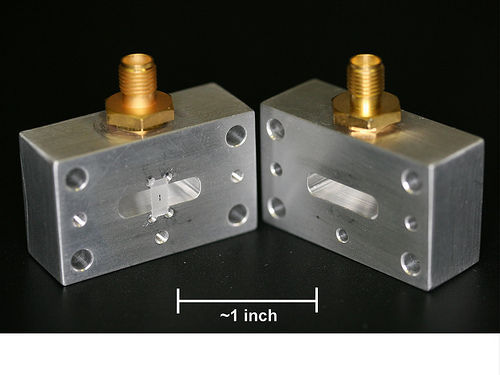
While there is a clear vision to build a quantum computer, scientists are dealing with a number of substantial roadblocks to realize such a device. One key problem remain interference factors that influence the controllability and reliability of qubits, such as temperature, electromagnetism and material defects. IBM said that the transition to a "three dimensional" superconducting qubit (3D qubit) allowed them to extend the time a qubit retains its state to 100 microseconds, which is a 2 to 4x improvement over previous results. It is not eternity, but IBM says the value " reaches just past the minimum threshold to enable effective error correction schemes and suggests that scientists can begin to focus on broader engineering aspects for scalability." The company has built a 3D qubit device with a 1mm qubit as part of a Sapphire chip to demonstrate its research progress.

IBM said that it believes that, in the future, a "classical" computer system will integrate quantum computing hardware to form a functional quantum computing system. The next challenges to achieve this goal will be necessary advances in communications and packaging technology.