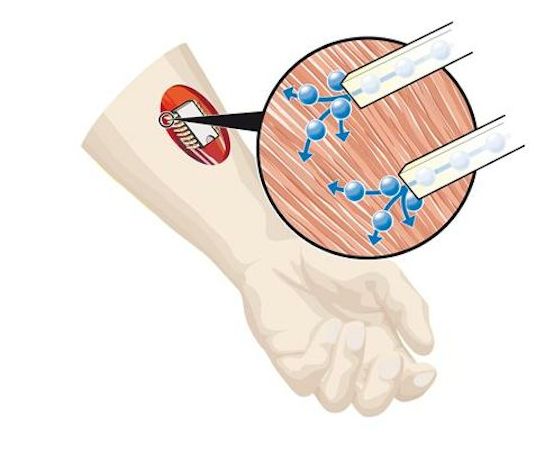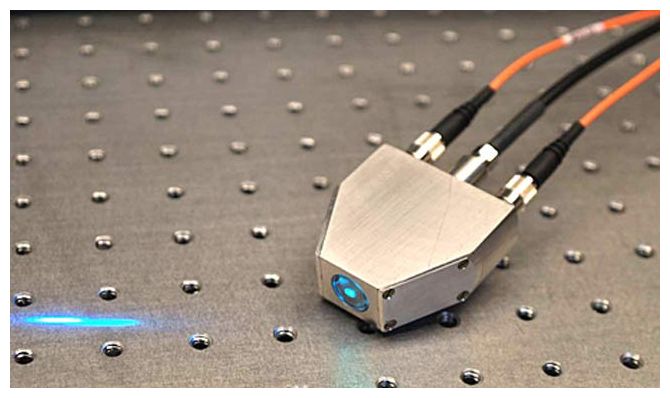
© Yale University | University of UtahA blue laser light shining on human skin can help detect the amount of fruits and vegetables in a person's diet.
The simple method works by revealing carotenoid pigments such as beta-carotene in carrots and lycopene in tomatoes.
A modern version of a decades-old technology called resonance Raman spectroscopy (RRS) can detect the energy changes in molecules after being energized by the laser light - a painless process that returns results in about a minute.
"It really derived from an observation that people have known about for decades," said Susan Mayne, head of chronic disease epidemiology at Yale University, "and that is that when people have high-vegetable diets they develop a yellow skin coloration that is particularly noticeable in the palm of the hand because of the accumulation of carotenoids in the skin."
"And we thought, 'Can we use that as a new approach to measure carotenoids in the body noninvasively?'"