Science & TechnologyS


Question

The unknown solar system

Kuiper Belt
© Don Dixon/cosmographica.com
Just beyond Neptune is the Kuiper Belt, a torus of comet-like objects, which includes a few dwarf-planets like the Pluto-Charon dual-planet system. Despite being lumped together under one monicker, the Belt is composed of several different families of objects, which have quite different orbital properties.

Some are locked in place by the gravity of the big planets, mostly Neptune, while others are destined head in towards the Sun, while some show signs of being scattered into the vastness beyond. Patryk Lykawka is a one researcher who has puzzled over this dark, lonely region, and has tried to model exactly how it has become the way it is today.

Over the last two decades there has been a slow revolution in our understanding of how the Big Planets, the Gas Giants, formed. They almost certainly did not begin life in their present orbits - instead they migrated outwards from a formation region closer to the Sun. To do so millions of planetoids on near-misses with the Gas Giants tugged them gently outwards over millions of years.

We know what happened to the Gas Giants, but what of the planetoids? A fraction today form the Kuiper Belt and the Oort Cloud beyond it (how many Plutos exist out there?) But a mystery remains, which Lykawka convincingly solves in his latest monograph via an additional "Super-Planetoid", a planet between 0.3-0.7 Earth masses, now orbiting somewhere just beyond the Belt.

Igloo

Solar cycle 24 not following sun spot activity predictions

Sunspot Cycles
© NOAA/SWPC Boulder, CO USA
Cycle 24 Sun Spot Levels

Every eleven years the sun experiences a peak of sun spot activity, we are nearing this peak period now but activity is low and below predictions. As you can see from the chart above the sun was actually well above average levels for sunspot activity in late 2011, but in 2012 it has been below the predicted levels, as can be seen by the red line.

What does this mean? It could mean that the peak actually came in 2011, a year early. The number of sun spots in 2011 did actually reach the predicted peak in terms of what should have happened in 2012. If this is the case we can look forward to decreasing levels in 2013.

However, it could also mean that this is the quite before the storm and we are in for a significant increase in the number of sunspots from the low level we have seen in 2012. The sun may actually make ofs for the low levels of activity we have been experiencing and over achieve to return is to the predicted numbers. If this happens 2013 will be abuzz with solar activity. Only time will tell but it looks like 2012 will end with a whimper as far as solar activity goes.

Wolf

Dr. Melba Ketchum on the background to her Bigfoot DNA research

Joining George Knapp, Dr. Melba S. Ketchum discusses her DNA analysis of possible Bigfoot hair samples.

Biography:

Dr. Melba S. Ketchum grew up in Texas City, Texas. She attended Texas A&M University where she received her doctorate in Veterinary Medicine after five years at the university. She had a mixed veterinary practice until she founded DNA Diagnostics. Dr. Ketchum is the president and founder of DNA Diagnostics, Inc. d/b/a Shelterwood Laboratories. Established in 1985, DNA Diagnostics has become a leader in all types of DNA testing including: human and animal forensics, human and animal paternity and parentage testing, disease diagnostics, trait tests, animal and human identity testing, species identification and sex determination. Most common species of animals are tested at DNA Diagnostics.


Blue Planet

Earth's twin will be discovered in 2013, astronomers predict

Image
Humanity is likely to discover its first truly Earth-like planet in 2013, according to the director of the Planetary Habitability Laboratory of the University of Puerto Rico at Arecibo.

"I'm very positive that the first Earth twin will be discovered next year," Abel Mendez told Space.com.

Mendez is leading the Habitable Exoplanets Catalog project, which seeks to identify potentially habitable planets outside our solar system. Astronomers have already found a number of potentially habitable planets, based on chemical and physical characteristics that are theoretically conducive to life. Earlier this month, Mendez said seven potentially habitable planets have been found - Gliese 581d, HD 85512b, Kepler 22b, Gliese 667Cc, Gliese 581g, Gliese 163c, and HD 40307g.

Comet 2

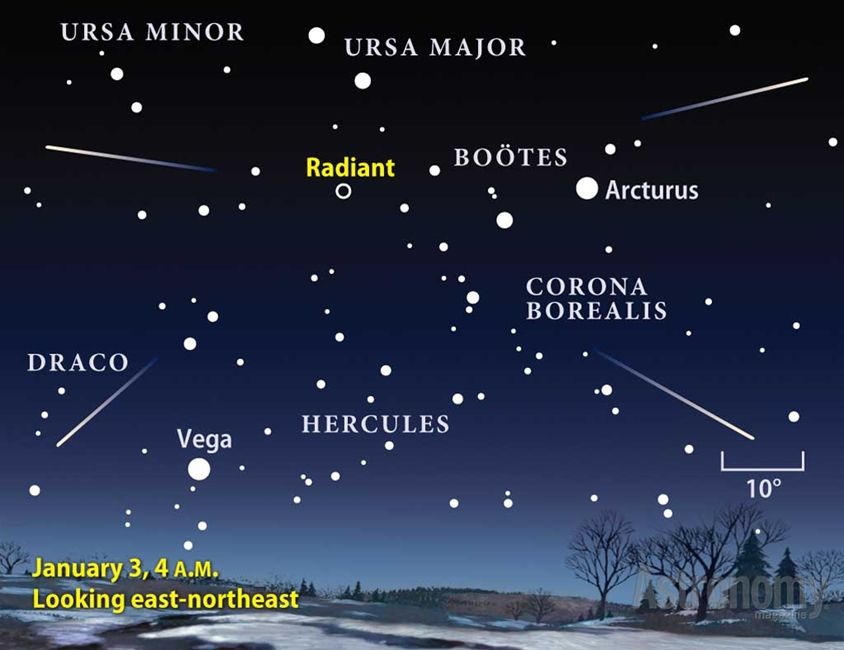
Quadrantids, one of the best but least-known meteor showers, will shine in January 3

The annual Quadrantid meteor shower usually is one of the year's best, and in 2013, it will once again provide a nice display. Throughout the Western Hemisphere, the shower reaches its peak before dawn January 3. Unfortunately, a waning gibbous Moon also is in the sky, and its light will obscure the dimmer streaks. The Quadrantids generate a high percentage of bright meteors, however, so it should still rank among the year's best showers.

Image
© Astronomy: Roen KellyA rush of meteors will populate the predawn sky January 3.

Bacon

Mangia! Italian wolves prefer ham to venison

Image
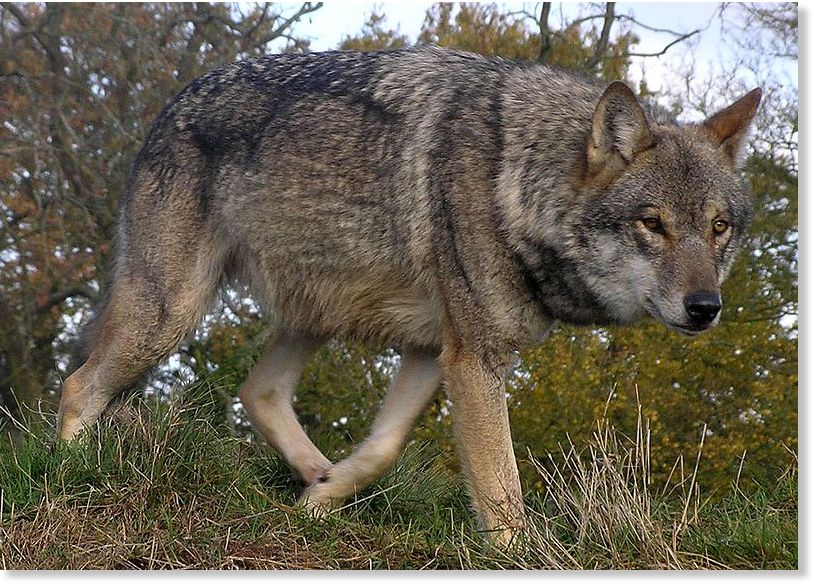
© Retron, Wikimedia CommonsA grey wolf in Europe
Italy is known as a home to fine food. Is it any wonder that even the wolves there are gourmets? Unlike the deer-devouring wolves of northern Europe, the refined palate of the Italian wolf demands pork. Wild boar accounted for two-thirds of the diet of Italian wolves in a study published in Plos One. Roe deer made up most of the other one-third of the wolves' diet.

For the past nine years, biologists have been sampling wolf feces in the Tuscany region of Italy. Wolves had been exterminated in Tuscany, but have recolonized the area.

Even in years of high roe deer population density, the canines consistently ate more ham than venison. They only switched to deer after boar had become scarce. The pork preference in Italy may be because of the smaller size of boars in the Mediterranean. The carnivores largely ignored domesticated animals in the area. The study's authors believe this means wolves could be reintroduced to other areas of Europe without significantly affecting the livestock.

Comet

Best of the Web: Electric Comets: The "dirty snowball theory" of quackademia easily debunked


Beaker

DNA of Sandy Hook killer Adam Lanza to be examined for 'evil' gene in first study of its kind ever conducted on a mass murderer

  • Adam Lanza
    © Agence France-Presse/Getty ImagesSandy Hook Elementary School shooter Adam Lanza at an unknown location in 2005 - Lanza's DNA is being examined for any evidence that could shed light on his actions that day
    The study will be the first one of its kind and will evaluate any genetic evidence for the mass killing of 20 first graders, six members of staff at Sandy Hook Elementary School and his own mother.
Scientists have been asked to study the DNA of Newtown school killer Adam Lanza to see if has an 'evil' gene that led him to carry out the massacre.

The study, which will look at any abnormalities or mutations in his individual DNA, is believed to be the first of its kind ever carried out on a mass murderer.

Lanza slaughtered 20 children and six adults in one of America's worst ever school shootings on December 14, 2012.

The 20 year old also shot dead his mother Nancy before taking his own life as police closed in on him at the Sandy Hook elementary school in Connecticut.

The massacre prompted President Obama to look into new gun controls and banning assault rifles such as AR-15 Bushmaster used by Lanza in his rampage.

Comment: It will be very interesting to see the result of this 'study' considering that the Sandy Hook school massacre has the hallmarks of domestic counter-terrorism, in the real meaning of that term: terrorism carried out by the state. Adam Lanza may have had little if anything to do with the event, as suggested by the evidence.

For more information please read:

Sandy Hook massacre: Official story spins out of control

Sandy Hook massacre: Evidence of official foreknowledge?

Connecticut massacre, two shooters? Look to Aurora, Colorado

Who is Adam Lanza?

Connecticut Chief Medical Examiner: School massacre perpetrators used military-style rifles that were rigged to reload quickly; Sandy Hook autopsies "worst I've seen"

Anomalies in the Connecticut school massacre: Second man arrested on scene; "hundreds" of shots reported; Official version of events full of contradictions


Info

Dragonfly shows human-like power of concentration

Dragonfly
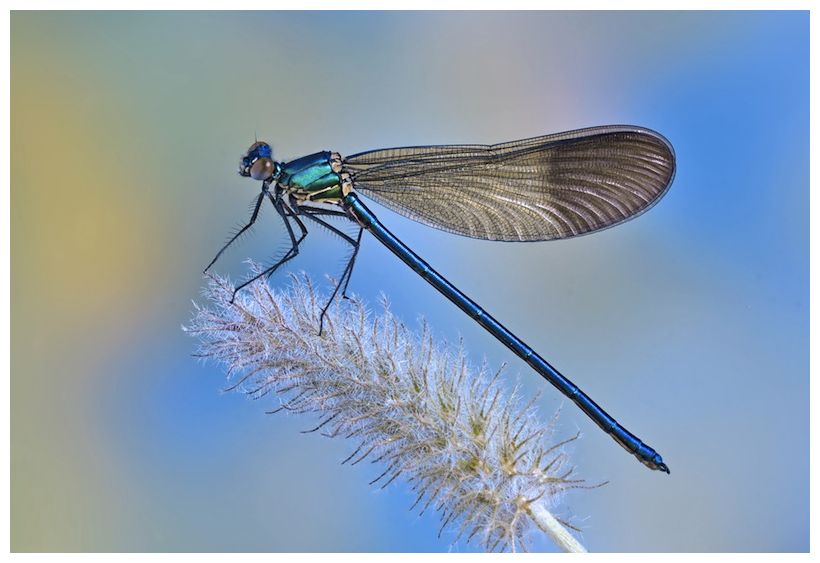
© alslutsky/ShutterstockThe dragonfly Calopteryx syriaca.
Dragonflies lack humans' big brains, but they still get the job done, according to new research that suggests that these insects have brain cells capable of feats previously seen only in primates.

Specifically, the dragonflies can screen out useless visual information to focus on a target, a process called selective attention. The new study, published Dec. 20 in the journal Current Biology, is the first to find brain cells devoted to selective attention in an invertebrate animal.

Selective attention is crucial for responding to one stimulus among the dozens of distractions that clamor for notice at any given time, said Steven Wiederman of the University of Adelaide in Australia.

"Imagine a tennis player having to pick out a small ball from the crowd when it's traveling at almost 200 kilometers an hour," Wiederman said in a statement. "You need selective attention in order to hit that ball back into play."

But little is known about how the brain locks onto its targets and ignores all else. To find out, Wiederman, who is from the university's Center for Neuroscience Research, and his colleague David O'Carroll turned to an unlikely animal. The researchers have long studied insect vision, and the dragonfly turns out to be quite adept in that arena.

Info

Shedding light on longevity and good health

Bat
© Geelong Advertiser
Geelong's very own "bat pack" of genetic scientists is at the forefront of groundbreaking research that could one day lead to a cure for cancer, slow the ageing process and prevent deadly diseases.

A 28-member team from the CSIRO Australian Animal Health Laboratory in East Geelong has spent 2 1/2 years working with scientists in China, Denmark, the US and Singapore as part of a world-first study piecing together the genetic make-up of two bat species.

Bat genomes (the genetic material that makes up bat cells) were then compared with those of eight other mammals, including humans, to find similarities and differences. In a breakthrough, the researchers found the evolution of bats learning to fly could hold the key to humans living longer and ageing more slowly, as well as overcoming and even preventing cancer.

Post-doctoral fellow Dr Chris Cowled said the study, initiated and co-ordinated by his CSIRO team, had found links between the bats' evolutionary adaptation and their super-strong immune systems.