Science & TechnologyS


Bulb

China's new approach to renewable energy

Image
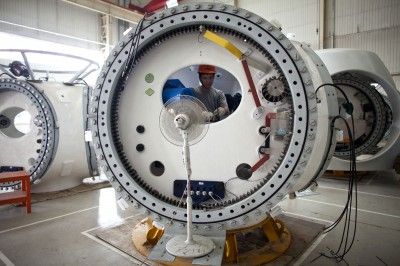
Chinese companies are using innovative business models to change the cost structures and capabilities involved in delivering renewable energy technology.

Through strategic partnerships with technology-led companies in the US and Europe, they are rapidly reducing the cost of production and effectively entering the value-added parts of the global technology economy.

In the popular imagination, China's industrial base is largely built on agriculture and manufacturing. This is still generally true. Agriculture employs an enormous proportion of the workforce and vast lands are dedicated to the painstaking process of growing rice or harvesting wheat. More recently, attention has been given to Chinese farmers leaving their hometowns in search of a better life in the city. Many of these migrant workers have moved into manufacturing or servicing China's immense construction boom. (The Chinese government alone has committed to building 20 new cities a year for the next decade.) But value-added goods and services are an increasingly important part of the Chinese economy - and the renewable energy sector is chief among them.

Many Chinese businesses in the clean tech space are adjusting their strategy in two ways. The first has been dubbed 'frugal innovation' by The Economist. Chinese businesses have found ways to make money from manufacturing high-tech goods in a low-tech way. Take BYD, China's leading battery manufacturer. Over the company's first 10 years its founder, Wang Chuan-Fu, brought the cost of the lithium ion battery down from US$42 to US$12. He is reported to have taken designs he had seen in Japan and replaced Japanese machinery with the hands of Chinese workers. Wang proved that it was possible to train large workforces to do repetitious tasks with minimal human error.

Boat

Flashback Waka crews set off on 10,000-mile ocean journey

Image
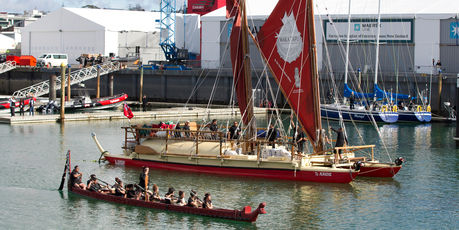
© Photo / Steven McNichollPeople celebrate the departure of Waka Tapu, from the Viaduct Events Centre, Auckland.
Johnson Tumai-Totorewa, 17, wasn't worried about the potential for 20-metre ocean swells as he embarked on a 10,000-nautical mile voyage on a waka hourua, double hulled sailing canoe today.

When his waka Ngahiraka Mai Tawhiti, and its elder sibling Te Aurere reach Rapanui/Easter Island in October it'll be the start of the cyclone season. He's not worried about that either.

The Mangere teenager, who said the trip was the first off the North Island, is the youngest of 23 sailors. But the only thing giving him twinges was how it would feel to miss someone, he said with a smile.

"My mummy. I'm a mummy's boy but everything else - well, I have confidence in all those around me. Most of all for me I think it's going to be awesome following in the footsteps of our tupuna."

The trip has been the dream of Hekenukumai Busby, the master waka builder who built both vessels. At 80 he is won't do the full trip but hopes to hop back on board as they get closer to the eastern tip of the Polynesian Triangle. Today, Mr Busby along with the Royal New Zealand Navy, a couple of hundred whanau and well-wishers farewelled the canoes with song and haka, the sounds echoing out over glassy Waitemata water.

Better Earth

Traditional rice farmers preserving India's rice biodiversity

rice
© Unknown
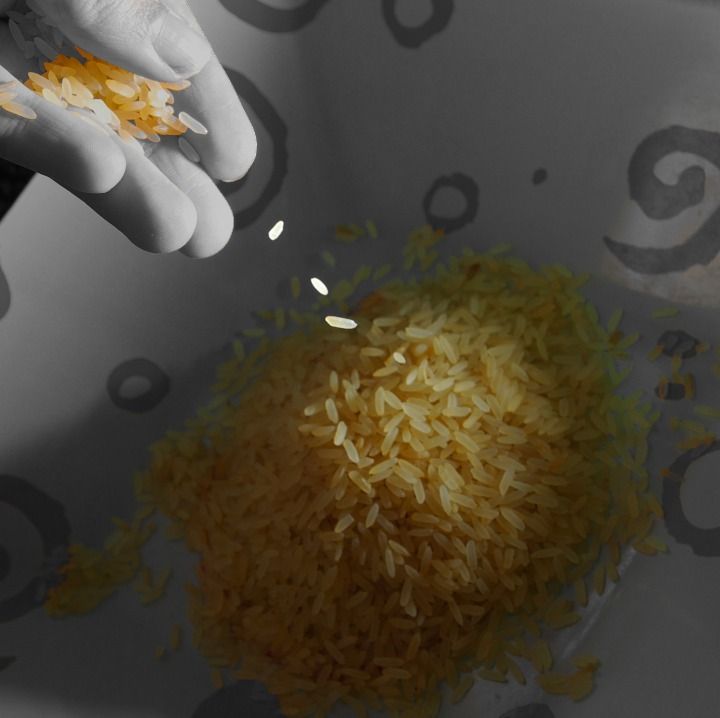
In May 2009 super cyclone "Aila" swept the Sunderbans in eastern India and thousands of hectares of rice were ruined overnight and the area completely submerged in salt water. A handful of traditional rice farmers sowed three salt-tolerant rice varieties. These farmers were the only ones who harvested some rice in the following winter. These are not the imported and cross-bred "miracle high yielding hybrid rice" varieties about which our rice experts keep boasting day in and day out, all of which were devastated by the titanic Aila. Rather, they are the result of the painstaking work of one person, who, over the years, in a remote village in Odisha (Orissa), is preserving our age-old traditional rice varieties for posterity so that India does not lose its invaluable rice germplams.

Lit by a kerosene lamp, the two room hut just outside a sleepy hamlet in Odisha's Rayagada district can easily pass off as any other farmer's house in this tribal region. Step inside and one will be taken aback by the hundreds of earthern pots labelled with coded stickers stacked in a corner as well as under a bed. These pots treasure over 750 varieties of rice grains, some on the verge of extinction. The keeper of the seed bank, Debal Deb, has been collecting and conserving these rare native varieties over the last two decades. He does not hire "trained" agricultural experts. His only help are the farmers who continue to depend on "heirloom" (traditional) seeds, which have a glorious past.

Boat

Historic voyage: Crews successfully sail from Easter Island to New Zealand using traditional navigation techniques

Image
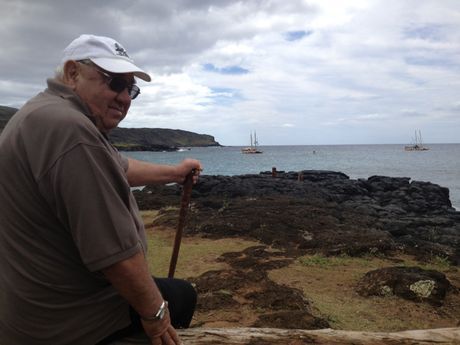
LANDED: Master waka builder Hekenukumai Busby on Easter Island, with the two ocean-going waka he built moored offshore.
More than 1000 Easter Islanders have given the crews of two Far North-built waka a rapturous welcome after an epic three-month journey from New Zealand.

The 20 sailors on board the waka hourua Te Aurere and Ngahiraka Mai Tawhiti first set eyes on Rapanui (Easter Island) late last week, but anchored offshore while 80-year-old master waka builder Hekenukumai (Hec) Busby flew to the island from his home at Doubtless Bay.

It had long been Mr Busby's dream to "close the Polynesian triangle" by sailing from Aotearoa to Rapanui using only traditional navigation techniques. The other sides of the triangle, from New Zealand to Hawaii and Hawaii to Easter Island, have already been sailed.

Once Mr Busby arrived the two waka completed their journey, chief navigator Jack Thatcher saying they were greeted by a rapturous welcoming party of more than 1000 people. They arrived at Anakena, on the northern side of Rapanui, at 9am on Thursday local time.

Mr Thatcher said the arrival was highly emotional because many sailors' family members had travelled from New Zealand to see them for the first time since they left Auckland in August.

Bulb

Earthquake proof cardboard cathedral being constructed in Christchurch, New Zealand

Image
This photo taken on December 5, 2012 shows the badly damaged Christchurch Cathedral
When Japanese architect Shigeru Ban designed a new cathedral in earthquake-devastated Christchurch, he chose the most unlikely of materials -- cardboard -- for the landmark project.

The New Zealand city's magnificent Gothic revival cathedral hewn from local basalt was irreparably damaged in the 6.3-magnitude earthquake that claimed 185 lives on February 22 last year.

Urgently needing a temporary replacement, the Anglican Church commissioned Ban -- who donated his services gratis -- to draw up plans for a place of worship to house Christchurch's faithful.

The result is the so-called cardboard cathedral now taking shape on the quake-scarred city's skyline.

Built from 600-millimeter (24-inch) diameter cardboard tubes coated with waterproof polyurethane and flame retardants, it will be a simple A-frame structure that can hold 700 people.

"It will be a huge milestone towards recovery for Christchurch," project manager Johnny McFarlane said.

"It's going to be a great building to walk into, it's very light and airy and gives a good sense of dominance and scale."

Ban, a world-renowned architect who has been hailed by publications such as The Wall Street Journal and Time magazine, sees the cathedral as a way his profession can help Christchurch's shattered community recover from the quake.

Comet 2

Sun-grazing comets as triggers for electromagnetic armageddon

Comet McNaught
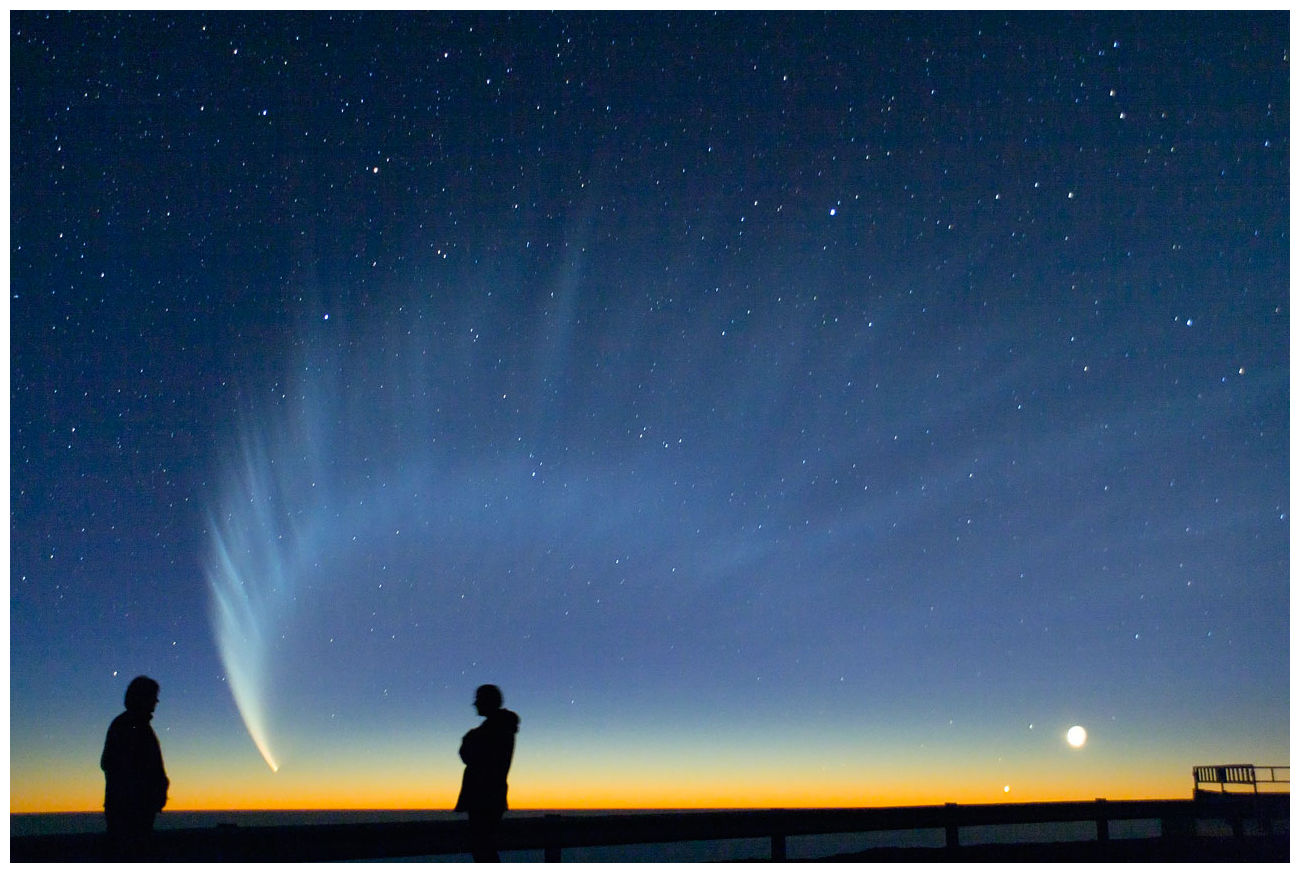
© S. Deiries/ESOComet McNaught as seen from the European Southern Observatory's Very Large Telescope in January 2007.
Large sun-grazing comets could bring on the sort of global electronics meltdown usually associated with electromagnetic pulse weapons or a full-scale nuclear exchange.

Or so says David Eichler, lead author of a forthcoming Astrophysical Journal Letters paper positing that a sun-grazing comet roughly the size of Hale-Bopp (with a nucleus some 30 kms in diameter), could trigger cosmic ray-generating shockwaves large enough to initiate a global electromagnetic Armageddon.

Eichler, an astrophysicist at Israel's Ben-Gurion University of the Negev in Beer-Sheva, argues that satellites that weren't in protection mode would be wiped out along with most of the world's electronics - everything from micro-circuitry on cell phones to full-scale power stations.

If such a comet were the size of Hale-Bopp, Eichler says, the resulting solar flare would by far be the largest ever observed.

The comet gets compressed and then explodes in the solar atmosphere which, in turn, creates shockwaves, says Eichler.

Eichler thinks that such a sun-grazing comet may have triggered a large solar flare and cosmic ray-generating shockwaves as recently as 775 A.D., as indicated by tree ring analysis pointing to a sudden 1.2 percent spike in atmospheric Carbon 14.

"I'm not saying that [event] couldn't have been caused by a magnetic solar flare, but we've never seen a solar flare nearly that big," said Eichler.

Telescope

Meteor Showers 2013 Dates and Times: Perseids, Geminids, Lyrids, Leonids, Orionids, Quadrantids, etc.

Shower of perseids
© Wikipedia
Meteor showers can be spectacular to watch. Year round there are some great displays, from the Perseids in August, to the Geminids in December, to the Quadrantids in January. The peak displays and intensities vary somewhat by year though, so knowing when to watch and what to expect can be hard to know. So I've created this guide to what should be the best meteor showers of 2013.

Some general meteor shower watching tips:

Regardless of when the exact peak is, it's nearly always best to watch for meteors in the early morning, sometime between 1-3am. And always take into account the phase that the moon is in. If it's a bright moon, try to watch before the moon rises or after it sets.

The further away from city lights you can get, the better. A clear, dark sky is what you want. Getting comfortable with a reclining lawn chair and some blankets is also a good idea. Dress warmly, and maybe bring something warm to drink, like coffee or hot chocolate.

Solar Flares

Days before 2013, Sun goes unpredictably quiet

SOLAR CYCLE UPDATE: 2013 is only days away, and according to most forecasters, Solar Max should be approaching as well. But is it? Barely-increasing sunspot counts and anemic solar activity suggest an interesting possibility: Perhaps Solar Max is already here. (Below) This plot of measured vs. predicted sunspot numbers illustrates the idea: The blue curve traces monthly sunspot numbers measured since 2000. The red curve is the prediction of the NOAA-led Solar Cycle Prediction Panel.

Image

Galaxy

Wallaby and Dingo space surveys expected to find 700,000 new galaxies

Image
© Photograph: Nasa/AFP/Getty ImagesEarly galaxies seen by the Hubble space telescope. Askap, the new radio telescope facility in Western Australia, is predicted to uncover 700,000 more galaxies.
Huge radio telescope in Western Australia will help astronomers find clues to mystery of dark energy and galaxy evolution

Two Australian sky surveys named Wallaby and Dingo are expected to discover 700,000 galaxies over the course of the new year.

A huge new radio telescope facility in Western Australia will scour vast regions of space to provide clues about galaxy evolution.

The £65m Australian Square Kilometre Array Pathfinder (Askap) is located in a remote desert region of Western Australia, 196 miles from the port of Geraldton. It consists of 36 dishes, each 12 metres (39ft) wide, which work together as a single antenna.

Askap will also help astronomers investigate one of the greatest mysteries of the universe: dark energy. This is the force which appears to be causing galaxies to fly apart at an accelerating rate. Although no one is sure what dark energy is, it is believed to account for 73% of the universe.

Scientists were able to predict Askap's capabilities by combining its specifications with computer simulations. Dr Alan Duffy, a member of the Askap team from the University of Western Australia, said: "Askap is a highly capable telescope. Its surveys will find more galaxies, further away, and will be able to study them in more detail than any other radio telescope in the world.

Meteor

Approaching comet may outshine the moon

A comet blazing toward Earth could outshine the full moon when it passes by at the end of next year - if it survives its close encounter with the sun.

The recently discovered object, known as comet ISON, is due to fly within 1.2 million miles (1.9 million km) from the center of the sun on November 28, 2013 said astronomer Donald Yeomans, head of NASA's Near Earth Object Program at the Jet Propulsion Laboratory in Pasadena, Calif.

Image
As the comet approaches, heat from the sun will vaporize ices in its body, creating what could be a spectacular tail that is visible in Earth's night sky without telescopes or even binoculars from about October 2013 through January 2014.

If the comet survives, that is.

Comet ISON could break apart as it nears the sun, or it could fail to produce a tail of ice particles visible from Earth.

Celestial visitors like Comet ISON hail from the Oort Cloud, a cluster of frozen rocks and ices that circle the sun about 50,000 times farther away than Earth's orbit. Every so often, one will be gravitationally bumped out from the cloud and begin a long solo orbit around the sun.