Science & TechnologyS


Sun

Sun expected to 'flip upside down' as magnetic field reverses its polarity

The Sun
© NASAAccording to NASA, the sun is about to reverse polarity.
The sun's magnetic field is about to flip upside down as it reverses its polarity.

In August Nasa said the reversal would happen in three to four months time, although that it would be impossible to pinpoint a more specific date.

Solar physicist Todd Hoeksema from Stanford University said that the reversal would have "ripple effects" across the whole of the solar system.

According to Nasa the sun's magnetic field changes polarity approximately every 11 years.

In comparison the last time the Earth's magnetic field flipped was almost 800,000 years ago.

Info

Scientists use a mutated virus to build a better battery

Mutated Virus
© io9
By unleashing a genetically modified virus onto microscopic electrode wires, researchers from MIT have shown that the performance of lithium-air batteries can be significantly improved - a remarkable breakthrough that could revolutionize the way our electric devices are powered.

Indeed, lithium-air batteries have generated considerable buzz over the years because of the way they can increase power without having to increase weight, an attribute that could lead to electric cars with much greater driving range. But engineers have struggled to to create the durable materials required for the batteries' electrodes, and increase the number of charging-cycles the batteries can withstand.

To overcome these limitations, researchers from MIT demonstrated that by adding bioengineered viruses to nanowires during the production stage - tiny electrode wires about the width of a red blood cell - some of these problems could be alleviated.

This virus, called M13, works by increasing the surface area of the wire, which in turn increases the area where electrochemical activity takes place when batteries are charged or discharged.

In a process similar to how an abalone pulls calcium from seawater to grow its shell, the nanowires, with the help of the M13 virus, pulls molecules of metal from room-temperature water, which the virus then binds into specific structural shapes. Specifically, the viruses produce manganese oxide wires - and they have the rough, spiky surface required for the desired increase in surface area.

Info

Human body clock affects inflammation

Disrupting the light-dark cycle of mice increased their susceptibility to inflammatory disease. New research indicates that the production of a key immune cell is controlled by the body's circadian clock.

Circadian rhythms (natural body cycles, physiological responses to day and night) and seasonal clocks are natural cycles in most organisms, including people. In relation to this, research indicates that the body's circadian clock controls the numbers of key inflammatory cells that are produced in response to an injury.

To show this, the research team used a mouse model and from this they identified a gene called Nfil3, which guides the development of the immune cells that patrol the body and protect against bacterial and fungal infections. They found that the efficiency of this gene was affected by alternations to the body clock, especially when the animals were kept awake at times when they would normally be asleep.

The study could lead to new ways to improve up the body's immune response to infection or dampen that response in the case of autoimmune diseases in which the body attacks its own tissues. Although improvements could be made, one implication of the study is with chronic circadian disruptions, such as night-shift work or jet lag, that other research studies have linked to human inflammatory disease.

Coupled with this new research, the findings could have implications for human health. The research was carried out at UT Southwestern Medical Center. The findings have been published in the journal Science. The paper is titled "TH17 Cell Differentiation Is Regulated by the Circadian Clock"

Bulb

Direct Current - 5 things you need to know

How the idea of channeling direct current electricity using circuit breakers could give rise to supergrids.
Image
© Unknown
What is it?

In the early era of electrification, the distribution of electricity by direct current (DC) ruled. Thomas Edison's first electricity utilities in the late 19th century used DC, but Westinghouse Electric Corporation championed alternating current (AC), developed by Nicola Tesla, which transmits more power more efficiently over longer distances than direct current. Edison did his best to smear the new technology, developing the electric chair as a means of demonstrating the danger of AC and going as far as to electrocute dogs and an elephant, to further illustrate its danger. But to no avail - AC's superiority was evident and it was soon widely adopted.

Info

Solution to immune mystery could lead to better therapies

Themis
© The Scripps Research InstituteA report in the journal Nature describes how the protein Themis subtly but crucially ensures the maturation of T cells that are fit for active duty in the body.
La Jolla, California - A team led by scientists at The Scripps Research Institute (TSRI) has solved a long-standing conundrum about the immune system and in so doing may have found a new way to boost or reduce immunity therapeutically.

The discovery concerns an unusual protein, Themis, that has been known to play a key role in the normal development of T cells, one of the most powerful elements of the immune system. Exactly how Themis controls T cell development hasn't been clear. But now in a report in the journal Nature, the TSRI scientists have described how the protein subtly but crucially ensures the maturation of T cells that are fit for active duty in the body.

"We've finally cracked the mystery of how Themis works, and we suspect that this finding will turn out to have relevance for human diseases," said immunologist Nicholas R. J. Gascoigne, who led the work at TSRI.

Comet

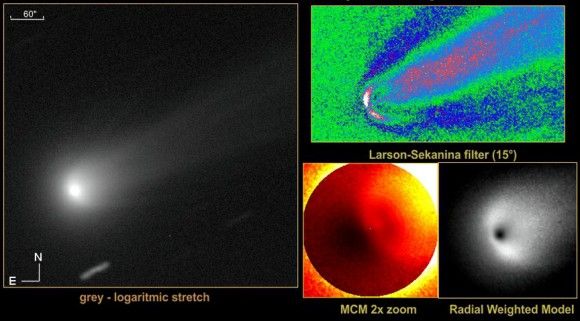
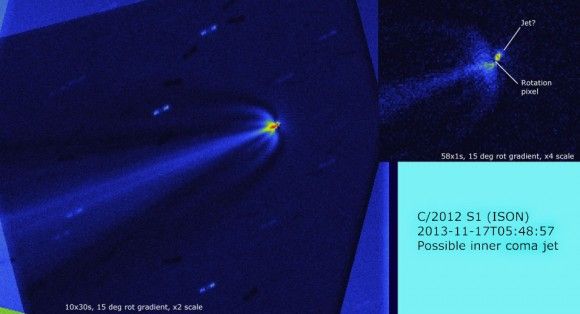
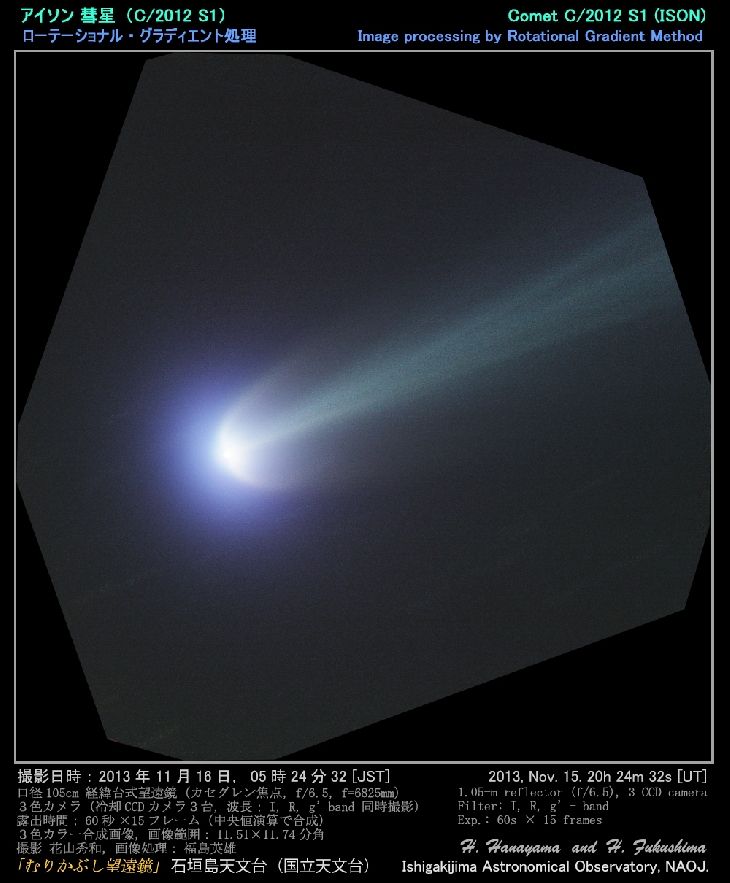
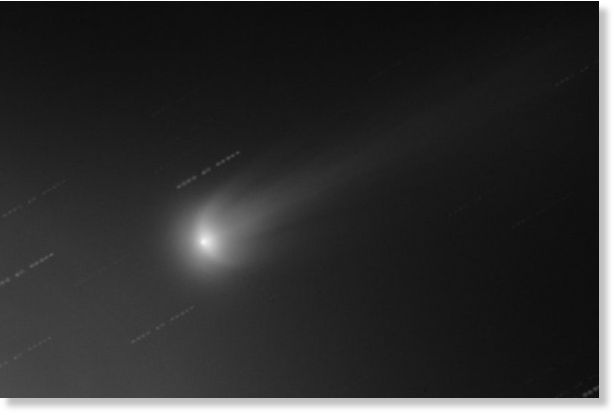
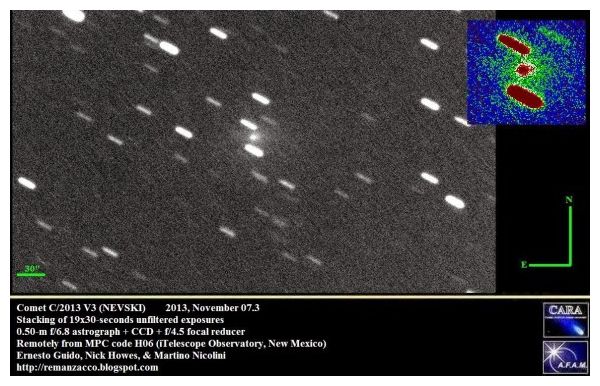
Comet ISON Breaking News: Huge outburst in pre-perihelion - Now visible to the naked eye

On November 13th 06:35 UT, Emmanuel Jehin from the Trappist telescope in Chile reported that the water production rate had increased by a factor of x2 in 24 hours. The value they were measuring was 2.0x10^28 molecules/s at 10.000 km. They suspected that an outburst was going on.

On November 13th, 06:51 UT Francois Kugel of the French group of observers, reported that they were seeing a magnitude increase of 1 magnitude in 24 hours.

(3) On November 14th, 01:42 UT, Nicolas Biver reports that comet ISON was visible to the naked eye. He measured magnitudes 8.1 on Nov. 12.2, 7.4 on Nov. 13.22, and 6.4 on Nov. 14.2.

Additional datasets are being reduced and we will show the results soon. A possible interpretation of these plots is that fragmentation has begun, and the larger exposed area is producing the outburst. We still lack visual evidence to confirm if the nucleus is intact or has begun its fragmentation. The outburst began at -0.66 AU from the Sun pre-perihelion, practically identically to the disintegration distance of comet Bressi.


Comet 2

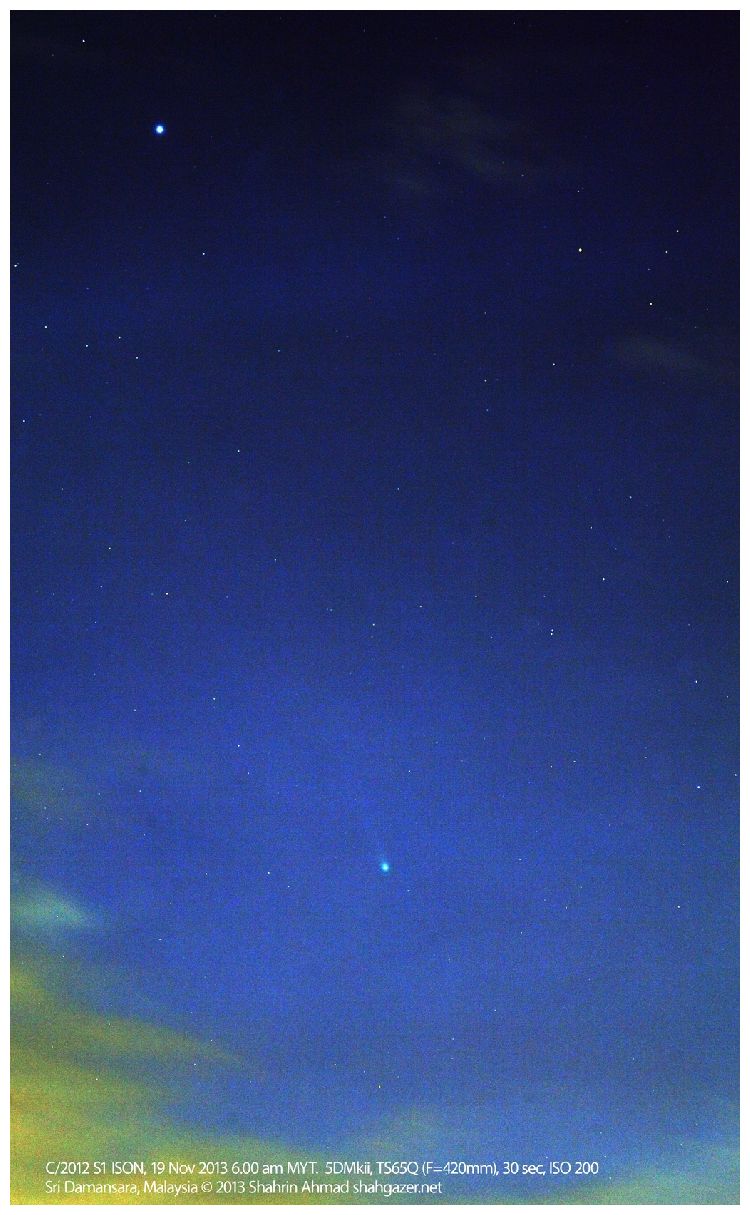
Comet ISON surged in brightness by approximately 2 magnitudes in little more than 24 hours

Multiple observers are reporting that Comet ISON brightened sharply last night. It started the week as an 8th magnitude object invisible to the human eye, but now it has surged to the threshold of naked-eye visibility. "The comet is definitely much brighter than before," says Brad Timerson of Newark, NY. "This morning it was an easy find in binoculars." Jim Saueressig II of Burlington, Kansas, adds that "under dark skies you may now possibly see it with adverted vision." In this picture taken just hours ago by Brian Emfinger of Ozark, Arkansas, the comet is passing by a comparison star of magnitude +6.25:
Comet ISON
© Brian Emfinger
Apparently, Comet ISON has surged in brightness by approximately 2 magnitudes in little more than 24 hours. If the trend continues, it could be a faint but easy naked-eye object by the end of the week.

Saturn

Saturn, Earth shine in amazing new photo by Cassini spacecraft

Saturn eclipses the Sun
© NASA cassini space probeSaturn eclipses the Sun, as seen from the Cassini–Huygens space probe. The Cassini spacecraft's onboard cameras acquired a panoramic mosaic of Saturn that allows scientists to see details in the rings as they are backlit by the sun. This image spans about 404,880 miles (651,591 kilometers) across.
A NASA spacecraft has revealed an unprecedented view of Saturn from space, showing the entire gas giant backlit by the sun with several of its moons and all but one of its rings, as Earth, Venus and Mars all appear as pinpricks light in the background.

The spectacular image, unveiled Tuesday (Nov. 12), is actually a mosaic of 141 wide-angle images from NASA's Cassini spacecraft taken in natural color, which mimics how human eyes might see the ringed planet. Stretching 404,880 miles (651,591 kilometers) across, the panorama captures all of Saturn's rings up to the ethereal E ring, the second outermost one.

The pictures that make up the mosaic were snapped on July 19, 2013 - the same day that Cassini took advantage of a rare opportunity to photograph Earth without interference from the sun, which was totally eclipsed by Saturn at the time. From its far-flung perch millions of miles away, Cassini captured amazing portraits of Earth as a pale blue dot as thousands of people on the ground waved in honor of the global picture day.

"In this one magnificent view, Cassini has delivered to us a universe of marvels," Carolyn Porco, who leads Cassini's imaging team at the Space Science Institute in Boulder, Colo., said of the new image in a statement from NASA. "And it did so on a day people all over the world, in unison, smiled in celebration at the sheer joy of being alive on a pale blue dot."

Info

Strange object boosts Kuiper belt mystery

Kuiper Belt Object
© NASA
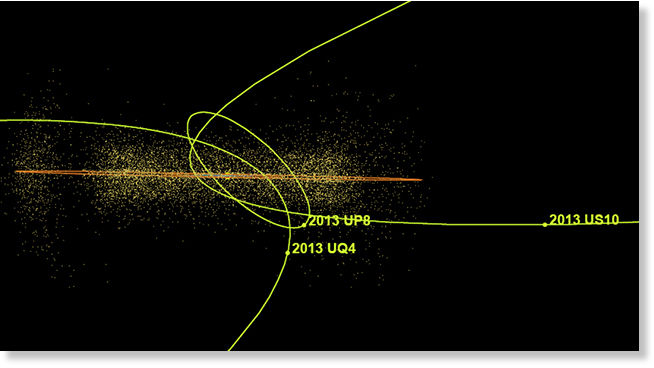
There's something odd floating around in the outer solar system. Actually, there's lots of odd things floating around in the outer solar system, but 2002 UX25 is one of the most baffling.

The mid-sized Kuiper belt object (KBO) measures 650 kilometers (400 miles) across, and yet it has a density less than water (less than 1 gram per cubic centimeter). Yes, if you put it in a huge bathtub, 2002 UX25 would float.

As we probably all know by now, the Kuiper belt - a populated region of the solar system found just beyond the orbit of Neptune - is a strange place. Once thought to have a population of just one, astronomers have identified thousands of other minor planetary bodies. In fact, it was the accelerated discoveries in the Kuiper belt that ultimately led to the reclassification (or demotion, depending on which way you look at it) of Pluto from "planet" to lowly "dwarf planet."

Now, in a paper accepted for publication in the The Astrophysical Journal Letters, planetary scientist Mike Brown, of the California Institute of Technology (Caltech) in Pasadena, has taken a measure of 2002 UX25′s density and discovered that it is "the largest solid known object in the solar system with a measured density below that of pure water ice." Measuring the density of these distant objects are very difficult and require a small moonlet in orbit around the KBO so its orbital characteristics can be accurately measured and KBO density probed. The KBOs satellite was discovered by Hubble in 2005 and follow-up observations by the Keck Observatory in Hawaii refined its orbit.

Satellite

Out of xenon fuel, space seismometer GOCE closing in on crash with Earth

Image
© AOES Medialab/ESAhe Gravity field and steady-state Ocean Circulation Explorer (GOCE), a 16-foot-long satellite with no moving parts, has completed its mission and is now gliding down toward a collision course with Earth.
The one-ton European GOCE satellite, the first orbital piece of technology to register (via infrasound) an earthquake back on earth, is out of xenon fuel and now a satellite falling.

US and European space scientists continue to work to predict the potential terranean fallout range from a snazzy one-ton European satellite called the GOCE that has sputtered out of fuel and is now orbiting the earth in ever tighter and faster circles, unable to resist the very gravity it has been studying.

Scientists believe the pickup-truck-sized satellite, formally known as the Gravity field and steady-state Ocean Circulation Explorer, will finally enter the Earth's atmosphere and break up into dozens of pieces Sunday night or Monday.

"Current predictions, with orbit data from [Saturday morning], indicate a reentry during the night of Nov. 10/Nov. 11, with an uncertainty time window that still spans about 1 day," writes Heiner Klinkrad of the European Space Agency's Space Debris Office, in an email to the Monitor. "The spacecraft is expected ... to spread a number of fragments along a ground impact swath of almost 1,000 kilometers in length."

The chances of being hit by such space junk , however, is infinitesimal, Mr. Klinkrad points out, as the likelihood of being hit by lightning is 65,000 times greater than the possibility of being struck by GOCE debris. Still: Up to 500 pounds of total remaining mass, broken up into perhaps 50 pieces, could be driven into the ground somewhere on the planet.