Science & TechnologyS


X

'Humans evolved after a female chimpanzee mated with a pig': Extraordinary claim made by American geneticist

  • Dr Eugene McCarthy points to features that distinguish us from primates
  • He says that the only animals which also have these features are pigs
  • Controversial hypothesis has been met by significant opposition
The human species began as the hybrid offspring of a male pig and a female chimpanzee, a leading geneticist has suggested.
Image
Image
The origin of the species? A remarkable new theory advanced by a leading geneticist suggests that human beings may have originally emerged as the hybrid offspring of a male pig and a female chimpanzee
The startling claim has been made by Eugene McCarthy, of the University of Georgia, who is also one of the worlds leading authorities on hybridisation in animals.

He points out that while humans have many features in common with chimps, we also have a large number of distinguishing characteristics not found in any other primates.

Dr McCarthy says these divergent characteristics are most likely the result of a hybrid origin at some point far back in human evolutionary history.

Info

Crows are no bird-brains: Neurobiologists investigate neuronal basis of crows' intelligence

Scientists have long suspected that corvids -- the family of birds including ravens, crows and magpies -- are highly intelligent. Now, Tübingen neurobiologists Lena Veit und Professor Andreas Nieder have demonstrated how the brains of crows produce intelligent behavior when the birds have to make strategic decisions.

Their results are published in the latest edition of Nature Communications.
Image
Behavioral biologists have called crows "feathered primates" because the birds make and use tools, are able to remember large numbers of feeding sites, and plan their social behavior according to what other members of their group do.

Crows are no bird-brains. Behavioral biologists have even called them "feathered primates" because the birds make and use tools, are able to remember large numbers of feeding sites, and plan their social behavior according to what other members of their group do. This high level of intelligence might seem surprising because birds' brains are constructed in a fundamentally different way from those of mammals, including primates -- which are usually used to investigate these behaviors.

Magnify

Controversy over use of Roman ingots to investigate dark matter, neutrinos

Image
© Jose A. Moya - UARoman lead ingots from the Bou Ferrer shipwreck.
The properties of these lead bricks recovered from ancient shipwrecks are ideal for experiments in particle physics. Scientists from the CDMS dark matter detection project in Minnesota (USA) and from the CUORE neutrino observatory at the Gran Sasso Laboratory in Italy have begun to use them, but archaeologists have raised alarm about the destruction and trading of cultural heritage that lies behind this.

The properties of these lead bricks recovered from ancient shipwrecks are ideal for experiments in particle physics. Scientists from the CDMS dark matter detection project in Minnesota (USA) and from the CUORE neutrino observatory at the Gran Sasso Laboratory in Italy have begun to use them, but archaeologists have raised alarm about the destruction and trading of cultural heritage that lies behind this.

As Elena Perez-Alvaro from the University of Birmingham explains: "Roman lead is essential for conducting these experiments because it offers purity and such low levels of radioactivity -- all the more so the longer it has spent underwater -- which current methods for producing this metal cannot reach."

"Lead extracted today is naturally contaminated with the isotope Pb-210, which prevents it from being used as shielding for particle detectors," adds physicist Fernando González Zalba from the University of Cambridge.

The two researchers have published a study in the journal Rosetta, also commented upon this month in 'Science', which poses a dilemma: Should we sacrifice part of our cultural heritage in order to achieve greater knowledge of the universe and the origin of humankind? Should we yield part of our past to discover more about our future?

"Underwater archaeologists see destruction of heritage as a loss of our past, our history, whilst physicists support basic research to look for answers we do not yet have," remarks Perez-Alvaro, "although this has led to situations in which, for example, private companies like Odyssey trade lead recovered from sunken ships." This is the company that had to return the treasure of the frigate Nuestra Señora de las Mercedes to Spain.

Comet

Best of the Web: Electric Universe: Earth cycles

 The Alps from space.
© Jacques Descloitres, MODIS Land Rapid Response Team,NASA/GSFCThe Alps from space.
It is a commonly held belief that events on Earth progress according to cycles.

One of the principle tenets of Electric Universe theory is that Earth and the Solar System have experienced catastrophic reordering and resurfacing perhaps as little as 5000 years ago. The time varies, but most adherents to the theory consider 10,000 years ago to be as far back as we need to look for the events to have occurred.

Prevailing geological theories state that it took millions, if not billions, of years to arrange the scenery on our planet. Mountains rise in response to mechanisms that are so slow as to be undetectable over all the millennia of human history: the Himalayas, the Alps, and the Rocky Mountains, for example, retain the shapes that were visible to ancient nomadic tribes that wandered the continents in ages past.

The seas, it is said, have not left their basins in time spans that have no meaning to the human mind. The Atlantic Ocean has bridged the distance between Africa, Europe, and the Americas for a period greater than the human species has existed on Earth.

Rivers, deserts, canyons - all appear to our modern eyes just as they would have appeared to Alexander the Great, Goyathlay, Sargon, or Khufu. The cyclic processes of erosion or sediment deposition are the same today as they were long ago. Most of the current methods for dating artifacts, geologic layers, or fossils are dependent on that hypothesis of gradual, uniform action.

What if the uniformitarian hypothesis is incorrect? What would be the ramifications if carbon dating, potassium-argon, or the so-called "geologic column" were not reliable windows to the past? What if the topography of Earth was created in a period of time so short that ancient civilizations were able to record it? What meaning would the Neolithic, or the Jurassic, or the Precambrian eras have?

Comet

SOTT Focus: Why didn't Comet ISON melt in the Sun? How NASA and Official Science got it all wrong (again)

Image
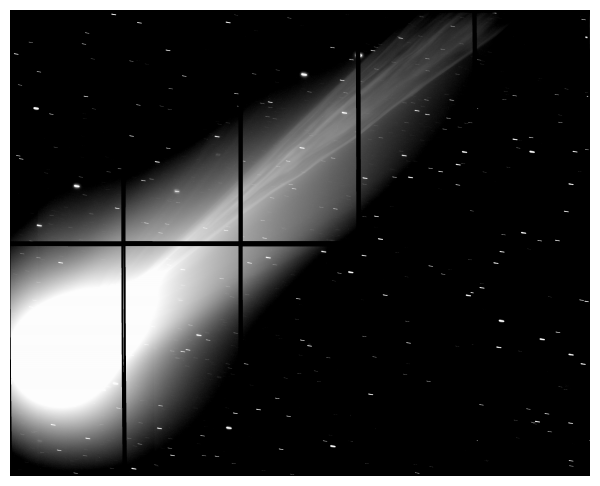
© Damian PeachComet ISON on November 15th, 2013. The field of view is 2.5°, five times the width of the full moon.

Comment:

Editors' Note


This article builds on an excerpt from an upcoming book, to be published by Red Pill Press, which draws on the 'Electric Universe' concept, information theory, astronomy, paleogeology - and much more - to present an expanded cosmology linking so-called 'climate change' and 'Earth changes' with mankind's role in the greater cosmic environment.

Written by Pierre Lescaudron, editor and researcher for SOTT.net, in the following article he provides an explanation for the "weird" and "unexpected" behaviour of Comet ISON to date, particularly regarding its unexpected survival as it went around the Sun on November 28th, 2013.


Comets or Asteroids?
Image
© NarwhallComet, asteroid, meteor and meteorite classification - according to mainstream science.
As depicted in the above illustration, and routinely argued by mainstream science, comets are "chunks of ice and rock", a.k.a. "dirty snowballs". This belief, however, is incompatible with the actual data. For instance, in 2011 Comet Lovejoy plunged into the Sun's atmosphere and emerged on the other side after an hour-long journey through the sun's corona. Its size and brightness didn't seem to have diminished.1 Here are some (pretty typical) comments from observers of this event:
This morning, an armada of spacecraft witnessed something that many experts thought impossible. Comet Lovejoy flew through the hot atmosphere of the sun and emerged intact. "It's absolutely astounding," says Karl Battams of the Naval Research Lab in Washington DC. "I did not think the comet's icy core was big enough to survive plunging through the several million degree solar corona for close to an hour, but Comet Lovejoy is still with us." 2
But if the temperature of the Sun's corona is several million degrees3, and if Comet Lovejoy is no more than a chunk of ice estimated to be just a few hundred meters in diameter,4 how was it possible that it wasn't vaporized?

Comet

Comet ISON lives!

Cancel the funeral. Comet ISON is back from the dead. Yesterday, Nov. 28th, Comet ISON flew through the sun's atmosphere and appeared to disintegrate before the cameras of several NASA and ESA spacecraft. This prompted reports of the comet's demise. Today, the comet has revived and is rapidly brightening. Click to view a SOHO coronagraph movie of the solar flyby (updated Nov. 29 @ 1800 UT):


Before the flyby, experts had made many predictions about what might happen to the comet, ranging from utter disintegration to glorious survival. No one predicted both.

Info

Nanodiamond sensors allow for complete surveillance at the cell level

Diamonds
© ExtremeTech
Impurities in diamonds can not only give them color, they can also turn diamonds into precise sensors of magnetic field and temperature. When the impurity happens to be a nitrogen atom, the crystal structure is deformed in such a way that a gap or defect, known as a nitrogen vacancy-center (NVC), is created.

Electrons that are trapped in the centers show a remarkable coherence with spin states that can be precisely manipulated. If the electron coherence inside nanoscale diamond can be preserved for long enough, not only will we have the perfect qubit for a quantum computer, but the perfect device to reveal the secret lives of neurons.

In bulk diamond, NVCs can store photons, along with the quantum data they might carry, for many milliseconds. New techniques have recently enabled nano-sized diamond structures to be self-assembled by joining them to ring-shaped molecules known as SP1 proteins. The traditional problem with trying to scale down to nanodiamonds has been that they show poor spin coherence - typically in the microsecond range. Now researchers at the University of Cambridge have found a way to protect NVC spins in finely-milled synthetic diamonds, and perform coherence measurements at high resolutions.

Comet 2

Comet ISON the comeback kid defies predictions (and assumptions)

ISON_1
© ESA/NASA/SOHO/GSFCBright, brighter, brightest: these views of Comet ISON after its closest approach to the sun Nov. 28 show that a small part of the nucleus may have survived the encounter. Images from the Solar and Heliospheric Observatory.
Talk about the Comeback Kid. After Comet C/2012 S1 ISON rounded the sun yesterday afternoon, professional astronomers around the world looked at the faded debris and concluded it was an "ex-comet." NASA wrapped up an hours-long Google+ Hangout with that news. The European Space Agency declared it was dead on Twitter.

But the remnants - or whatever ISON is now - kept brightening and brightening and brightening in images from the NASA/European Space Agency Solar and Heliospheric Observatory. The pictures are still puzzling astronomers right now, almost a day after ISON's closest encounter with the sun.

Comment: The level of puzzlement would drop drastically if mainstream science wasn't so attached to its 'dirty snowball' theory.

The True Origins of Electric Comet Theory
Electric Comet: The Elephant in NASA's Living Room?
Evidence Confirms Electric Comet Model
Comets: The Loose Thread


Comet

Best of the Web: Cancel the eulogy for ISON ... For now

Comet ISON flew through the sun's atmosphere on Nov. 28th and the encounter did not go well for the icy comet. Just before perihelion (closest approach to the sun) the comet rapidly faded and appeared to disintegrate. This prompted reports of ISON's demise. However, a fraction of the comet might have survived. Click on the image below to see what emerged from Comet ISON's brush with solar fire:
ISON
© Spaceweather
In the movie, Comet ISON seems to be falling apart as it approaches the sun. Indeed, researchers working with NASA's Solar Dynamics Observatory said they saw nothing along the track that ISON was expected to follow through the sun's atmosphere. Nevertheless, something has emerged. Whether this is a small scorched fragment of Comet ISON's nucleus or perhaps a "headless comet"--a stream of debris marking the remains of the comet's disintegrated core--remains to be seen.

Nuke

Revealed: UK Government's radical plan to 'burn up' UK's mountain of plutonium

Image
© Getty ImagesBarrels containing high level radioactive nuclear waste are stored in a pool to keep cool before being reprocessed at Sellafield nuclear plant.
A radical plan to dispose of Britain's huge store of civil plutonium - the biggest in the world - by "burning" it in a new type of fast reactor is now officially one of three "credible options" being considered by the Government, The Independent understands.

However, further delays have hit attempts to make a final decision on what to do with the growing plutonium stockpile which has been a recurring headache for successive governments over the past three decades.

The stock of plutonium, one of the most dangerous radioactive substances and the element of nuclear bombs, has already exceeded 100 tonnes and is likely to grow to as much as 140 tonnes by 2020, bolstered by a recent decision to include foreign plutonium from imported nuclear waste.