© Unknown
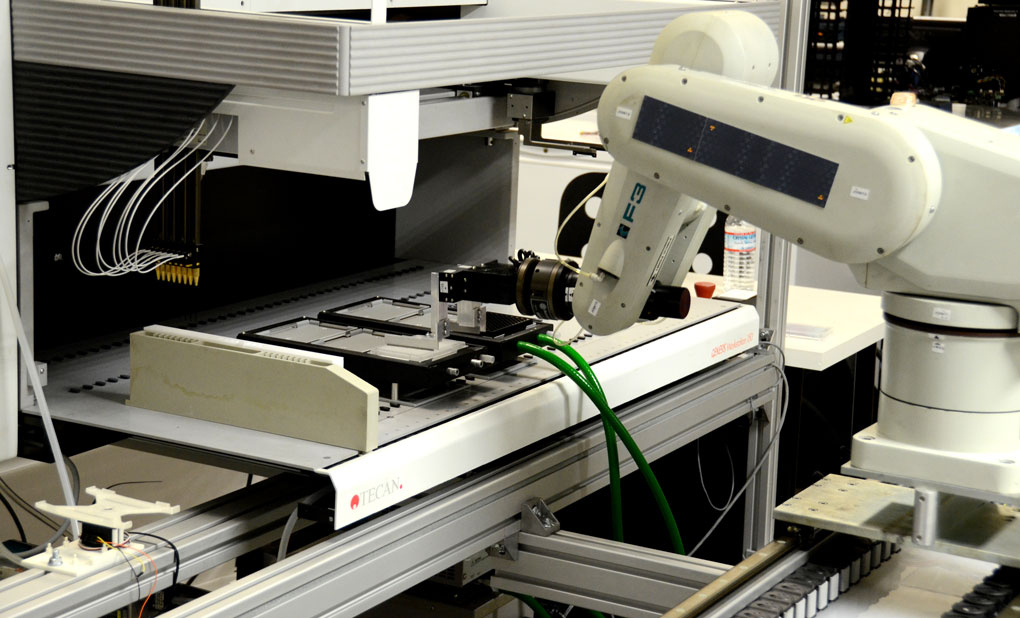
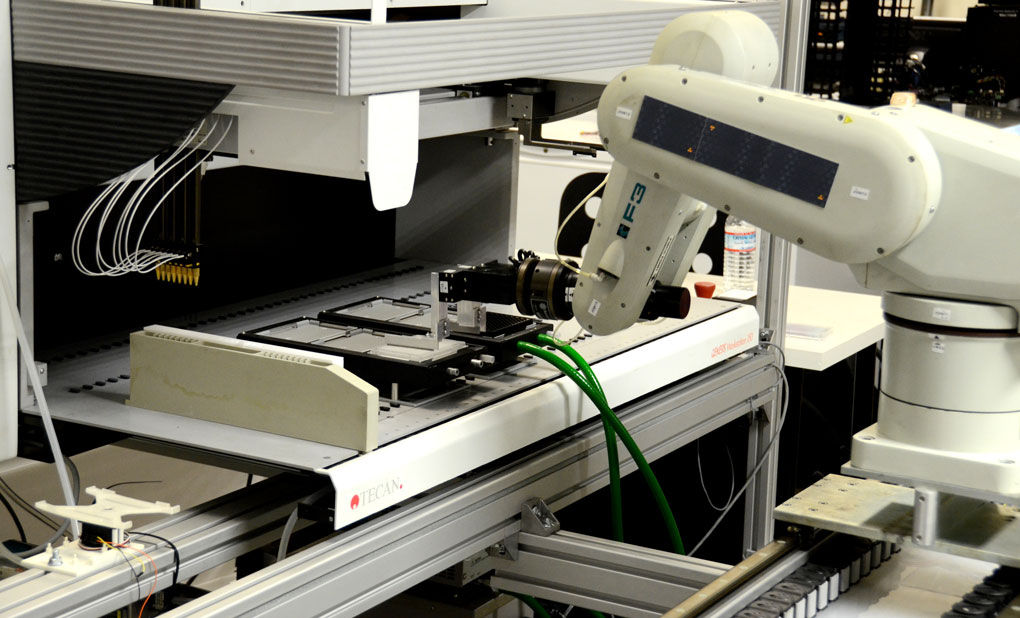
Inside a nondescript office park in Silicon Valley, a robotic arm is running a test. With rapid, precise movements, the arm pipettes colored liquids into wells on a tray. Within a few minutes its work is done: the arm has pipetted the logo for
Transcriptic, a fast-growing, Google Ventures-backed robotics startup that could upend the way biologists do their research.
Transcriptic's small team is calibrating the robot arm, which serves as the linchpin of the company's efforts to transform life-science research by making it cheaper and more accessible. Scientists send in raw materials - DNA, for example, or biopsied mouse tissue - and tell Transcriptic what to do with it. Costs for the service start at a few dollars per test, and the turnaround time is typically limited only by how long it takes for cells to divide.
The company began taking orders from all comers earlier this year, selling services including cell cloning, genotyping, and biobanking. Early customers include Stanford; the California Institute of Technology; the University of California, San Diego; and the University of Chicago. Since July, the number of customers has roughly doubled every month. The heart of Transcriptic is what it calls the "work cell," the automated lab where the robot arm performs its duties: manipulating samples using the various connected machines that run protocols.
The company had never previously allowed journalists inside its walls. But recently, Transcriptic invited
The Verge to come look behind the curtain - the work cell is normally hidden behind an actual, physical curtain - to see how the company is using robotics to do work that has previously been the province of PhDs.
Comment: Though one can say, robots are revolutionlizing the future by replacing the human activity, there is a bigger picture no corporation wants you to think. . With more than 50% people living under poverty in US and more and more people dying with homelessness,cold and greedy corporations poisoning
the human food, one has to ask where does all this lead to as a human scoeity?.



















Comment: Though one can say, robots are revolutionlizing the future by replacing the human activity, there is a bigger picture no corporation wants you to think. . With more than 50% people living under poverty in US and more and more people dying with homelessness,cold and greedy corporations poisoning the human food, one has to ask where does all this lead to as a human scoeity?.