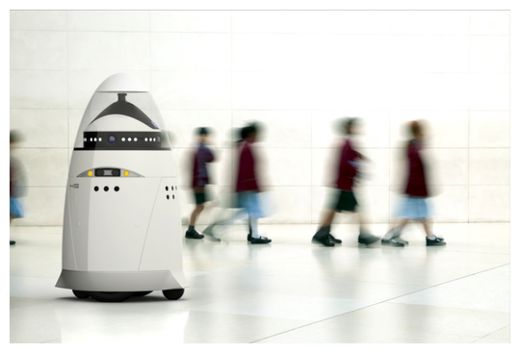
© KnightscopeA bullet-shaped robot that stands about 5 feet (1.5 meters) tall, the K5 "security guard" looks a lot like the droid R2-D2 from the "Star Wars" films. And it may be able to help stop crimes before they happen.
Robot security guards are staples of most futuristic sci-fi movies, video games and TV shows. They exist in real life as well, though the sight of a security robot patrolling the streets is far from common.
The K5 Beta, a just-unveiled prototype from California-based company Knightscope, might change all that.
A bullet-shaped robot that stands about 5 feet (1.5 meters) tall, the K5 looks a lot like
the droid R2-D2 from the "Star Wars" films. The K5 might not have all the features of its counterpart from a galaxy far, far away. But what it does have, Knightscope representatives said, is an onboard sensor array that can see, hear, touch and smell its surroundings.
The K5 can also combine that sensory data with "existing raw business, government and crowdsourced social data sets, and subsequently assigns an alert level that determines when a business, community or authorities should be notified of a concern," according to Knightscope's press release.
In other words, the K5 is supposed to combine its observations with public data on the social and financial statistics of its surroundings, and use the information to predict if, when and where a crime is likely to occur.
If the K5 does detect that an "incident" is occurring, it makes all of its sensor data publicly available via Wi-Fi, "to allow the entire community to review the information transparently and contribute additional relevant, real-time information," Knightscope representatives said.



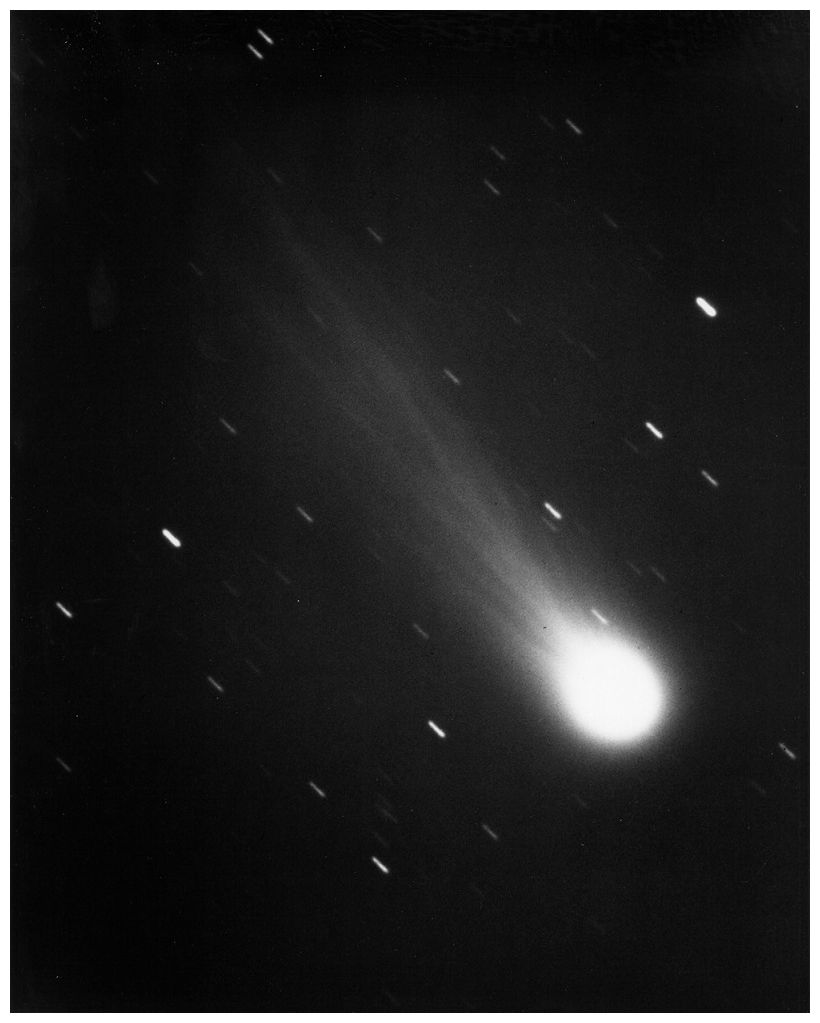






Comment: Historical accounts record multiple air blasts, so more likely than one 'random' cometary event is multiple smaller blasts over a period of time. Read Comets and the Horns of Moses to see how cyclical catastrophe unfolded in the Dark Age that came before the post-Roman Dark Age. Same model, same story: the comets don't directly cause the famines which weaken the populations, followed by the plague. The populations are already weakened by 'climate change' and food shortages due to a corrupt and ensconced elite, then one or two larger chunks of space rock deliver the payload - a comet-borne virus or two that humanity has little to no immunity against.