Science & TechnologyS


Seismograph

Powerful seismic waves from Japan's 2011 earthquake struck Earth's core and bounced back up, moving the island eastward

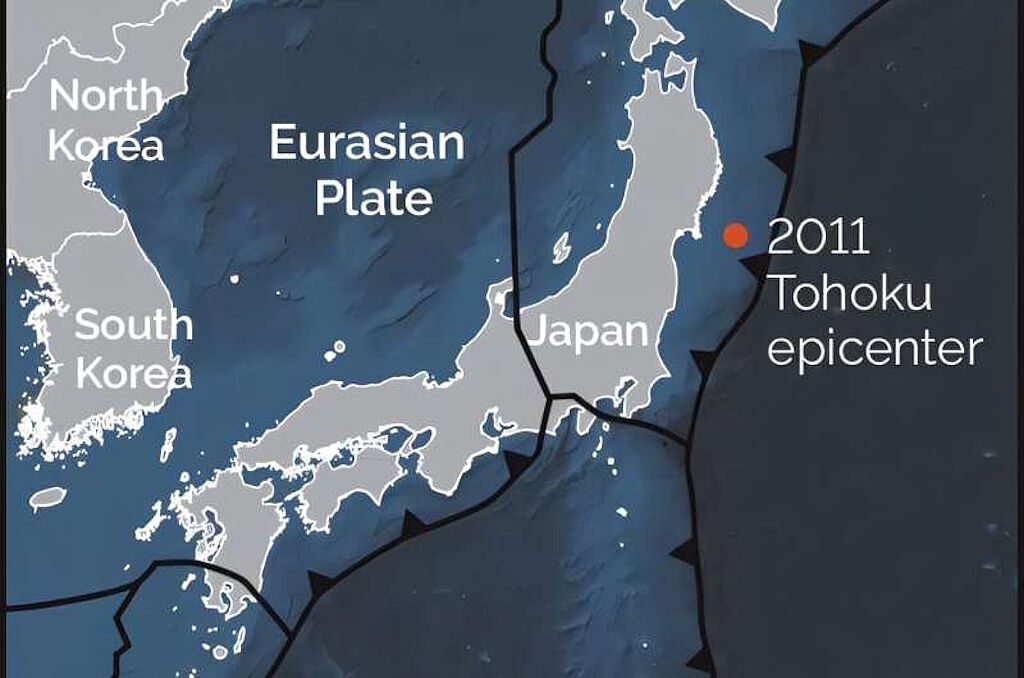
japan earthquakes tectonic plates map
© K. Cantner/American Geosciences InstituteJapan rests at the intersection of four different tectonic plates.
In 2011, Japan reeled from the effects of a devastating magnitude 9.0 earthquake. But unnoticed in the chaos resulting from the quake, its major aftershocks and the tsunami it caused, something strange happened. About 16 minutes after the earthquake, but before the aftershocks hit, Japan's GPS stations registered an eastward lurch — across the entire country — but unconnected to any specific quake or aftershock.

A new analysis of data from the quake, led by University of Chicago geophysicist Sunyoung Park, suggests an extraordinary answer: The waves from the earthquake traveled downward to the Earth's core and then back up, displacing the tectonic plates further. This permanently moved the entire island of Japan eastward by up to 6 millimeters.

Seismologists knew that large waves from earthquakes can travel through the Earth and even reverberate off the core. But this is the first time the phenomenon has been identified as causing tectonic plates to slip near the Earth's surface. "It's striking because this is both an unprecedented length and area for a seismic event, and it is a previously unrecognized source of seismic hazard," said Park.

Attention

The targeted assassination of studies showing vaccines cause injury

Since they can't win on the merits, they've resorted to other tactics.
Injury Studies
© Injecting Freedom
A journalist from The Guardian recently contacted me for a comment on vaccine-related studies I have previously cited in my work. The publishers of these studies have decided — years after publication — that these studies were so flawed and "dangerous to public health" that they needed to be retracted or investigated. The journalist wanted to know if I would amend my book and my recent ACIP presentation now that these studies were under attack.

My response:
"I welcome the media noting the targeted assassination of articles that do not fit the religious belief of vaccine proponents; this is also exemplified by the media's lack of interest in the hundreds of other articles, reviews, and trial documents from my book and ACIP presentation which make plain that the claim vaccines are 'safe and effective' is not supported by the available evidence."
So which studies are under fire? You won't be surprised that they are on some of the biggest hot-button topics when it comes to vaccine injury:

Eye 1

Best of the Web: Generative Optogenetics: brought to you by DARPA!

darpa report generative optics brain thought control
© DARPA
I am going to do the hard work on a DARPA document so that you don't have to.

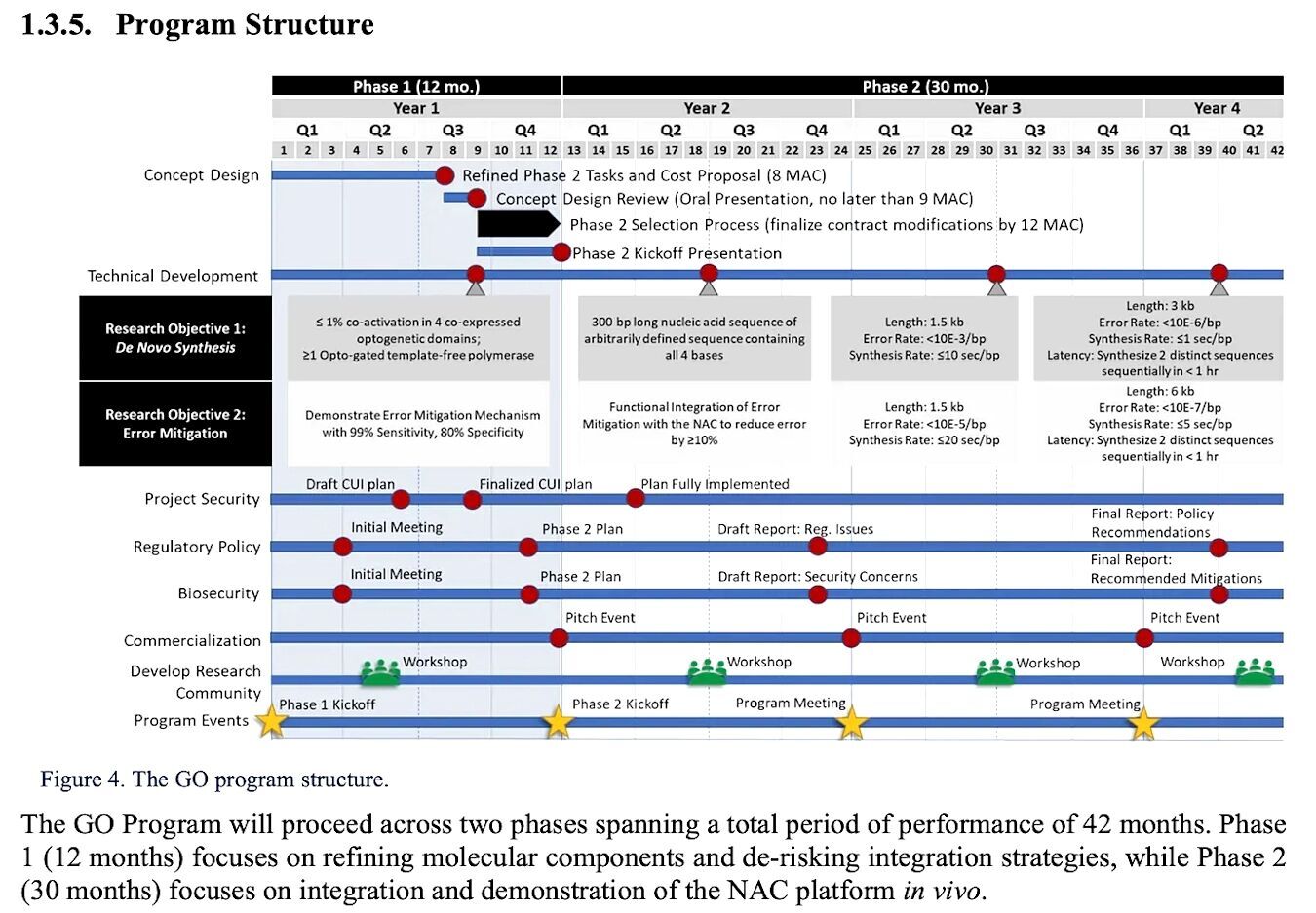
The document I am referring to is an Initial Announcement by the Defense Advanced Research Projects Agency (DARPA) (Biological Technologies Office (BTO)) for a funding opportunity in Generative Optogenetics valued at $1.7M or $1.99M, depending on the research objective selected.1 The announcement was posted on December 19, 2025 and Phase 1 of the project is likely well underway complete with a workshop for interested parties.
darpa report generative optics brain thought control
© DARPA
So what this means is that DARPA is looking for smart people to design a protein complex that can synthesize DNA/RNA directly in living cells using optical signals. Now what the hell does that mean, you ask? I refer you to my article on optogenetics to find out, as a start.

To summarize (as I so succinctly did so in this article), optogenetics is the introduction of genes into cells that don't naturally carry them, whereby the resulting proteins, once expressed, can be controlled and monitored with light stimuli in neurons of living brains, heart muscle cells, and cultured cells.

Hourglass

Scientist set clocks made from an atomic nucleus running for the first time

clock atomic nucleus crystal of calcium fluoride thorium
© Luca Toscani De Col/TU WienA crystal of calcium fluoride that is infused with thorium atoms (shown) is at the heart of a new nuclear clock.
Researchers already used one of the nuclear clocks to search for dark matter

For the first time, scientists used an atomic nucleus as a clock.

The world's most precise timepieces are made using atoms, specifically their electrons. But clocks based on atomic nuclei — protons and neutrons — might eventually outperform them, while also testing basic laws of physics in new ways. Now, the decades-old dream of a nuclear clock has finally been realized, two independent teams of researchers report.

The technology is still at an early stage, but the physics behind it is so different from that of atomic clocks that it's already broken new ground, researchers report in a paper submitted June 3 to arXiv.org. "In some types of measurements, we're already outperforming all of the atomic clocks," says physicist Thorsten Schumm of TU Wien in Vienna.

Family

Researchers accidentally discovered strange, hidden rule of human behavior

humans prefer walk counterclockwise study
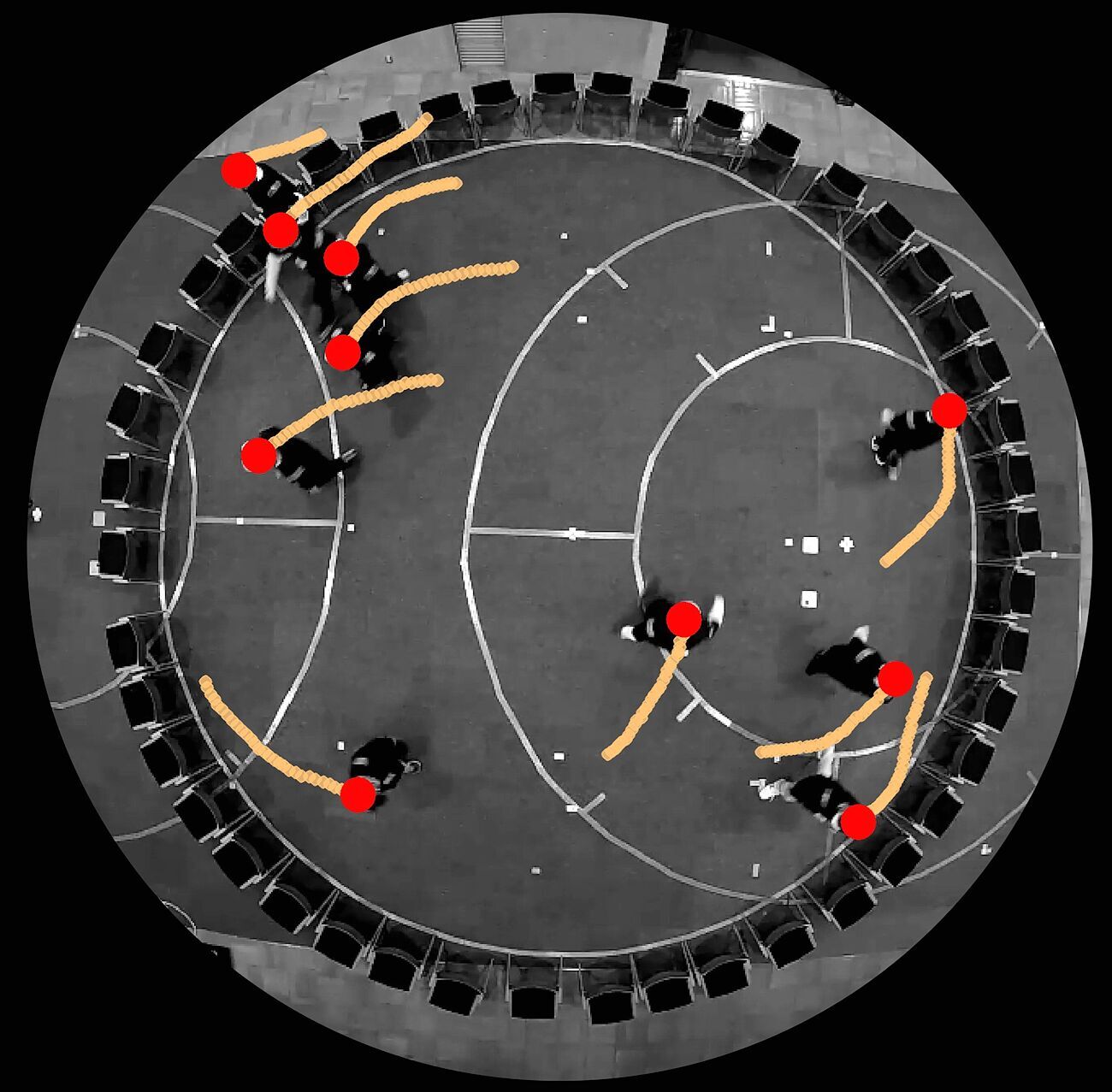
© Iñaki Echeverría-Huarte, Claudio Feliciani, et al"Recently, the spontaneous development of collective counterclockwise motion has been reported in both dense and sparse human assemblies."
Researchers report a "serendipitous" discovery while watching videos of crowds: an inexplicable bias toward counterclockwise turning that may be rooted in biology.

Scientists have discovered that people walking in crowds tend to spontaneously turn counterclockwise — regardless of the environment, from schoolyards to busy settings — a surprise finding that "may represent a manifestation of a deeper biological principle of symmetry breaking," according to a study published in Nature Communications on Wednesday.

The bizarre finding was made essentially by accident; during the Covid-19 pandemic, researchers led by Iñaki Echeverría Huarte, a professor who studies pedestrian dynamics at the University of Navarra in Spain, studied the movements of pedestrians as part of a project to inform public health guidance on social distancing measures. But the videos revealed something unexpected — a consistent pattern of people turning counterclockwise when switching direction.

Arrow Up

Bots now generate more web traffic than humans - Cloudflare

circuit board
© NicoEINino/Getty ImagesCloudflare circuit board
The rise of AI agents has pushed automated requests past human activity, according to the internet infrastructure firm.

Bots and AI agents now generate more web traffic than humans, according to data from internet infrastructure company Cloudflare. CEO Matthew Prince has described the development as a major turning point in the history of the web.

Recent Cloudflare Radar data shows that automated bot requests account for roughly 57% of traffic to ordinary webpages across a selection of websites using the company's services, compared with about 43% generated by humans.

"Welp, that happened faster than I predicted," Cloudflare co-founder and CEO Matthew Prince wrote on X on Wednesday. He stated that he had expected automated traffic to overtake human activity only in 2027, but that "agentic traffic" has grown rapidly enough for bots to pass humans "for the first time in the Internet's history."

Red Flag

Vampire Planet: Data centers, far bigger disasters than you even thought

Amazon's Baldy Mesa solar project
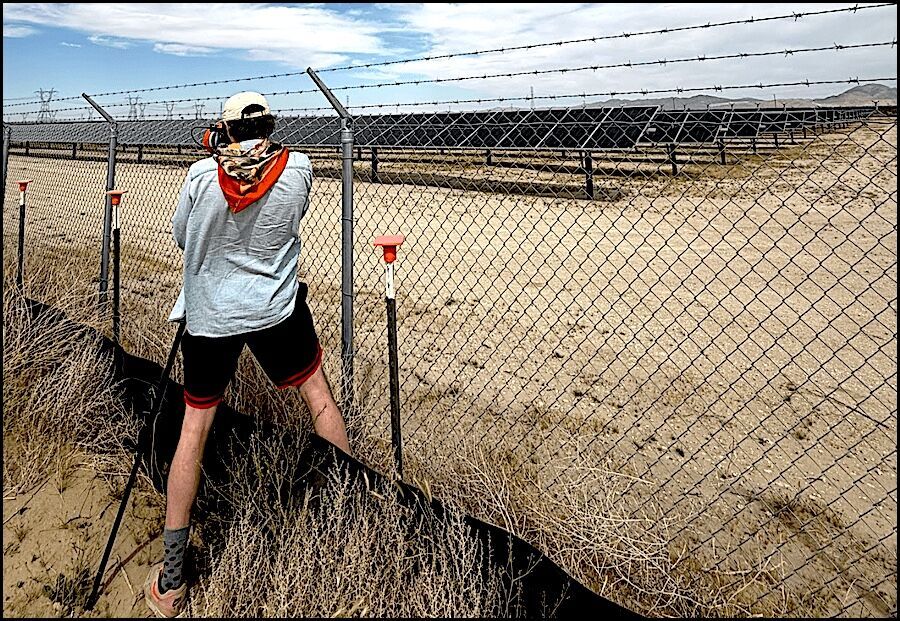
© Screen Shot 6/3/2026 8 11.49.36-AMColby Goves documenting Amazon's Baldy Mesa solar project • 6/3/2026 8 11.49.36-AM
This week in the Anthropocene

The road is dusty and trash-strewn. My friend and collaborator Colby Groves is hanging out the car window as I drive, gazing at a patchwork of solar panels lined up behind a chain-link fence.

"This has to be it," declares Colby, balancing a large camera on his lap, hoping it doesn't bounce off as we traverse a series of bumps and divots.

We are in this land of scorching sun and heat, searching for a large Amazon solar installation in rural San Bernardino County, California. This is the home of the endangered desert tortoise and Joshua trees, but more recently, it's become a plaything for greedy Silicon Valley entrepreneurs.

In 2024, Jeff Bezos' Amazon connected its Baldy Mesa solar-and-storage project, which helps to power the company's nearby data centers, to the electrical grid, earning accolades for its use of renewable energy. It's the first of its kind in California. Despite its gargantuan size, the project faced very little opposition, as is often the case with such "green" projects.

Cassiopaea

Scientists have found a surprisingly simple way to create powerful quantum states

entangled quantum states conceptual image
A conceptual visualization of highly entangled quantum states
Many of the most promising quantum technologies, including advanced sensors and future quantum computers, depend on a phenomenon known as entanglement, where particles become deeply connected and influence one another in ways that cannot be explained by classical physics. Creating the complex entangled states needed for these technologies has traditionally required sophisticated equipment and carefully designed experimental systems.

Researchers at the University of Chicago Pritzker School of Molecular Engineering (UChicago PME) have now proposed a much simpler approach. Their new theoretical method can generate and control a wide range of entangled quantum states using tools that are already common in many quantum physics laboratories.

The work, published in Physical Review X, could help advance ultra precise quantum sensing and open new opportunities for exploring fundamental physics.

Fireball 5

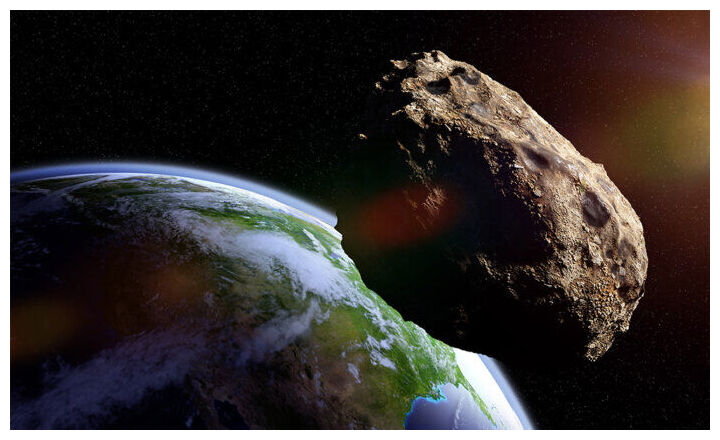
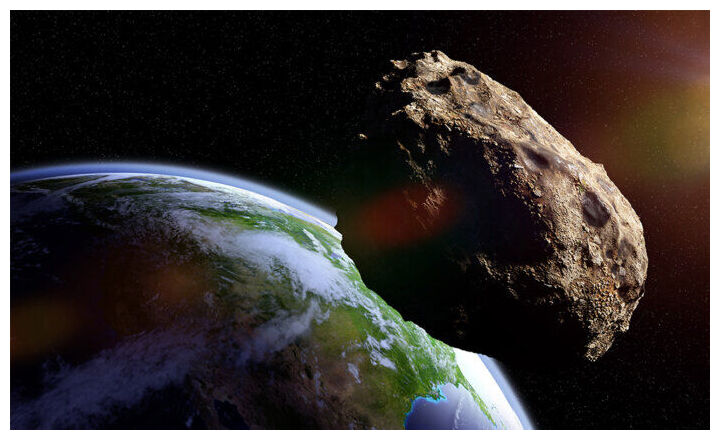
How to stop a killer asteroid

From high-speed battering rams to gravity tractors, the technology exists to protect the planet. The question is whether humanity will act in time — and in concert.
Killer Asteroid
© Adobe Stock
Late last month, in broad daylight, residents across Massachusetts and beyond saw a brilliant flash in the sky, followed by two sonic booms that rattled windows, shook houses, and prompted a flood of 911 calls. Some people thought they had just experienced an earthquake. Others thought it was thunder, an explosion, or a military flyover.

But the true source of all the commotion was out of this world — literally. A small meteoroid, about five feet wide and as heavy as an elephant, had entered the atmosphere at a blinding 42,000 miles per hour before disintegrating dozens of miles above the ground. The midair explosion released a pressure wave equivalent to 230-300 tons of TNT, and any surviving fragments likely fell into Cape Cod Bay.

Since then, the story has captivated an American public already more space-crazed than usual, thanks to the recent success of Artemis II. However, it has also served as a stark reminder that space is not as benign or empty as it may seem. Rather, our solar system is a celestial shooting gallery, chock-full of flying projectiles — not just meteoroids but larger bodies, such as comets, asteroids, and other cosmic detritus — and Earth is right in the firing line. Earlier in May, for instance, the newly discovered asteroid 2026 JH2, estimated at 50 to 115 feet wide, missed Earth by a "mere" 56,000 miles. Had it been on a collision course, it could have easily destroyed a big city.

But even that would not have been humanity's worst nightmare scenario. After all, some celestial goliaths can run a lot larger than JH2 — large enough to decimate entire countries and even continents. British physicist Stephen Hawking believed that a cosmic impact poses one of the greatest threats to humanity, far greater than any global pandemic or terrestrial natural disaster. The question is not if we will suffer a direct hit but when.

Fish

Fossil fishes buried in the desert reveal a missing chapter in marine history

Jack fish skeleton
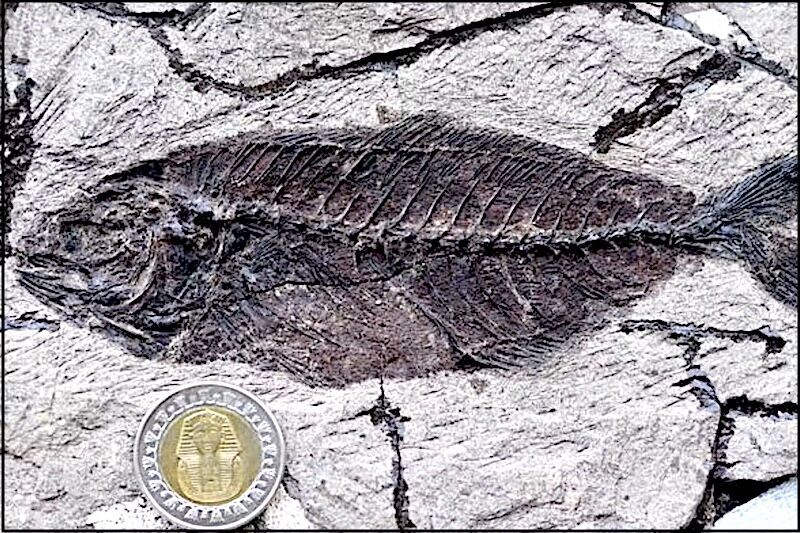
© Professor Hesham Sallam, Mansoura University Vertebrate Paleontology CenterA complete skeleton of the oldest jack fish, found at Qreiya 3
When an asteroid struck Earth about 66 million years ago, it ended the age of dinosaurs and transformed life across the planet. The effects of that catastrophe are visible in the fossil record on land, but scientists know far less about what happened to fishes in the seas during the first few million years after the extinction.

Like many people during the pandemic, I suddenly found myself living through long stretches of isolation and uncertainty. In 2020, while alone in my apartment in Ann Arbor, Michigan, I was finishing a study on fossil fishes from Egypt. This question of what happened to fishes immediately after the age of the dinosaurs kept troubling me.

That missing chapter represented a major gap in scientific understanding of how modern marine ecosystems emerged.

A unique opportunity

At the time, I was studying younger fossil fishes, but I kept wondering whether older rocks in Egypt might preserve clues to this critical period. During those long pandemic months, I spent countless hours reading geological reports and searching for mentions of formations with fish fossils of the right age.

Then, Hesham Sallam, my adviser, introduced me to earlier work by paleontologist and geologist Robert Speijer and colleagues who had documented rocks at Qreiya in Egypt that were deposited only about 4 million years after the asteroid impact.

That single detail changed the entirety of my Ph.D. research.