
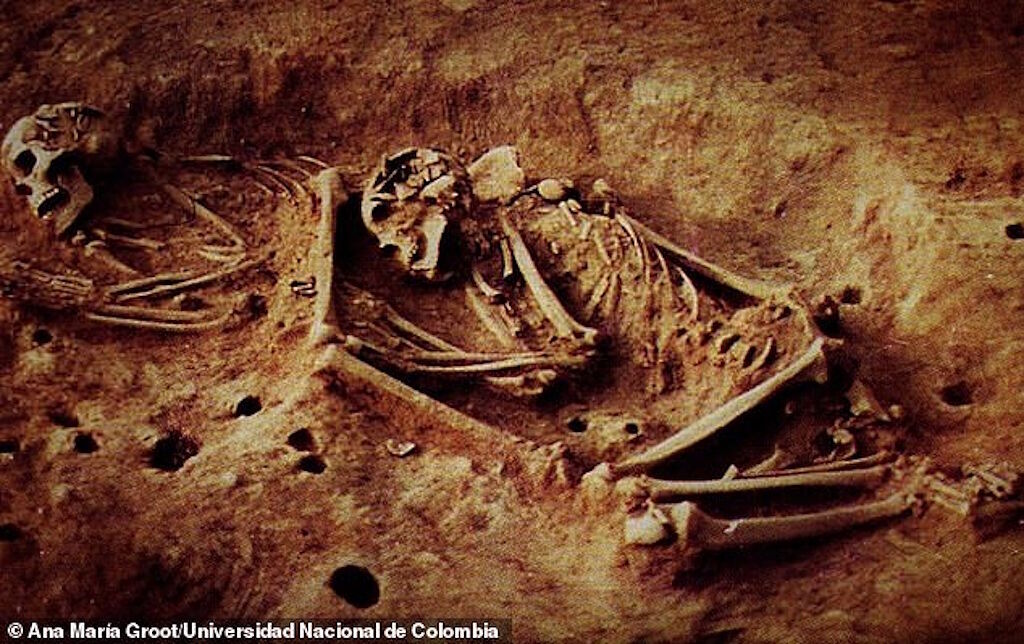
© Ana Maria Groot/Universidad Nacional de ColumbiaThe skeletons of two hunter-gatherer individuals excavated at the Checua archaeological site (Bogotá Altiplano) were found to have no relationship to current Columbian indigenous groups.
The remains, discovered at the ancient preceramic site of Checua near Bogotá, were of hunter-gatherers whose DNA does not match that of any known Indigenous population in the region today.
Instead, their genetic signature reveals a distinct and now-extinct lineage that may have descended from the earliest humans to reach South America, one that diverged early and remained genetically isolated for thousands of years.
By analyzing ancient DNA from 21 individuals who lived in the Bogotá Altiplano between 6,000 and 500 years ago, researchers reconstructed a rare genetic timeline spanning nearly six millennia.












Comment: New Scientist elaborates: