
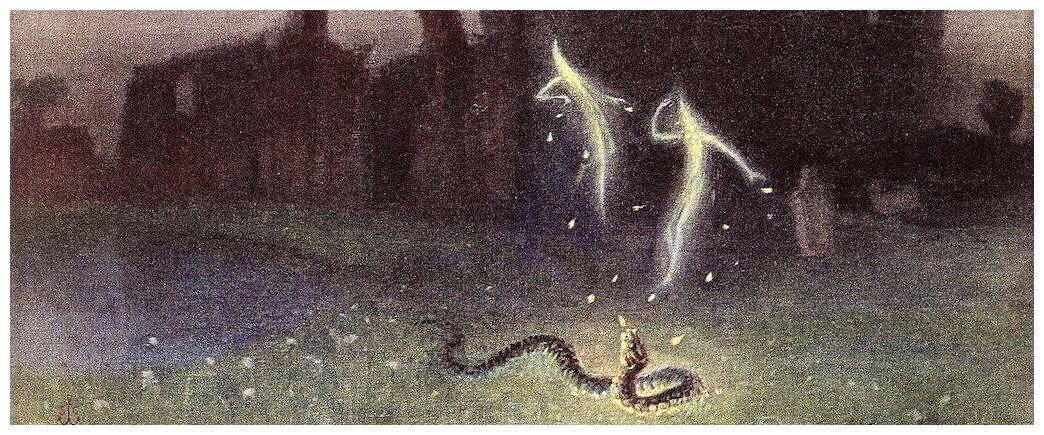
© Hermann Hendrich/Public DomainAn 1823 painting, Will-o-the-wisp and snake.
Often called will-o'-the-wisps, jack-o'-lanterns, or ignis fatuus, these bizarre floating flames have understandably inspired many a colorful back story. They're sometimes explained as the spirits of the dead, or lanterns carried by lost souls doomed to roam the land forever after tricking the Devil.
But what is the science behind this fanciful folklore? More grounded explanations have included pockets of swamp gas that spontaneously ignite, but they shouldn't be able to spark up without a clear trigger.
Now, a study led by Stanford University chemists suggests that microlightning could be to blame. These tiny bolts of electrical energy could form in electric fields where gases meet liquids, then jump between bubbles of different charges and ignite methane gas.
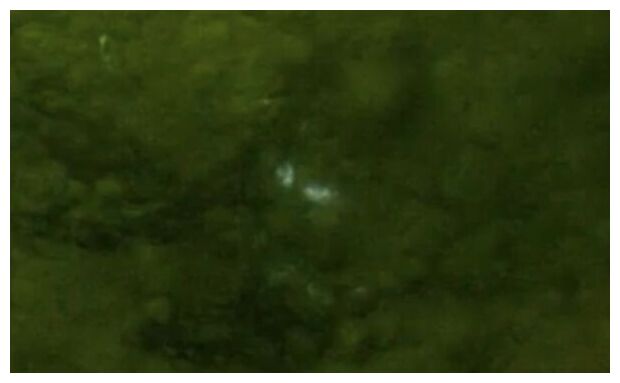
© Xia et al., PNAS, 2025Flashes of microlightning can be seen between bubbles in the team's experiments.
Although the flashes were seen even when only air bubbles were introduced, more microlightning seemed to flare up when methane was present.
"Microlightning between methane microbubbles offers a natural ignition mechanism for methane oxidation under ambient conditions," the researchers write in their paper.
"This discovery supports a long-suspected link between electrified interfaces and spontaneous cool flames, and it provides a physically grounded explanation for the occurrence of ignis fatuus."
This phenomenon might not just explain the mysterious will-o'-the-wisps - it could have played a key role in our own existence. Some of the same researchers previously suggested that this kind of microlightning could have provided the original spark that set off the chemical reactions that let life arise from non-living matter.
The research was published in the journal PNAS.



Reader Comments
Those clever scientists, need to explain how microseconds turn into many seconds and minutes of actual phenomena.