Best of the Web:


Chess

Best of the Web: Flores interview: Turkey's Syria gambit is fourth-generation warfare at its finest

Turkish tanks

Comment: Flores offers a great analysis of the situation in Syria re: Turkey. Not only that, he makes clear the major challenges inherent in any analysis of geopolitical events. We are always dealing with incomplete information. That doesn't make analysis impossible, but it definitely inspires humility.


Turkey's seizure of multiple villages from the so-called "Syrian Democratic Forces," i.e., US-backed Kurds has put into question the fate of Kurdish forces in and around Aleppo. What's more, discussion has opened as to whether or not Damascus and Ankara have reached a deal trading "Kurds and terrorists for Aleppo," thus heightening cooperation between the two countries in attaining strategic objectives which were diametrically opposed just several months ago.

Analysts have been split in their assessments of Euphrates Shield operation and its implications for Turkish-Russian rapprochement and the dynamics on the ground in Syria. While some appraised Turkey's adventure, its involvement of "FSA" forces, and its supposed backing by the US coalition represented by Joe Biden as signs of post-coup Turkish treachery, others suggested that the campaign could not have begun, much less advanced so far, without coordination and at least tacit agreement with Damascus, Moscow, and Tehran.

Comment: Further reading:


Bad Guys

Best of the Web: Who's behind the campaign to blame Putin for everything?

Putin did it
Hardly a day goes by without some "news" about the Russian "threat," and in the past twenty-four hours the hate-on-Russia campaign seems to have picked up speed. After learning from Hillary Clinton that Vladimir Putin is not only responsible for the Trump campaign, but also for the "global nationalist movement" that yanked the British out of the European Union, mainstream media are telling us that Russian interlopers are supposedly invading our electoral process by hacking into voter databases. The Washington Post "reports":

"Hackers targeted voter registration systems in Illinois and Arizona, and the FBI alerted Arizona officials in June that Russian hackers were behind the assault on the election system in that state.

"The bureau told Arizona officials that the threat was 'credible' and severe, ranking as 'an 8 on a scale of 1 to 10,' said Matt Roberts, a spokesman for the secretary of state's office.

"As a result, Secretary of State Michele Reagan shut down the state voter registration system for almost a week."

So the Russkies are invading the American polity, launching a cybernetic assault on the very basis of our democracy? Really? Well, no, as becomes apparent when the reader gets down in the weeds and exercises his critical faculties, if such exist. Because by the time we arrive at paragraph five of this "news" story, we learn that:

"It turned out that the hackers did not succeed in compromising the state system or even any county system, but rather had managed to steal the user name and password for one Gila County elections official."

Oh, but never mind that nothing much happened and no data was altered, because:

"Nonetheless, the revelation comes amid news that the FBI is investigating suspected foreign hacks of state election computer systems, and earlier this month warned states to be on the alert for intrusions."

"Russian" hackers have now been magically transformed into "suspected foreign hacks": we aren't supposed to notice this shift in attribution because, after all, the FBI is supposedly putting its imprimatur on this conspiracy theory. Except they aren't: nowhere in the story does the FBI confirm that the Russians or any foreign actors are behind this.

Comment: There will be no all-out nuclear conflict with Russia. US suggestions to that effect are merely a continuation of 'the nuclear threat' which the US has used to keep vassals in line since 1945.

However, another reason for this rise in the "Russian hacker" meme (which is actually just an extension of the "Chinese hacker" meme) is to provide a plausible lie that can be used to 'excuse' the coming, inevitable economic winter.


Red Flag

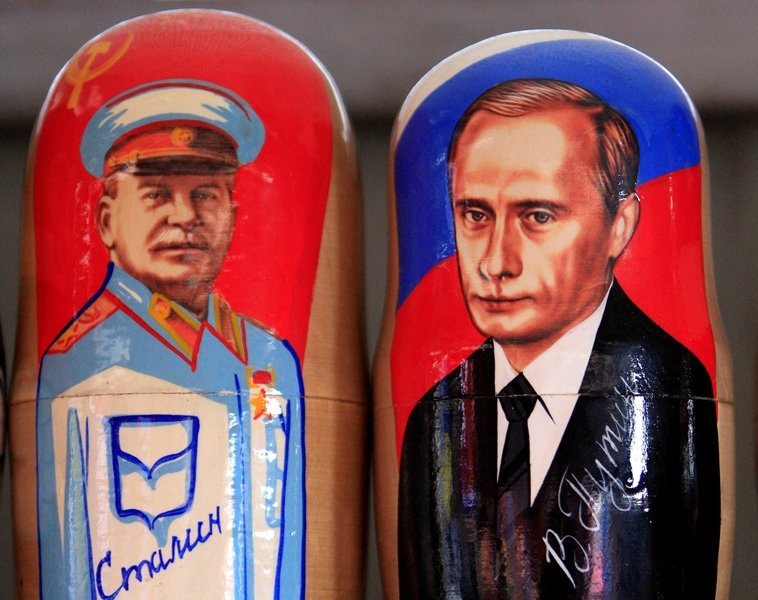
Best of the Web: Is Putin the new Stalin?

stalin putin dolls
© Unknown
Last week, an optician from my home town, let's call him 'Bernard,' posted a link on Facebook to a radio show I participated in from Moscow. There was nothing unusual about that, but some of the comments below the line were startling.

Particularly from a man I admire in other walks of life, who will be known as 'Tom' for the purposes of this op-ed. Tom is as bright as a button, well read, and is a high achiever but his prejudices when it comes to Russia are badly misinformed.

"Russia (is) probably the most corrupt nation on the planet. Putin is in the same league as Stalin. Sorry, I have no time for their leadership. A tiny number of oligarchs have usurped the wealth of a huge country. All are friends of Putin," Tom wrote on Bernard's page.

My initial reaction was that his statement essentially regurgitated talking points from numerous BBC 'exposes' on Putin's Russia. Which does go to show the influence of the British state broadcaster.

Bad Guys

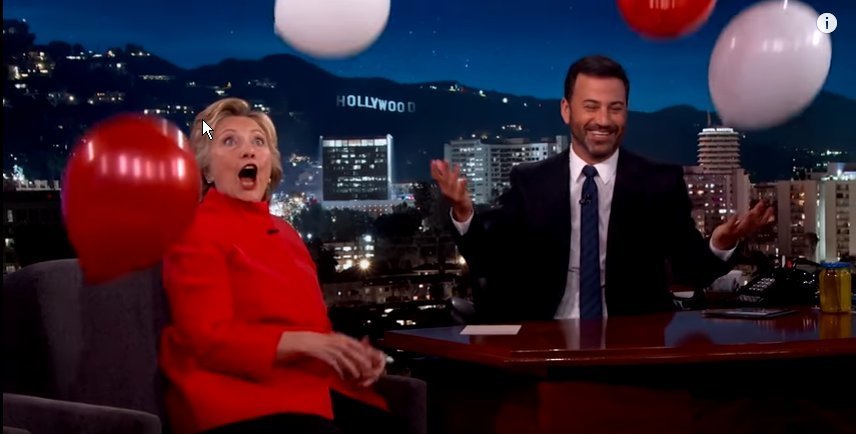
Best of the Web: The absurdity of Hillary Clinton blaming Putin for vast 'far-right conspiracy' in the U.S.

Hillary Clinton on ABC's
© ABC / Jimmy Kimmel Live
It is now obvious that the Clinton Foundation's primary function was always as a shell organization to facilitate the exchange of money for favors.

It seems that among the few certainties in life, along with death and taxes, is the inevitability of a political scandal involving at least one member of the Clinton family. Just as certain as the scandals themselves are the inevitable denials, obfuscations and absurdist attempts to change the subject which follow in their wake. So it comes as no surprise that, after easily the worst week of her campaign thus far, Clinton is attempting to throw a giant red herring into the news cycle by floating the specter of an insidious and vast, "Alt-Right" conspiracy within the Trump campaign.

Indeed, as things presently stand she desperately needs to have the media pivot off of its recent focus on the transparently corrupt dealings of the Clinton Foundation. Even traditionally die hard liberals are now openly calling for her to end her association with the Foundation. This may have to do with the fact that it is now obvious that the foundation's primary function was always as a shell organization to facilitate the exchange of money for favors, quite literally the selling of influence. These revelations are extremely damaging to a candidate that is already profoundly mistrusted by the majority of the American electorate.

Comment: Clinton blames Trump supporters for 'dark conspiracies' but then follows with her own 'paranoid fever dream' about Putin controlling America's nationalist movement,
The godfather of this global brand of extreme nationalism is Russian President Vladimir Putin.... Trump himself heaps praise on Putin and embrace pro-Russian policies. He talks casually of abandoning our NATO allies, recognizing Russia's annexation of Crimea, and of giving the Kremlin a free hand in Eastern Europe more generally.

American presidents from Truman to Reagan have rejected the kind of approach Trump is taking on Russia. We should, too.
So while Clinton tries to position herself as the 'protector of the vulnerable' we know what to expect from her: more war and more victims. Also see: Funnily enough, Hillary's supporters aren't even sure what the alt-right is:


Info

Best of the Web: Washington's Sunni myth and the Middle East undone


Comment: Malik offers a detailed and fairly insightful analysis of what's going on in Syria and Iraq. However, he hasn't quite escaped from the lies of the Western propaganda machine. Even then, his analysis shows that even if you accept much of the West's propaganda narrative, it is not enough to rationally justify any of the U.S.'s policy choices when it comes to Syria. The narrative is self-defeating. Of course, it's that way on purpose, because their real goals are diametrically opposed to their professed goals. But if enough people saw this, it would at least be a bit more of a challenge for the U.S. to destroy Syria like it did to Libya and countless other countries over the past couple generations. See part 1 here: The Syrian and Iraqi wars: Washington's myth of Sunni/Shia sectarianism


A Westerner with extensive on-the-ground experience in Syria and Iraq tackles conventional Western views of the civil wars in Iraq and Syria and proposes a dramatic rethinking of the region.
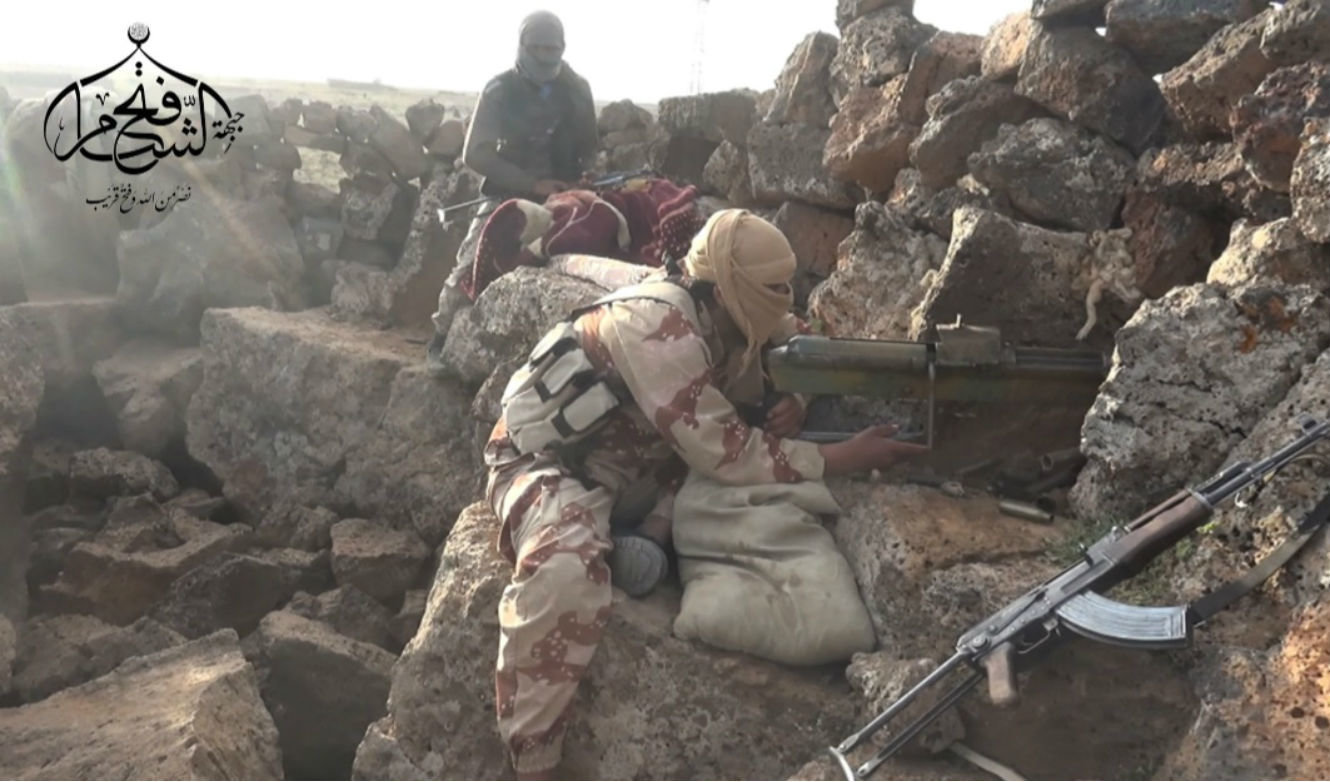
nusra

Editor's Note: This is the second of two articles on this topic, the
first of which was published last week. There has been some controversy over my decision to allow this author to write under a pen name. I know the author's identity and while his arguments are surely controversial, I am confident in his sourcing and subject matter expertise. I carefully considered his request to use a pen name. I decided that this case reasonably meets the standards for such protection published on our site. The author, in my view, can reasonably and seriously fear for his professional employment and safety publishing under his real name. -RE

I was not surprised to see my first article greeted with so much outrage by those who adhere to the conventional Western narrative of the civil wars in Iraq and Syria as well as the larger tumult of the Middle East. In truth, these conflicts are not so easily defined by the easy sectarian narrative offered in the Western press. I argued that Western elites were surrendering to and even embracing the Saudi definition of what Sunni identity should mean. And I provided accounts of the conflicts in Syria and Iraq that do not comport with what you likely have been reading in the newspapers.

Gem

Best of the Web: The Ankara-Tehran-Moscow (ATM) coalition

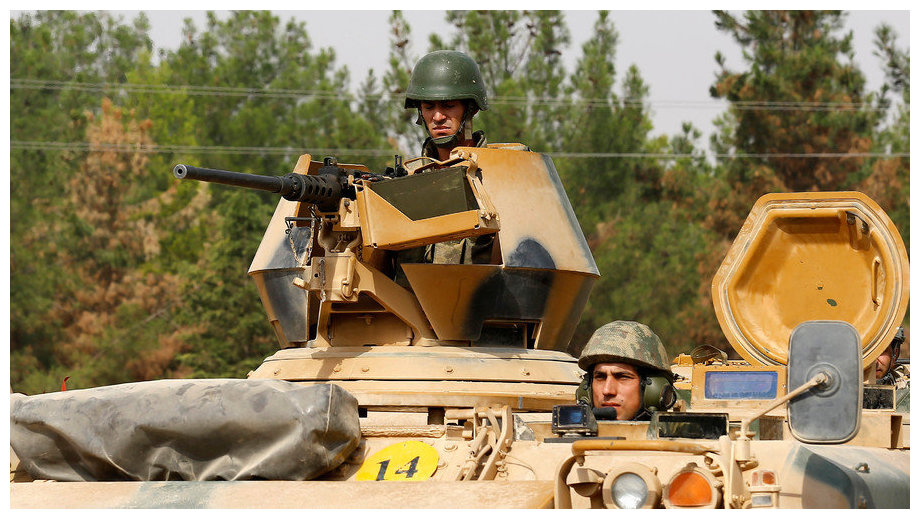
Turkish soldiers
© Umit Bektas/Reuters Turkish soldiers on an armoured vehicle are seen in Karkamis on the Turkish-Syrian border in the southeastern Gaziantep province, Turkey, August 25, 2016.
So Turkish President, a.k.a. Sultan Recep Tayyip Erdogan is about to make a high-profile visit to Tehran - the date has not yet been set - to essentially kick start the ATM (Ankara-Tehran-Moscow) coalition in Syria.

Anyone as much as hinting at such a massive geopolitical tectonic shift a few weeks ago would be branded a madman. So how did the impossible happen?

A major strategic game-changer- Russia using an airfield in Iran to send bombers against jihadis in Syria - had already taken place, with its aftermath spectacularly misreported by the usual, clueless US corporate media suspects.

Then, there's what Turkey's Prime Minister, Binali Yildirim, said last Saturday in Istanbul: "The most important priority for us is to stop the bloodshed [in Syria] as soon as possible." The rest are irrelevant "details."

Yildirim added Ankara now agrees with Moscow that Bashar al-Assad "could" - and that's the operative word - stay in power during a political transition (although that's still highly debatable). Ankara's drive to normalize relations with Moscow had an 'important share' in this 'policy shift'.

The 'policy shift' is a direct consequence of the failed military coup in Turkey. Russian cyber-surveillance aces - in action 24/7 after the downing of the Su-24 last November - reportedly informed Turkish intelligence a few hours before the fact. NATO, as the record shows, was mum.

Even minimalist optics suggests 'Sultan' Erdogan was extremely upset that Washington was not exactly displeased with the coup. He knows how vast swathes of the Beltway despise him - blaming him for not being serious in the fight against ISIS and for bombing the YPG Kurds - Pentagon allies - in Syria. The record does show Erdogan has mostly ignored ISIS - allowing non-stop free border crossing for ISIS goons as well as letting Turkish business interests (if not his own family) profit from ISIS' stolen Syrian oil.

Compared to Washington's attitude Moscow, on the other hand, warning Erdogan about serious, concrete facts on the ground in the nick of time. And for Erdogan, that was highly personal; the putschists reportedly sent a commando to kill him when he was still in Marmaris.

Fast forward to Iranian Foreign Minister Mohammad Zarif's surprise visit two weeks ago to Ankara. Zarif and his counterpart Mevlut Cavusoglu did discuss serious options by which the budding ATM coalition could come up with a viable exit strategy in Syria. One week later Cavusoglu went to Tehran and talked again to Zarif for five hours.

It's an uphill battle - but doable. Tehran knows very well IRGC officers as well as Hezbollah, Iraqi and Afghan fighters were killed in the Syrian war theater, and that shall not be in vain. Ankara for its part knows it cannot afford to remain forever trapped in an ideological dead end.

Megaphone

Best of the Web: French General: Syrian government unlikely to be behind 2013 Ghouta chemical weapon attack

damascus
© REUTERS/ Yaseen Al-Bushy
Syrian government forces are unlikely to be behind the 2013 Ghouta chemical attack, Francois Delattre, a French Army general and an analyst with the Institute of International and Strategic Relations (IRIS), told Sputnik on Wednesday.

Debates over the Ghouta attack incident resurfaced earlier in the day after Syria's Permanent Representative to the United Nations Bashar Jaafari said in an interview that the attack was organized by French intelligence in an effort to divert UN inspectors' attention from another incident caused by the opposition.

"I would prefer not to think that French special forces were involved in the chemical weapons operation, and even about them stating that [Syrian President] Bashar Assad used them in Ghouta. According to the information available, the weapons were inspected by UN experts and it was found that they were deployed in areas which Assad's forces could not have accessed by definition," Delattre said.

The international community has struggled to establish the side responsible for the attack, with the UN Security Council's Joint Investigative Mechanism (JIM), set up in 2015, due to publish its findings by the end of August. Despite the lack of conclusive evidence, a number of governments, including France, the United Kingdom and the United States, were quick to blame the Syrian government for the incident.

Comment: Another French General, Dominique Trinquand, hints that the Syrian opposition could have been behind the attack:
"There really were chemical weapons. The question is, what happened to these chemical weapons: whether they were completely destroyed, or the rebels were able to capture them and use them. And in this case the Syrian government would be primarily responsible for that because it had failed to keep it. And secondly, the responsibility, of course, also lies on those who had used chemical weapons, namely the opposition, if it was them who'd done it," he said.
But, the question then becomes, how did the Syrian opposition get access to chemical weapons. Gen. Trinquand seems to think the weapons would have been stolen from the Syrian government, but there isn't any proof of that. It could easily be claimed that the opposition was given chemical weapons by sources from the West and then used to attack and demonize Syria. The Syrian representative to the UN, Dr. Bashar al-Jaafari, has accused French Intelligence of being behind the attack:
"The use of chemical weapons in the Damascus area was meant to prevent Dr. Åke Sellström [the head of the weapons inspectors] from going to Aleppo because [France] knew who had used chemical weapons in Aleppo."
He elaborated on his accusations in an exclusive interview with Sputnik:
"The case with chemical weapons was initially fabricated to exert pressure on the Syrian government. After the first chemical gas attack on Khan al-Asal in Aleppo, I went to the Secretary-General (UN approx.) to request assistance to the Syrian government in investigation for answering if there actually was a chemical attack and who was behind it?"
[...]

"Three hours later after consultation with the countries of the UN Security Council, he came back to me and said, 'Tell your government that I will assist and sent a delegation of experts who will be engaged in investigating the chemical attack in Khan al-Asal.'"

However, according to Jaafrey, the Secretary-General added that he will not be able to assist in determining the party behind the attack.

"From that moment, it became clear that the UN Security Council members are interested in keeping the party behind the attacks unnamed due to certain political circumstances," Jaafrey said.
[...]
The purpose of the Huta attack was to distract from Khan al-Asal, to create obstacles to keep Selstrum from traveling there, as well as to focus everyone's attention on Damascus. The plan was a success, as Dr. Selstrum has not yet visited Khan al-Asal, according to Jaafrey.

"According to the French sources and according to the book 'Road to Damascus'the famous French journalists Georges Malbruno and Christian Shesno have documented evidence to prove the involvement of the former French Foreign Minister, Laurent Fabius, in the Eastern Guta tragedy near Damascus," Jaafrey told Sputnik.

"At the moment, we have sent hundreds of letters to the UN Security Council, the Commission of Inquiry under 1540 and to the mission of fact-finding and joint investigation. All of them were created after the incident in Khan al-Asal in the Eastern Guta and near Damascus. In our letters there was transparent information," the representative said.

However, the UN Security Council member states either ignored the data, or accused it of being unreliable. They did not pass the data to the media, nor did they mention it in their statements. "This was due to the fact that the party behind these chemical attacks has the support of these countries," Jaafrey said.
As we can see now, the chemical weapons attack in 2013 that was used by the West as a prime example to remove Assad from power was another false flag set up to further US imperial designs. There is no proof that Assad gassed his own people, while it's likely that the proxy army created by the West are the ones responsible.

See also:


Sherlock

Best of the Web: Outright lying by UK govt: We know about Iraq, but what about Syria?

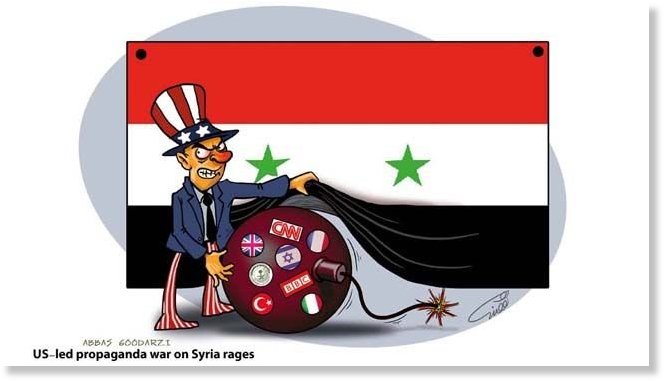
syria propaganda
British wars abroad have two enemies. First, the official enemy, portrayed as a monster whom we always battle with noble intentions. But second is the enemy within - us, the public. The danger posed by the public is that we may stop elites doing what they want, hence we are subject to state 'information operations' to convey messages and obscure facts, usually via compliant media organisations. Current British policy in Syria, which is having the effect of prolonging the terrible war by supporting forces fighting the regime, involves outright lying by ministers at a level similar to that over Iraq in 2002-3.

The British government is waging 'information warfare' by funding media operations for some Syrian rebel groups. The Ministry of Defence is hiring contractors to produce videos, photos, radio broadcasts and social media posts branded with the logos of rebel groups, to 'effectively run a press office for opposition fighters'. Materials are being circulated in the Arabic broadcast media and posted online with no indication of British government involvement.


Comment: Is it not possible these contractors might be spreading disinformation about Assad and his "attacks on civilians"??


But a key strand of government propaganda over Syria is often simply lying to parliament and the public. In July 2015, Defence Minister Earl Howe told Parliament that the government 'would seek further Parliamentary approval before UK aircraft conducted air strikes in Syria'. This was untrue - British aircraft were already secretly striking Islamic State targets in Syria as was revealed by human rights organisation Reprieve six days after Howe's statement. These air strikes, conducted by pilots embedded with US and Canadian forces, began months before Parliament voted in favour of them in December 2015.

Microscope 2

Best of the Web: The day before Deraa: How the West brought civil war to Syria

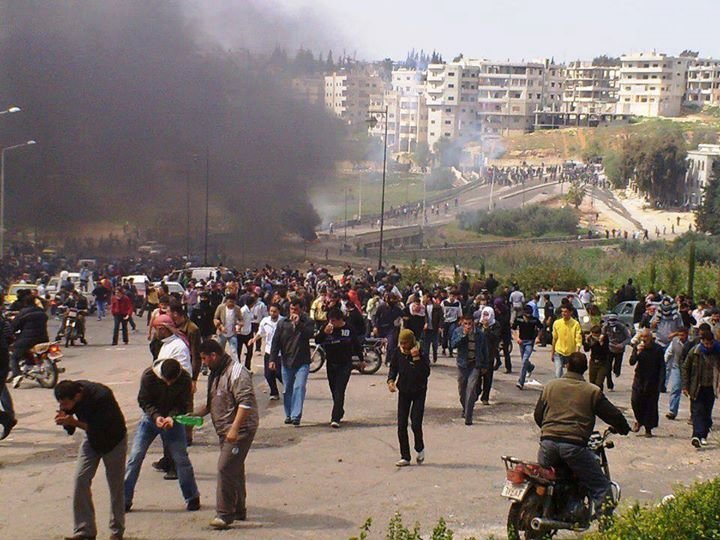
deraa protest
Setting the stage: 'protests' in Deraa in March 2011, instigated and organized by Western intelligence-trained agents provocateurs
The day before September 11, 2001 was like any normal day in New York City. September 10, 2001 was unaware of the earthshaking events which would happen the next day.

Similarly, one might think the day before the violence broke out in Deraa, Syria, in March 2011, would have been an uneventful day, unaware of the uprising about to begin.

But that was not the case. Deraa was teaming with activity and foreign visitors to Syria well before the staged uprising began its opening act.

The Omari Mosque was the scene of backstage preparations, costume changes and rehearsals. The Libyan terrorists, fresh from the battlefield of the US-NATO regime change attack on Libya, were in Deraa well ahead of the March 2011 uprising violence. The cleric of the Omari Mosque was Sheikh Ahmad al Sayasneh. He was an older man with a severe eye problem, which caused him to wear special dark glasses, and severely hampered his vision. He was not only visually impaired, but light sensitive as well, which caused him to be indoors as much as possible and often isolated. He was accustomed to judging the people he talked with by their accent and voice. The Deraa accent is distinctive. All of the men attending the Omari Mosque were local men, all with the common Deraa accent.

Better Earth

Best of the Web: The new Russia-China-Iran coalition changes everything

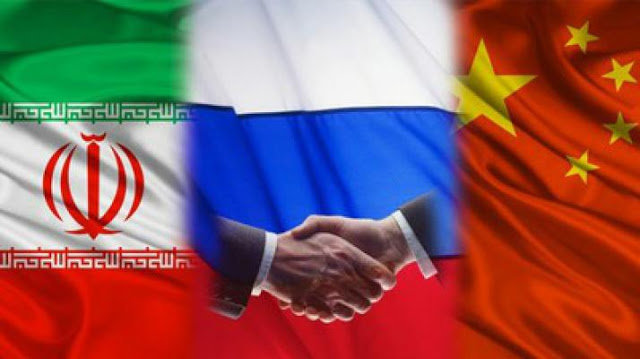
iran russia china
Over the span of just a few days, the situation in the Middle East in general and Syria in particular has undergone radical changes. What's more, these are good changes which we can be proud of, ones which many in the Pentagon are losing sleep over. Putin is taking full advantage of the institutional paralysis which is engulfing the United States during election campaigns and is, literally in front of dumbfounded Americans' eyes, redistributing spheres of influence in one of the key regions of the world.

Let's start with the reports that Russia has just set up its own air force base in Iran. Honestly speaking, this isn't the case. This is not our base. Iran has "loaned" it to us for some time in order for bombing ISIS terrorists and their friends in Syria to be easier. The context of these reports is key. In general, it is no secret to many that Iran has long since closely cooperated with Russia in Syria and opened its airspace for the passage of Russian Caliber rockets, just like its airfields were already being used last year by our transport and bombers for refueling.

But there is a nuance. Iran and Russia have tried not to advertise this, apparently so as to not create additional tension during the process of Syria negotiations, and so that Iran can still continue the tedious and difficult work of defrosting their Western assets since sanctions have been lifted. But the situation has radically changed now.

Comment: For SOTT's take on the latest moves in Iran, Turkey, and Syria, listen to our latest episode of Behind the Headlines: Yemen resists, Turkey rebels, and the weather goes wild