
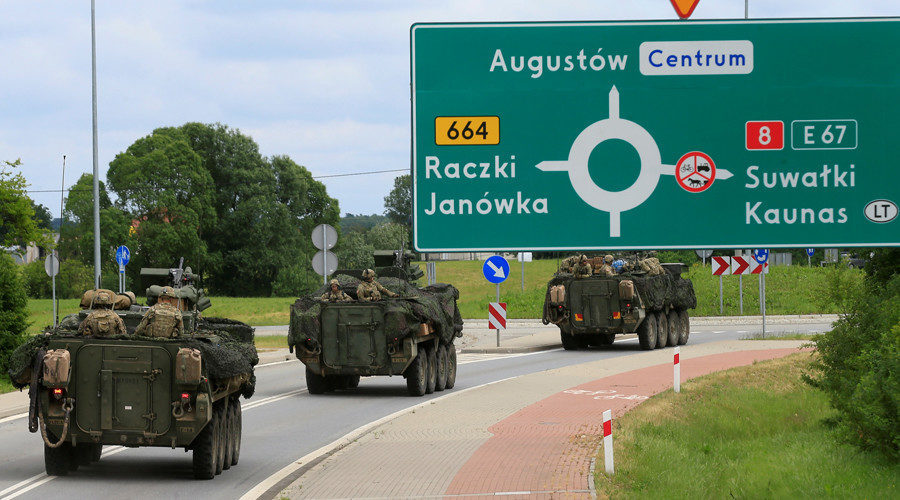
© Ints Kalnins / Reuters A US military convoy heading towards Suwalki, Poland, on June 17, 2017.
Some 1,500 NATO troops participated in the war games in the Suwalki Gap over the weekend, alongside US helicopters and British aircraft, training to protect the area from alleged "aggression."
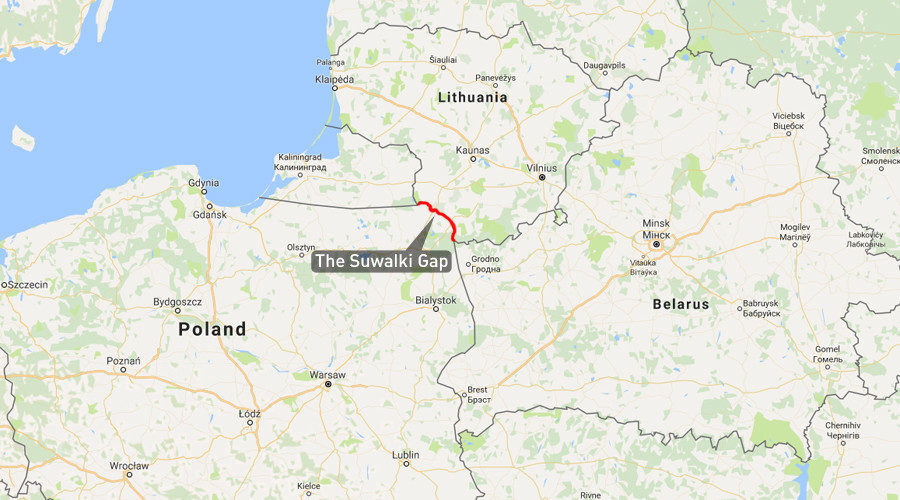
© Google Maps
"The Gap is vulnerable because of the geography. It's not inevitable that there's going to be an attack, of course, but... if that was closed, then you have three allies that are north that are potentially isolated from the rest of the alliance," US Lieutenant General Ben Hodges told Reuters.
"We have to practice, we have to demonstrate that we can support allies in keeping [the Gap] open, in maintaining that connection."
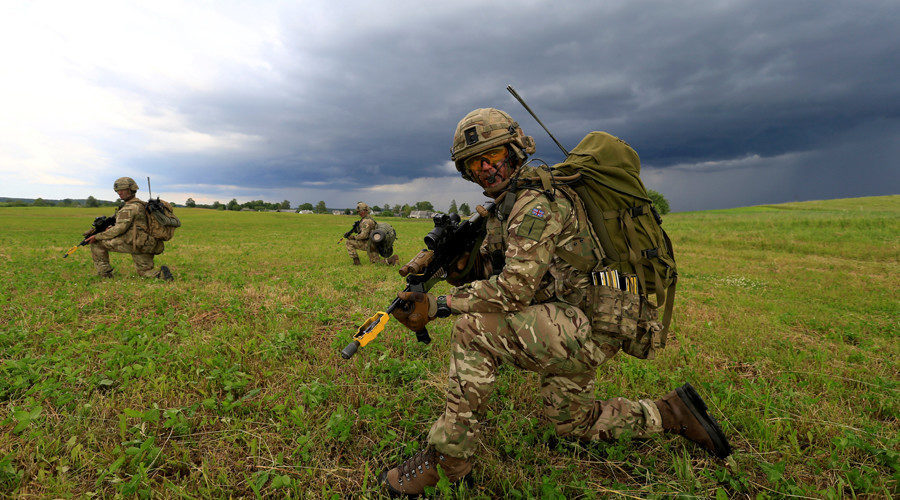
© Ints Kalnins / ReutersBritish Army soldiers take part in the Suwalki Gap exercise in Lithuania, June 17, 2017.
"This is only a small-scale drill compared to what would be needed in case of a real attack, but it is important for us because it shows that allies share our worries," Reuters quoted Rupsys as saying.
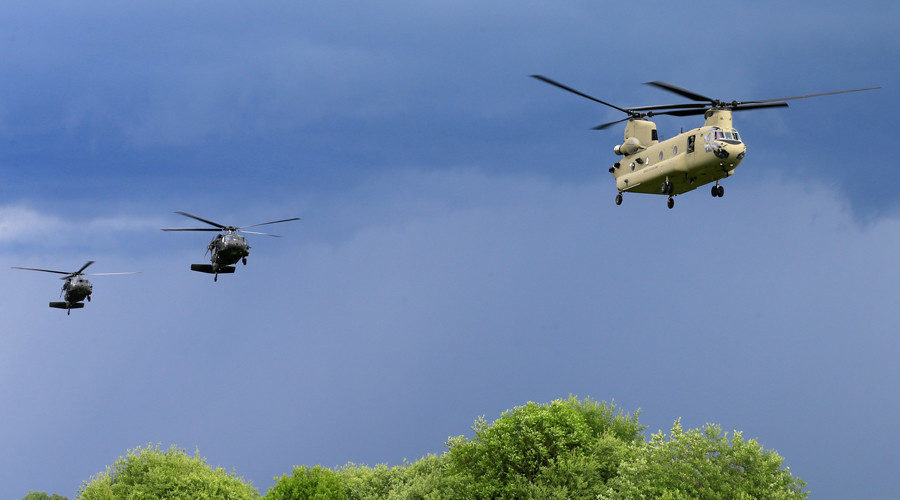
© Ints Kalnins / Reuters US CH-47 Chinook and Black Hawk helicopters during the Suwalki Gap exercise in Lithuania, June 17, 2017.
"But if not, we'll be prepared to move to defend the borders of NATO," he added.
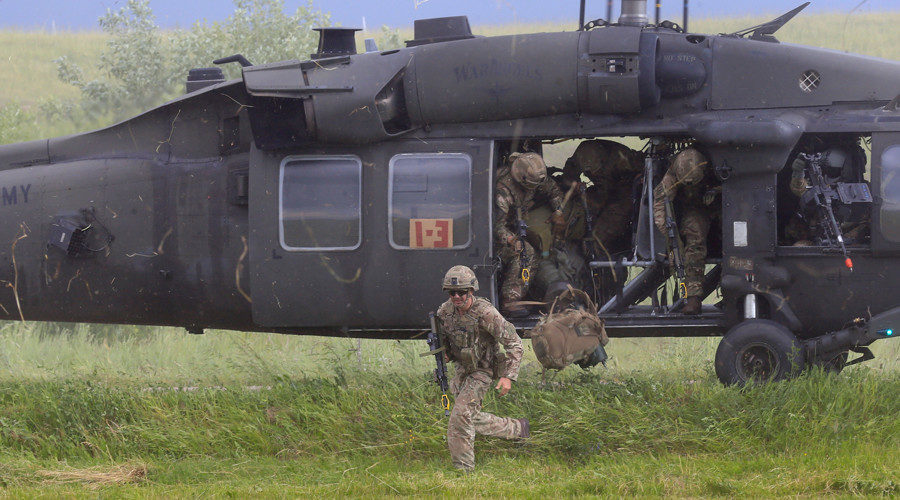
© Ints Kalnins / Reuters US Army soldiers disembark from a Black Hawk helicopter during the Suwalki Gap exercise on June 17, 2017.
Russia has repeatedly denied the existence of any plans to attack the Baltic States, and denounced NATO's military buildup along its borders as a threat to national security.
In February, Russian President Vladimir Putin blamed NATO for provoking a conflict with Moscow and using its "newly-declared official mission to deter Russia" as a pretext.
Also in February, while speaking at the Munich Security Conference, Russian Foreign Minister Sergey Lavrov said that "NATO's expansion has led to an unprecedented level of tension over the last 30 years in Europe."



Reader Comments
to our Newsletter