
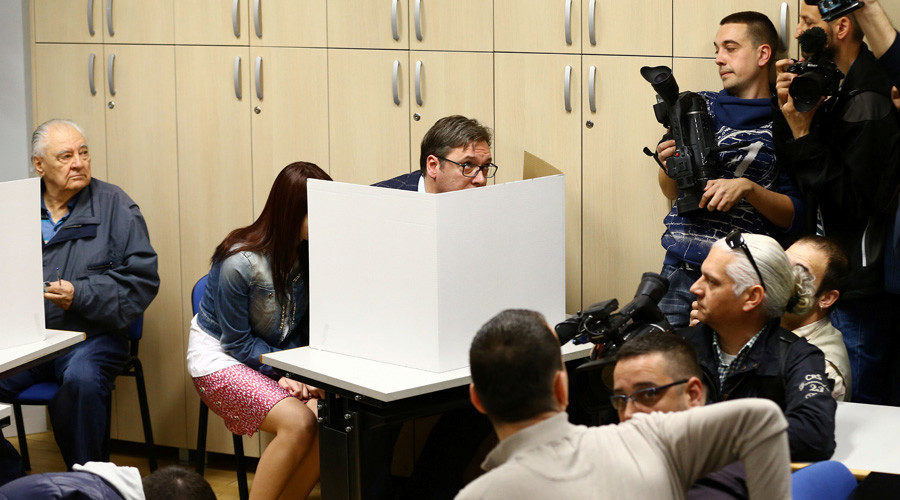
© Antonio Bronic / Reuters Serbian Prime Minister and presidential candidate Aleksandar Vucic prepares his ballot at a polling station during the presidential election in Belgrade, Serbia, April 2, 2017.
Based on 40 percent of votes counted from a sample of polling stations, Vucic won the Sunday election with around 55 percent of the vote, Reuters reported citing the CRTA and Ipsos polling groups. According to the exit poll results, there will be no run-off.
Vucic's nearest rival, opposition candidate and former ombudsman, Sasa Jankovic, took some 16 percent of the vote, according to the polls.
Additional data, provided by a Serbian NGO, Center for Free Elections and Democracy (CeSID), suggested Vucic took 61 percent of the vote, while 11.3 percent voted for Jankovic, TASS reported.
Eleven candidates were registered by Serbia's election committee to run for the presidency. Among the other candidates were comedian and political activist Luka Maksimovic (who received nine percent of the vote, according to the Ipsos poll, as reported by TASS), Serbia's former minister of foreign affairs Vuk Jeremic (five percent) and leader of the far-right Serbian Radical Party Vojislav Seselj (four percent).
The election turnout stands at 55.5 percent, TASS reported citing Vucic's campaign office. Some 6.7 million people were eligible to vote in Serbia, RIA reported, adding that those voters include people living abroad and in Kosovo and Metohija, with OSCE (Organization for Security and Cooperation in Europe) representatives having monitored the election process in the region.
In total, almost 2,000 local and over 120 international observers monitored the elections, with the head of the Russian delegation having told TASS that no violations had been registered and the voting was "calm."
The president of Serbia is elected for a five-year term and one person can only serve two terms. The Presidential role is largely ceremonial, with the Serbian president having such formal powers as representing the country in the international arena, offering parliament a candidate to head the government, having the right to sign and veto laws, as well as to appoint ambassadors and giving awards. The president is also the commander-in-chief.
Vucic was named as the front-runner before the voting. Various polls suggested he would win the vote, only having argued whether or not he would receive more than half of the votes, avoiding the run-off.
With the conservative ruling party leader being widely expected to appoint a loyal ally as new prime minister, Vucic's opponents claim he's adopted an authoritarian streak since his party rose to power in 2012, Reuters reported. Vucic denies such a charge.
Vucic's supporters however say they "voted for stability," according to Reuters. Vucic himself said that Serbs had voted for a continuation of Serbia's path into the EU, while at the same time maintaining strong ties with Russia and China.



Reader Comments