
© Alaska Stock
"We have always assumed that the initial peopling of the Western Hemisphere was a single, unique and independent event," Dennis O'Rourke, a professor of anthropology and Kansas University, said in a news release. "By seeing it as part of a larger global process, everything we learn about other dispersals into geographic areas out of Africa within the last 50,000 years or so are relevant to our understanding of the American case."
The great migration unification
Up to now, settlement of the Americas appeared to be mostly separate from the out-of-Africa dispersal that started around 50,000 years ago. The earliest Americans were thought to be descended from a small subset of Eurasians that moved to North America fewer than 15,000 years ago.
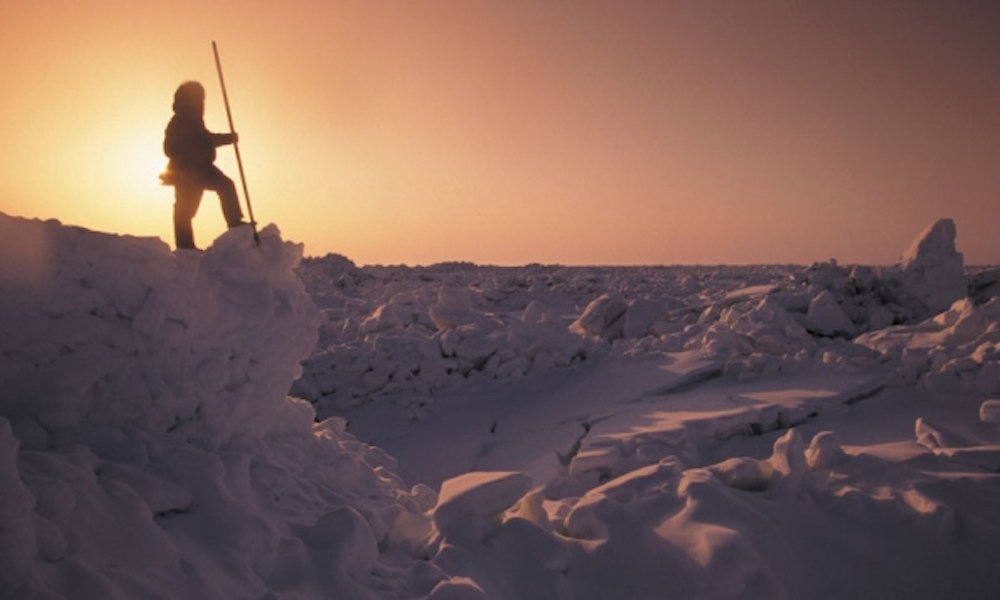
However, archaeological findings since 2000 have revealed that Homo sapiens occupied the land bridge between Asia and North America, known as Beringia, prior to 30,000 years ago and during what is referred to as the Last Glacial Maximum (LGM), the last time ice sheets were at their largest.
"Linking the process of peopling near the time of the LGM brings the idea of 'refugia,' which we see for populations elsewhere at this time, into sharper focus as a possible mechanism for source populations in the Americas and the role that may play in structuring the genetic variation we see early in the record," O'Rourke said about the study.
The "Beringian Standstill Hypothesis," is founded on the evaluation of mitochondrial DNA in specimens from living Native American and Siberian people. The DNA evidence and historical climate research indicated the isolated residents of Beringia migrated at the conclusion of the LGM to stay away from rising sea levels.
O'Rourke said the research pointed to many questions around the complicated migration of people across Beringia. He said future studies should look for high-quality ancient DNA information from northeast Siberia from 15,000 to 30,000 years ago.
"Augmenting the paleoecological record across the Bering Sea basin, and expanding the archaeological record around the western and southwestern coasts of Alaska, would be quite useful," he said.




This article contains no mention of the overwhelming evidence that other groups came and settled in North and South America from areas other than Beringia. It appears that new scientific research is still the victim of scientific dogma. People migrated to America from Europe, Africa and Polynesian islands 8-12K years BEFORE people came via Beringia. Why is this being erased and ignored? Because it doesn't fit today's political narrative and because so called "scientists" are protecting their life's work which consists of poor research and false assumptions. European genetic markers are found in every single "native" American tribe and that genetic material was acquired at the time Asian tribes arrived. Did they catch that DNA the way we catch a cold today? Of course not, they conquered and mated with people who were already here.
.
Dr. Dennis Stafford published "Across Atlantic Ice" in 2012 and everyone who cares about truth should read this incredible book. If the rules of analyzing scientific research and archaeological evidence and drawing "scientific conclusions" were applied equally our history books would have already been re-written. The "Clovis First" theory is dead, can we please move on with fully uncovering the truth or will we continue to live a lie?