
© Kieran Doherty / Reuters
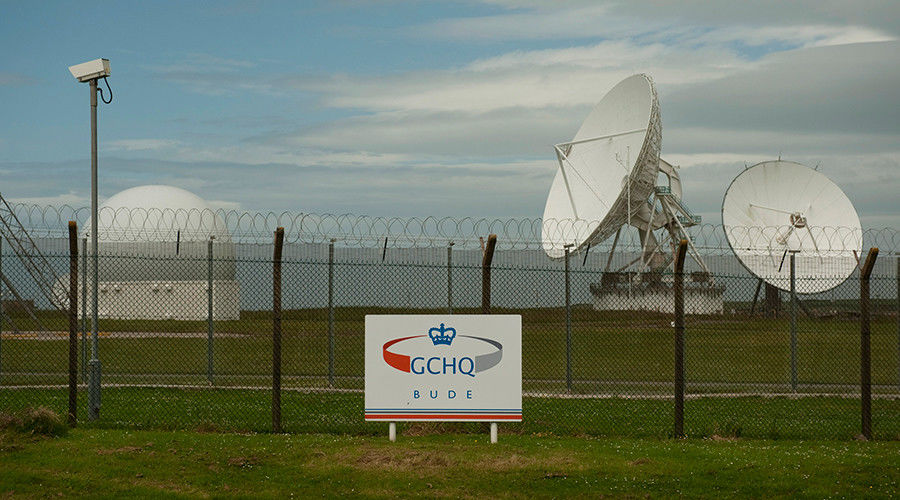
Mandeep K. Dhami, a psychology professor at Middlesex University London, provided GCHQ with expert advice, research and recommendations on how it could improve its effectiveness.
A report she produced for the listening post has recently sparked debate over whether psychologists should help spy agencies to peddle propaganda and deceive the public.
The report, written in 2011, is entitled Behavioral Science Support for JTRIG'S Effects and Online HUMINT Operations.

© Unknown Prof Mandeep K Dhami
Originally published in 2011, the study uses terms such as "'discredit,' promote 'distrust,' 'dissuade,' 'deceive,' 'disrupt,' 'delay,' 'deny,' 'denigrate/degrade,' and 'deter'" to describe GCHQ's activities.
Among JTRIG's targets are "domestic extremist[s]," criminals, online hacktivists, and in some cases "entire countries."
Since the report's publication, some of Dhami's fellow psychologists have questioned the ethics involved in working with an organization like GCHQ.
Comment: Of course it's unethical, but many in the social sciences have been into this game for a long, long time.
What else is there to learn? CIA 'experimenting' on people in 60 year old torture program
Dr. Stephen Soldz, co-founder of the Coalition for an Ethical Psychology, told the Intercept that Dhami's recommendations to GCHQ in the report were "deeply disturbing"and "grossly unethical."
Soldz added that "the psychology profession and the public must grapple with developing proper ethical constraints on the activities of operational psychologists."
Another co-founder of Coalition for an Ethical Psychology, Dr. Bradley Olson, told the news site that using one's "expertise, research, or consultation to guide deceptive statements, even the statements of others, when the deceptive intentions are clearly documented...is against psychological ethics."
Comment: And a lot of other people were playing the same game, at the same time.
Damage Control: The APA's torture campaign, public relations, and the 'Fugitive Facts'
Not all of Dhami's fellow practitioners agree that she has acted unethically.
Dr. Christian Crandall, a professor at the University of Kansas, told the Intercept: "In my perusal, it seemed that she was writing a brief that would lead to research opportunities, consulting opportunities, and the like.
Comment: In other words, it's just the cost of doing business. So what if it leads to the destruction of civil liberties? It could land her a posh gig.
"Because this brief was commissioned and written prior to the Snowden revelations ... we might give Prof. Dhami the benefit of the doubt, that she might not [have] know[n] or anticipate[d] the extent of misconduct in the intelligence agencies."
Responding to the criticisms through the Schillings law firm, Dhami has maintained her innocence in any wrongdoing.
"The work undertaken by our client has been focused on helping GCHQ to accurately understand and responsibly apply psychological science," the law firm said.
"In working with the government our client typically provides advice on how to improve specific aspects of their work...not therefore actively engaged in the day-to-day business of these departments, but rather an independent observer/commentator."
Schilling added that Dhami had a "strong track record of publishing critiques of existing Government policies."



Comment: Sure, we can condemn a psychologist for her participation in such a program, but what about condemning those UK authorities who created this "unethical" agency in the first place? You know, the ones who pursue this sort of research, and who actively participated in the US' torture program? And why stop there - why not begin to question the entire 'war on terror' based on "'discredit,' promote 'distrust,' 'dissuade,' 'deceive,' 'disrupt,' 'delay,' 'deny,' 'denigrate/degrade,' and 'deter'"?