Storms
S


Cloud Precipitation

Evacuations ordered as flooding hits eastern France

Neuilly-les-Dijon flood
© AFPA flooded car park in Neuilly-les-Dijon where the Ouche river bursts its banks after days of heavy rain.
Officials in eastern France ordered evacuations Saturday after torrential rains hit the Burgundy region.

Some residents of Dijon were ordered out of their homes to escape the rising waters of the Ouche river, which overflowed its banks, after a month's worth of rain poured down over 12 hours.

Dijon firefighters had to rescue three people trapped in a car, and ferry service in Lyon was suspended because the water in the Saone river had risen to the point the boats could not pass under bridges, Radio France Internationale said.

Flood alerts in seven departments were lifted Saturday, however the downpour was expected to continue in other parts of France.

Windsock

Massive Italy tornado caught on tape, leaves trail of destruction

A strong tornado hit the Italian region of Emilia Romagna on Friday at around 1400 GMT according to Italian media, injuring 11 people and damaging several houses. Numerous fields were damaged by the strong storms and the harvest could be ruined.


Snowflake

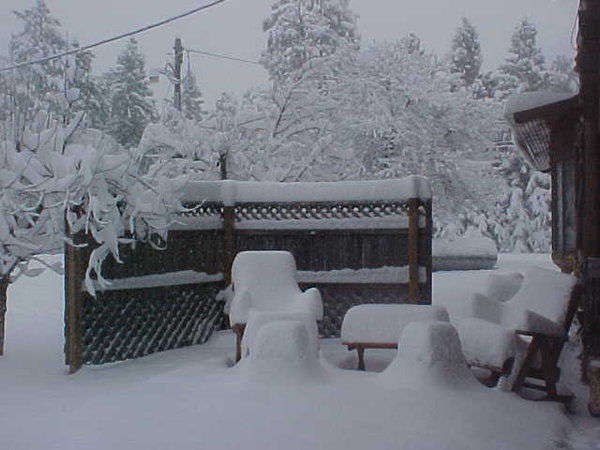
May snowstorm still pummeling Wisconsin, up to 17 inches reported

snow
© Cindy Cowell
Heavy snow continues to fall this afternoon in parts of northern Wisconsin, with Rice Lake already reporting 17 inches on the ground.

The heaviest snow had moved east of Hayward at noon but was still falling in Park Falls, Ironwood and Ashland.

The Wisconsin Department of Transportation earlier advised no travel because of heavy snow on U.S. Highway 53 between Spooner and Gordon; U.S. Highway 63 from Spooner to Hayward; and state Highway 70 from Stone Lake to Siren.

Other highways are reported to be snow-covered, including U.S. Highway 2 east of Iron River.

The unusual May snowstorm moved just south and east of the Twin Ports but hovered over southeastern Minnesota, north-central Wisconsin and into Washburn, Bayfield, Ashland and Iron Counties where up to 14 inches fell overnight.

Cloud Precipitation

Nearly a foot of rain falls in Jackson County, Mississippi

Jackson flooding
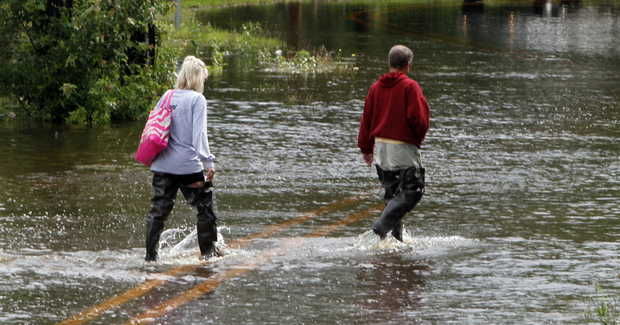
© Tim Isbell / Sun HeraldCindy and Roy Smith brave flood waters to wade their way into neighborhood on Brandon James Drive.
South Mississippi should brace for more showers through Saturday morning as a low pressure system hovers over the area, dropping nearly a foot of rain in east Jackson County, officials said.

The National Weather Service on Thursday morning registered rainfall at 1.71 inches in Gulfport, 4.27 inches in Biloxi and 7.12 inches in Pascagoula.

Radar estimates showed rainfall could have been even higher in Jackson County, meteorologist Mike Efferson said. "Anywhere from 10 to 12 inches," he said. "It was significantly higher in the northern half of the county and along that eastern border that meets up with Alabama.

The Coast will see a redevelopment of showers and thunderstorms Thursday afternoon with possibly another 1 to 3 inches to fall on already soaked soil, while some isolated areas could see significantly more, he said.

Cloud Precipitation

Flash floods kill 16 in Saudi Arabia after heaviest rainfall in 25 years

saudi flood
© AFPFlooding of Saudi lake - File photo
Sixteen people have been killed and three more are missing in Saudi Arabia after downpours caused flash floods in several areas of the desert kingdom, the civil defense authorities said on Wednesday, the AFP news agency reported.

Two others died in flash floods in neighboring Oman, local media reported, as cloudbursts swept across most Gulf countries.

The official Saudi SPA state news agency quoted a civil defense statement as saying people died in several areas including in the capital Riyadh, Baha in the south, Hail in the north and in the west.

Ice Cube

May Day snow storm hits Colorado, Wyoming and Midwest U.S.

People in parts of Colorado and Wyoming pulled puffy jackets, hats and umbrellas out of the closet again Wednesday for another round of wet spring snow. The May Day snow storm was making travel difficult on some Colorado highways, where several crashes were reported late Wednesday, and along Interstate 80 in southeastern Wyoming. Denver's airport reported about 50 flight cancellations, and other flights were delayed for de-icing.
Image
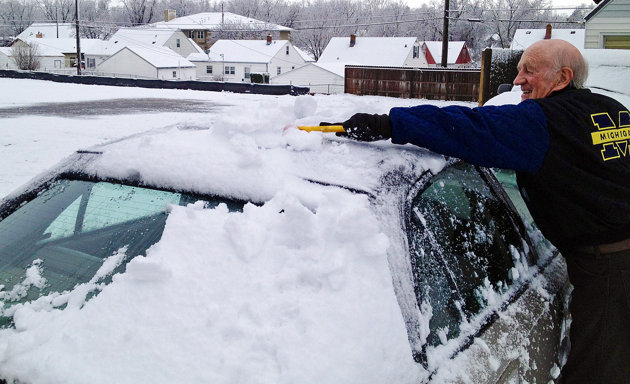
© AP Photo/The Argus Leader, Dalton WalkerArvid Buseman clears snow off his car Wednesday morning, May 1, 2013 in central Sioux Falls, S.D. Sioux Falls, South Dakota's largest city, got its first May snowfall in 37 years Wednesday and its largest May amount since 1944.
By midday, more than a foot of snow had fallen at Rocky Mountain National Park. The heavy snow caused power and heat outages there and in Cheyenne, which received 15 inches of snow by noon Wednesday. West of Cheyenne, 20 inches fell near Buford, while Casper saw 4 inches of snow. Parts of the Midwest were also getting rare May snow.

South Dakota's largest city, Sioux Falls, got its first May snowfall in 37 years. The city received 1.5 inches of snow by late morning. A winter storm warning was also in effect for parts of Minnesota and Wisconsin. Snow fell in parts of Nebraska, and western Iowa was expecting snow between Wednesday night and Thursday morning.


X

14 killed, 4 missing in heavy Saudi rainfall

Image
© WAMFourteen people have died and four are missing due to torrential rain according to the Saudi Civil Defense General Directorate.
Fourteen people have died and four are missing due to torrential rain, said the Saudi Civil Defense General Directorate.

From Monday night until midday Tuesday, Saudi authorities received more than 4,213 reports from across the kingdom of accidents resulting from torrential rainfall.

Classes have been suspended in affected areas of the country.

Ice Cube

Ice Age Cometh: Spring disappears from northern hemisphere: the winter that won't end

April has been a freakishly cold month across much of the northern USA, bringing misery to millions of sun-starved and winter-weary residents from the Rockies to the Midwest. "The weather map ... looks like something out of The Twilight Zone," Minneapolis meteorologist Paul Douglas of WeatherNation TV wrote on his blog last week. Record cold and snow has been reported in dozens of cities, with the worst of the chill in the Rockies, upper Midwest and northern Plains. Several baseball games have been snowed out in both Denver and Minneapolis.
Image
Cities such as Rapid City, S.D.; Duluth, Minn.; and Boulder, Colo., have all endured their snowiest month ever recorded. (In all three locations, weather records go back more than 100 years.) In fact, more than 1,100 snowfall records and 3,400 cold records have been set across the nation so far in April, according to the National Climatic Data Center. Unfortunately for warm-weather lovers, after some mild temperatures the past few days, the chill is forecast to return as the calendar turns to May: Accumulating snow is forecast overnight Tuesday night and Wednesday in Denver and in Minneapolis-St.Paul by Wednesday night and Thursday, said AccuWeather meteorologist Mark Paquette.

Ice Cube

Ice needles on a beach in Minnesota?

Springtime in Minnesota: the sun, the beach, the ice.

Wait, what?

Despite temperatures climbing to almost 80 degrees on Sunday, beachgoers to a lake in eastern Minnesota saw spiky mounds of ice in almost volcanic-looking formations along the edge of the beach.


Igloo

Start of 2013 the coldest in 208 years

Prof Warns Mini Ice Age has Started

German meteorologists say that the start of 2013 is the coldest in 208 years - and now German media has quoted Russian scientist Dr Habibullo Abdussamatov from the St. Petersburg Pulkovo Astronomical Observatory, who says it is proof that we are heading for a "Mini Ice Age."

Talking to German media, the scientist said that based on his sunspot studies, we are now on an "unavoidable advance towards a deep temperature drop."

Building on observations made by English astronomer Walter Maunder, Dr Abdussamatov said he had found that the Earth cools and warms in a 200-year cycles.

The last big freeze, known as the Little Ice Age, took place between 1650 and 1850 which he said coincided with Maunder's findings that there had been no sunspots between 1645 and 1715.

"The last global decrease of temperature (the coldest phase of the Little Ice Age) was observed not only in Europe, North America and Greenland, but also in any other part of the world during the Maunder minimum of sunspot activity and of the total solar irradiance in 1645 - 1715 years," says Abdussamatov.