Animals
S


Binoculars

Rare polar bear sighting on Iceland

Reykjavik -- A polar bear has been discovered on Iceland, which is hundreds of kilometres from the threatened species' natural habitat, a local photographer said Tuesday.

"The bear is in the north of Iceland near the town of Saudarkrokkur," Rax Axelsson, a photographer with Iceland's newspaper of reference, Morgunbladid, told AFP.
Polar Bear
©Unknown

"The bear is living off of eggs and birds" and does not appear to be hungry, he added.

The bear was discovered by 12-year-old Karen Heljateynsdottir not far from her farm as she was out walking her dog on Monday.

"She saw something white and thought it was a plastic bag, and then she realised it was a polar bear. She ran home and she said she has never run so fast in her life," Axelsson said.


Bizarro Earth

Panda habitat damaged by China quake

BEIJING - At least 80 percent of the habitat for giant pandas in China's earthquake-hit province was destroyed or damaged, a forestry official said Tuesday.

Pandas
©AP Photo/Alexander F. Yuan
Two pandas play at China Conservative and Research Center for the Giant Panda in Wolong, China's southwest Sichuan province, Tuesday, June 10, 2008. The nine-year-old Mao Mao was finally found Monday and dug out Tuesday, almost a month after the May 12 devastating earthquake, crushed by a wall of her enclosure as the river nearby swelled with landslide debris.

Bug

Australia: Honey bees 'crucial to food security'

A federal parliamentary committee is warning that Australia's food security could be compromised if the future of the honey bee and pollination industry is not supported.

Magic Hat

Deer With Rare 'Unicorn' Horn Spotted in Italy

ROME - A deer with a single horn in the center of its head - much like the fabled, mythical unicorn - has been spotted in a nature preserve in Italy, park officials said Wednesday.

"This is fantasy becoming reality," Gilberto Tozzi, director of the Center of Natural Sciences in Prato, told The Associated Press. "The unicorn has always been a mythological animal."

Bizarro Earth

Crazytalk: Scientist says dolphin deaths look like a mass suicide

The dolphins that died after becoming beached in Cornwall had ingested debris and mud, leading one of the scientists who examined some of the corpses to compare their deaths to a "mass suicide".

Vic Simpson, who has been involved in the postmortem examinations of some of the 26 dolphins that died, said yesterday: "On the face of it, it looks like some sort of mass suicide - but the question is why?

"The dolphins had swallowed and inhaled big chunks of mud from the estuary. Their lungs and stomachs were full of it. That is very bizarre indeed."

Simpson, who founded the Wildlife Veterinary Investigation Centre in Truro and is examining the dolphins on behalf of the Zoological Society of London, added: "We have seen strandings on beaches, sometimes with five to seven dolphins, but never on a scale like this."

Comment: See: What terrified the dolphins? Cause of mass dolphin deaths in U.K. may have been fear
and UK Dolphin update: Royal Navy exercises and an "unexplained explosion"


Hourglass

Dozens of dolphins die on Madagascar beach

Some 55 dolphins have died, after coming ashore on a beach in the northwest of Madagascar, conservationists said on Monday.

The melon-headed whales, a species of dolphin, were first spotted at sea last month, but then became stranded on a beach last week, Herilala Randriamahazo, from the Wildlife Conservation Society, a non-profit organization, told Reuters.

Rocket

UK Dolphin stranding update: Royal Navy exercises and an "unexplained explosion"

The Royal Navy was carrying out live-firing exercises just hours before 26 dolphins died in the biggest mass stranding of the species in Britain, it has been claimed.

Marine experts trying to find out why the pod of dolphins tried to beach themselves on the shores of Percuil river, near Portscatho, Cornwall, say they could have been panicked by an "underwater disturbance".

The dolphins were found dead early on Monday morning.

Question

South Africa: Mysterious Crocodile Deaths Puzzle South African Scientists

A group of animal experts and wildlife officials rushed to South Africa's Kruger National Park to find out what has suddenly killed at least 30 crocodiles in the refuge within a week's time.

The first carcasses were sighted on May 27, then helicopter searches found many more littering the Olifants River, the park's most polluted waterway.

While no dead fish or other animals were found, all of the dead crocodiles contained yellow-orange hardened fat in their tails - usually a sign of eating rotten fish.

"We are in unknown territory, and we certainly don't have the answers as to why these crocodiles seem to be dying, so we need to look at the problem closely and find a solution," Danie Pienaar, head of scientific services for the park, said in the statement.

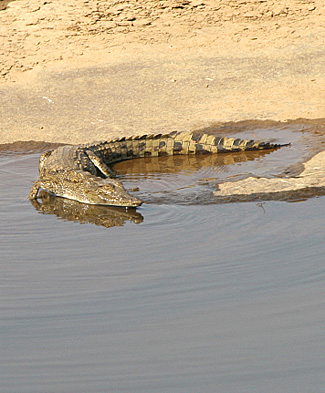
Image
©Grant Shimmin
A healthy Nile crocodile lurking on the bank of the Olifants River, in South Africa's Kruger National Park.

Stop

At least 60, oil-covered penguins on Uruguayan beaches

At least 60 dead penguins washed up on Uruguay's coast Sunday in an incident that an environmentalist linked to a fuel spill following a boat crash near Montevideo's port days ago.

Another 34 penguins, covered in oil but alive, also appeared on the beaches of this South American nation's southern coast, Richard Tessore of the Fauna Marina environmental group told local online news outlet Observa.

Hourglass

Caribbean Monk Seal Gone Extinct From Human Causes, NOAA Confirms

After a five year review, NOAA's Fisheries Service has determined that the Caribbean monk seal, which has not been seen for more than 50 years, has gone extinct - the first type of seal to go extinct from human causes.

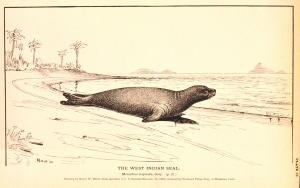
Caribbean Monk Seal
©U.S. National Museum
Scientific Sketch of a Caribbean Monk Seal.