Animals
S


Bizarro Earth

Penguins Setting Off Sirens Over Health Of World's Oceans

Like the proverbial canary in the coal mine, penguins are sounding the alarm for potentially catastrophic changes in the world's oceans, and the culprit isn't only climate change, says a University of Washington conservation biologist.

Adélie penguin
©Dee Boersma
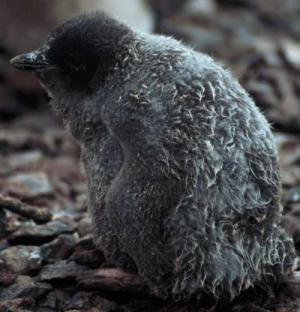
Rain has soaked this Adélie penguin chick in Antarctica before its feathers are capable of repelling water. Though the icy continent is in essence a desert, coastal rainfall is becoming more common with changing climate.

Oil pollution, depletion of fisheries and rampant coastline development that threatens breeding habitat for many penguin species, along with Earth's warming climate, are leading to rapid population declines among penguins, said Dee Boersma, a University of Washington biology professor and an authority on the flightless birds.

"Penguins are among those species that show us that we are making fundamental changes to our world," she said. "The fate of all species is to go extinct, but there are some species that go extinct before their time and we are facing that possibility with some penguins."

In a new paper published in the July-August edition of the journal BioScience, Boersma notes that there are 16 to 19 penguin species, and most penguins are at 43 geographical sites, virtually all in the Southern Hemisphere. But for most of these colonies, so little is known that even their population trends are a mystery. The result is that few people realized that many of them were experiencing sharp population declines.

Info

Foreigners threaten Afghan snow leopards

KABUL - Afghanistan's snow leopards have barely survived three decades of war. But now the few remaining mountain leopards left in Afghanistan face another threat -- foreigners involved in rebuilding the war-torn country.

Despite a complete hunting ban across Afghanistan since 2002, snow leopard furs regularly end up for sale on international military bases and at tourist bazaars in the capital. Foreigners have ready cash to buy the pelts as souvenirs and impoverished Afghans break poaching laws to supply them.

snow leopards
©REUTERS/Rupak De Chowdhuri
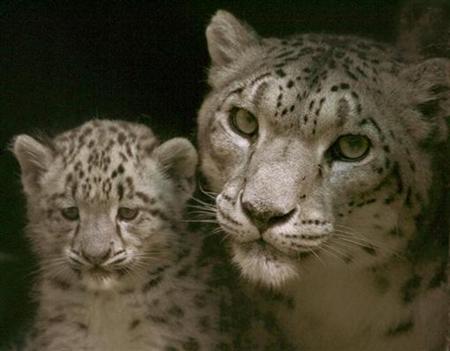
A female snow leopard with its cub is seen inside its enclosure at a zoological park in Darjeeling, about 80 km (50 miles) north from the northeastern Indian city of Siliguri June 21, 2007.

Tucked between souvenir stores on Chicken Street, Kabul's main tourist trap, several shops sell fur coats and pelts taken from many of Afghanistan's threatened and endangered animals.

"This one is only $300," one shopkeeper told Reuters, producing a snow leopard pelt from the back of his shop.

"It was shot several times," he said pointing to the patches of fur sewn together. "The better ones are only shot once. The skin remains intact," he says as his assistant brings out a larger pelt, this time with no patches. "This one is $900."


Better Earth

US: Increase in wild bee swarms in New Jersey

Seth Belson remembers getting a phone call last month asking him to remove a bee swarm the size of a Volkswagen from a man's front yard in Merchantville, New Jersey.

The beekeeper found a mass of bees towering 50 feet (15 meters) above the ground. There was nothing he could do but wait for them to move on, he said.

Butterfly

Video posted by federal agency captures wolf-bear interaction in Montana park

HELENA - A video posted on the Web site of the U.S. Geological Survey captures remarkable interaction between a wolf and a family of 3 grizzly bears in Montana's Glacier National Park.

The wolf draws close to the cubs, only to be chased away by the youngsters and, more seriously, by their mother. But the wolf is not deterred, returning repeatedly for another run at the cubs in what looks like a tease.


Fish

US: Deadly fish virus hits Lake Michigan

A fast-spreading virus recently killed thousands of round gobies near Milwaukee, and officials fear the same fate may await fish elsewhere in Lake Michigan.

The gobies washed ashore May 28 after dying from viral hemorrhagic septicemia, according to the Wisconsin Department of Natural Resources.

The virus causes fish to hemorrhage and suffer organ failure.

The Milwaukee incident made Lake Michigan the fourth of the five Great Lakes to suffer a large VHS-related fish kill.

Only Lake Superior has avoided the disease. It has killed millions of fish in lakes Erie, Ontario and Huron and threatens the Great Lakes' $7 billion sport and commercial fisheries.

Fish

Wild Salmon to be Extinct in 10 Years

Wild salmon in the Broughton Archipelago, off the west coast of Canada's British Columbia, will be extinct within 10 years due to parasite contamination from fish farms, according to a study published in the journal Science.

"The impact is so severe that the viability of the wild salmon populations is threatened," said lead researcher Martin Krkosek, from the University of Alberta.

"The probability of extinction is 100 percent," Krkosek said, "and the only question is how long it is going to take."

Bizarro Earth

Scotland: Mystery virus threatens to wipe out bees

Scotland's population of honeybees could be wiped out by a mystery virus.

Known as the Marie Celeste Syndrome, it has already killed million of insects around the world.

Beekeepers say Scottish swarms - which total half a billion bees - are at risk because defences against the virus are "woefully inadequate".

In Marie Celeste Syndrome, also known as Colony Collapse Disorder, worker bees disappear without trace and never return.

Comment: See the SoTT focus article: To Bee or not to Be


Bizarro Earth

Alaska salmon may bear scars of global warming

Tanana, Alaska -- With a sickening thud, another hefty and handsome salmon lands in the waste barrel, headed for the dogs.

"See, it's all of the biggest, best-looking fish," said Pat Moore, waving a stogie at the pile of discards. "It breaks my heart. My dogs cannot eat all that. The maggots will get them first."

Alaskan salmon
©Rick Loomis / Los Angeles Times
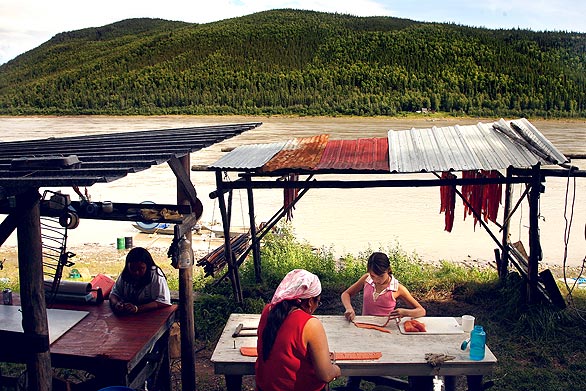
Faith Peters and Haley Brigham, 12, help Kathleen Zuray cut king salmon into strips at a fish camp on a stretch of the Yukon River called the Rapids. Eagerly awaited each year, king salmon are the biggest and most prized fish migrating upriver to spawn in the Yukon's headwaters, in Canada

Fish

Jellyfish outbreaks a sign of nature out of sync

PARIS -- The dramatic proliferation of jellyfish in oceans around the world, driven by overfishing and climate change, is a sure sign of ecosystems out of kilter, warn experts.

"Jellyfish are an excellent bellwether for the environment," explains Jacqueline Goy, of the Oceanographic Institute of Paris. "The more jellyfish, the stronger the signal that something has changed."

Brainless creatures composed almost entirely of water, the primitive animals have quietly filled a vacuum created by the voracious human appetite for fish.

Dislodging them will be difficult, marine biologists say.

"Jellyfish have come to occupy the place of many other species," notes Ricardo Aguilar, research director for Oceana, a international conservation organisation.

Nowhere is the sting of these poorly understood invertebrates felt more sharply than the Mediterranean basin, where their exploding numbers have devastated native marine species and threaten seaside tourism.

Target

UPDATE: Polar bear stranded on Iceland killed by police

REYKJAVIK -- Icelandic police said Wednesday they had shot and killed a polar bear discovered earlier this week on the island, which is hundreds of kilometres (miles) from the threatened species' natural habitat.

"It was shot last night (Tuesday)," a police spokesman in the northern town of Saudarkrokkur told AFP.

Polar bears are rare sightings on Iceland, since they have to swim hundreds of kilometres through icy waters to reach the island from their natural Arctic habitats, but the bear discovered Monday was the second spotted and killed on the island in the past two weeks.

Icelandic authorities had been harshly criticised for killing the first bear and had indicated they would try to capture the second animal, which was discovered by a 12-year-old girl as she was out walking her dog.

The chief veterinarian from the Copenhagen zoo had been flown in late Tuesday to help.

The police "tried to get close to (the bear) with our vet, but they did not get close enough to shoot it with the anaesthetiser," zoo spokesman Bengt Holst told AFP.

"Then the bear started running, so the police were frightened they would lose control. The bear could run very close to the populated area, so they decided to shoot it," he added.