Animals
S


Cow

UK: Trapped cow airlifted to safety in repeat £5,000 rescue

A cow trapped on a cliff ledge has been airlifted to safety by a military helicopter two weeks after a bullock owned by the same farmer had to be rescued in a similar operation.

The Hereford-cross heifer was believed to have slipped while trying to escape dogs and ended up 150 feet below the cliff top at Gwennap Head, near Lands End, Cornwall.

It was winched to safety by the crew of a Sea King helicopter from the Royal Naval air station at Culdrose. Two weeks ago a Charolais steer belonging to the same farmer Andrew Flower was rescued from a spot only feet away.

On that occasion the mission was delayed for three days due to a dispute between Ministry of Defence and RSPCA officials over who would pay the £5,000 rescue bill. The MoD eventually agreed to waive the fee, saying it was treating the rescue as part of an exercise.
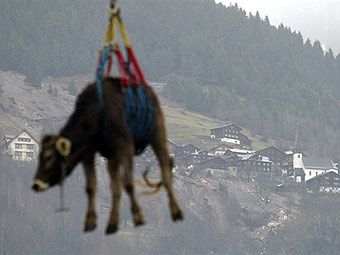
cow lifted
©AFP

Question

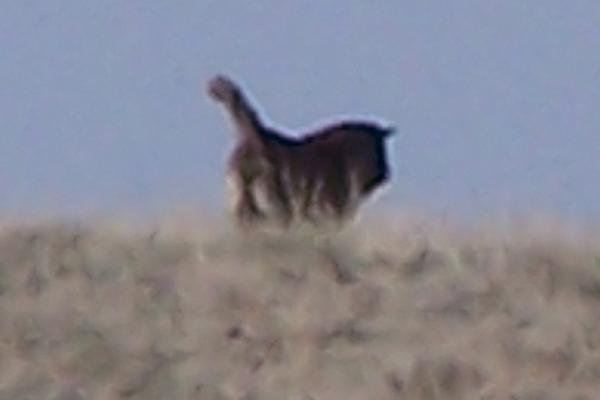
Colorado, US: Dog or lion? Beast loose in El Paso County

Irene LoBaido has never hunted and has never shot an animal, but today, she packed a Smith & Wesson .357 Magnum in a holster on her left hip.

LoBaido was among local residents alarmed by a reports of an African lion on the loose.

"I feel I'm going to be carrying this until it's (found)," LoBaido said. "I hope I never have to use it, but I care about my horses and dogs."

LoBaido, 49, said she loaded her gun with hollow-point bullets to make certain she could take down a lion if needed.

Image
©El Paso County Sheriff's OFfice
The creature was large and shaggy, but only photographed at a distance.

Fish

Fragile Antarctic Marine Life Pounded By Icebergs: Biodiversity Suffering

Antarctic worms, sea spiders, urchins and other marine creatures living in near-shore shallow habitats are regularly pounded by icebergs. New data suggests this environment along the Antarctic Peninsula is going to get hit more frequently. This is due to an increase in the number of icebergs scouring the seabed as a result of shrinking winter sea ice.

Image
©British Antarctic Survey
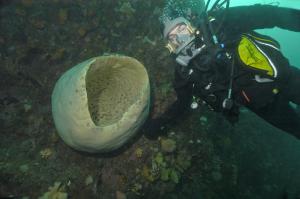
A British Antarctic Survey marine biologist encounters a giant sponge nearly 20m below the surface.

Scientists from the British Antarctic Survey (BAS) show how the rate of iceberg scouring on the West Antarctic Peninsula seabed is affected by the duration of winter sea ice, which has dramatically declined (in space and time) in the region over the last few decades due to climate warming. This increase in iceberg disturbance on the seabed, where the majority of all Antarctic life occurs (80%), could have severe effects on the marine creatures living as deep as 500m underwater.

Butterfly

Canada: Moth outbreak threatens forests, scientist warns

The mountain pine beetle isn't the only problem British Columbia forest officials are concerned about in the Southern Interior.

Entomologist Lorraine MacLauchlan, who just came back from the field, says the area is in the midst of a severe outbreak of the tussock moth.

Info

Over 100 Species Of Bats Found Within Several Acres Of Rainforest In Ecuador

Bats are a remarkable evolutionary success story representing the second largest group of mammals, outnumbered only by rodents in number of species. Now, researchers of the Leibniz-Institute for Zoo and Wildlife Research in Berlin (Germany) and Boston University (U.S.A.) have discovered the place that harbours the highest number of bat species ever recorded. In a few ha* of rainforest in the Amazon basin of eastern Ecuador, the authors have found more than 100 species of bats.

Dr. Katja Rex and colleagues captured bats at several biodiversity hotspots in the New World tropics, in the lowland rainforest of Costa Rica, the slopes of the Andes and a site in the Amazon rainforest of Eastern Ecuador, at the Tiputini Biodiversity Station 1 located adjacent to the Yasuní Biosphere Reserve. During many months of strenuous nightly field work, exposed to rain and mosquitoes, the researchers captured bats, identified species and recorded the total number of each species they captured. Based on these numbers, they calculated the species richness and diversity present in each of these forests.

Question

India: Mysterious disease affects crops in Nellai district

Farmers in and around Tirunelveli and Palayamkottai, who cultivated cotton, vegetables, and sunflower, are in a shock over a mysterious disease, which caused heavy damage to the crops.

Farmers from Gangaikondan, Anaithalaiyoor, Paruthikulam, Maanur and other areas surrounding Tirunelveli and Palayamkottai have cultivated cotton, vegetables and sunflower on 600 acres. They bought seeds from private companies and recently they noticed, a white liquid secreting from the stem of cotton.

Question

US: Mysterious disease is killing Florida's state tree

Florida's state tree is dying, and there's no cure.

A disease that's killing sabal palms was reported in Hillsborough County on Thursday, but University of Florida researchers who used DNA testing to confirm the deadly phytoplasma don't know how it is spread or how to stop it.

"It's a new disease, and there are no easy answers," said Hillsborough County forest extension agent Rob Northrop.

What they do know: The tall, slender trees that are the source of "swamp cabbage" - the edible hearts of palm - are turning brown and dying.

Fish

France: Mystery plague kills French oysters

Oysters have been mysteriously dying in the worst crisis to hit France's shellfish industry in 40 years.

In the last few days farmers have lost between 40 and 100 per cent of their oysters aged one to two years old.

Such a death toll has not been seen in France since 1970, when virtually an entire harvest was wiped out. Experts are unsure if the shellfish are succumbing to a viral epidemic or to poor water conditions caused by global warming.

Butterfly

UK: Plague of caterpillars destroys acres of fell land

A plague of caterpillars has defied the odds by returning for a second year in succession to eat away miles of grass in the Lake District.

Moth
©Unknown

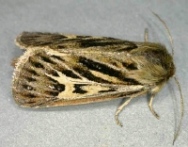
The antler moth caterpillars, which are about two inches long, have hatched in their millions in the Helvellyn and Skiddaw areas.

The phenomenon, which has always been thought to occur once in every eight to 10 years, has left wide expanses of dead grass where sheep are normally grazed. But what is puzzling the experts is the fact that there was also an invasion of caterpillars last year.

For the first time in living memory, the plague of caterpillars has been followed by a second epidemic in the subsequent year.

Attention

Lead Shot From Hunting and Fishing Kills Wildlife

Millions of pounds of lead used in hunting, fishing and shooting sports wind up in the environment each year and can threaten or kill wildlife, according to a new report from the U.S. Geological Survey.

Lead has long been known to be damaging to biology. It's previous use in gasoline, paint, pesticides, and solder in food cans has nearly been eliminated. Lead shot was banned for waterfowl hunting in 1991, but its use in ammunition for upland hunting, shooting sports, and in fishing tackle remains common.

Image
©Jacobson et al. 1977, courtesy of Journal of the American Veterinary Medical Association
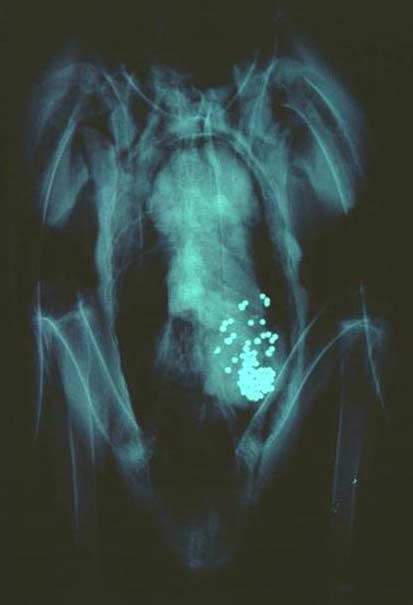
Radiograph of immature bald eagle containing numerous lead shot in its digestive tract.

Numerous previous studies have documented adverse effects to wildlife, especially waterbirds and scavenging species, like hawks and eagles, the researchers say. Lead exposure from ingested lead shot, bullets, and fishing sinkers also has been reported in reptiles, and studies near shooting ranges have shown evidence of lead poisoning in small mammals.