Animals
S


Question

Trinidad and Tobago: Ministry alarmed by monkey deaths

Warning over meat

More monkeys were being found dead in forests across the country, according to Hunters Association president Mohan Bholasingh.

He said it was not known what was killing them and that the association as a precautionary measure had sent out advisories through members calling on hunters and other people entering forests to be immunised with the yellow fever vaccine.

Red Howler monkeys are the hosts of the virus that carries the disease.

Better Earth

Rabbits Devastate Island Wildlife

wildlife
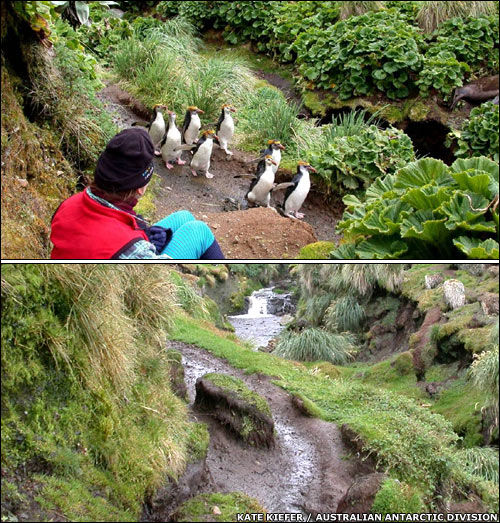
© Australian Antarctic DivisionRabbits caused plant cover to decline starkly on this royal penguin "run" between 2001 (top) and 2007 (bottom).
The removal of cats in 2000 caused "catastrophic" damage to the ecology of a sub-Antarctic island, a study says.

Since cats were removed from Macquarie Island, rabbit numbers have soared, and the animals are now devastating plants.

Cats previously kept a check on rabbits but were eradicated because they were also eating seabirds, scientists relate in the Journal of Applied Ecology.

The Australian government plans to eradicate rabbits, rats and mice from the island, a World Heritage Site.

The rabbits have now caused so much damage to the island's flora that the changes can be seen from space.

The scientists behind the research say conservation agencies must "learn lessons" from the episode.

Binoculars

Nature Hits Back: Major spike in shark attacks on Australian beaches

Shark Attacks 1
© FlickerThe victim described the shark as a bull shark
An aerial search will resume on the New South Wales south coast tomorrow for a shark that attacked a 24-year-old man.

Steven Fogarty was snorkelling at Windang near the entrance to Lake Illawarra when the shark bit him on the leg, leaving 40 puncture wounds.

He described the shark as a bull shark and said he punched the shark until it let go.

Info

Medicinal plants on verge of extinction

The health of millions could be at risk because medicinal plants used to make traditional remedies, including drugs to combat cancer and malaria, are being overexploited. "The loss of medicinal plant diversity is a quiet disaster," says Sara Oldfield, secretary general of the NGO Botanic Gardens Conservation International.

Most people worldwide, including 80 per cent of all Africans, rely on herbal medicines obtained mostly from wild plants. But some 15,000 of 50,000 medicinal species are under threat of extinction, according to a report this week from international conservation group Plantlife. Shortages have been reported in China, India, Kenya, Nepal, Tanzania and Uganda.

Commercial over-harvesting does the most harm, though pollution, competition from invasive species and habitat destruction all contribute. "Commercial collectors generally harvest medicinal plants with little care for sustainability," the Plantlife report says. "This can be partly through ignorance, but [happens] mainly because such collection is unorganised and competitive."

Ladybug

Rare 'dinky' bird migrates to US for first time

Choke Canyon, Texas-- Birders with binoculars and cameras are flocking to a remote state park in search of a small yellow-chested bird that apparently crossed the U.S. border for the first time from its high-mountain habitat to the south.

At 5 inches with beige and yellow markings, the pine flycatcher doesn't look like much, but its unprecedented migration from Mexico and Guatemala is exciting birders all over the country.

"It's not a thrilling bird visually. It's thrilling because it's a first U.S. record," said Wes Biggs, who flew to Choke Canyon State Park from Orlando, Fla., to catch a glimpse.

Question

Philippines: Hog deaths in Davao Sur still a mystery

The provincial veterinarian office on Thursday said the death of at least 50 pigs here since December was caused by a mixture of viral and bacterial infection.

But Dr. Nestor Barroga, provincial veterinarian, said they could not determine yet what type of virus affected the animals.

Barroga's statement came in the wake of the tests being conducted by experts from the United Nations on pigs in Luzon, where a strain of the Ebola-Reston virus was found last year.

Barroga said they were trying to immediately determine the type of the virus that downed pigs in at least eight villages here and that more samples have been brought to the regional animal center in Davao City for testing.

Bizarro Earth

US: Increase of sick brown pelicans baffles experts

Los Angeles: Wildlife experts are trying to figure out why sick, disoriented and bruised California brown pelicans are being found in record numbers along more than 1,000 miles of coastline.

The birds, some of them dead, have been spotted from San Francisco to Baja California, Mexico. Many have been found far from their homes on roads, fields and backyards.

The pelicans started appearing late last month north of San Pedro in Southern California, then began appearing farther north, said Jay Holcomb, executive director of the International Bird Rescue Research Center in Fairfield, in Northern California.

The center's San Pedro facility received more than 40 birds in the past seven to 10 days, while the Fairfield one has received about 25, Holcomb said Tuesday.

A man vacationing in Baja California alerted the center about a similar problem there this week after discovering sick pelicans on the beach south of San Felipe.

Magnify

Pelicans fall out of sky

Pelicans suffering from a mysterious malady are crashing into cars and boats, wandering along roadways and turning up dead by the hundreds across the West Coast, from southern Oregon to Baja California, Mexico, bird-rescue workers say.

Attention

US: Mercury Found at High Levels in Indiana Streams

Foam on a stream in southeast Indiana
© Bernie KasperFoam on a stream in southeast Indiana.
INDIANAPOLIS - Six of every 100 streams in Indiana contain mercury at levels greater than the state water quality standard protecting human health, according to research released today by the U.S. Geological Survey. With new mapping techniques, the scientists identified an area in southeastern Indiana with some of the highest levels of mercury deposition in the United States.

Mercury concentrations in 73 percent of the samples exceeded the more restrictive state water quality standard protecting wildlife.

More than 80 percent of the water samples had detectable methylmercury, the most toxic form of mercury that accumulates in fish, birds, and mammals at the top of food chains.

In a separate report looking at mercury in rain and snow, USGS scientists found that mercury concentrations in more than 40 percent of the samples exceeded the Indiana water quality standard for human health and nearly all concentrations exceeded the standard protecting wildlife.

"Our studies are showing that mercury can be found in the water everywhere we've looked in Indiana, but the mercury varies from place to place and changes both seasonally and year to year," said USGS scientist Martin Risch, an author on both papers.

Binoculars

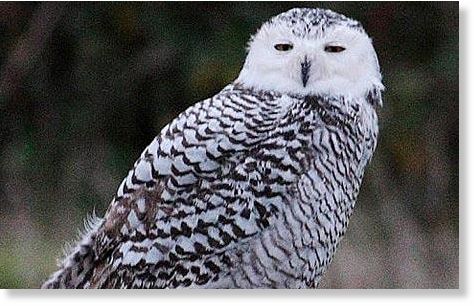
Hundreds of birdwatchers turn out to see rare snowy owl

Hundreds of birdwatchers have gathered in a Cornish village to catch a glimpse of a rare snowy owl.
british snowy owl
© SWNSThe owl was first spotted in Cornwall on Dec 21

The bird, which is a native of the Arctic Circle, and is usually found in Greenland, Canada and Russia, has been seen at Zennor, near St Ives.

It is the first time in 60 years one has been seen in Cornwall.

In Britain, the snowy owl is usually only a rare winter visitor to Shetland, the Outer Hebrides and the Cairngorms. On average there are between one and four seen each year in the United Kingdom.

The young owl was believed to appeared in Cornwall after being blown off course by storms. Birdwatchers said it appeared to be content, and at home in the freezing temperatures.