Animals
S


Fish

South Aftrica: A shark in our river? Dead right for the ecosystem

Cape Town - Cool-headed Witsand residents have accepted their toothy marine neighbour with some pride and are not about to be scared away from their beloved Breede River by any shark, big or small, they say.

Witsand hit the headlines this week when a four-metre female Zambezi shark, heavily pregnant with at least four pups, was caught 5,5km upriver from the fishing village.

Locals said they were more amazed than frightened at the appearance of the shark, estimated to weigh about 650kg.

Telescope

Mature Arctic Ivory Gull spotted In Massachusetts for first time in over a century

The temperatures were in the single digits, but not low enough to keep the gawkers away. A celebrity was in town, behind the East Bay Grille, a visitor not seen in these parts in decades, if not longer.

But these weren't paparazzi, and this wasn't a Hollywood star. Rather, they were avid birdwatchers - about 20 in all - braving the frigid air as they scanned the bay and the edges of the breakwater with binoculars and spotting scopes.
Ivory Gull
© Greg Derr/The Patriot LedgerAn ivory gull, a native of the Arctic, has been attracting bird watchers from across New England to Plymouth Harbor.

Bizarro Earth

Caterpillar plague strikes west Africa

A throng of crop-eating caterpillars is threatening food supplies across west Africa, and could prove hard to control with pesticides. The crawling menace has appeared in northern Liberia, where hundreds of millions of the black larvae are devouring plants, fouling wells with their faeces and even driving farmers from fields.

They are now crossing into neighbouring Guinea, and the UN Food and Agriculture Organization (FAO) warns that in two to three weeks they will turn into moths that can fly hundreds of kilometres and could spread across west Africa, worsening food shortages in the region.

"The species is so far unknown," FAO entomologist Winfred Hammond told New Scientist from Accra in Ghana, where Liberian specimens were being flown for analysis.

Butterfly

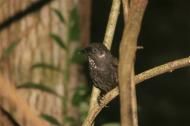
New Species of Babbler Bird Discovered in China

Bab Bird
© AP Photo/Birdtour Asia, James Eaton, HOA Nonggang babbler is seen in southwestern China's Guangxi in December 2008. A new species of the fist-sized, babbler bird has been found in network of underground caves in China, raising the prospect the country could become a hot spot for other new discoveries, a conservation group said Thursday, Jan. 29, 2009.
A new species of the fist-sized babbler bird has been found in a network of underground caves in southwestern China, raising the prospect the country could become a hot spot for other new discoveries, a conservation group said Thursday.

Ornithologists Zhou Fang and Jiang Aiwu first spotted the dark brown bird with white specks on its chest in 2005 and have since confirmed its identity as an undescribed species. They named it the Nonggang babbler, or Stachyris nonggangensis, for the region in China where it was found.

A formal description was published last year in The Auk, which is the quarterly journal of the Virginia-based American Ornithologists' Union.

"This is exciting evidence that there could be many more interesting discoveries awaiting ornithologists in China," said Birdlife International's Nigel Collar, which announced the discovery.

Question

US: Hundreds of dead birds found in Somerset County

Franklin Township, New Jersey - Residents in Somerset County's Franklin Township have a mystery on their hands.

Hundreds of dead birds have been falling onto people's homes and cars across the southern part of the township.

Homeowner Andrea Kipec tells the Courier News of Bridgewater that she's counted more than 150 dead birds on her property. She's been told by local officials it's her responsibility to clean them up.

Info

US: Disease shows up in area bat colony

A week before Christmas, DeeAnn Reeder and her colleague Greg Turner made a discovery in a cave in Mifflin County. A handful of bats hibernating for winter had the tell-tale sign of white-nose syndrome, a mysterious condition killing off colonies in the northeast.

The discovery of the white fungus confirmed what state, federal and academic researchers have suspected would happen: White-nose syndrome has arrived in Pennsylvania after being detected in New York and Vermont.

Info

Parasites threatening California sea otters

The food some California sea otters eat might carry deadly parasites that come from cats and opossums, a recent study suggests.

Scientists from the University of California-Davis and the U.S. Geological Survey say some marine invertebrates on which sea otters feed can act as transport hosts for lethal pathogens that have made their way into the ocean, confirming a theory that has long been reported.

The risk of exposure to the pathogens is higher among sea otters when clams, fat innkeeper worms and marine snails are part of their diet, researchers said.

Fish

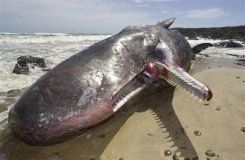
One Whale Survives Mass Australian Beaching

Whale
© UnknownA dead sperm whale on the north coast of Tasmania. Three more sperm whales from a group of almost 50 that beached en masse in Australia's south have died, with just two survivors sandwiched among the dead, rescuers have said.
Just one sperm whale from a group of almost 50 that beached en masse in Australia's south has survived, and remains sandwiched among the dead, officials said Saturday.

The pod of 48 whales became trapped this week on a sandbar 150 metres (500 feet) offshore from Perkins Island on the northwest coast of the island state of Tasmania. By the time they were discovered on Thursday almost all had perished.

High winds and ocean swell prevented rescuers from floating the two whales who survived through Friday night out to sea, and by late Saturday rescuer Warwick Brennan said just one was still alive.

"We didn't get a chance to get the whales out so we've just been trying to maintain them, keep them cool, but unfortunately one of them has died during the day so we've only got one alive now," Brennan told AFP.

Bizarro Earth

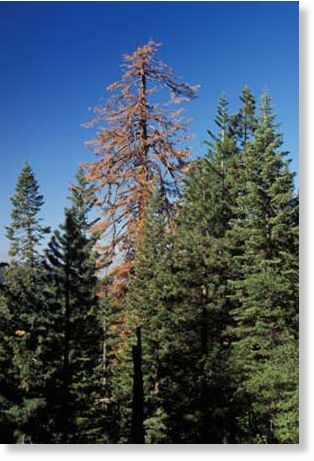
Tree deaths double across western US

Old, unmanaged trees in the western US
© Jerry FranklinOld, unmanaged trees in the western US are dying twice as fast as they were 50 years ago

The majestic old trees of the western US are disappearing twice as fast as they were three decades ago, and climate change is most likely to blame, say scientists.

Philip van Mantgem of the US Geological Survey and colleagues collected data from 76 plots on the west coast - from California up to British Columbia, Canada - and in Idaho, Arizona and Colorado. These are plots without any direct human management, so any tree loss is not due to logging.

The team focused on old forests, where many of the trees were at least 200 years old, and sometimes as much as 1000 years old. In 87% of the plots, trees are disappearing faster than new trees are springing up. Death rates varied, but the trend held whether the trees were old or relatively young, big or small, high up in the mountains or down in valleys.

The Pacific Northwest, including the pine trees of British Columbia, were the worst affected - death rates there are doubling every 17 years.

Info

Mountain gorillas in dire straits, DNA reveals

baby Gorilla kisses a silverback male
© Paul Souders / CorbisA baby Gorilla kisses a silverback male, Bwindi Impenetrable National Park, Uganda.

Mountain gorillas are in more trouble than we thought. Fewer of them are living in Uganda's Bwindi Impenetrable National Park (BINP) than previous estimates suggest. This is one of only two places worldwide where the gorillas survive in the wild.

Traditionally, conservationists estimate gorilla numbers by counting nests and examining the dung outside each one. "Each individual constructs a nest to sleep in, and before they leave in the morning, they defecate outside it," says Katerina Guschanski at the Max Planck Institute for Evolutionary Anthropology in Liepzig, Germany.

According to this method, there are 336 gorillas left in the 331-square-kilometre national park. But when Guschanski's team analysed DNA samples from each pile of dung using a new genetic counting method, the population estimate dropped by 10 per cent to 302. This suggests that some individuals had been counted twice using the old technique (Biological Conservation, DOI: link).