Animals
S


Info

Boy feared snatched by crocodile in Australian floodwaters

A five-year-old boy is feared to have been snatched by a crocodile in floodwaters in northern Australia while walking with his dog on Sunday, police said.

"The boy was walking with his seven-year-old brother earlier this morning when he followed his dog into floodwaters," police said in a statement.

"He disappeared in the water and his brother saw a large crocodile in the vicinity of his disappearance."

A large-scale search for the boy has been launched at Cape Tribulation in far north Queensland.

Police were also searching for two people missing after their car was washed away as they tried to drive through floodwaters south of Tully in Queensland.

Much of the state has been declared a disaster zone, with an area of more than a million square kilometres (386,100 square miles) and 3,000 homes affected by floods due to torrential rains.

Butterfly

Nightmarish Caterpillar Swarm Defies Control in Liberia

They came by the millions out of the forest.

Caterpillars
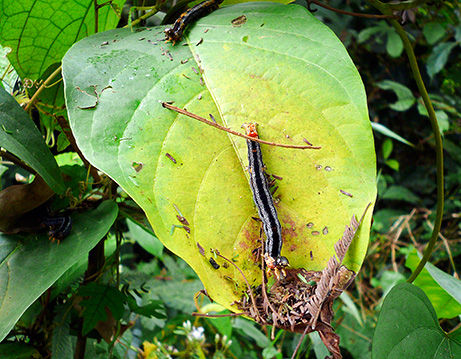
© UnknownAchaea catocaloides, the caterpillar that began devouring Liberia's trees and crops in January 2009, turns into a moth that can lay 500 to 1,000 eggs if not killed beforehand. Experts fear the cycle could begin anew if the caterpillars are not contained.
From off in the bush, townspeople at the epicenter of the plague heard a low roar, like the sound of heavy rain cascading down through the leaves. It was caterpillar droppings.

In early January, when the long, black caterpillars reached the creeks that serve as the main water sources for the town of Belefanai in north-central Liberia, the creatures' feces instantly turned streams dark and undrinkable.

Moving through the forest canopy on webs, devouring the leaves as they went, the caterpillars advanced like nothing the townspeople had ever seen.

Health

Deadly H5N1 avian flu found in Hong Kong birds

Scientists check ducks
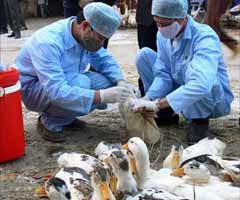
© AFP/deHK officials check ducks for avian bird flu.
Hong Kong: A dead goose and two dead ducks found on a Hong Kong island last week have tested positive for the deadly H5N1 strain of bird flu, officials said on Wednesday.

The birds were found on January 29 and 31 on a beach on Lantau island and preliminary tests showed they had tested positive for H5 avian influenza.

Further tests confirmed it was the H5N1 strain of the virus, a spokesman for the Agriculture, Fisheries and Conservation Department said in a statement.

Health

China's Drought May Make Birds More Susceptible to Avian Flu

A drought in northern China that has limited drinking water to almost 4 million people may also be making birds more susceptible to the deadly H5N1 avian-flu strain.

The lack of rainfall in Shandong, Shaanxi and other northern provinces since October causes stress for local fowl, said Hong Kong Veterinary Association President Veronica Leong, who specializes in birds. "Any sort of stress would make birds more susceptible to disease," she said by e-mail today.

Bird flu killed five people in China last month, three of whom were from regions experiencing drought. Lo Wing-Lok, a health adviser to the Hong Kong government, said yesterday China has an outbreak of bird flu among poultry that its government hasn't reported.

Bizarro Earth

Australia Battles Floods in North as Crocodiles Enter Towns

Emergency services in northern Australia are battling the worst floods in three decades as residents report shortages of supplies and crocodiles swimming through towns inundated by water.

Almost 3,000 homes have been flooded and 30 people evacuated in the northwest of Queensland state, the Department of Emergency Services said. Supplies are being airlifted to towns cut off by rising waters in the region west of Cairns, it said.

"It's like looking out into an ocean," Donna Smith, acting manager of the Albion Hotel in Normanton, a town inland from the Gulf of Carpentaria, said by telephone today. "There is a 5-meter crocodile swimming by, but the biggest problem is that we're running out of beer."

Hourglass

US: Bat-killing syndrome spreads in Northeast

A mysterious and deadly bat disease discovered just two winters ago in a few New York caves has now spread to at least six northeastern states, and scientists are scrambling to find solutions before it spreads across the country.

White-nose syndrome poses no health threat to people, but some scientists say that if bat populations diminish too much, the insects and crop pests they eat could flourish. Researchers recently identified the fungus that creates the illness' distinctive white smudges on the noses and wings of hibernating bats, but they don't yet know how to stop the disease from killing off caves full of the ecologically important animals.

"The cause for concern is that this is going to race across the country faster than we can come up with a solution," said Alan Hicks, a wildlife biologist with New York state's Department of Environmental Conservation.

Frog

Ten new amphibian species discovered in Colombia

Image
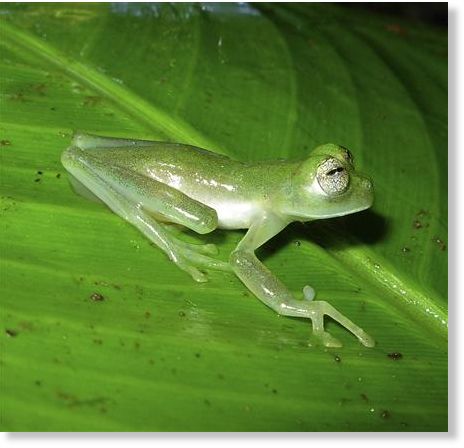
© REUTERS/Marco Rada-Conservation International Colombia/Handout An undated handout image shows a glass frog of the Nymphargus genus, which is potentially new to science, that was discovered in the mountains of the Darien region in Colombia. Ten new species of amphibians -- including three kinds of poisonous frogs and three transparent-skinned glass frogs -- have been discovered in the mountains of Colombia, conservationists said on February 2, 2009.

Ten new species of amphibians -- including three kinds of poisonous frogs and three transparent-skinned glass frogs -- have been discovered in the mountains of Colombia, conservationists said Monday.

With amphibians under threat around the globe, the discovery was an encouraging sign and reason to protect the area where they were found, said Robin Moore, an amphibian expert at the environmental group Conservation International.

The nine frog species and one salamander species were found in the mountainous Tacarcuna area of the Darien region near Colombia's border with Panama.

Ladybug

Riddle of Liberian insect plague

A devastating plague of caterpillars ravaging part of West Africa is not armyworms, as previously believed, but an unidentified species, experts say.

A UN emergency co-ordinator told the BBC the insects in Liberia and Guinea were very different from armyworms.

He said experts had noted the insect has distinct feeding patterns, life cycle, habits, movement and appearance.

Specialists are studying the pest to find a way of controlling the swarm, which has affected 400,000 residents.

Frog

Many New Species Discovered In Hidden Mozambique Oasis With Help Of Google Earth

Chamelon
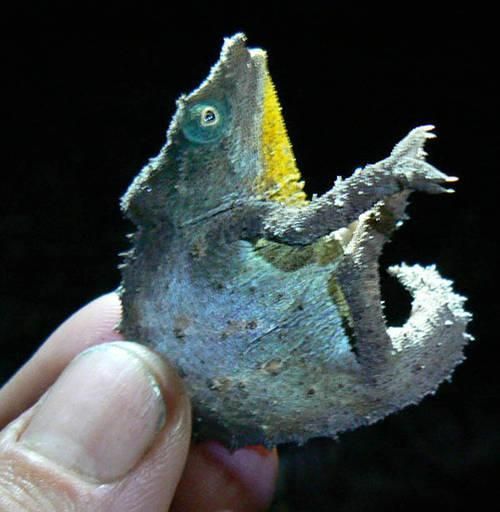
© Julian Bayliss/KewScientific surveying Mount Mabu -- Mozambique - found a wealth of wildlife including Pygmy Chamelons.
Space may be the final frontier, but scientists who recently discovered a hidden forest in Mozambique show the uncharted can still be under our noses. BirdLife were part of a team of scientists who used Google Earth to identify a remote patch of pristine forest. An expedition to the site discovered new species of butterfly and snake, along with seven Globally Threatened birds.

The team were browsing Google Earth - freely available software providing global satellite photography - to search for potential wildlife hotspots. A nearby road provided the first glimpses of a wooded mountain topped by bare rock. However, only by using Google Earth could the scientists observe the extent of woodland on the other side of the peak. This was later discovered to be the locally known, but unmapped, Mount Mabu. Scientific collections and literature also failed to shed light on the area.

Ladybug

Feds apologize but insist birds had to be poisoned

Blame it on the Bard.

Hundreds of birds that dropped dead on Somerset County cars, porches and snow-covered lawns, alarming residents over the weekend, were all of a rather foul breed of fowl -- the notorious European starling, which the United States Department of Agriculture killed on purpose.

The starling, a prominent figure in Shakespeare's "Henry IV," has become a royal nuisance in North America. They have been invading farms and pushing out native wildlife since a New York City group infatuated with the playwright released about 100 imported starlings in Central Park in 1890 and 1891.

It was part of an ill-conceived plan by the American Acclimatization Society to make European immigrants feel at home by filling America with all the birds mentioned in Shakespeare's works.