Animals
S


Ladybug

US: Bee shortage again this year

Image
Many bee farm owners say there's once again a bee shortage this year. "The bee population this year seems to be better than it was two and three years ago so there's some recovery being noted, but still we have a ways to go," bee farm owner Mike Potoczak said. "We're still losing 20% to 30% a year and that's way too much. One third of our food supply is because of their pollinating activities and that's why bees are protected by the government."

Potoczak owns a bee farm in Corfu and he's part of the Western New York Honey Producers group. He says his farm is still seeing a loss of bees and there's no solid explanation for it, but researchers are looking into possible reasons. "The name given to this situation is Colony Collapse Disorder, that's because they don't know what's doing it, the {bee} colony just collapses," Potoczak said. "The bees are there one week and then it just goes downhill... the bees disappear, they're gone and there's nothing left."

Ladybug

Bee parasite spreading on Hawaii, US

The varroa mite parasite that's been killing bees across the country is spreading on the Big Island, threatening local fruit and macadamia nut industries. The tiny bug has escaped a quarantine area around Hilo and spread to Hamakua and Puna.

The varroa mite became established on the mainland in the 1980s. Since then, it's destroyed more than half of some beekeepers' hives and devastated most wild honeybee populations. Mainland bees have also been hit by another illness called colony collapse disorder, which causes adult bees to abandon their hives.

Hawaii's first varroa mite was found in 2007 on Oahu, where it is now widely established.

Cow Skull

Plague wipes out prairie dog town

The heat is not the only thing Panhandle residents need to be careful of this summer. Bubonic plague is affecting animals, and at least one person has contracted West Nile virus in the region.

A prairie dog town in northeast Hansford County was wiped out by bubonic plague in the past few weeks, said Ron Antalek, the county's emergency management coordinator. He suggested being on alert for signs of other die-offs, controlling pets to prevent them from getting the fleas that carry the disease and not directly handling dead rodents.

Hourglass

Arctic freeze brings odd birds to Northeast Ohio

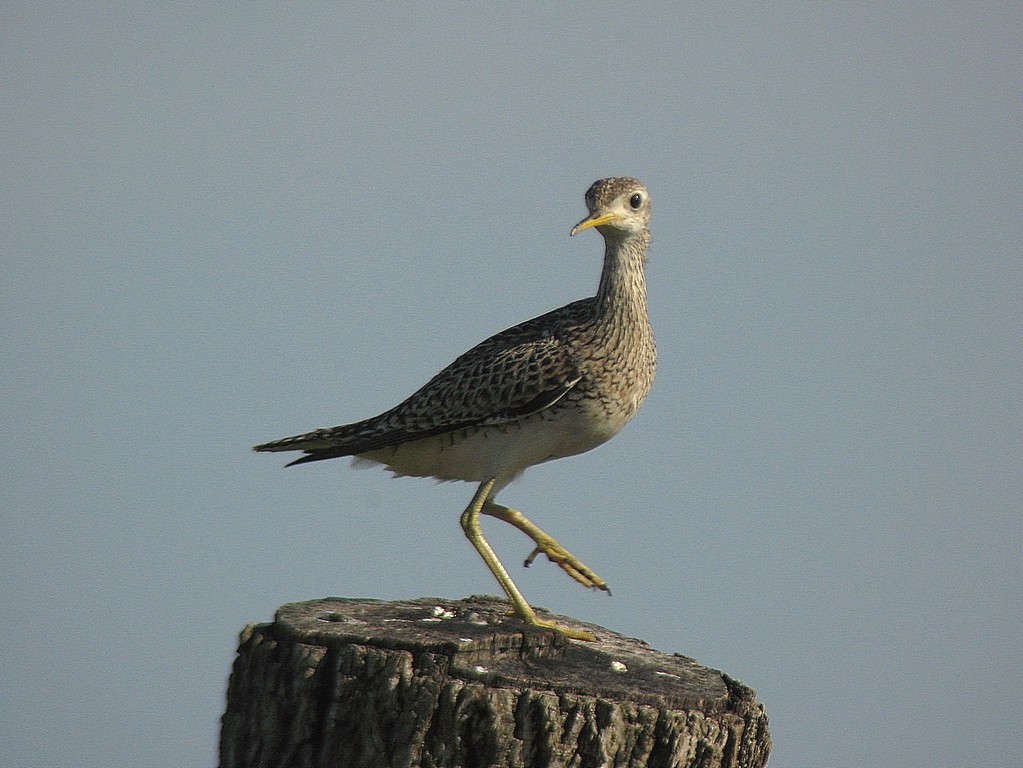
Sandpiper
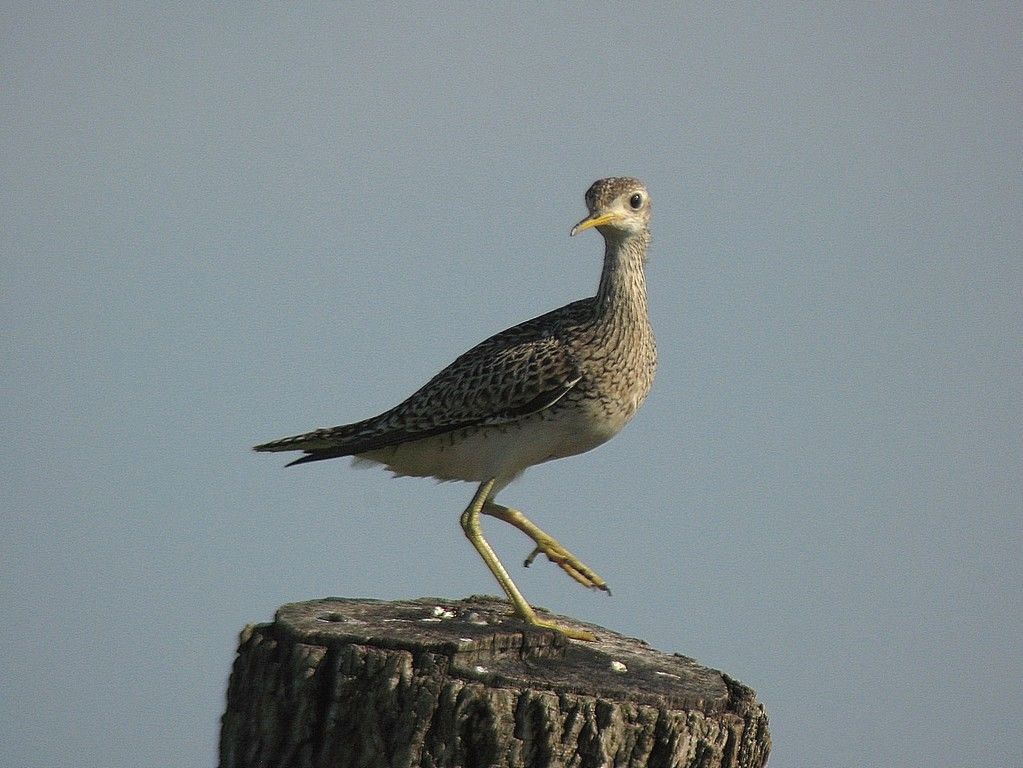
© Jerry TalkingtonThis upland sandpiper was one of at least four found at an airport in Harrison County last week. The sightings marked welcome returns to Ohio for the long-absent species.

What an odd month this has been for bird comings and goings.

Last week, Jerry Talkington found two whimbrels in a field in Fairport Harbor. The sightings were unprecedented for the date in Northeast Ohio, according to "The Birds of the Cleveland Region."

Were they late northbound migrants on the way to their Arctic nesting grounds? Or early fall migrants headed south?

At the same time, upland sandpipers -- a grassland species that had all but abandoned Ohio over the past 30 years -- suddenly appeared at three separate locations in Mansfield, Champaign and Harrison counties.

For the second consecutive year, yellow-crowned night herons are nesting in a neighborhood in Bexley, just east of Columbus.

The hottest birder buzz last week was over several sightings of one or more Mississippi kites in Worthington, just north of Columbus. The reports came a year after the state's first-ever nesting of kites at a golf course in Hocking County.

Then on Saturday morning, I was awakened to a familiar song coming from a hemlock outside my bedroom window. It was a white-crowned sparrow, a common visitor to my yard in April and May, but never before in the middle of June, when the "Birds of the Cleveland Region" tells us that white-crowneds are "occasional" and "not to be expected."

Magnify

Coelancanth Island has New Tiny Bat

Coelacanth Bat
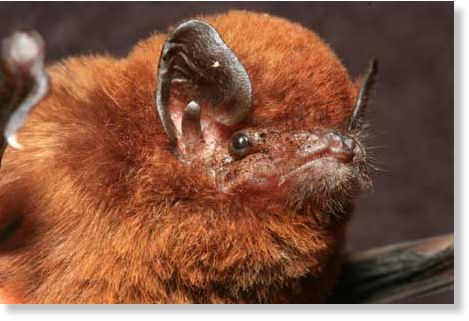
© Manuel Ruedi/Muséum de GenèveMiniopterus aelleni
Scientists have identified a new species of bat weighing just five grams in the Comoros island archipelago off eastern Africa, the Natural History Museum in Geneva said on June 24, 2009. The Comoros islands are famed in cryptozoological history as the first known recognized rediscovered home of the 65 million-year-old survival, the Coelacanths.

The new mammal has been named Miniopterus aelleni in honor of the late Villy Aellen, a former head of the Geneva museum and a major bat specialist. Miniopterus (long winged bat) is a genus of vesper bats and the only genus of subfamily Miniopterinae.

Extinguisher

Oil Boom Threatens The Last Orang-utans

Image
© Kathy MarksRazed lowland forest on Sumatra island awaits a palm oil plantation
A famous British company, Jardines, is profiting as the lowland forest - which shelters the few remaining orang-utans - is razed to make way for massive palm oil plantations, reports Kathy Marks in Tripa, Indonesia

Binoculars

Iowa, US: Harsh winter leaves mark on flowers, trees, crops

The thermometer says another Iowa summer has arrived. But winter continues to hang around in the form of dead trees, flowers, plants and shrubs that were unable to rebound from one the snowiest and coldest seasons on record.

The state's summer palette might be a bit heavy on brown as a result.

"We've had some real damage here," Bob Atha of Appleberry Farm in Marshalltown said. "I don't know about other places, but we're expecting about half the apples we had last year, maybe a little less than half."

Experts call it "winterkill," and it's been reported from the alfalfa fields of Ontario to the wheat stands of Kansas to golf courses in Massachusetts.

In Iowa, the bitter cold and early snow was hard on even the hardiest evergreens. An early spring didn't help, either.

"We've had literally hundreds of people calling and complaining about" winter-ravaged bushes and shrubs, said Jeff Westphal, a salesman at Miller Nursery in Johnston. "Some of them were already weak going into the winter. But that doesn't explain what happened to the boxwoods and yews. I think it was just too cold for some of them."

Bizarro Earth

Locusts Swarm Ethiopia

Image
© AFP/File/Tengku Bahar
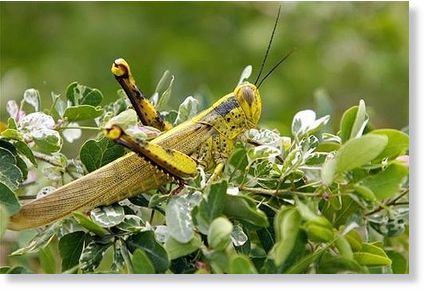
Crops in large swathes of Ethiopia risk being destroyed by swarms of locusts coming from northern Somalia, the UN Office for the Coordination of Humanitarian Affairs (OCHA) said Tuesday.

The Food and Agriculture Organisation (FAO) "reports that locust swarms have been confirmed in seven regions in the country, including in areas where there is no previous record of infestation," a statement said.

"The government is expected to present a response plan specifying immediate and medium-term actions to be taken during the week," OCHA said.

Magnify

In a St. Paul lab, scientists race to defeat a killer wheat fungus

The spores arrived from Kenya on dried, infected leaves ensconced in multiple layers of envelopes.

Working inside a bio-secure greenhouse outfitted with motion detectors and surveillance cameras, government scientists at the Cereal Disease Laboratory in St. Paul suspended the fungal spores in a light mineral oil and sprayed them onto dozens of healthy wheat plants each day. After two weeks, the stalks were covered with deadly reddish blisters characteristic of the scourge known as Ug99.

Nearly all of the plants were goners.

Crop scientists fear the Ug99 fungus could wipe out more than 80 percent of worldwide wheat crops as it spreads from its home base in eastern Africa. It has jumped the Red Sea and traveled as far as Iran. Experts say it is poised to enter the breadbasket of northern India and Pakistan, and the wind inevitably will carry it to Russia, China and even North America - if it doesn't hitch a ride with people first.

Compass

Long cold spell is to blame for lack of shellfish

Guernsey fisherman are struggling to make a living after a reduction in crab stocks.

It is thought that this year's cold spell, which lasted longer than in previous years, might have something to do with the poor amount of shellfish being caught.

Potter Robert Le Noury, who fishes off the west coast of the island, said he was putting down the same amount of pots but was struggling to find any crab.

'This is the slack time of year, but it seems to have dragged on.

'It's worrying whether I will be able to catch them or not and whether the season will be a wipe-out.