Animals
S


Red Flag

Maryland State Issues Rockfish Warning

Image
© Baltimore Sun/Elizabeth MalbyHaving already warned about eating rockfish caught in the Chesapeake Bay, the state now urges limited consumption of Atlantic rockfish, as they contain high levels of PCBs.
Advisory for toxic PCBs extended to Atlantic waters

State officials warned Wednesday that people should restrict consumption of Atlantic striped bass - the state fish and one of the most popular with recreational anglers on Ocean City's beaches and charter boats, as well as with area restaurant diners.

Fish

Estrogen in Waterways Worse than Thought

Image
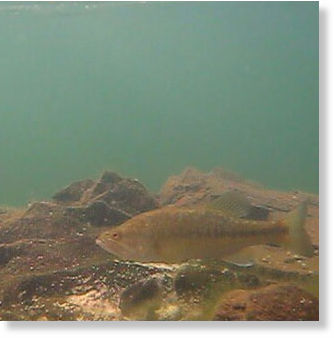
© FLICKR/VELO STEVEFISHY WATERS: Some male bass have been growing eggs, which researchers attribute to the presence of estrogen in the rivers.
Exposure to estrogen puts fish at greater risk of disease and premature death, according to a new federal study.

The U.S. Geological Survey study showed that estrogen exposure reduces a fish's ability to produce proteins that help it ward off disease and pointed to a possible link between the occurrence of intersex fish and recent fish kills in the Potomac and Shenandoah rivers.

The report, published in the current issue of Fish & Shellfish Immunology, adds to a growing body of research pointing to problems with estrogen in the nation's waterways.

Bug

US: 10,000 bees crowd wing of plane at Massachusetts airport

Image
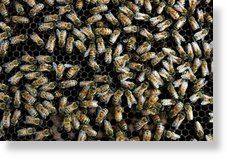
© AFP/File/Saul LoebHoney bees walk on a moveable comb hive at the Bee Research Laboratory, in Beltsville, Maryland in 2007. The number of domesticated bees is on the rise worldwide despite declining numbers of wild honey bees in the United States and Europe, a study said Thursday.
Danvers - Maybe these bees were too tired to fly for themselves. A gang of honeybees landed on the wing of a plane used for flight school training at Beverly Airport. At first, the 10,000 or so bees swarmed over the left side of the aircraft, then landed on top of the left wing. The owner of the flight center called police, who said to call local bee removal expert Al Wilkins.

Wilkins used a specially designed vacuum to suck the bees off the plane, and then relocated them to hives where they will produce honey.

Arrow Down

US: Honey Bee Loss for Third Year in a Row

Image
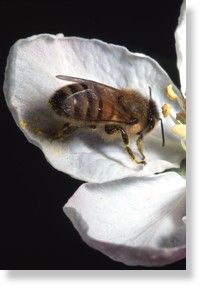
© Jack Dykinga
News continues to be bleak for the nation's commercial beekeeping industry, which could ultimately mean more bad news for farmers and higher prices at the grocery store.

Although a recent survey conducted by the Apiary Inspectors of America to measure colony losses over the winter of 2008-2009 found that the total number of colonies lost last winter was lower than the losses suffered over the previous two winters, a 29% loss is worrying. Overall, beekeepers are facing honey bee losses at rates that are economically unsustainable.

Bizarro Earth

Dozens of whales beach on South African shore

Dozens of pilot whales beached this morning near the storm-lashed tip of South Africa, prompting a massive rescue operation.

Rescuers were using six bulldozers to push the 55 whales back into the water, but "as soon as we put them back into the sea, they swim back to the beach again," said National Sea Rescue Institute spokesman Craig Lambinon.

One whale has died, and high winds and rough seas were frustrating the rescue attempts.

"It's not a very easy situation," Lambinon said.

Pilot whales, about 3 meters (10 feet) long, are fairly common around South Africa. There was no immediate explanation as to why they were beaching.

Butterfly

Thousands of Marauding Caterpillars Trap Car in Silky Web

Image
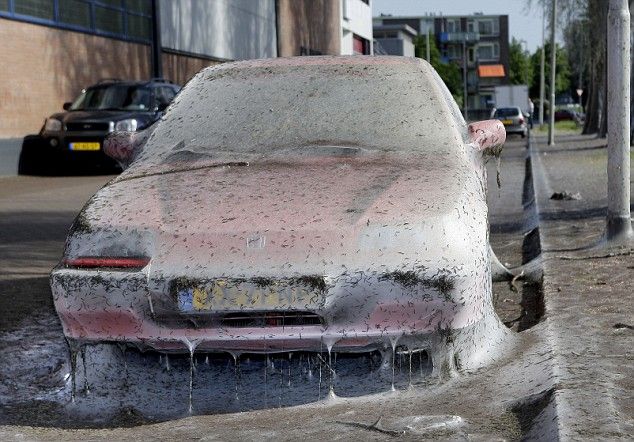
© unknownMoth attack: Spindle ermines covered this car with a giant silk web in Rotterdam
Most drivers would be delighted if their car came with a silk-lined interior.

Whether it's such an appealing prospect on the outside is another matter.

This is the sight that greeted one unlucky motorist when he returned to his vehicle in Rotterdam.

Under a giant silk cocoon created by an army of caterpillars, the shape of a Honda is just about visible.

The car was mistaken as food by spindle ermine larvae, which had already begun to strip a nearby tree of its leaves.

Question

US: Turtle Death Mystery

Menasha - A wildlife expert in east-central Wisconsin says she's worried about the increasing number of dead turtles in the area.

Tracey Koenig is the executive director of the Heckrodt Wetland Reserve in Menasha. She says an empty turtle shell occasionally washes ashore, but lately there are more deaths involving larger turtles.

She says some turtles just crawl ashore and die.

Her staff reports the recent deaths of six snapping turtles and four or five painted turtles. Another two dozen large turtles were discovered dead at a nearby pond in the past month.

Question

Philippines: Virus kills 200 hogs in San Simon, rapidly spreading in Pampanga

City of San Fernando - More than 200 swine in San Simon town were found dead recently due to Porcine Reproductive Syndrome (PRRS) virus.

The Provincial Veterinary Office (PVO) said the rapid spread of PRRS among hogs and piglets in Apalit, Mexico, San Luis, Bacolor and in the City of San Fernando has reached an alarming proportion.

Mayor Rodrigo "Digos" Canlas said he accompanied the PVO officers in giving vaccines to afflicted pigs in some of the big and backyard piggeries in San Simon to avoid the mortality increase.

Augusto Baluyut, provincial veterinarian, said the PRRS first erupted in San Simon and it is continuously spreading in more towns in the province.

Baluyut recalled that two years ago, over 40 percent of the piggeries in the towns of Porac, Lubao, Santa Rita, Guagua were severely affected by PRRS, which caused financial setbacks to the owners of backyard farming.

Binoculars

UK: Where Have All Our Birds Gone?

Image
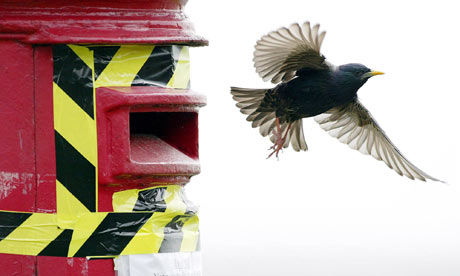
© East News / Rex FeaturesA family of Starlings has chosen a post box for the third year running in an Essex seaside town to raise their young brood.
People have been listening to skylarks singing in Britain for 10,000 years. But now they, and many other much-loved species, are vanishing fast.

The B1042 that winds from the Bedfordshire town of Sandy towards the village of Potton is a difficult road to cross. Fast and twisty, there are several blind bends where pedestrians must take their lives into their hands. That is trickier than it sounds, for most pedestrians who cross the B1042 already have a pair of binoculars in their hands.

The road separates the grand headquarters of the RSPB, home to hundreds of birdwatchers, from some unkept fields, home to hundreds of watchable birds - hence the regular skips across the tarmac.

Fish

Shellfish reefs are 'most imperilled sea habitat'

Image
© Getty Images / GlowimagesAn American costal shellfish reef. These are at risk, because their importance as ecosystem engineers has been overlooked until now
Globally, 85 per cent of reefs have been lost. Destructive fishing practices, disease and coastal development threaten many of the survivors. What sounds like an apocalyptic vision of the future for the world's tropical corals is in fact a chilling assessment of the current state of reefs built in cooler waters by oysters and other bivalve shellfish.

According to a report from The Nature Conservancy (TNC), released this week at the International Marine Conservation Congress in Washington DC, shellfish reefs are the world's most imperilled marine habitats - faring worse than coral reefs and mangrove forests.

"Shellfish like oysters, cockles and mussels have been feeding people for millennia," says co-author Robert Brumbaugh, a member of TNC's global marine team based in Summerland Key, Florida. "But there is very little appreciation for their plight." Shellfish biologists hope that TNC's global survey will galvanise conservation efforts in a similar way to the 1998 report of the Global Coral Reef Monitoring Network, which raised the alarm on tropical reefs.