This silver bull figurine posing in a human-like manner may have been buried in a ritual to mark a temple boundary 5,000 years ago.
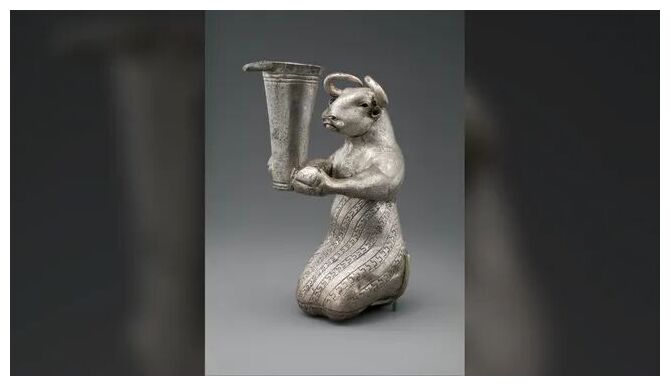
© Purchase, Joseph Pulitzer Bequest, 1966; Metropolitan Museum of Art (Public Domain)The silver bull figurine was likely involved in an ancient Mesopotamian ritual.
It was made in southern
Mesopotamia by someone from the Proto-Elamite culture, the oldest civilization in Iran, and was likely used in a ritual or ceremony.
The bull is in the collection of the
Metropolitan Museum of Art in New York City. It stands 6.4 inches (16.3 centimeters) tall and was made from 98.5% pure silver, according to a
1970 study by then-Met conservator Kate Lefferts. Inside the hollow figurine, Lefferts found five limestone pebbles, which were likely included by the artist to create a rattling sound. Fiber adhered to the statue was made from animal yarn.
In a
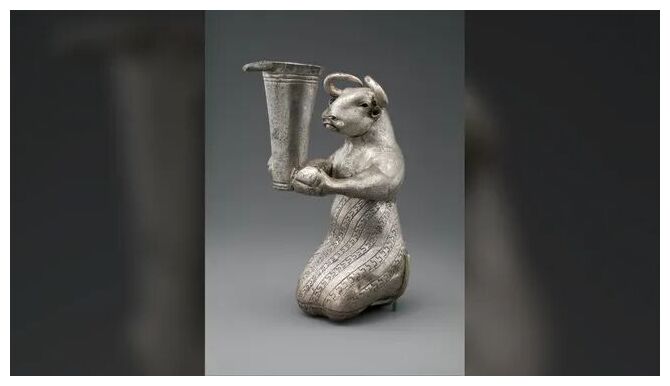
1970 study, Donald Hansen, then a fine arts professor at New York University, described the figurine as a remarkable blend of part-human and part-animal characteristics. The bovine head, complete with curved horns, rests atop human-like shoulders, and the creature is clothed in a decorated robe that covers its kneeling legs. The bull's outstretched arms are human-like but end in hooves that hold a vessel. The figurine does not have a flat base, Hansen noted, which means it could not have stood on its own on a hard surface.











Comment: The Times of India on the 10th of September reports: