Animals
S


Question

US, Massachusetts: Mysterious ailment hits county bats

An ailment that has stumped scientists and has killed thousands of bats in New York and Vermont is now afflicting bats in Berkshire County and other parts of Massachusetts.

The mysterious sickness has been dubbed "white-nose syndrome" due to one of the symptoms that can be spotted with the eye - white, powdery fungus coating a bat's nose.

Question

Mirrored glass to blame for bird deaths in Moscow

Mirrored glass could be behind the deaths of some 50 migrant birds reported in Moscow within a week, Moscow's environmental department said on Friday.

A total of 46 dead waxwings were found dead on 15-18 March, with head injuries, broken bones, ruptured internal organs and crushed chests in southeast and northwest Moscow.

Question

Bee colony collapse dilemma still a mystery

For those studying the colony collapse dilemma that continues to affect bee populations around the country, it seems, at least for now, "enigma" remains the buzz-word.

Researchers in the Colony Collapse Disorder field have indicated that various factors - including foreign pathogens, genetics, stress levels, nutrition and pesticides - could be to blame for the problem. But there's still no smoking gun to explain what's become an ongoing scientific mystery.

Phoenix

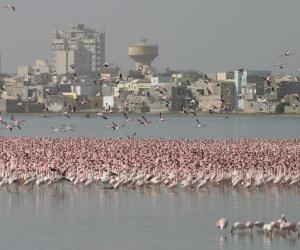
Majestic Lesser Flamingos Survive In Contaminated Indian Waters

A University of Leicester ecologist is setting out to discover why flamingos are so in the pink of health - in the poo!

flamingos
©University of Leicester
A University of Leicester ecologist is setting out to discover why flamingos are so in the pink of health - in the poo!

Frog

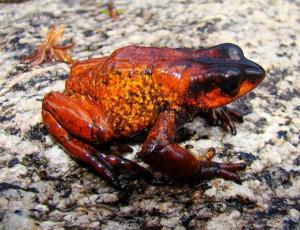
Harlequin Frog Rediscovered In Remote Region Of Colombia

After 14 years without having been seen, several young scientists supported by the Conservation Leadership Programme (CLP), have rediscovered the Carrikeri Harlequin Frog (Atelopus carrikeri) in a remote mountainous region in Colombia.

harlequin frog
©Conservation Leadership Programme
Carrikeri harlequin frog.

Sherlock

Ornithologists announce discovery of new bird species

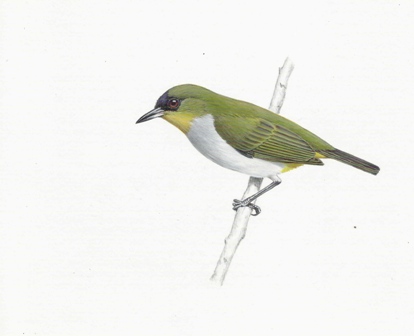
The announcement of the discovery of a new bird comes with a twist: It's a white-eye, but its eye isn't white. Still, what this new bird lacks in literal qualities it makes up for as one of the surprises that nature still has tucked away in little-explored corners of the world.

Ornithologists, including one from Michigan State University, describe for science a new species of bird from the Togian Islands of Indonesia - Zosterops somadikartai, or Togian white-eye, in the March edition of The Wilson Journal of Ornithology.

Image
©Agus Prijono
An artist's rendering of Zosterops somadikartai, or Togian white-eye

Star

Amazing picture of thousands of dead starfish washed up on Kent beach

For five miles they stretched along the beaches, a gruesome line of dead starfish.

Fishermen and bird-watchers at Pegwell Bay near Sandwich, Kent, discovered a "carpet" of thousands of the creatures lying on the sand just above the water line.

And on the beach at nearby Sandwich Bay, thousands more were photographed by Tony Flashman.

Phoenix

Beck's Petrel Flies Back From Presumed Extinction

A bird not seen for almost 80 years has been discovered in the Pacific to the delight of conservationists.

Becks Petrel Pseudobulweria becki
©Hadoram Shirihai
Recently fledged juvenile Beck's Petrel Pseudobulweria becki, off Cape St George, New Ireland, Papua New Guinea, August 2007.

Arrow Down

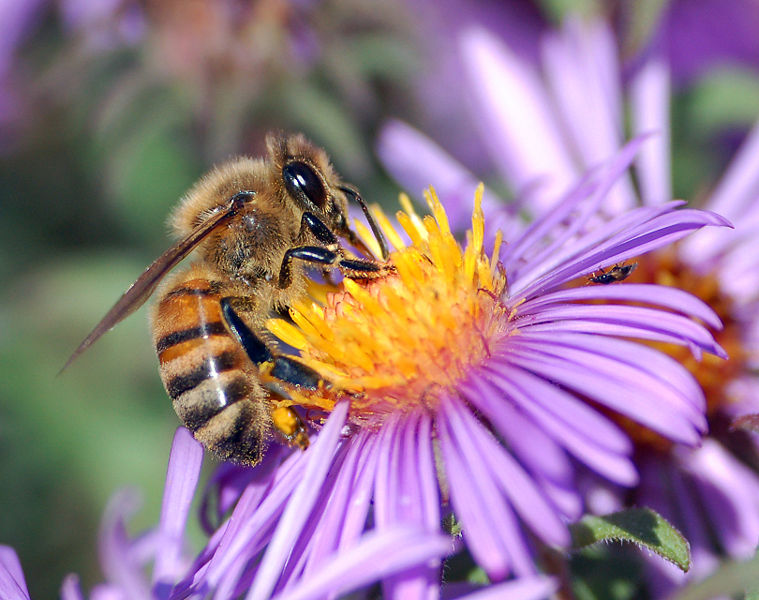
UK: Honey bees 'wiped out in 10 years': beekeepers demand £8m for research, government denies

Beekeepers have warned that most of the country's honey bees could be wiped out by disease in 10 years unless an urgent research programme is launched to find new treatments and drugs. They are to launch a nationwide campaign, including protests, to force the government to fund the £8m research project which they say is needed to save the nation's bees.

honey bee
©John Severns

Comment: The disappearance of bees will ultimately bring the disappearance of human kind. Albert Einstein observed that:
"If the bee disappeared off the surface of the globe then man would only have four years of life left. No more bees, no more pollination, no more plants, no more animals, no more man."
So why aren't the governments alert and rushing to fund research to save the bees AND human kind? SOTT focus editorial To Bee or not to Be, answers this question.


Arrow Down

Russia's snow leopard population declines by half

The number of snow leopards in Russia's southwestern Siberian Altai Republic has fallen from 40 in the late 1990s to 10-15, the director of the Gorny Altai nature preserve said on Friday.

Russia has an estimated total of 100 large mountain cats, which are in the Red Book of Endangered Species.

Sergei Spitsyn said the main reason is an insufficient number of forest rangers and rampant poaching, adding that local residents often see helicopters that are used for illegal hunting.