Animals
S


Stop

South Africa: Man attacked by swarm of bees

A man is fighting for his life in hospital after he was stung more than 1 000 times by African honey bees at a Drummond farm on Wednesday.

A paramedic who rushed to the man's aid was also stung several times and was admitted to hospital briefly after he showed signs of a severe allergic reaction to the stings.

Netcare 911 spokesperson Chris Botha said that when paramedics arrived they saw a man collapsed on the ground.

"When the paramedics got out of their ambulance they realised a large swarm of African honey bees was incensed and had stung the man repeatedly. The bees continued to swarm around the man.

Roses

S.D. beekeepers concerned as die-off continues

The California winter has been a tough one on South Dakota beekeepers like Richard Adee.

Last fall he sent 155 semitrailer trucks to California loaded with hives containing bees fit and ready to pollinate the almond crop.

"We lost 40% of the hives we sent there. We sent 70,000 out and lost 28,000," said Adee, whose Adee Honey Farms in Bruce is considered the largest beekeeping operation in the nation.

"I would say overall the losses of South Dakota bees - from what I've heard - from what they started in the spring of '07 until they came out of the almonds is at least 50%. It's not good."

Now, in preparation for the honey-making season in South Dakota, he's working to get back to full strength from a mystery called colony collapse disorder.

Frog

Zoologists Unlock New Secrets About Frog Deaths

New research from zoologists at Southern Illinois University Carbondale opens a bigger window to understanding a deadly fungus that is killing off frogs throughout Central and South America, and that could threaten amphibian populations in North America as well.


Sherlock

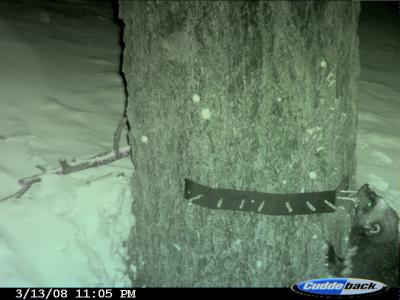
US: Additional evidence of wolverine found in the Tahoe National Forest

During ongoing investigations by an Oregon State University graduate student, the Forest Service, and California Department of Fish and Game (DFG), two additional wolverine photographs were captured this past week. A variety of hair, track and scat samples were also sent for analysis to determine if these were from a wolverine. After the initial photograph of a wolverine was taken by a remote camera on Feb. 28, 2008, in the Tahoe National Forest, researchers, biologists and volunteers intensified the search for more detections in the same general area, north of Truckee, Calif.

Image
©US Forest Service and Oregon State University
Side view of a wolverine photographed in California's Tahoe National Forest by a remote-controlled camera. A wolverine was first photographed on the national forest on Feb. 28, 2008, the first scientific confirmation of the animal's presence in California since the 1920s.

Binoculars

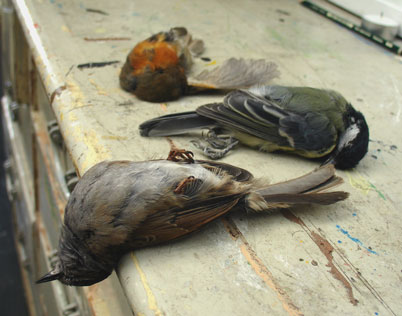
UK: Garden birds decline by 20 per cent in four years

Garden bird numbers have slumped 20 per cent in the past four years, the latest survey reveals.

Polly Morgan
©Polly Morgan - The Drawbridge UK
Dead garden birds
Polly Morgan

Bug

Studies Show Alarming Insect-eating Bird Declines in Canada

An article by Bird Studies Canada biologist Jon McCracken examines substantial population declines for 'aerial insectivores ' - birds that specialize on feeding on flying insects.

Butterfly

Bee plague worsening, anxious keepers say

It's been 16 months since Dave Hackenberg of Dade City became the first beekeeper in the country to say publicly that something was terribly wrong with his insects.

In the intervening time following the identification of the malady now known as Colony Collapse Disorder, things haven't gotten any better for the nation's bees, which pollinate about one-third of U.S. crops - some $15 billion worth.

Question

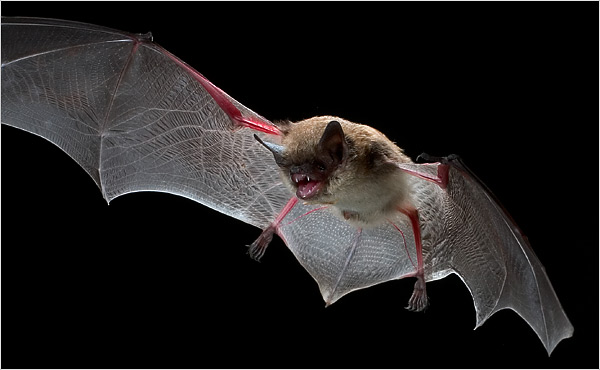
Bats Perish, and No One Knows Why


Bats
©Michael Durham/Getty Images
THREAT Healthy bats, like the one above, hibernate in winter.

Al Hicks was standing outside an old mine in the Adirondacks, the largest bat hibernaculum, or winter resting place, in New York State.

But bats dying from a mystery illness have been found in the snow in daylight hours.

It was broad daylight in the middle of winter, and bats flew out of the mine about one a minute. Some had fallen to the ground where they flailed around on the snow like tiny wind-broken umbrellas, using the thumbs at the top joint of their wings to gain their balance.

Butterfly

Best of the Web: Death of the Bees: GMO Crops and the Decline of Bee Colonies in North America

'Commercial beehives pollinate over a third of [North}America's crops and that web of nourishment encompasses everything from fruits like peaches, apples, cherries, strawberries and more, to nuts like California almonds, 90 percent of which are helped along by the honeybees. Without this pollination, you could kiss those crops goodbye, to say nothing of the honey bees produce or the flowers they also fertilize'.1

Question

India: Contradictory reports over mysterious death of gharials

The findings of the Uttar Pradesh Pollution Control Board (UPPCB) in relation to the "mysterious" death of around 100 "gharials", a member of the crocodile family, from November 2007 to February 2008 in the National Chambal Sanctuary in Etawah district has added another twist in the tale.

In its report submitted to the State Forest and Wildlife Department, dated March 19, 2008, the agency has concluded that lead and cadmium were not found in the waters of the river Yamuna. The sanctuary is situated at the confluence of the Yamuna and the river Chambal, which flows from the neighbouring Madhya Pradesh, in Etawah district. The Pollution Control Board findings indicate that the death of the gharials could not have been due to toxicity.