
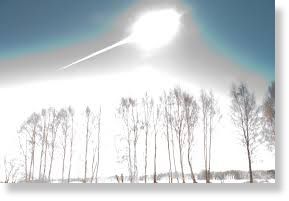
© NASAChelyabinsk rock
Three studies released Wednesday, two in the journal Nature and one in the journal Science, have provided the most detailed description and analysis of the dramatic event on the morning of Feb. 15. Scientists now estimate the diameter of the object at just a hair under 20 meters, or about 65 feet. Undetected by astronomers, the rock came out of the glare of the sun and hit the atmosphere at 43,000 miles per hour.
As it descended through the atmosphere, it broke into fragments, creating a series of explosions with the combined energy of about 500 kilotons of TNT, making it more than 30 times more powerful than the atom bomb that destroyed Hiroshima in 1945, although the energy in this case was spread out over a much broader area.
The shock wave blew out windows in nearly half the buildings in Chelyabinsk. It knocked people off their feet; dozens were sunburned by the blinding flash, which at its peak was 30 times brighter than the sun. About 1,200 people were hurt, most by broken and flying glass, but no one was killed.







Comment: Here's a great book that sheds even more light on this 'ongoing problem', Laura Knight-Jadczyk's latest:
Comets and the Horns of Moses