Comets


Fireball

There was a crazy-looking fireball over Los Angeles

Californians from Fresno to San Diego reported seeing a crazy-looking fireball streak across the sky this evening around 8 p.m. There were a lot of fake photos being passed around, but CBS Los Angeles found some security footage that captured the fireball:


So what's going on here? It's likely a part of a meteor shower going on that has a reputation for putting on quite a show around Halloween every year. Every year in late October and early November, the earth passes through the dust of a comet named Comet Encke. One astronomy website described the shower this way: "Although a modest shower, the Taurids can surprise you with a flamboyant fireball or two!" A meteorologist with the National Weather Service told the San Gabriel Valley Tribune that's likely what us Southern Californians saw tonight.


Comment: Regardless of whether it was a stray meteor from the Taurids meteor shower or not, something is afoot out there. Fireball sightings are becoming the norm instead of the odd occurrence all around the BBM. Comets and The Horns of Moses


Fireball 3

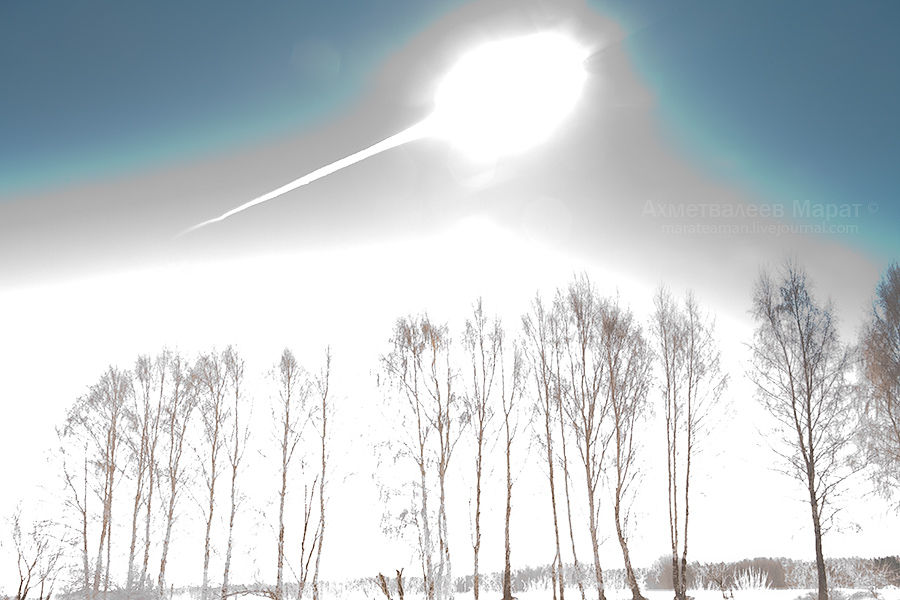
Chelyabinsk meteor explosion was so bright, radiation burned people's eyes and skin

At its most intense, meteor fireball glowed 30 times brighter than the sun causing skin and retinal burns, say researchers
Image
© Marat Ahmetvaleev
Scientists have published the most complete picture yet of the devastation caused by the meteor that exploded over the city of Chelyabinsk in Russia this year.

The 20-metre-wide space rock hurtled into the skies over the city in February and began to tear apart at an altitude of 28 miles. Travelling at a speed of 12 miles per second, the rock exploded with the energy of around 500 kilotonnes of TNT, researchers found.

Directly beneath the meteor's path, the shockwave was powerful enough to knock people off their feet. Windows were shattered in more than 3,600 apartment blocks, and a factory roof collapsed.

In the local library in Yemanzhelinsk, 30 miles away, a statue of Pushkin cracked when it was struck by a blown-out window frame. At least 1,210 people were treated for injuries, most from falling building debris and flying glass.


Comet

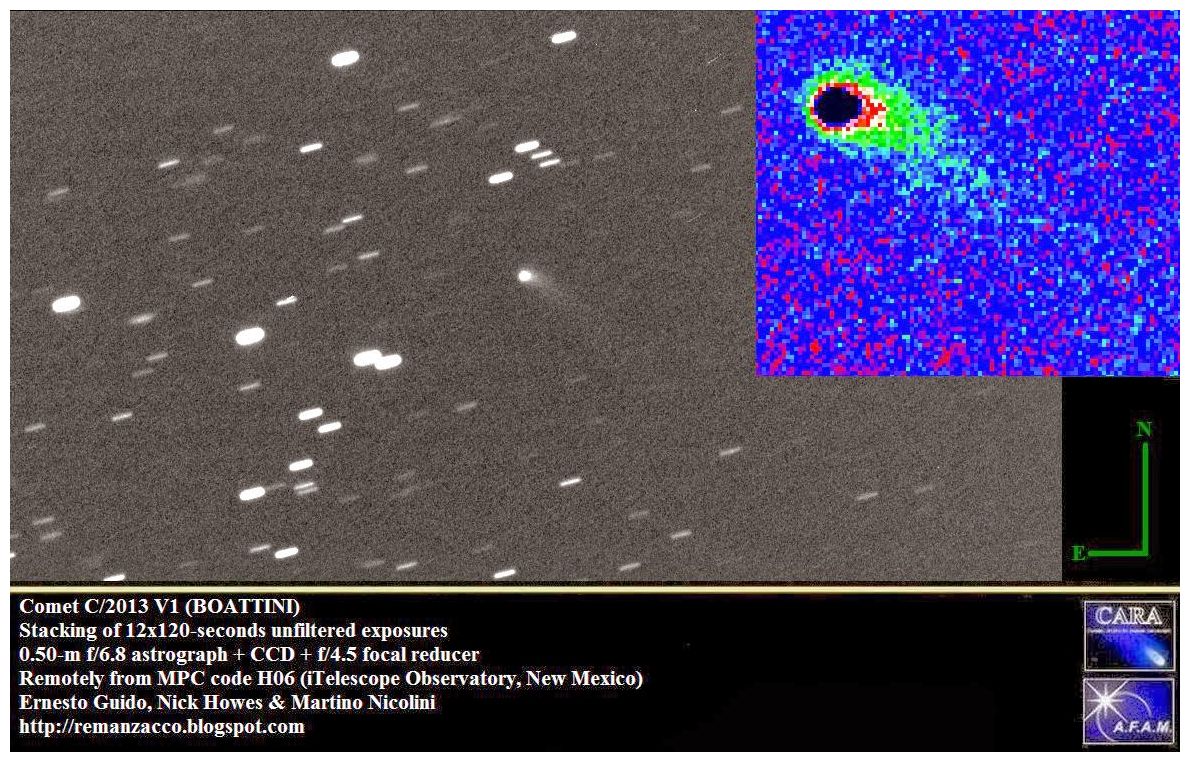
New Comet: C/2013 V1 (BOATTINI)

Cbet nr. 3689, issued on 2013, November 06, announces the discovery of a new comet (discovery magnitude ~15.6) by A. Boattini on CCD images obtained with the Catalina Sky Survey's 0.68-m Schmidt telescope. The new comet has been designated C/2013 V1 (BOATTINI).

We performed follow-up measurements of this object, while it was still on the neocp. Stacking of 3 R-filtered exposures, 20-sec each, obtained remotely from MPC code Q62 (iTelescope Observatory, Siding Spring) on 2013, November 05.75 through a 0.50-m f/6.8 astrograph + CCD + f/4.5 focal reducer, shows that this object is a comet: diffuse coma about 18" in diameter.

We imaged again this object on 2013, November 06.35 remotely from MPC code H06 (iTelescope Observatory, New Mexico) through a 0.50-m f/6.8 astrograph + CCD + f/4.5 focal reducer. The comet is showing a nice curved tail ~1' long in p.a. 240 deg. Below our image of November 06. Click on it for a bigger version.
C/2013 V1
© Remanzacco Observatory
M.P.E.C. 2013-V32 assigns the following preliminary parabolic orbital elements to comet C/2013 V1: T 2014 Apr. 8.42; e= 1.0; Peri. = 50.83; q = 1.50; Incl.= 62.39

Comet 2

Comet ISON looking 'downright weird' as it approaches the sun

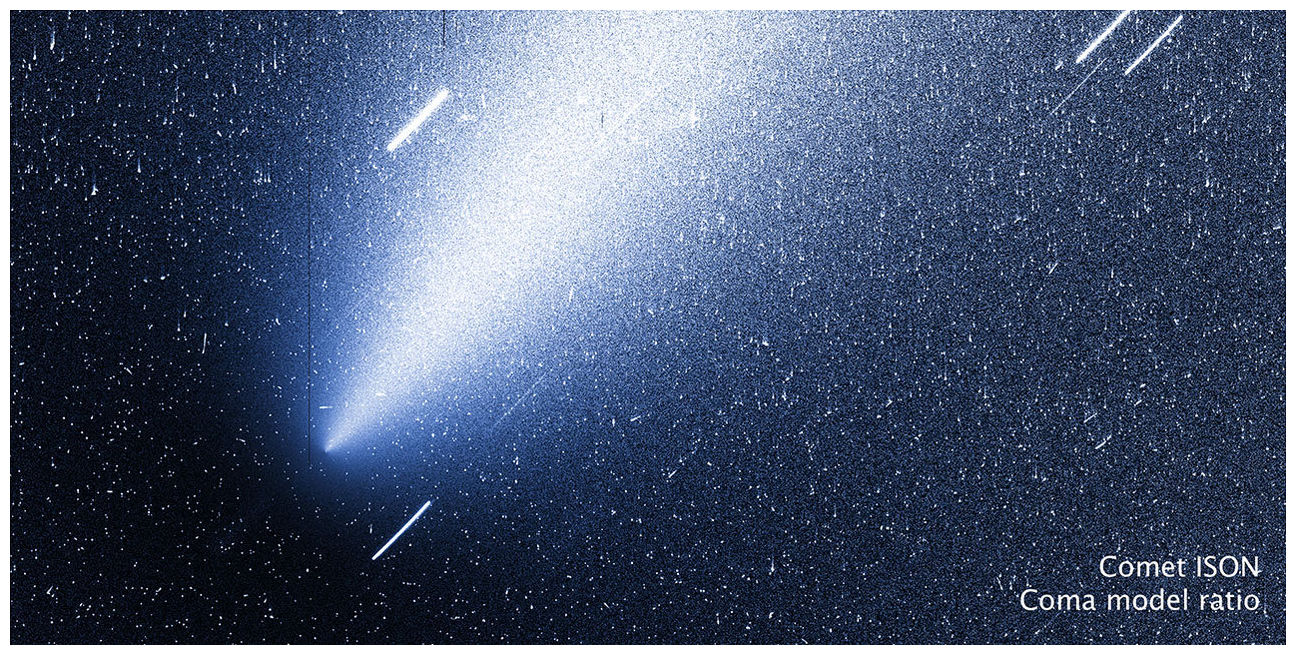
The newest 'comet of the century' has been making a name for itself since it was discovered last year, with claims that it's Nibiru, a doomsday comet, or even an alien spacecraft. However, this comet has been behaving very strangely recently, and a recent analysis of comet images have shown a structure unlike anything scientists have seen from previous comets.
Comet ISON
© Yahoo! News Canada
"There is a bright, miniature, long-tailed comet situated within a much larger, but very much fainter and diffuse halo of a coma," said veteran comet-hunter John Bortle, according to Space.com.

Dr. Jian-Yang Li, of the Planetary Science Institute, put together the computer simulation of the comet that took the Hubble Space Telescope images and removed the signal for the diffuse coma that surrounds the central core. What's left is an image of the comet's nucleus and the concentrated tail of debris behind it.

"At this stage of the game, with the comet about to cross the orbit of Earth, I cannot recall any previous comet in my 50-plus years of comet observing looking quite like this," Bortle said. In fact, comet ISON is crossing Earth's orbit as of today, as it plummets towards a November 28th pass around the sun. After that, it will swing around the sun's north pole and head back out towards the outer solar system, passing almost directly over Earth around the end of the year.

Fireball 5

Russian fireball explosion shows meteor risk greater than thought

Supercomputer simulation
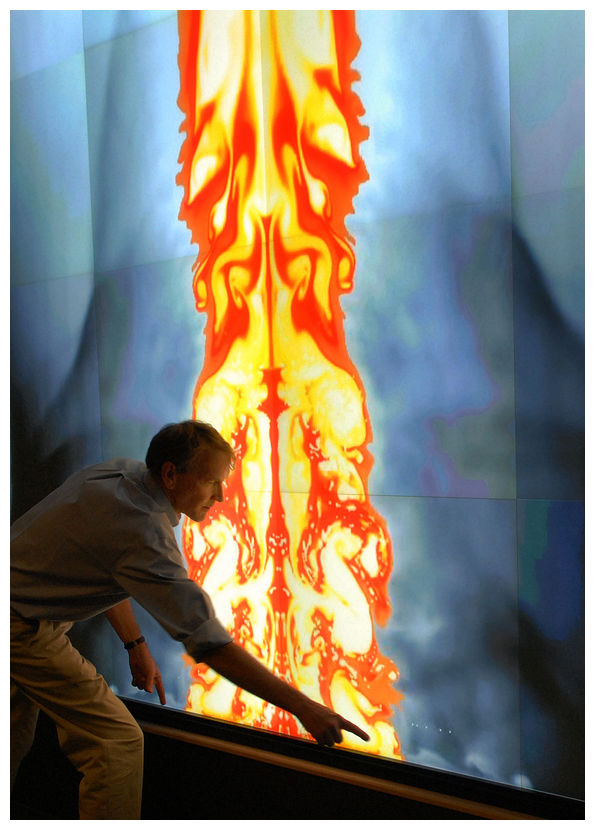
© Randy Montoya/SandiaSupercomputer simulation shows details of a fireball that might be expected from an asteroid exploding in Earth's atmosphere. A team led by Sandia National Laboratories researcher Mark Boslough devised the simulation.
Denver - As researchers recover more leftover pieces from the space rock that detonated earlier this year near the Russian city of Chelyabinsk, the event is helping to flag a worrisome finding: Scientists have misjudged the frequency of large airbursts.

Computer simulations also imply that such airbursts cause more damage than nuclear explosions of the same yield, which are typically used as an analogue to ballpark impact risk.

The meteor explosion over Chelyabinsk gives the bottom-line message that the risk from airbursts is greater than previously thought.

Fireball 4

Fireball in Pacific Northwest sky likely landed in Pacific Ocean

Image
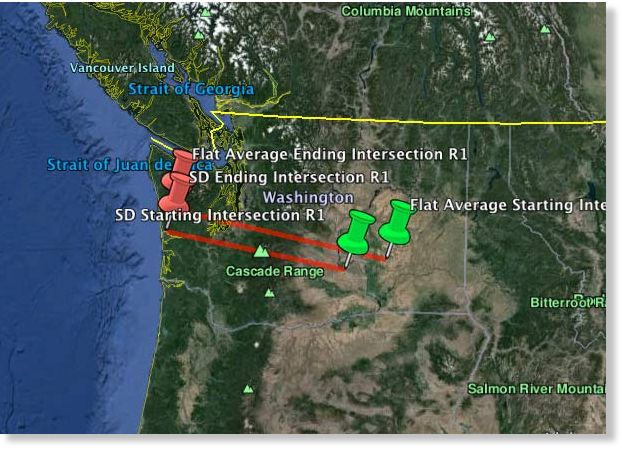
© American Meteor SocietyPreliminary trajectory
A fireball in the sky above the Pacific Northwest led dozens of people to report sightings to the American Meteor Society on Wednesday. The FOX 12 newsroom started receiving reports of a bright light flashing across the sky around 6 a.m. Wednesday.

AMS experts said it appears the decent-sized meteor entered the Earth's atmosphere in Washington state, traveled in an east-to-west direction and landed in the Pacific Ocean. "It went from one horizon to the other, never fading," said one witness. A report out of Tigard said it "traveled east to west across the entire visible sky - very long."

Another witness, out of Gladstone, described it as "the longest lasting shooting star I've ever seen."

There were also reported sightings in British Columbia, Alberta, Montana and Washington. Because of cloud cover in the Seattle area, there were very few reported sightings there. Experts at OMSI say a fireball is another term for a very bright meteor, generally brighter than magnitude -4, which is about the same magnitude of the planet Venus in the morning or evening sky.

Comet 2

Paying lip service to the cosmic threat: UN votes to 'fight' asteroids by creating 'global warning network'... maybe

Image
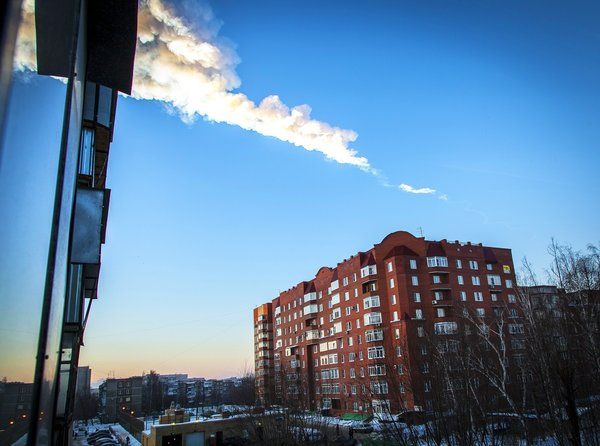
© Oleg Kargopolov / AFP/Getty ImagesA meteorite trail seen above a residential apartment block in the Urals city of Chelyabinsk, Russia.
Even the United Nations is taking the threat of asteroids hitting our planet seriously. Last week, the U.N. General Assembly approved measures to coordinate detection and response to asteroid strikes that could level cities and possibly destroy our civilization.

Specifically, the agency voted to create an International Asteroid Warning Network made up of scientists, observatories and space agencies around the planet to share information about newly discovered asteroids and how likely they are to impact Earth. The group will also work with disaster relief organizations to help them determine the best response to an asteroid impact like the one that rattled the Russian city of Chelyabinsk in February. The U.N. will also set up a space mission planning advisory group to look into how humans might deflect an asteroid heading our way -- the best options, the costs and the technologies needed. The results of that study will be shared with space agencies throughout the world.

The General Assembly also agreed that the existing U.N. Committee on the Peaceful Uses of Outer Space would monitor threats from asteroids and help plan and authorize a deflection campaign if necessary.

Comment: Given the current state of the world, humans voting on pooling resources to deflect asteroids is like ants voting to prevent the boulders rolling down the hill from hitting their colony. And these UN diplomats might even realise this on some level. They can say all the things they want, vote endlessly on measures everyone should take, but at this point it's far too late. Practical, physical technologies should have already been developed, tested and worked out.

But no! Instead they had wars to fight and money to make... to hell with protecting and advancing the welfare of mankind.


Info

Paleontologist presents origin of life theory

Origin of Life Theory
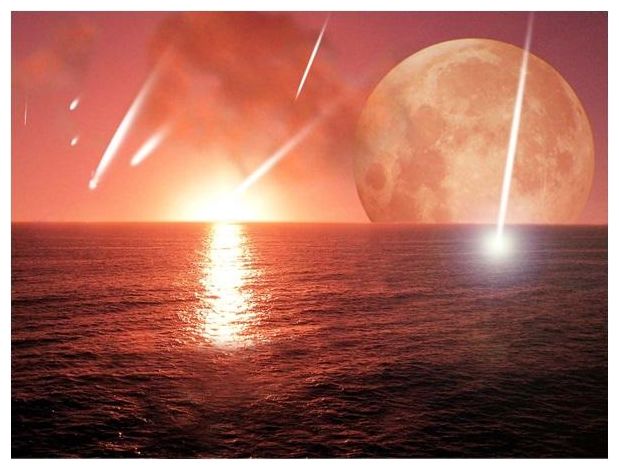
© Texas Tech UniversityMost researchers believe that life originated in deep-sea hydrothermal vents. About 4 billion years ago, Earth was a watery planet; ocean stretched from pole to pole; any life synthesis would be dilated. It needed a protected basin.
It has baffled humans for millennia: how did life begin on planet Earth? Now, new research from a Texas Tech University paleontologist suggests it may have rained from the skies and started in the bowels of hell.

Sankar Chatterjee, Horn Professor of Geosciences and curator of paleontology at The Museum of Texas Tech University believes he has found the answer by connecting theories on chemical evolution with evidence related to our planet's early geology.

"This is bigger than finding any dinosaur," Chatterjee said. "This is what we've all searched for - the Holy Grail of science."

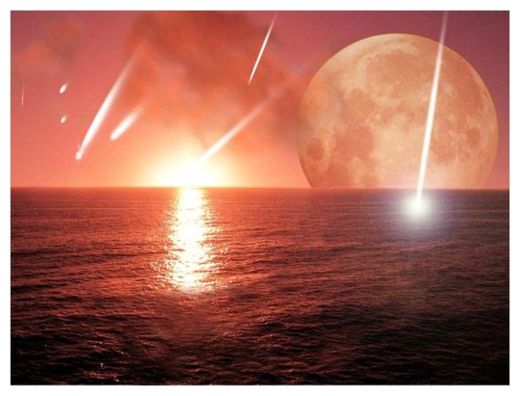
Thanks to regular and heavy comet and meteorite bombardment of Earth's surface during its formative years 4 billion years ago, the large craters left behind not only contained water and the basic chemical building blocks for life, but also became the perfect crucible to concentrate and cook these chemicals to create the first simple organisms.

He will present his findings Oct. 30 during the 125th Anniversary Annual Meeting of the Geological Society of America in Denver.

As well as discovering how ancient animals flew, Chatterjee discovered the Shiva Meteorite Crater, which was created by a 25-mile-wide meteorite that struck off the coast of India. This research concluded this giant meteorite wreaked havoc simultaneously with the Chicxulub meteorite strike near Mexico, finishing the dinosaurs 65 million years ago.

Ironically, Chatterjee's latest research suggests meteorites can be givers of life as well as takers. He said that meteor and comet strikes likely brought the ingredients and created the right conditions for life on our planet. By studying three sites containing the world's oldest fossils, he believes he knows how the first single-celled organisms formed in hydrothermal crater basins.

"When the Earth formed some 4.5 billion years ago, it was a sterile planet inhospitable to living organisms," Chatterjee said. "It was a seething cauldron of erupting volcanoes, raining meteors and hot, noxious gasses. One billion years later, it was a placid, watery planet teeming with microbial life - the ancestors to all living things."

Blackbox

Just in case we come a cropper: The doomsday vault that keeps seeds for every type of agriculture mankind relies upon should a disaster ever wipe them out - but keeps them for whom?

Image
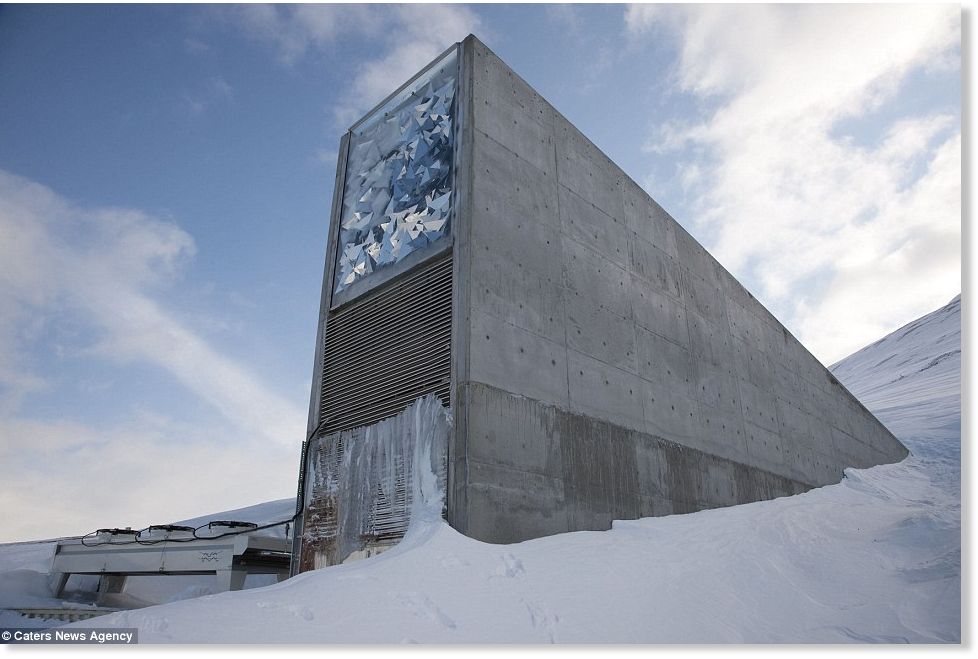
Food ark: Entrance to the Global Seed Vault in Norway which is home to more than two billion of the world's seeds
These incredible images give a rare glimpse inside the 'Doomsday' seed vault which protects the world's food supply. On an Arctic island off the coast of Norway lies the Svalbard Global Seed Vault, which is home to more than two billion seeds. The secure seed bank which can withstand a nuclear strike, aims to preserve crops in the face of climate change, war and natural disasters.

These rare images taken by photographer Jim Richardson offer a visual tour of the food ark, which safely homes up to 4.5 million varieties of seeds from almost every country in the world. It preserves duplicate collections of seeds for everything from peas to wheat on behalf of the world's genebanks.

The seeds in the vault can only be accessed when the original seed collections have been lost. The seeds are stored inside sealed envelopes, then placed into plastic tote containers on metal shelving racks and kept at a temperature of -18C.

The low temperature and limited supply of oxygen inside the vault prevents the seeds from ageing. The permafrost surrounding the facility helps maintain the low temperature of the seeds should the electricity supply fail. The vault was started by conservationist Cary Fowler from the Global Crop Diversity Trust. It cost £4 million to construct and since it's opening in 2006 it has accepted deposits of seeds from all over the world.


Comment: In a world that isn't run by psychopaths the concept of having a 'back-up supply' of a 'food ark' would make sense, though we know who they are really concerned about - he who owns the food supply owns the people.

"Doomsday Seed Vault" - Bill Gates, Rockefeller and the GMO giants know something we don't?


Comet 2

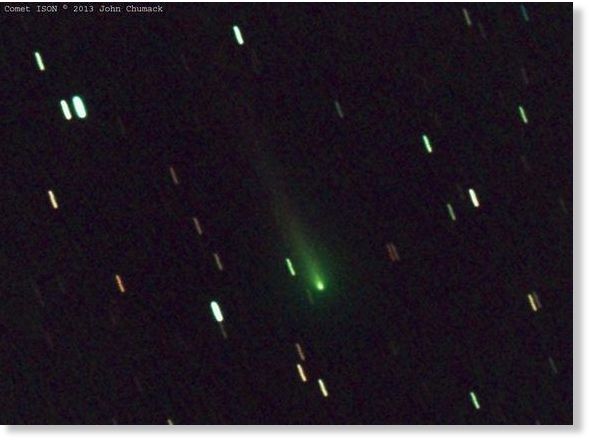
Wow! Stargazer snaps amazing photos of Comet ISON

Image
© John Chumack
The promising Comet ISON is steadily making its way closer to the sun and one avid amateur astronomer has snapped a series of spectacular photos of icy wanderer in action.

Veteran astrophotographer John Chumack took the new Comet ISON photos and shared the series with SPACE.com. The images, taken in color as well as black and white, show striking views of the approaching comet.

"Comet ISON is going strong!" Chumack wrote SPACE.com in an email. "I will be imaging the comet every clear night I get through Perihelion Passage, on Nov. 28, and throughout December and January." [See amazing photos of Comet ISON by stargazers]

On Nov. 28 - the Thanksgiving holiday in the United States - Comet ISON will approach within 730,000 miles (1.2 million kilometers) of the sun, a close shave above the solar surface. If the comet survives the solar encounter, it could flare up brilliantly in the night sky, astronomers have said.

Chumack captured the new Comet ISON images on the morning of Oct. 9 from his dark-sky site at John Bryan State Park in Yellow Springs, Ohio, using a QHY8 cooled single shot color CCD camera and his homemade 16" Diameter F4.5 Newton telescope.