Comets


Comet

RIP Comet ISON: Scientists declare famous 'sungrazer' dead after sun encounter

Comet ISON
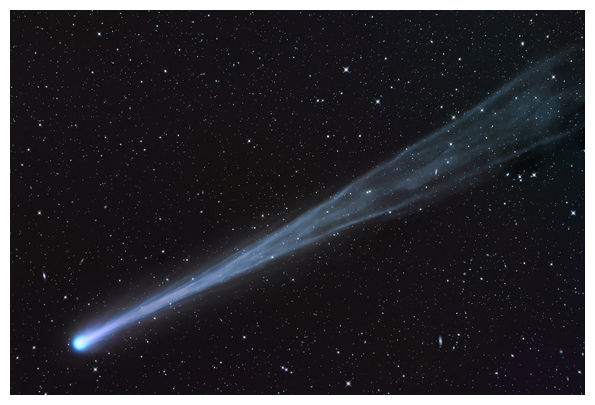
© Waldemar Skorupa (Kahler Asten, Germany)German amateur astronomer Waldemar Skorupa captured this spectacular photo of Comet ISON from Kahler Asten, in Germany, on Nov. 16, 2013.
San Francisco - It's time to accept reality: Comet ISON is dead.

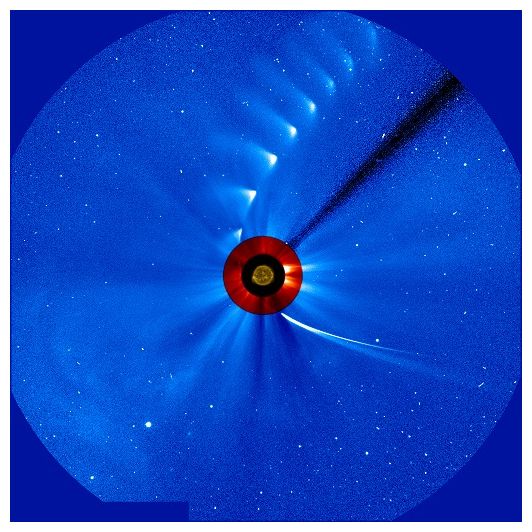
Comet ISON broke apart during its highly anticipated solar flyby on Nov. 28, emerging from behind the sun as a diffuse cloud of dust that has since all but dissipated in the darkness of deep space, scientists say.

"At this point, it seems like there's nothing left," comet expert Karl Battams, of the U.S. Naval Research Laboratory in Washington, D.C., said here today at the annual meeting of the American Geophysical Union. "Comet ISON is dead; its memory will live on."

Comet

Comet ISON mysteries continue

Image
In November 2013, skywatchers around the world eagerly awaited the approach of Comet ISON. Dubbed the "Comet of the Century" by several in the media, some astronomers had predicted a stupendous cometary display as Comet ISON approached its perihelion. The comet was also the subject of countless bizarre speculations. However, despite the heightened expectations, ISON ultimately proved to be somewhat of a fizzle.


Comment: Tune in to SOTT Talk Radio this Sunday 15th December when we'll be discussing all this and more with Wallace Thornhill from the Thunderbolts Project.


Fireball 3

An outburst of Andromedid meteors

The Andromedid meteor storm
© New York Public LibraryThe Andromedid meteor "storm" on November 27, 1872, as portrayed Enciclopedia Moderna Illustrata, published in Milan, Italy, in 1904.
Skywatchers worldwide are readying to view the robust, reliable Geminid meteors later this week. But you might want to head outdoors early - tonight, in fact - based on some interesting news.

Meteor specialist Peter Brown (University of Western Ontario) reports that the Canadian Meteor Orbit Radar has recorded an outburst from the Andromedid meteors in the past 24 hours. Moreover, he reports, "It is not clear if the peak of the outburst has been reached or if activity may continue to increase."

You'd be forgiven if you've never heard of the Andromedids, let alone that they'd be worth watching. This is a stream of debris shed by the now-defunct periodic Comet Biela, which was discovered three times: in 1772, 1805, and 1826. In 1846 this curious interloper returned as two comets traveling side by side.

Comet

Fiercest meteor shower on record to hit Mars via comet

Mars
© Steven Hobbs/Stocktrek Images/AlamyNASA's Mars Reconnaissance Orbiter has a ringside seat for the comet's approach.
Comet ISON's visit to Earth was a bit of a disappointment - but next year Mars is getting a cometary visitor that looks like it will be anything but. Calculations suggest that the Red Planet's "comet of the century" will come closer to its surface than any comet has come to Earth's in recorded history - causing a meteor shower so epic that it may pose a danger to the spacecraft that orbit Mars.

Comet C/2013 A1, also known as comet Siding Spring after the observatory in New South Wales, Australia, where it was discovered, is due to cross Mars's orbit on 19 October 2014.

Early estimates of its path made it look as though the comet could smack into the Red Planet.

A more recent study rules out a collision - but only just - and raises the alarm for the fleet of orbiters overhead.

Comet

Subaru telescope captures stunning images of Comet Lovejoy as it discharges an enormous tail

Comet Lovejoy
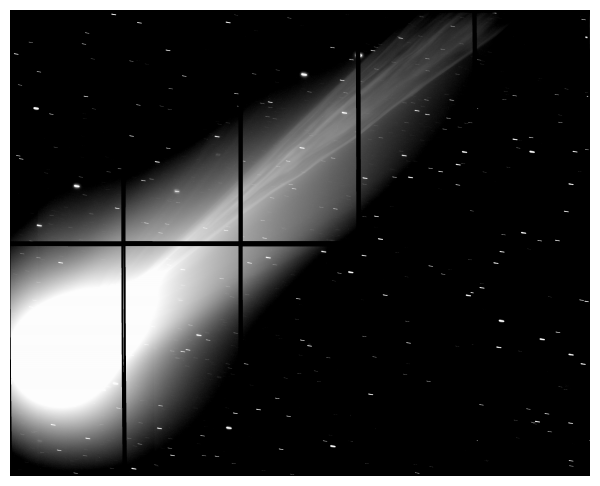
© NAOJ with data processing by Masafumi Yagi (NAOJ)Comet C/2013 R1 (Lovejoy) imaged by the Subaru Telescope on Dec. 3.
Comet ISON may be no more than just a cloud of icy debris these days but there's another comet that's showing off in the morning sky: C/2013 R1 (Lovejoy), which was discovered in September and is steadily nearing its Christmas Day perihelion. In the early hours of Dec. 3, astronomers using the 8.2-meter Subaru Telescope atop Mauna Kea in Hawaii captured this amazing image of Lovejoy, revealing the intricate flows of ion streamers in its tail. (Click here for a higher resolution of the image above.)

Better Earth

Electric Universe: Stone monoliths - Part 2

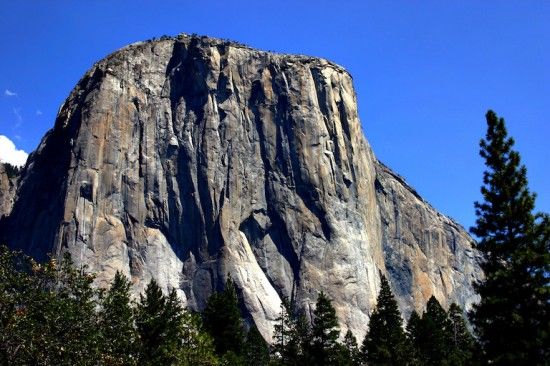
El Capitan, a giant granite monolith in Yosemite National Park.
© Mike MurphyEl Capitan, a giant granite monolith in Yosemite National Park.
Stones as large as mountains could be physical evidence for interplanetary lightning bolts on Earth.

In the last installment about immense solitary stones that are found all over the world, it was noted that several of them in Australia and Europe could be the result of tremendous electric arcs. The magnetic fields created from such forces may have lifted the sediments and other materials from the surrounding landscape, crushed it in compression zones capable of squeezing sand into stone, and left behind a solidified mass. Some extraordinary formations are located in areas where there is nothing around except flat desert for thousands of square kilometers.

Sometimes the stone monoliths are made from several minerals that are fused into a solid, although the various crystals retain their shapes. Granite is an example of different minerals that have been fused into a single stone and then laid down in enormous beds - although there are almost as many different kinds of granite as there are deposits.

Granite is composed of feldspar and quartz, but usually contains mica and hornblende as well, providing a characteristic sparkle. Granite decomposes into soils that are well drained and high in mineral nutrients, making places like California ideal for agriculture. Since the Sierra Nevada mountains are granite uplifts, the erosion of the peaks has supposedly washed down the rivers over millions of years, forming the sediments in the Central Valley, "America's breadbasket".

Better Earth

Electric Universe: Stone monoliths - Part 1

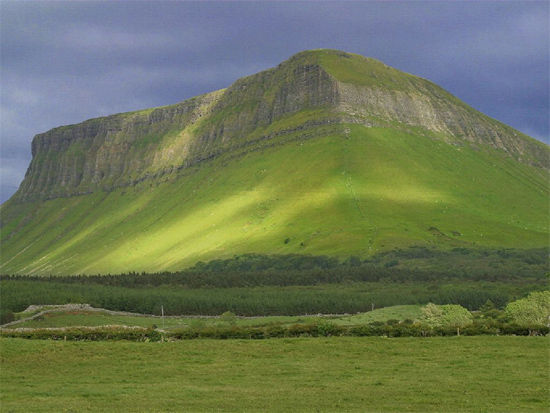
Ben Bulben, County Sligo, Ireland.
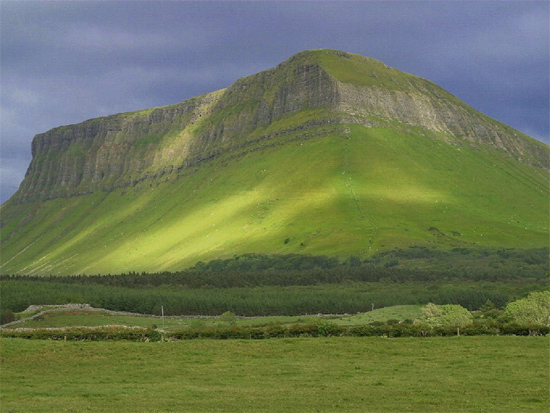
© Andrew C. ParnellBen Bulben, County Sligo, Ireland.
On every continent are examples of isolated stone mountains that are not easy to explain.

Mount Augustus in Australia is an example of a sandstone monolith that could be the largest of those monoliths that also includes Uluru. Mount Augustus, or Burringurrah to the local Wadjari people, is an asymmetric anticline resting on top of what geologists refer to as "very old" granite. Its composition differs markedly from the underlying rock strata.

Ben Bulben is an example of another isolated monolith, or tor, that can be found on every continent. They all share similar morphology, although they are composed of different minerals. Mount Augustus, for instance, is made up of rocks and pebbles of various sizes cemented together by hard sandstone. In other areas of Australia, such as Bald Rock, the great blocks of stone are actually granitic, resting on top of discontinuous strata that does not match the overall structure of the rock.

The geology of Ben Bulben is quite different, however. It is composed of Darty limestone (which makes up the Darty mountains) and shale, overlying Glencar limestone. Ben Bulben is the headland of the Darty mountains, sloping gradually upward until the flat-topped mesa and steep, regularly carved cliff face stop at the edge of the ocean. The change from Ben Bulben shale to Glencar limestone in the monolith is dramatic - the boundary layer is paper-thin.

In other areas of the world, such as Peña de Bernal in Mexico, or the Rock of Gibraltar in Europe, the single stones appear to be metamorphic, indicating a powerful energy source that drew the material in the mountains together, as well as melting and reforming their mineralogical composition. The Rock of Gibraltar is composed of metamorphosed limestone and chalk. The Strait of Gibraltar, itself, demonstrates some remarkable topography and could mark an area where Earth-grazing electric arcs touched-down and sculpted the region.

Comet

Fate of Comet ISON uncertain after fiery sun encounter

Comet ISON
© ESA/NASA/SOHO/SDO/GSFCIt initially appeared that the comet did not survive its inbound journey toward the sun — indeed, images and video ofCometISON from NASA spacecraft suggested that the comet had completely disintegrated just prior to its closest approach. But by Friday, the comet most definitely appeared alive and well, suggesting that previous reports of ISON being "sun and done" were at the very least, premature.
The celestial saga continues for Comet ISON, which crept close to the sun like the fabled Icarus, only to apparently survive the encounter at first. But whether the comet will once again be visible to stargazers is far from certain.

On Thanksgiving Day (Nov. 28), many amateur and professional astronomers declared that Comet ISON was dead after the comet flew within 684,000 miles (1.1 million km) of the sun. But on Friday, to paraphrase Mark Twain: "The report of Comet ISON's death was an exaggeration."

It initially appeared that the comet did not survive its inbound journey toward the sun - indeed, images and video of Comet ISON from NASA spacecraft suggested that the comet had completely disintegrated just prior to its closest approach. But by Friday, the comet most definitely appeared alive and well, suggesting that previous reports of ISON being "sun and done" were at the very least, premature.

Comet

A new theory on the origins of desert glass - Comet impact

Desert Glass
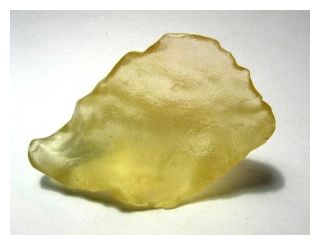
© H. Raab, used via CC license.
Libyan Desert Glass is opaque, greenish glass formed when the desert sands fused in some sort of extremely hot incident. (Alternately, Sandman Volume 2 Number 9 proposes that the glass is the remains of an ancient city.) What, exactly, created the heat that made the glass is a source of scientific debate, but a new paper suggests it might have been the result of a comet impact.

Why a comet and not, say, an asteroid? Scientists studied a stone found in conjunction with the glass and discovered that it contained a mixture of elements that you'd be unlikely to get from an asteroid impact. Instead, the elements suggest an origin outside our solar system's asteroid belt.

Comet

Comet ISON does not survive perihelion, only a ghost remains

Comet ISON
© NASAIllustration showing where to search for remainder of Comet ISON in the east-southeast skies before dawn.
In true soap opera fashion, the enigmatic comet ISON has followed a somewhat tumultuous lifestyle. It has kept us on the edge of our seats like a good cliffhanger, and excited us when we least expected it to.

Now after and up-and-down journey through the cosmos, ISON has seemingly met its match and it its fate has been sealed once and for all.

Astronomers for over a year have been calling ISON the "comet of the century," claiming it was going to put on a spectacular show around Thanksgiving 2013. However, others had pegged the comet to actually "fizzle out" and not even offer us a glimmering chance of show.

But as the comet approached its perihelion with the sun on Thanksgiving Day it was sure to be a feast for the eyes for many. With several space observatories focused on ISON, the frozen chunk of gas, dust and debris made its final approach Thursday afternoon (Nov 28) at around 1:40pm EST.