Comets


Comet 2

Are comets a bigger danger than asteroids?

Impact Event
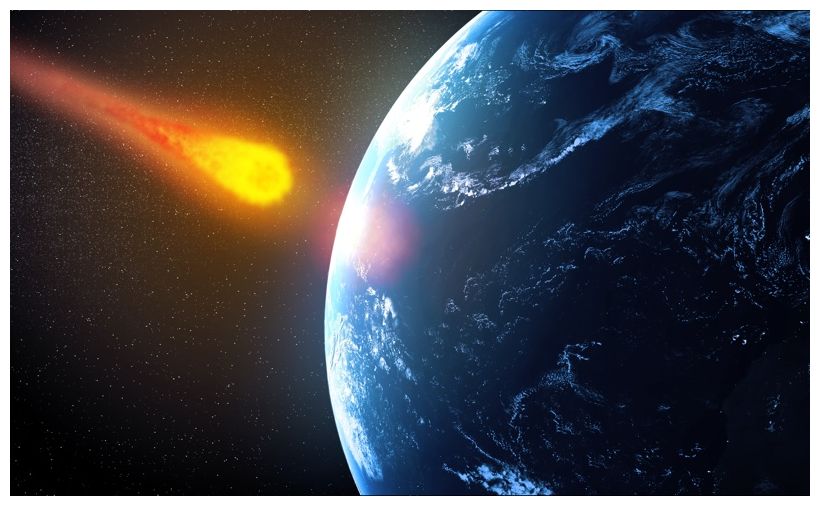
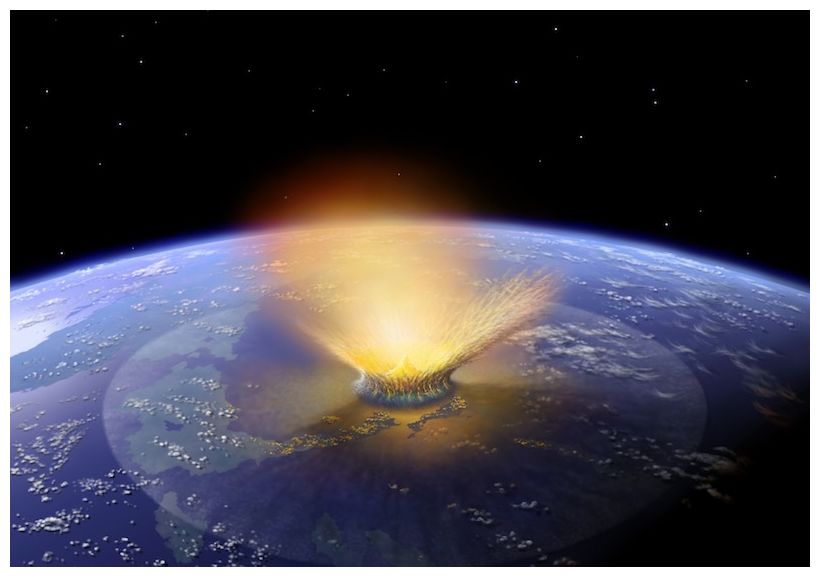
© NASA/Don DavisAn artist's illustration depicts a massive asteroid impact on earth.
Discussions about "death from above" scenarios usually center on asteroids, but a comet impact could be far more devastating than a space rock strike.

Near-Earth asteroids (NEAs) have Earth-like orbits, so their collisions with Earth tend to be glancing blows from behind or from the side. But comets travel around the sun in more random paths and can thus slam into the planet head-on, with potentially catastrophic results, researchers say.

"It would be a much bigger explosion, a much bigger crater, much more damage," impact expert Mark Boslough, of Sandia National Laboratories in New Mexico, said on June 5. He made the comment during a webcast produced by the online Slooh community observatory, which previewed the June 8 Earth flyby of the asteroid 2014 HQ124.

In fact, comets can be traveling up to three times faster than NEAs relative to Earth at the time of impact, Boslough added. The energy released by a cosmic collision increases as the square of the incoming object's speed, so a comet could pack nine times more destructive power than an asteroid of the same mass.

The speed of comets also means that a dangerous one could be nearly upon Earth by the time scientists detect it.

Comet

Asteroid-turned-comet 2013 UQ4 Catalina brightens

C/2013 UQ4
© Novichonok and PrystavskiComet C/2013 UQ4 Catalina as imaged from the iTelescope observatory at Siding Spring, Australia.
Though ISON may have fizzled in early 2014, we've certainly had a bevy of binocular comets to track this year. Thus far in 2014, we've had comets R1 Lovejoy, K1 PanSTARRS, and E2 Jacques reach binocular visibility. Now, and asteroid-turned-comet is set to put on a fine show this summer for northern hemisphere observers.

Veteran stargazer and Universe Today contributor Bob King told the tale last month of how the asteroid formerly known as 2013 UQ4 became comet 2013 UQ4 Catalina. Discovered last year on October 23rd 2013 during the routine Catalina Sky Survey searching for Near Earth Objects based outside of Tucson Arizona, this object was of little interest until early this year.

Comet 2

New Comet: P/2014 L2 (NEOWISE)

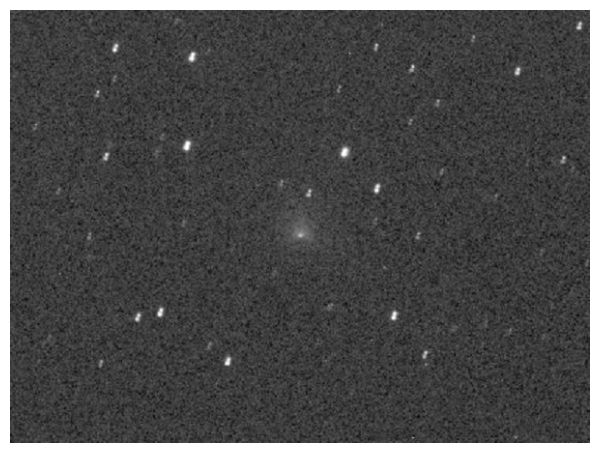
Cbet nr. 3901, issued on 2014, June 15, announces the discovery of a comet (~ magnitude 16.5) by the Near-Earth Object Wide-field Infrared Survey Explorer (NEOWISE) team on images taken with the NEOWISE satellite on 2014, June 07.4. The new comet has been designated P/2014 L2 (NEOWISE).

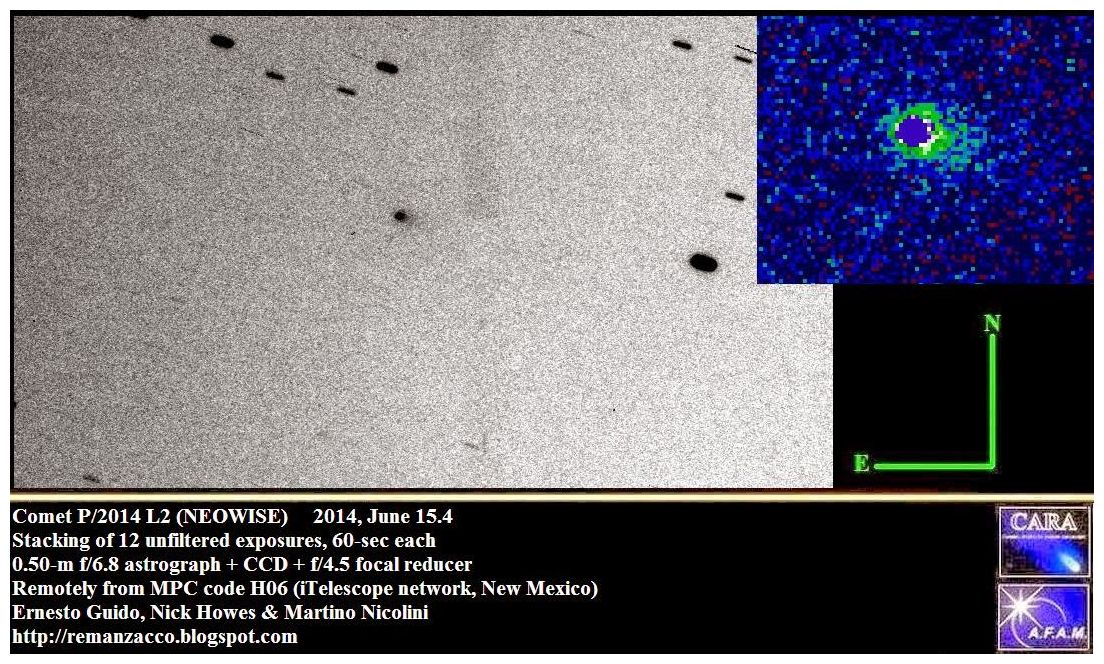
We performed follow-up measurements of this object, while it was still on the neocp. Stacking of 12 unfiltered exposures, 60-sec each, obtained remotely on 2014, June 15.4 from H06 (iTelescope network, New Mexico) through a 0.50-m f/6.8 astrograph + CCD + f/4.5 focal reducer, shows that this object is a comet with a tail nearly 15" long in PA 250 with coma about 8" in diameter.

Our confirmation image (click on it for a bigger version)
P/2014 L2, Neowise
© Remanzacco Observatory
M.P.E.C. 2014-L61 assigns the following preliminary elliptical orbital elements to comet P/2014 L2: T 2014 Aug. 4.59; e= 0.43; Peri. = 190.6; q = 2.11; Incl.= 5.20

Cassiopaea

SOTT Focus: Behind the Headlines: Earth changes in an electric universe: Is climate change really man-made?

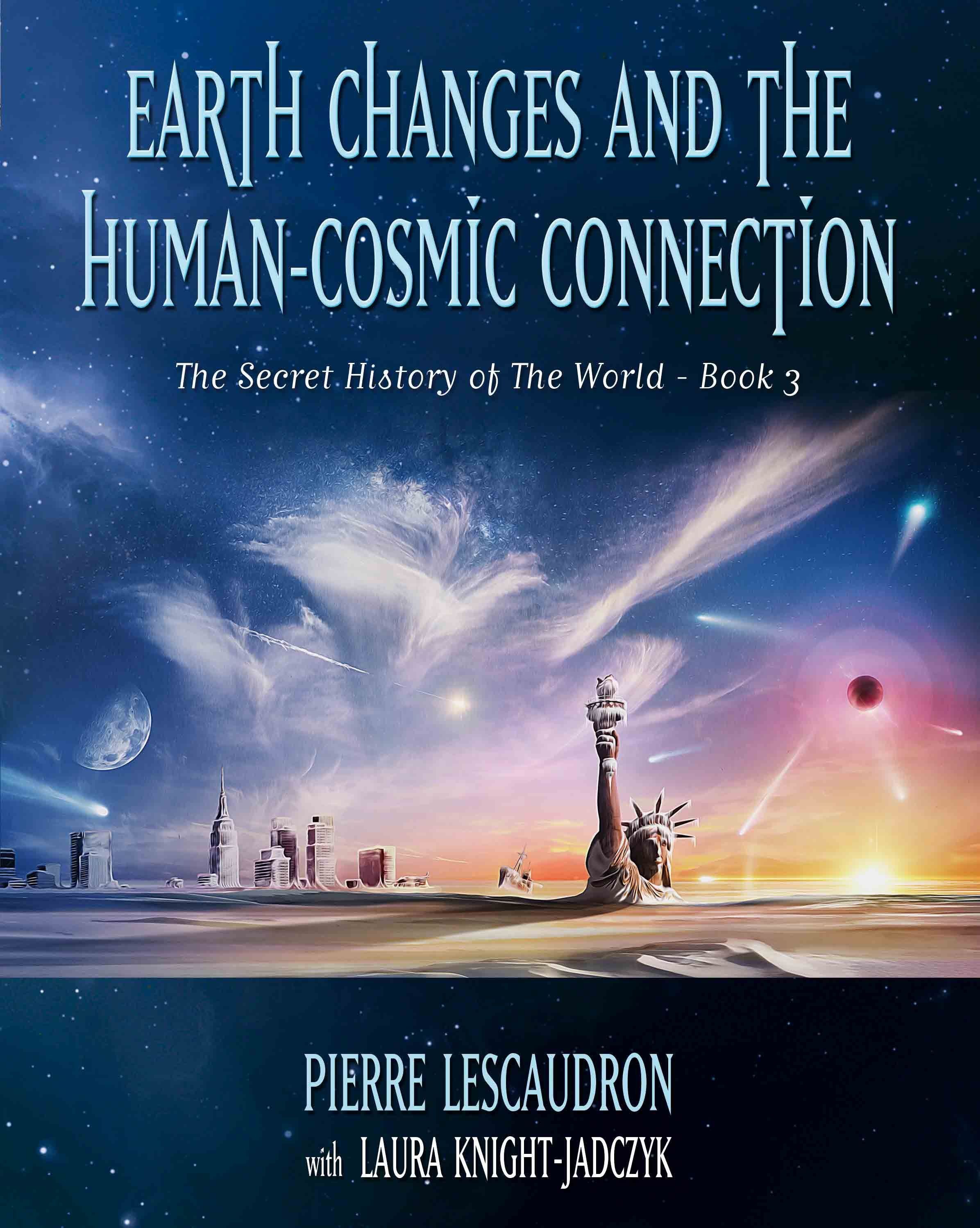
ECHCC_front_low_def_CoverBook
© SOTT.net/Red Pill Press

This week on SOTT Talk Radio we discussed the recently released book by SOTT.net editors Pierre Lescaudron and Laura
Knight-Jadczyk, Earth Changes and the Human-Cosmic Connection.

While official science portrays the crazy weather, more frequent sinkholes, increased meteor fireball activity, and intensifying earthquakes as phenomena that are unrelated, research put together by Pierre and Laura strongly suggests that all this (and more!) is intimately connected and may stem from a common cause.

In times past, people understood that the human mind and states of collective human experience influence cosmic and earthly phenomena. How might today's 'wars and rumors of wars', global 'austerity measures', and the mass protest movements breaking out everywhere play into the climate 'changing'?

Running Time: 01:59:00

Download: MP3


Comment: Continue to Part Two: The Hazard to Civilization From Fireballs and Comets

See also:

Black Death found to be Ebola-like virus

New Light on the Black Death: The Cosmic Connection

New Light on the Black Death: The Viral and Cosmic Connection

Related:

Happy New Year 2014?


Fireball 5

Russia's Popigai meteor crash linked to mass extinction

Meteor
© Mopic/ShutterstockA space rock that slammed into Earth some 33.7 million years ago not only took a gouge out of the planet but also may be linked to the Eocene mass extinction, scientists say.
Sacramento, California - New evidence implicates one of Earth's biggest impact craters in a mass extinction that occurred 33.7 million years ago, according to research presented here Wednesday (June 11) at the annual Goldschmidt geochemistry conference.

Researchers from the University of California, Los Angeles precisely dated rocks from beneath the Popigai impact crater in remote Siberia to the Eocene epoch mass extinction that occurred 33.7 million years ago. Popigai crater is one of the 10 biggest impact craters on Earth, and in 2012, Russian scientists claimed the crater harbors a gigantic industrial diamond deposit.

The new age, which is later than other estimates, means the Eocene extinction - long blamed on climate change - now has another prime suspect: an "impact winter." Meteorite blasts can trigger a deadly global chill by blanketing the Earth's atmosphere with tiny particles that reflect the sun's heat.

"I don't think this will be the smoking gun, but it reopens the door to Popigai being involved in the mass extinction," said lead study author Matt Wielicki, a UCLA graduate student.

This isn't the first time flying space rocks have been implicated in the Eocene's mass die-offs. Other possible culprits besides Popigai crater include three smaller Earth-meteorite smashups between 35 million and 36 million years ago: Chesapeake Bay crater offshore Virginia, Toms Canyon crater offshore New Jersey and Mistastin crater in Labrador, Canada.

Meteor

SOTT Exclusive: NASA blowing meteor smoke as noctilucent clouds intensify

NASA is blowing more 'meteor-smoke' in our eyes regarding the year's first (northern hemisphere) appearances of noctilucent clouds (NLCs) on May 24th. NASA outlet spaceweather.com claims:
Seeded by meteor smoke and boosted by the climate-change gas methane, noctilucent clouds have been spreading beyond the Arctic.
Image
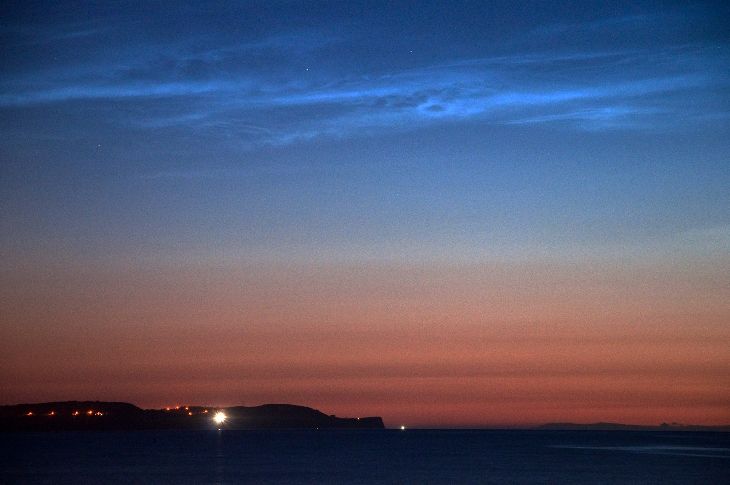
© Noel BlaneyJune 6th, 2014: Electric-blue NLCs over Bangor, Northern Ireland
Rising methane from below, the alleged exclusive result of human industrial activity, is NOT responsible for noctilucent clouds. Increasing atmospheric methane levels are primarily due to methane being released from deep under the oceans.

Increased NLCs are a 'canary in a coal mine' alright, but not in the way Official Science would have us believe.

Pistol

Three RCMP officers gunned down in Canada, two more injured

police roadblock moncton
© Marc Grandmaison/Associated Press A police roadblock in Moncton, New Brunswick, where a gunman killed three Canadian mounted police and wounded two others.
Two other RCMP officers wounded and manhunt under way for Justin Bourque, 24

A gunman has shot dead three Canadian mounted police and injured two more in one of the worst losses of life for the country's police forces in a decade.

The Royal Canadian Mounted Police in New Brunswick said on their Twitter feed that they were in pursuit of 24-year-old Justin Bourque of Moncton who was considered armed and dangerous. The police force tweeted an image of a suspect wearing military camouflage and carrying two guns.
#Codiac #RCMPNB - 3 officers mortally wounded by shooter. 2 officers sustained non life threatning injuries. Shooter still actively sought.

- RCMP New Brunswick (@RCMPNB) June 5, 2014
RCMP spokesman Paul Greene said the two wounded RCMP officers had non-life-threatening injuries. The Horizon Health Network, a provincial health authority, said on its Twitter feed that two patients were taken to the Moncton hospital with gunshot wounds.

Constable Damien Theriault said police were urging people in a certain area of Moncton, New Brunswick, to stay inside.

He said the search for the suspect was concentrated around two streets.

Sean Gallacher, who lives near the area where police were concentrating their search, said he heard what he now believed were gunshots. "I was downstairs and heard a few bangs," said Gallacher, 35.

Four Canadian RCMP officers, known as "mounties", were killed in March 2005 by a gunman on a farm in the province of Alberta. It was the RCMP's worst single-day loss of life in more than 100 years.

Satellite

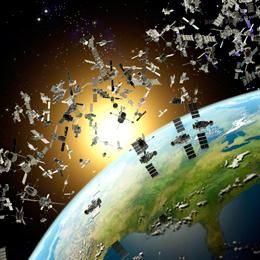
Pentagon plans project to combat 'space junk chain reaction,' but is it really incoming space rocks they're worried about?

earth and space junk
© www.nature.comDebris poses a threat to satellites.
Later this month the US Pentagon plans to award a massive contract to one of the two most influential American contractors for a project that, if all goes according to plan, will be able to identify space debris before it becomes a threat to the Earth.

Lockheed Martin Corp. and Raytheon Co. are competing for the $6 billion contract to design and construct Space Fence, a radar system that will eventually be able to track large bodies of space matter. The plan is being put into place so that the government can not only better predict the bodies that may come into contact with Earth (such as the asteroid that exploded over Chelyabinsk, Russia, for instance) but also to better protect satellites that could be destroyed while in orbit.

"There's a lot of stuff up there, and the impact of the new space fence will be able to track more objects and smaller objects," Joan Johnson-Freese, a professor of national security affairs at the US Naval College, told the Sydney Morning Herald, adding that the technology "is a necessity, but not sufficient...We need to move on to an active plan for removal."

The National Aeronautics and Space Administration has estimated that 500,000 chunks of man-made material floats around the Earth. Any one of those could damage or completely knock out the 1,200 operational satellites owned by various nations that are responsible for providing Internet access, banking functions, cell phone connections, Global Position System mapping, and other necessities.

Comment: Space Fence is a successor project to design and deliver globally positioned S-band radars capable of interoperation with the Space Surveillance Network. Not conveyed is what can possibly be done, once alerted, to stop a 22,000 mile-per-hour space junk collision. Since debris begets debris, the field is predicted to reach critical density beginning 2015 and initiate a chain reaction (Kessler Syndrome), enough to render low earth orbits unusable and too hostile for future space use. Is the Pentagon justified to spend multi-billions on a space junk tracker? Or, could it be the uptick of incoming comets and asteroids is the real tracking priority lurking in the background not being talked about?


Dollar

Europe to ditch climate protection goals - make way for fracking

Image
© Spiegel.deEurope may be backing away from its ambitious climate protection goals.
The EU's reputation as a model of environmental responsibility may soon be history. The European Commission wants to forgo ambitious climate protection goals and pave the way for fracking -- jeopardizing Germany's touted energy revolution in the process.

The climate between Brussels and Berlin is polluted, something European Commission officials attribute, among other things, to the "reckless" way German Chancellor Angela Merkel blocked stricter exhaust emissions during her re-election campaign to placate domestic automotive manufacturers like Daimler and BMW. This kind of blatant self-interest, officials complained at the time, is poisoning the climate.

But now it seems that the climate is no longer of much importance to the European Commission, the EU's executive branch, either. Commission sources have long been hinting that the body intends to move away from ambitious climate protection goals. On Tuesday, the Süddeutsche Zeitung reported as much.

At the request of Commission President José Manuel Barroso, EU member states are no longer to receive specific guidelines for the development of renewable energy. The stated aim of increasing the share of green energy across the EU to up to 27 percent will hold. But how seriously countries tackle this project will no longer be regulated within the plan. As of 2020 at the latest -- when the current commitment to further increase the share of green energy expires -- climate protection in the EU will apparently be pursued on a voluntary basis.

Comment: Note that this decision was made BEFORE the Ukraine crisis blew up in their faces and they came up with the narrative that they had to press ahead with fracking the life out of everything in order to 'save Europe from Russia'.

The elites in the US and EU are simply greedy dwarves who would ruin their own homeland because they feel no normal bonds to anyone or anything but themselves and their profits.


Fireball 5

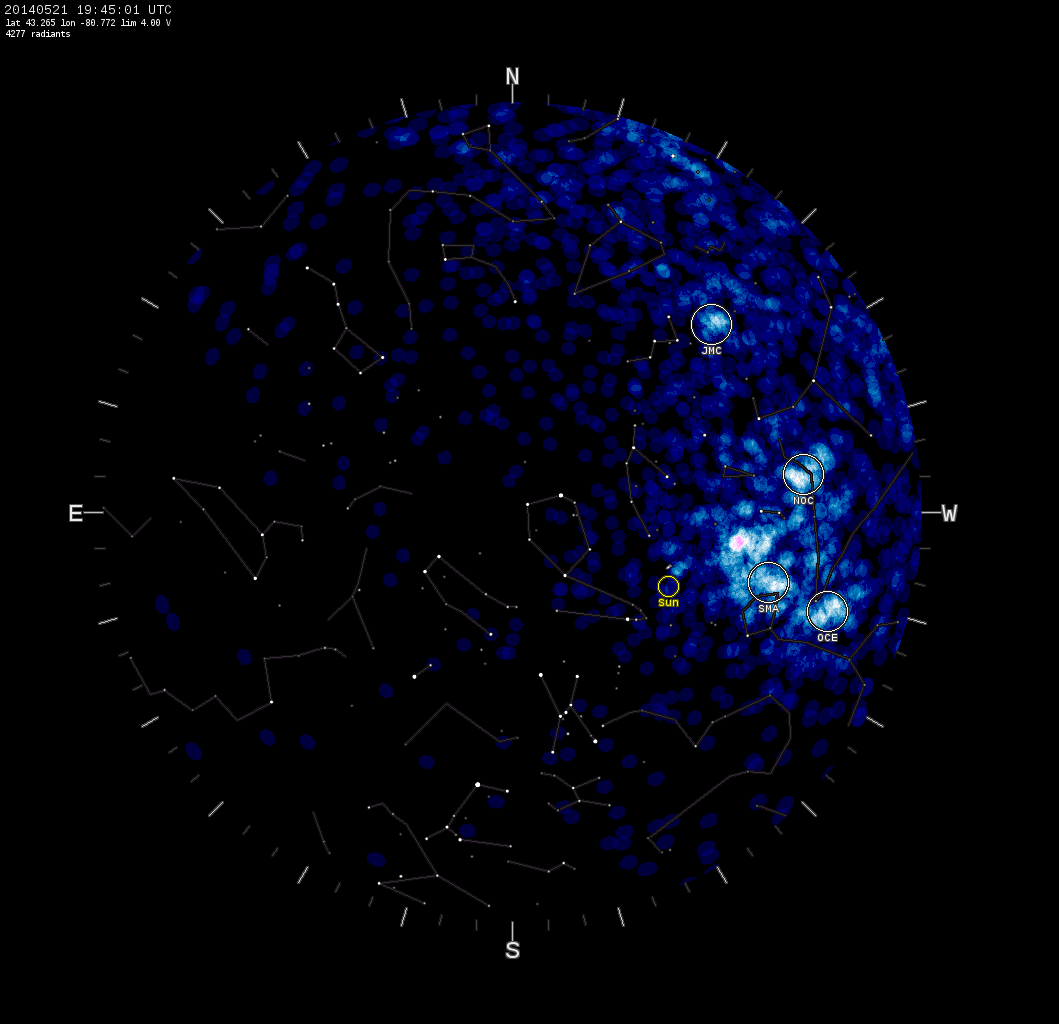
1,000 years of Meteors in 30 seconds

Image
The blue map follows their position in the sky using the Canadian Meteor Orbit Radar (CMOR). The main showers are highlighted with circles and listed by their International Astronomical Union name. A second radar map on the bottom looks at meteoroid speed.
* Maps produced using the space agency's Asgard program which tracks an estimated 4,000-5,000 meteoroids a day

* Every day, more than 40 tonnes of meteoroids hit our planet, with larger chunks of comet debris becoming fireballs

* The blue map tracks their position in the skies over our planet with the main showers highlighted in white circles

* A second radar map looks at meteoroid speed. The red regions indicate a speed of 7.5 miles/s (12km/s), the green from 26 miles/s (42km/s) and the blue from 41 miles/s (66km/s)

Every day, more than 40 tonnes of meteoroids hit our atmosphere.

Many are tiny specks of comet dust that crumble harmlessly in Earth's atmosphere, producing a slow drizzle of meteors in the night sky.

Bigger chunks of asteroid and comet debris create dozens of nightly fireballs around the planet - and now, these real-time maps mean you'll never have to miss one again.

Nasa's meteoroid visualisations are produced using the space agency's Asgard software program which tracks an estimated 4,000-5,000 meteoroids a day.

The blue map follows their position in the sky using the Canadian Meteor Orbit Radar (CMOR). The main showers are highlighted with circles and listed by their International Astronomical Union name.