
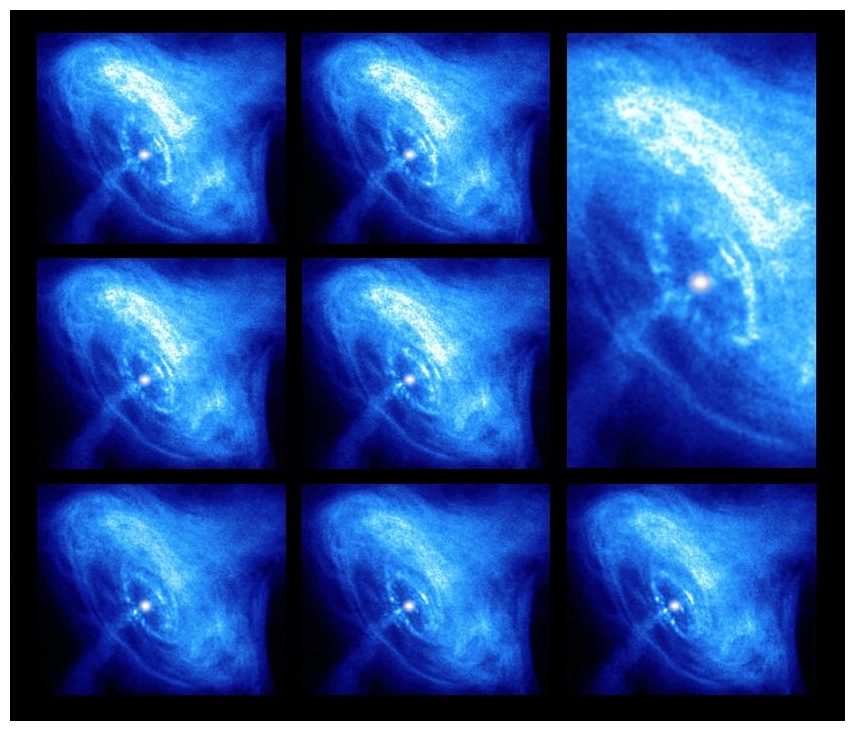
© NASA/Getty ImagesMultiple images of the Crab Nebula made over a span of several months with NASA's Chandra X-ray Observatory show matter and antimatter propelled to nearly the speed of light by the Crab pulsar, a rapidly rotating neutron star the size of Manhattan.
The star, known as NGC 5907 ULX, is emitting far more x-rays than any other ever observed.
So huge is the output that it has been classified as an "ultraluminous x-ray source" (ULX). It is by no means the first ULX to be recorded in nearby galaxies, but all the others are confidently predicted to be generated by black holes - this is the first one that uses star-power.
So there goes the first theory.
But there are still more baffling elements to the discovery, made by a team led by Gianluca Israel from the National Institute of Astrophysics in Rome, Italy, and reported in Science.











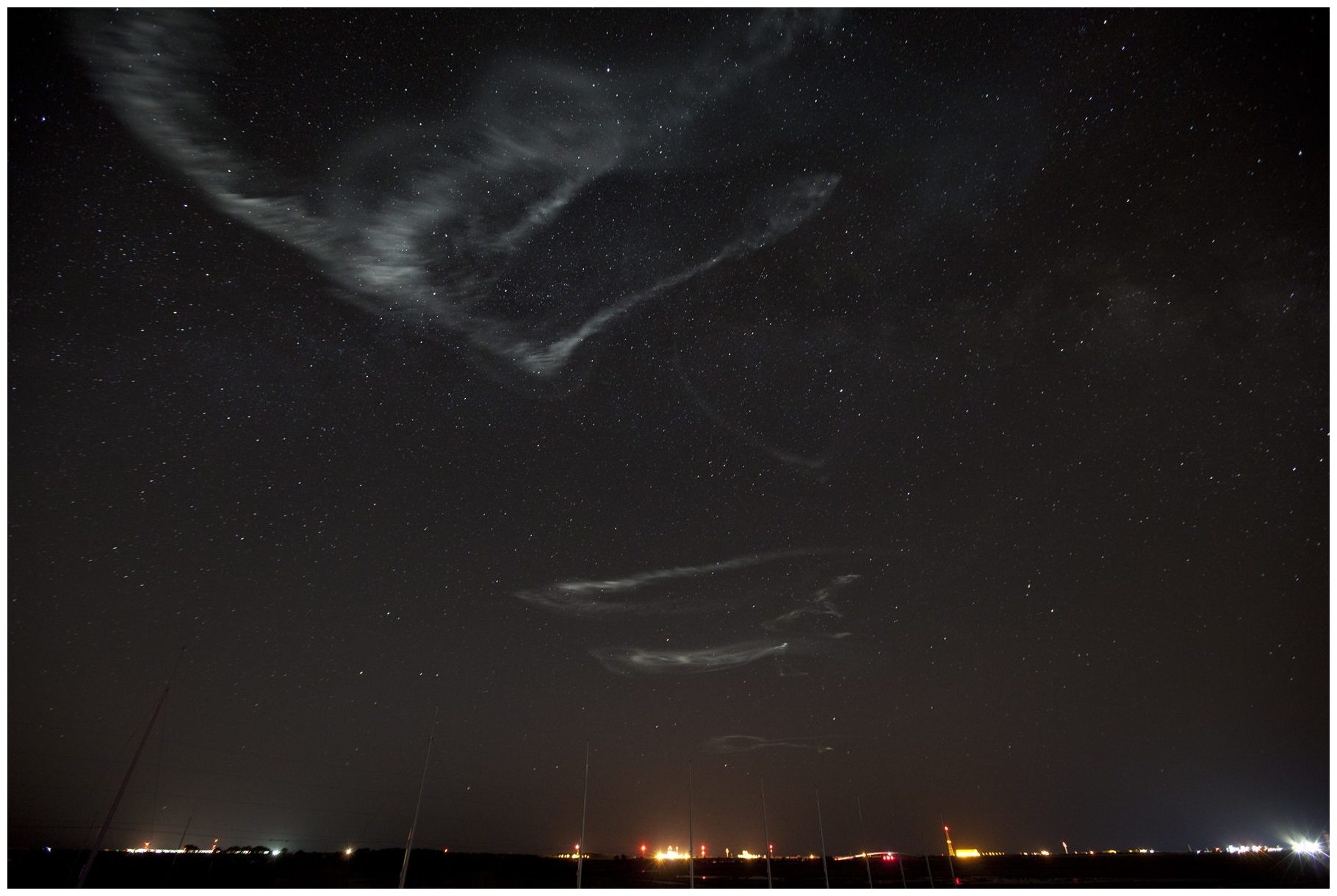



Comment: Uhm, didn't they say they were shutting down HAARP in 2014?
So now it's in civilian hands. Or so they say...