
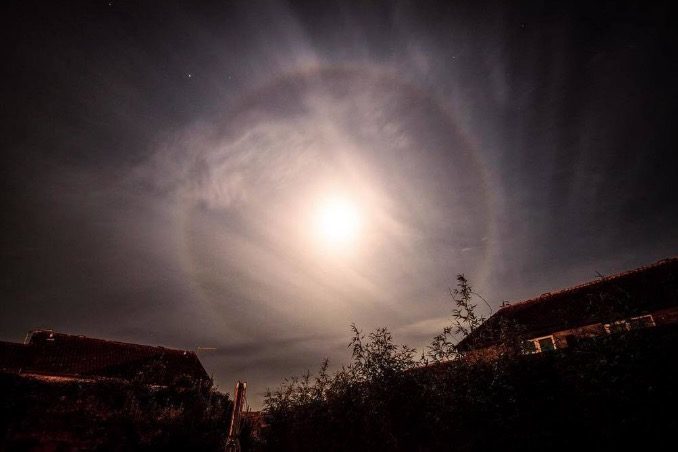
© Via Twitter/William Belcher
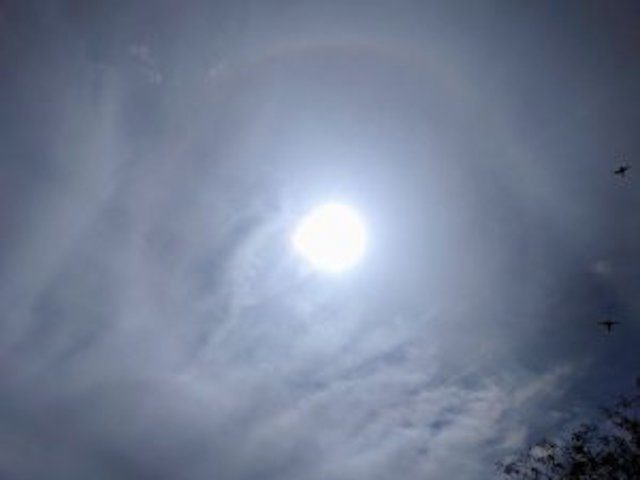
The phenomenon is called a 22-degree halo, and is more commonly seen around the sun.
Leighton James, a photographer in Bristol, told the BBC: "It's something I have never seen before and thought it looked quite amazing."
A 22-degree halo forms when there are high cirrus clouds passing slowly across the sky. The light from the sun or moon hit the ice crystals, and the refraction caused by that shows a halo. These halos in general are relatively common, but it's less common to see them form around the moon.
This is because the moon has to be in the new moon phase and the visibility has to be good in order for the halo to be seen.

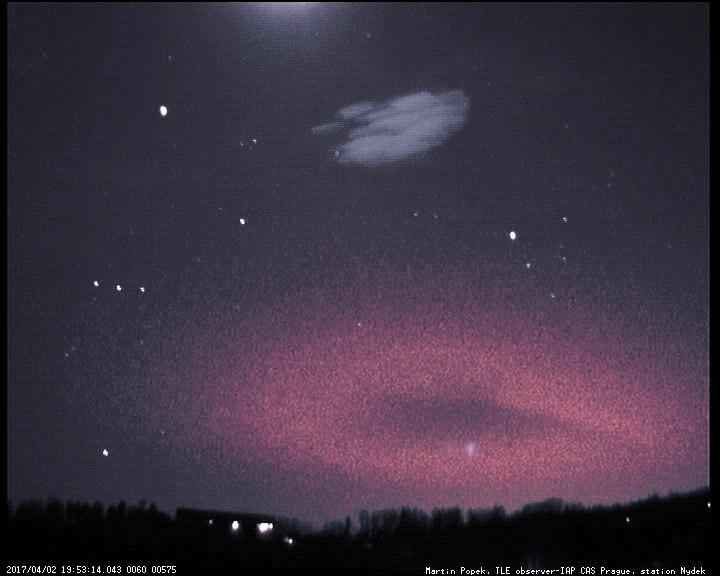



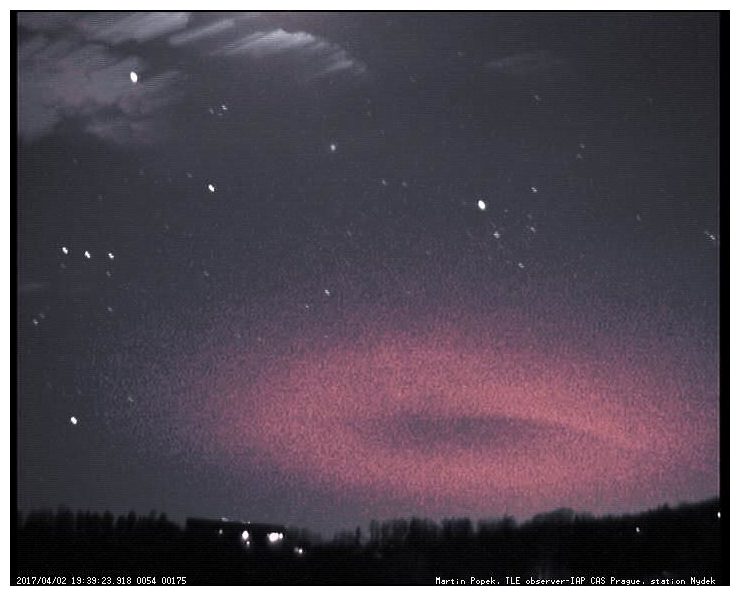












Comment: Another ELVE was photographed above a thunderstorm in Colorado last year. A few days ago 6 'gigantic jets' (ionospheric lightning) were captured above storm clouds in Western Australia. Another blue jet was observed over Brazil last month. These transient luminous events (TLEs) are not so 'rare' these days.
See also: Electric universe: Lightning strength and frequency increasing
The Electric Universe model is clearly explained, with a lot more relevant information, in the book Earth Changes and the Human Cosmic Connection by Pierre Lescaudron and Laura Knight-Jadczyk.