Extreme Temperatures
S


Snowflake

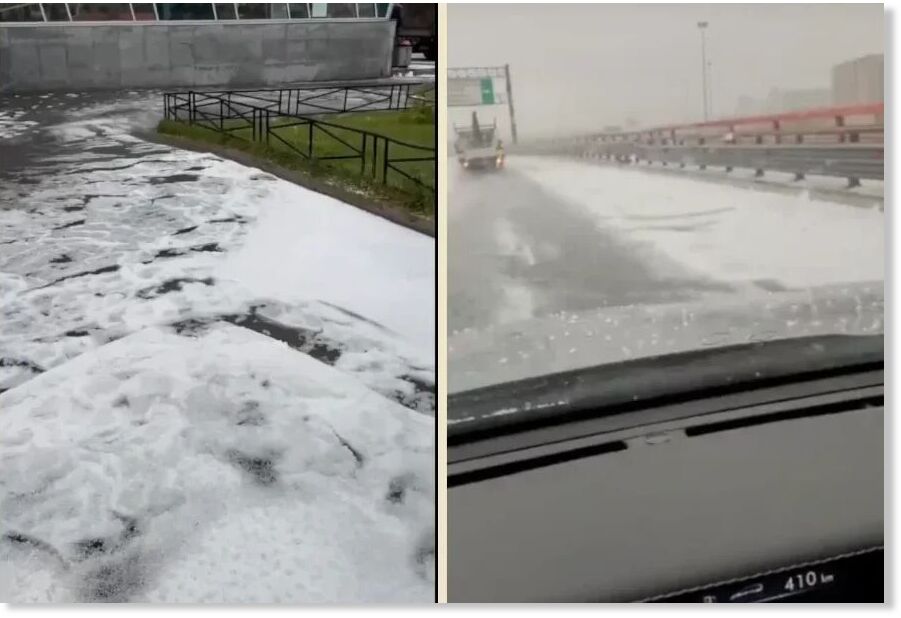
Rare summer snowfall hits St. Petersburg, Russia in late August

mmmmm
An unexpected snowstorm struck St. Petersburg on August 25, covering city streets with wet snow, hail, and causing significant flooding following heavy rains.

Snow and Hail Reported by Locals

According to the Telegram channel "Piter Live", residents captured videos showing a dense layer of wet snow covering roads and the steps of underground crossings. Alongside the snowfall, hail was seen scattered across asphalt surfaces, while powerful streams of water flooded the streets after intense rainfall mixed with snow.


Snowflake Cold

Early snowfall hits Poland's Tatra mountains as temperatures drop to - 3°C

mmmmmm
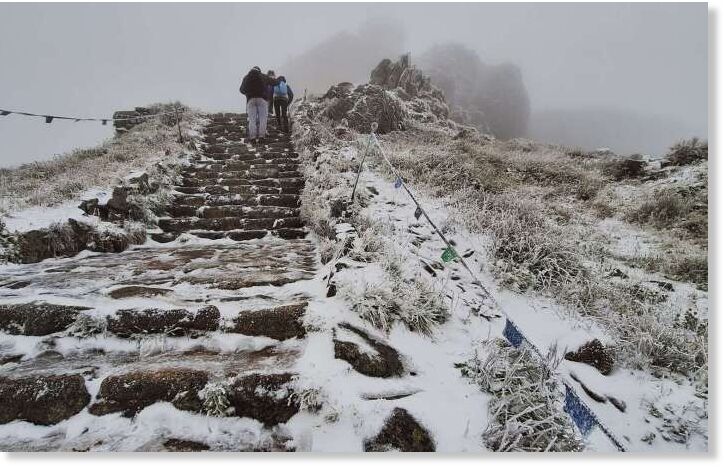
Snow fell continuously from Saturday night into Sunday as temperatures dropped to - 3°C in Poland's High Tatras mountains, particularly on Kasprowy Wierch, home to the upper cable car station and a meteorological observatory.

According to Euronews (French edition), the Arctic air mass sweeping across Poland over the weekend brought an unusually sharp chill, signaling the arrival of an especially early winter.

At the summit of Kasprowy Wierch (1,987 meters), temperatures dipped to - 3°C overnight, accompanied by snowfall. While snow can occur at the highest Polish peaks in any month of the year, the last recorded August snowfall was in 2010. An even earlier occurrence was noted in July 2011.


Snowflake

Heavy August snowfall shuts Khardung-La Pass, India

mmmmm
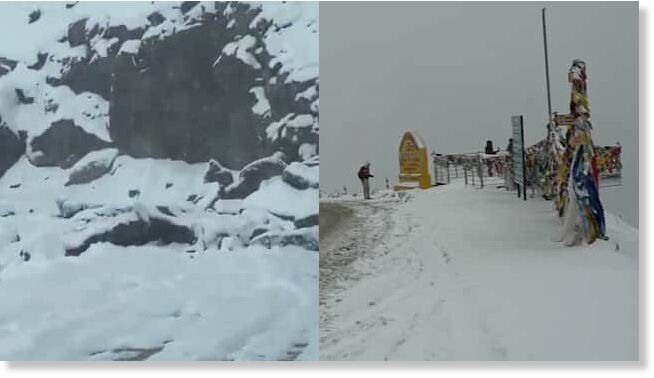
Heavy snowfall over the past 24 hours has forced the closure of Khardung-La Pass in Ladakh, one of the highest motorable roads in the world, disrupting movement of vehicles and supplies.

Officials said traffic was suspended after the road turned slippery and unsafe due to snow accumulation, with authorities taking precautionary measures to prevent accidents.

Snow clearance operations will be launched once weather conditions improve, while travelers have been advised to avoid the route until further notice.

Situated at over 17,500 feet, Khardung-La is a vital link connecting Leh with Shyok and Nubra valleys, and its closure impacts locals, tourists, and the transport of essential goods.

The Meteorological Department has forecast more light to moderate snowfall in the upper reaches of Ladakh over the next 48 hours and urged caution for those planning high-altitude journeys.


Snowflake

August snowfall on the Carpathian mountains in Ukraine

mmmmm
The Zaroslyak tract near Goverla was covered with the first snow of the season on August 24.
The first snowfall was recorded on Mount Pip Ivan Chornohirskyi on August 24. The air temperature at the summit is +1°C, and rescuers warn of danger.

On Independence Day, August 24, rescuers recorded the first snowfall of the year on Mount Pip Ivan Chornohirskyi, writes UNN with reference to the State Emergency Service of Ukraine in Ivano-Frankivsk Oblast.

Details

Rescuers also added that the air temperature at the summit is only +1°C, with wind.

Recall

Earlier, UNN wrote that the first snowfall of the season was recorded in the Zaroslyak tract near Hoverla. The high-altitude Carpathians are covered with snow, preparing for winter.


Snowflake

Andes mountains clobbered by massive snowstorm - 32 inches of snow in 24 hours

mmmmm
© Jack Price
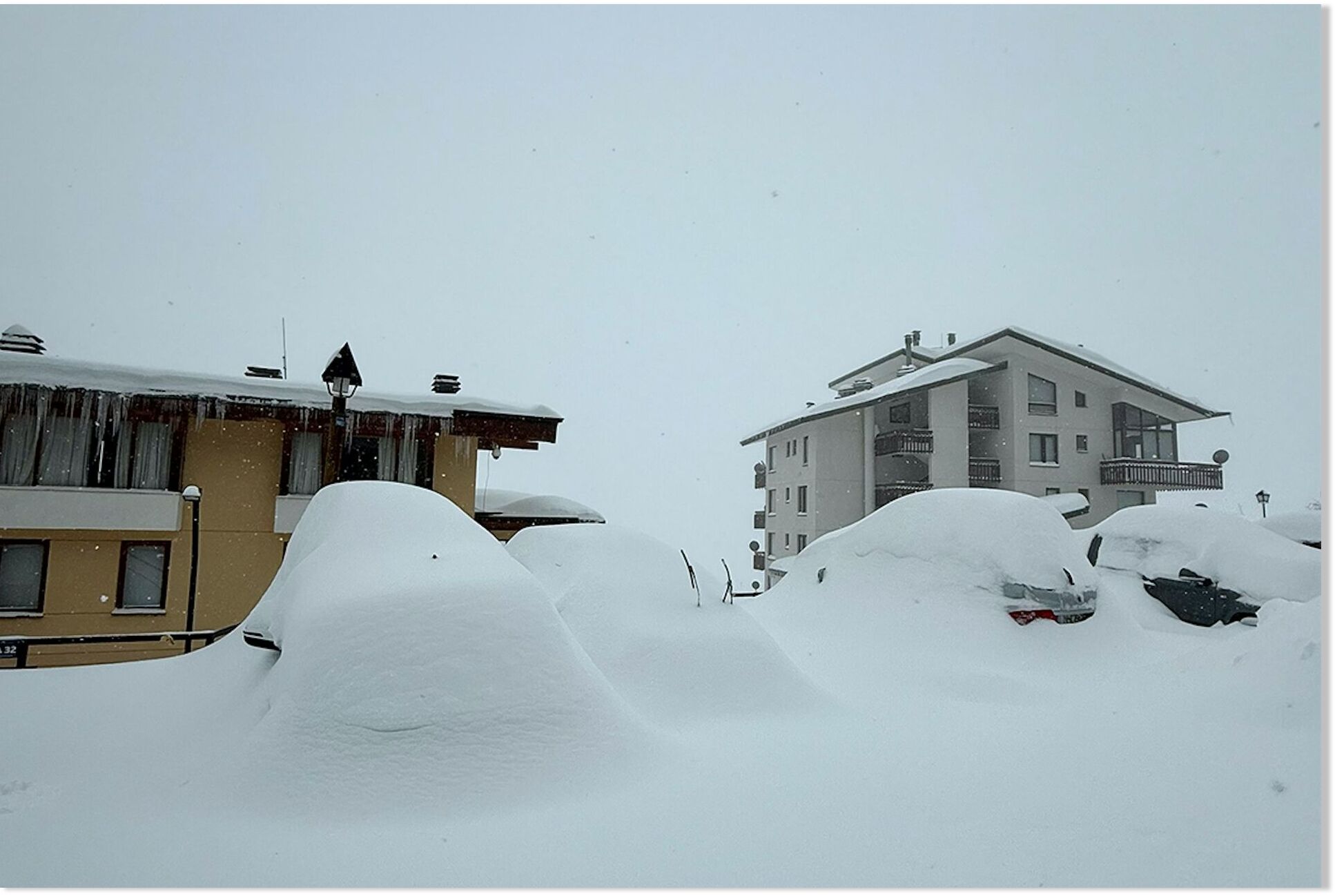
The Andes Mountains are engulfed in a major storm, with Valle Nevado sitting in the heart of the action. The famous Chilean ski area has received over 43" of snow in the last five days, with 32" falling in the last 24 hours as of 9 AM MST August 22, according to Open Snow.

"It was a wild Wednesday night, and it got even more hectic on Thursday as winds picked up," said Open Snow meteorologist Luke Stone. "The second phase of the storm began on Thursday night as the cold front moved across the Andes with more heavy snow. The storm should linger through Friday afternoon before tapering off overnight."

Our friends from the Montana-based Entourage crew are boots on the ground and were some of the lucky individuals who woke up to multiple feet of snow blanketing the parking lot. While much of the resort skiing remains closed, there are always other opportunities. "Backcountry conditions are dicey, so we're looking to hit a street spot and wait for the chance to head into the mountains," said filmer Jack Price.


Attention

The greatest threat to civilization and why we need cooperation now!

Nuclear War
© dischuss.com
Since the late 1980s we have been led to believe that the greatest danger facing planet Earth, and human civilization, is carbon dioxide induced global warming. It is asserted that an increase of approximately 0.015% of carbon dioxide to the global atmosphere since the dawn of the Industrial Revolution, is going to somehow trigger a runaway greenhouse effect that, it is widely declared, will bring a whole series of calamities down upon our heads. Yet when one strips away the hype, the self-serving agendas, the relentless barrage of propaganda and contrived computer models, the reality we are faced with is a gentle warming of the Earth that has occurred since the end of the Little Ice Age along with a CO2 stimulated greening of the planet.

On the other hand, the competition for global resources shows no sign of ameliorating since the factions in charge of American foreign policy keep pushing a confrontational posture with respect to international relations. We are degenerating into a new American led Cold War that is increasing the risk to our future and could erupt into a hot war with dire consequences for millions of people and devastating consequence for the planetary environment. Two articles published in the British science journal Nature this July underscore the growing dangers confronting us as we move ever closer to a point of no return. A major course correction is urgently needed.

In 2023 Professor Michel Chossudovsky with Global Research correctly wrote:

"At no point since the first atomic bomb was dropped on Hiroshima on August 6th, 1945, has humanity been closer to the unthinkable. All the safeguards of the Cold War era, which categorized the nuclear bomb as 'a weapon of last resort', have been scrapped.

"Let us also recall the unspoken history of America's doctrine pertaining to the conduct of nuclear war. Barely six weeks after the bombing of Hiroshima and Nagasaki, the U.S. War Department released a Secret Plan on September 15, 1945 to bomb 66 cities of the Soviet Union with 204 atomic bombs.

The September 1945 Plan was to 'Wipe the Soviet Union off the Map' at a time when the US and the USSR were allies. Confirmed by declassified documents, Hiroshima and Nagasaki served as a 'Dress Rehearsal'.

Snowflake

Best of the Web: It's been snowing in really weird places this year

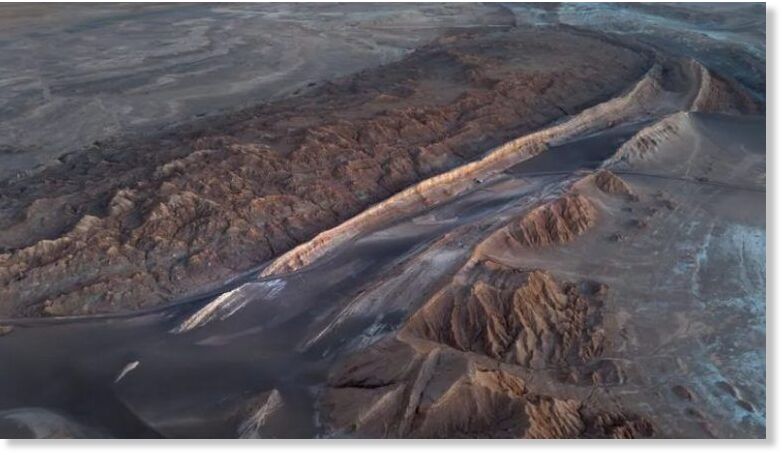
The Atacama Desert, Chile, is considered the driest place on earth. Much of the desert receives less than half an inch of rainfall per year, and some areas none at all for hundreds of years.
© John MooreThe Atacama Desert, Chile, is considered the driest place on earth. Much of the desert receives less than half an inch of rainfall per year, and some areas none at all for hundreds of years.
Mother Nature is unpredictable, and sometimes it can snow in places where most people think it could never happen. Even some of the hottest places on Earth have recorded snow, like the Sahara Desert. This past January, parts of the Gulf Coast were hit by a snowstorm that brought snow to Florida, Alabama, Texas, and Louisiana.

Snow is usually found in cold climates, but the right mix of temperature, elevation, and moisture can bring snowfall to even the most unexpected places. However, this year, a very rare and disruptive snowstorm swept across the Southeast, including areas that don't traditionally see snow. The historic snowstorm brought snow to the northern Gulf Coast on January 21, 2025. This snowstorm shattered longstanding snowfall records across the region, which were set during the February snowstorm of 1895. It's a harsh reminder that if the perfect conditions come together, even snow can fall in places where it usually does not.

Info

Ocean sediments might support theory that comet impact triggered Younger Dryas cool-off

Impact Sediments
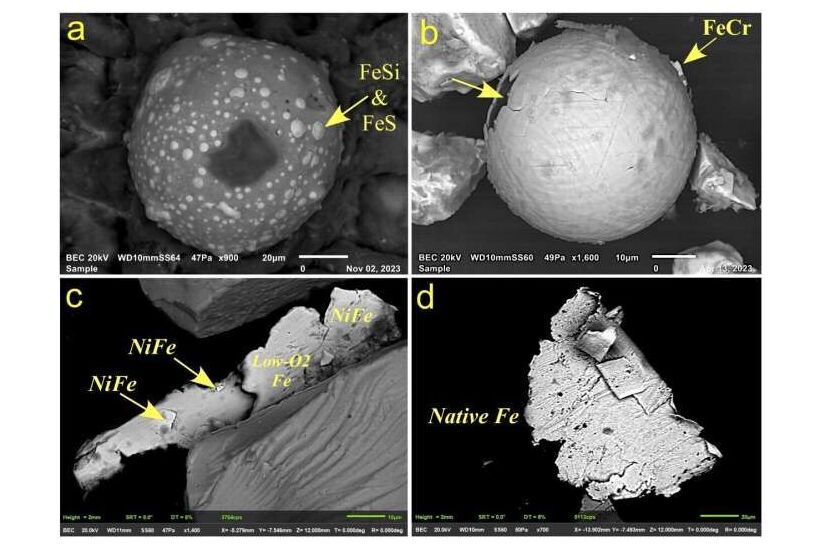
© Moore et al., 2025, PLOS One, CC-BY 4.0Examples of Fe-rich and silica-rich impact microspherules (a and b) and metallic dust particles (MDPs; c and d) interpreted as cometary dust from Baffin Bay cores. Yellow arrows show particles of FeSi, FeS, and FeCr on microspherules (a and b) and NiFe, low-O2 Fe, and native Fe on metallic particles (c and d). Note folded edges of MDP in panel d.
Analysis of ocean sediments has surfaced geochemical clues in line with the possibility that an encounter with a disintegrating comet 12,800 years ago in the Northern Hemisphere triggered rapid cooling of Earth's air and ocean. Christopher Moore of the University of South Carolina, U.S., and colleagues present these findings in the journal PLOS One on August 6, 2025.

During the abrupt cool-off — the Younger Dryas event — temperatures dropped about 10 degrees Celsius in a year or less, with cooler temperatures lasting about 1,200 years. Many researchers believe that no comet was involved, and that glacial meltwater caused freshening of the Atlantic Ocean, significantly weakening currents that transport warm, tropical water northward.

In contrast, the Younger Dryas Impact Hypothesis posits that Earth passed through debris from a disintegrating comet, with numerous impacts and shockwaves destabilizing ice sheets and causing massive meltwater flooding that shut down key ocean currents.

However, the impact hypothesis has been less well supported, lacking any evidence from ocean sediments. To address that gap, Moore and colleagues analyzed the geochemistry of four seafloor cores from Baffin Bay, near Greenland. Radiocarbon dating suggests the cores include sediments deposited when the Younger Dryas event began.

Cloud Precipitation

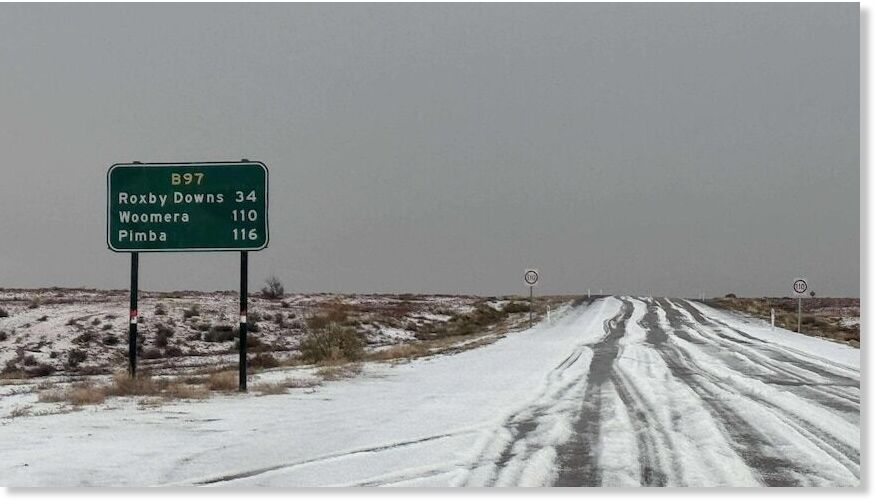
Hail creates snow-like scenes in outback towns of South Australia's far north

large accumulations of small hail — has covered the roads and red dirt of far north South Australia.
© Rebecca TaylerLarge accumulations of small hail — has covered the roads and red dirt of far north South Australia.
Parts of outback South Australia looked more like a scene from a European winter, after a massive hailstorm covered desert terrain in the state's far north in white.

It was a sight rarely witnessed in South Australia, especially so far north — much to the amazement of locals and travellers — as temperatures dropped to freezing levels on Thursday.

Kath Acton lives in the Riverland but has been travelling through the Flinders Ranges for a couple of weeks.

"We were driving from Wilpena to Rawnsley and it started hailing so we pulled up," she said.

"Then the sound on the roof of the car changed and the drops on the windscreen changed and we all realised we were getting snowed on.

"The outside temperature dropped to 3 degrees. It was very cold."


Snowflake

'Unusual' snow, rain and thunderstorms sweep across eastern Australia

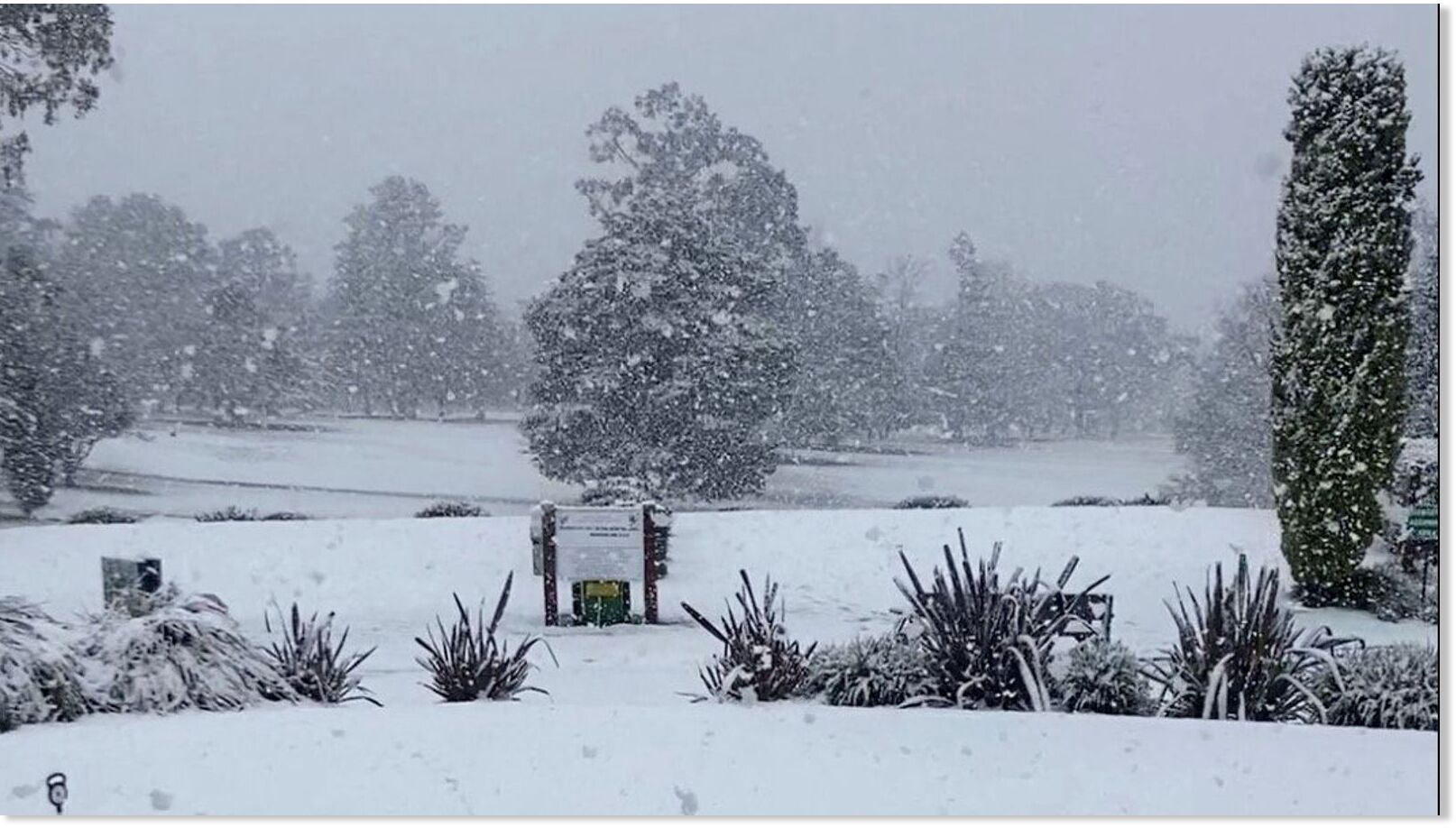
Snow blankets the grass at a Golf Club,
© Armidale Golf ClubSnow blankets the grass at a Golf Club, in Armidale, New South Wales, Australia, August 2, 2025, in this screengrab obtained from social media video.
A slew of Australian towns have been blanketed with their thickest layer of snow in decades, as wild weather swept across the east of the country.

As much as 40cm (16 inches) of snow fell in northern parts of New South Wales on Saturday, the most since the mid-1980s, Miriam Bradbury, a meteorologist at Australia's weather bureau, said.

She said parts of neighbouring state Queensland also saw snow for the first time in 10 years.

The New South Wales State Emergency Service said unprecedented snow, coupled with heavy rain and thunderstorms in other parts of the state, has led to more than 1,455 incidents over the weekend.