Extreme Temperatures
S


Arrow Down

Bill Gates is suddenly skeptical: pivots away from climate doom and renewables

Sinking Ship
© joannenova.com.au
Yet another climate change heavyweight abandons ship

It's the beginning of the end of the renewables fantasy, but there will be no apology — no admission they were wrong, or that thousands upon millions of people have suffered because of climate sorcery.

Watch as the billionaire who lectured us from private jets, pivots into word salad. Now he says we still have to solve climate change (whatever that means), but the doomsday view is wrong, and it "will not be the end of civilization." He's suddenly turned into a kind of Bjorn Lomborg. Forget mitigation, say hello to Adaptation.

On the cusp of COP30 in Brazil, Bill Gates has launched a life raft for his reputation — a 17 page memo called Three tough truths about climate

Bill Gates can see what's coming (a reckoning for the renewables debacle), so he is repositioning himself so he doesn't go down with the ship. Indeed, he's almost writing an escape plan for the whole Blob. In a nutshell, he's admitting between the lines that wind and solar power are unaffordable, and since climate change won't actually be that catastrophic, everyone should calm down while we invent technologies, and in the mean time, get back to stopping people from starving. Wouldn't you know, he says "Health and prosperity are the best defense against climate change." (That's Truth #3 ).

What he's not saying is that he and his friends wasted untold billions (maybe trillions) of dollars of our money installing wind and solar panels which aren't very good. He is not joining those dots.

We still need that breakthrough mythical technology to save us from the climate monster.
Three tough truths about climate

...though climate change will have serious consequences — particularly for people in the poorest countries — it will not lead to humanity's demise. People will be able to live and thrive in most places on Earth for the foreseeable future. Emissions projections have gone down, and with the right policies and investments, innovation will allow us to drive emissions down much further.

Unfortunately, the doomsday outlook is causing much of the climate community to focus too much on near-term emissions goals, and it's diverting resources from the most effective things we should be doing to improve life in a warming world.
He's still painting himself as a savior, of course:
If given a choice between eradicating malaria and a tenth of a degree increase in warming, Gates told reporters, "I'll let the temperature go up 0.1 degree to get rid of malaria. People don't understand the suffering that exists today." -- AP News
Now, at long last, he says the first priority should be to prevent suffering in the here and now. Which is all very noble, but where were you Bill for the last ten years when people in Africa needed coal plants — you were telling them to invest in wind and solar.

Ice Cube

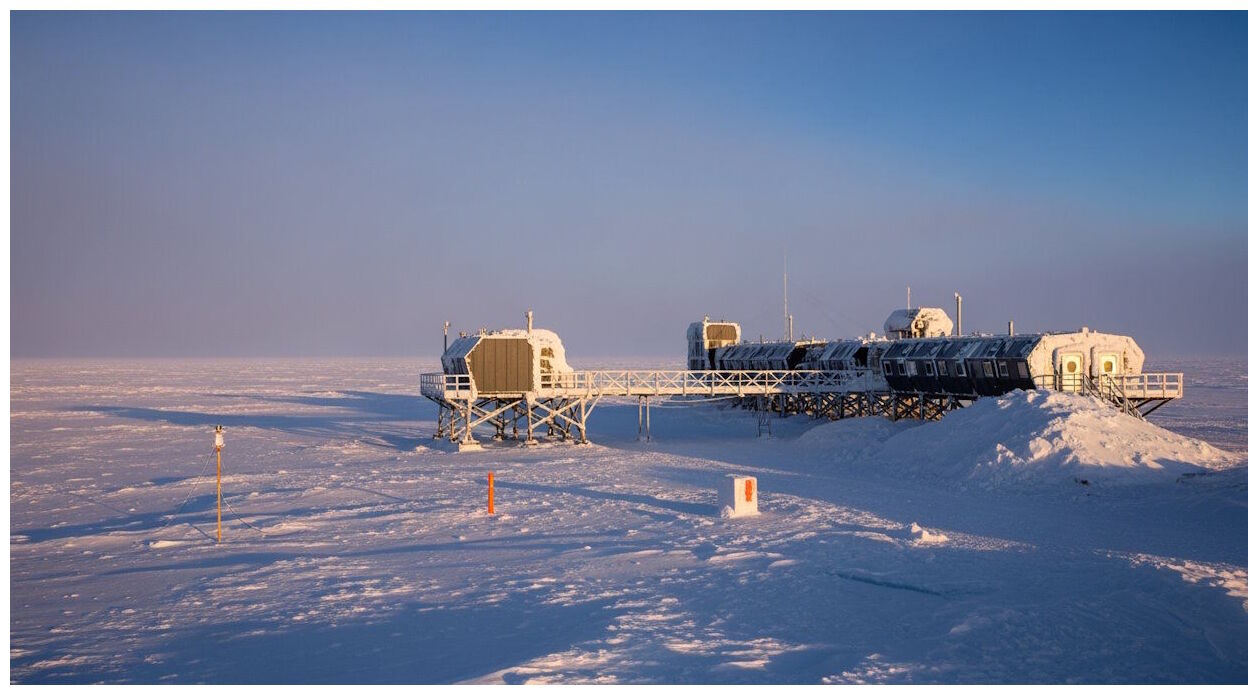
Antarctic Amundsen-Scott station sees coldest October in 44 years...Mainstream media silent!

This is not supposed to be happening, according to the climate models.
Antarctic Station
© Report24/KI
While the headlines relentlessly holler about "exploding global warming" and "dramatic melting" of the polar caps, the South Pole is telling a starkly different story.

Here reports Germany's Report 24.

On October 15, the Amundsen-Scott South Pole Station registered an astonishing temperature of minus 61.3 degrees Celsius and it isn't even winter there. It's springtime and temperatures should be on the rise.

Coldest October since 1981

According to Report 24, the numbers are clear: It was the coldest October measured at the station since 1981.

This extreme cold is not an isolated event. As the article points out, even CNN reported in 2021 that the continent had experienced its coldest winter since records began.

The data from stations like Amundsen-Scott, Vostok, and Dome C show that instead of a linear, CO₂-driven heating trend, the South Pole is dominated by naturally occurring, extreme temperature fluctuations, including pronounced cold snaps.

Info

Ice age animals found in a northern Norway cave: 'Extremely rare' discovery reveals a frozen past

Sediment Profile
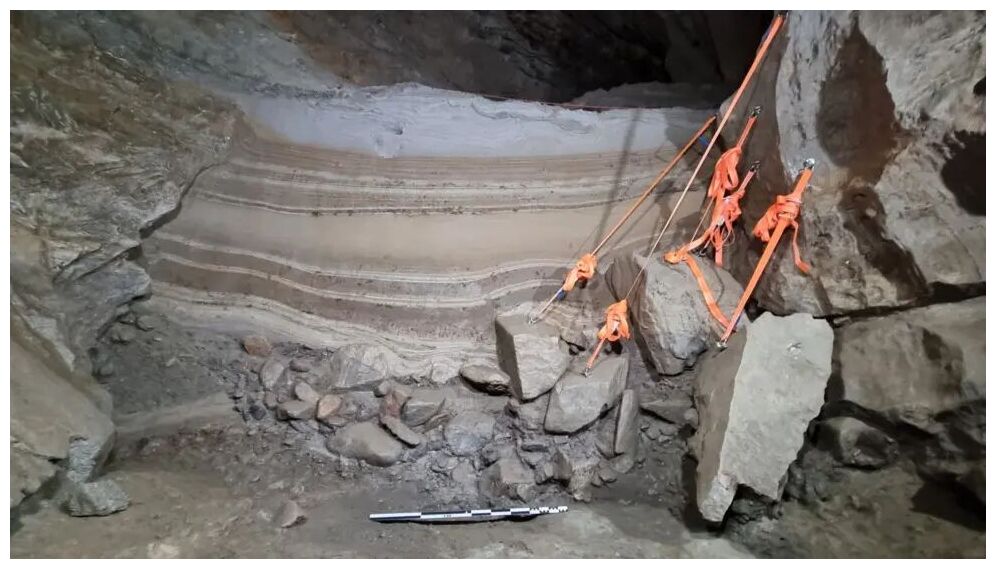
© Trond Klungseth Lodoen/Bournemouth University/PA WireThe sediment profile in Arne Qvamgrotta after excavation.
A remarkable discovery in northern Norway has uncovered the remains of 46 species from the last Ice Age — from reindeer and Arctic foxes to whales and seabirds — preserved for 75,000 years inside a mountain cave.

A cave near Kjøpsvik in the municipality of Narvik, northern Norway, has yielded one of the most extraordinary Ice Age fossil finds in Europe. Deep inside the Arne Qvam Cave, scientists uncovered thousands of fragmented bones from animals that once lived there 75,000 years ago — offering a detailed glimpse into a cold, coastal Arctic ecosystem long before the last glaciers reached their maximum.

The research, published in Proceedings of the National Academy of Sciences (PNAS), reveals a rare and rich mix of mammals, birds, and fish, making it the oldest preserved faunal assemblage ever found in the European Arctic.

"Unique, even by global standards"

"This is extremely rare and valuable," says Sanne Boessenkool, professor of evolutionary biology at the University of Oslo and co-author of the study. "Most traces of Ice Age life in Scandinavia were wiped away when glaciers advanced and stripped the land bare. These cave sediments are a remarkable exception."

Altogether, the researchers identified 46 animal taxa: 23 bird species, 13 mammals, 10 kinds of fish, and a handful of marine invertebrates and plant remains. Such a broad range of fauna from one Ice Age deposit has never before been found in Scandinavia.

"It's unique, even by global standards," Boessenkool says.

Frozen Remains
© Walker et al. (2025), PNASDiagram showing the variety of animal species identified from bones found in the Arne Qvam Cave, Northern Norway. The chart illustrates relationships among mammals, birds, and fish discovered in the 75,000-year-old deposits. Species were identified using bone analysis and ancient DNA techniques.

Bizarro Earth

Climate prophets say Humanity is entering New Reality — has 'crossed the first tipping point'

New Reality
© joannenova.com.au
With the climate olympic-junket just weeks away in Brazil, the race is on for word-salad-catastrophes flavored with science-incense to shake down more cash and concessions from the rich democracies.

And thus the University of Exeter proffers the first round of this year's "on the brink" specials.

The first tipping point is almost upon us, just like it was every year for the last 29 years in a row:
'New reality' as world reaches first climate tipping point

The world faces a "new reality" as we have reached the first of many Earth system tipping points that will cause catastrophic harm unless humanity takes urgent action, according to a landmark report released today (13 Oct) by the University of Exeter and international partners.

With ministers gathering today ahead of the COP30 summit, the second Global Tipping Points Report finds that warm-water coral reefs - on which nearly a billion people and a quarter of all marine life depend - are passing their tipping point. Widespread dieback is taking place and - unless global warming is reversed - extensive reefs as we know them will be lost, although small refuges may survive and must be protected.

We are on the brink of more tipping points, with devastating risks for people and nature: the irreversible melting of polar ice sheets, the collapse of key ocean currents and the dieback of the Amazon rainforest - where COP30 will be held.

With global warming set to breach 1.5°C, the report - by 160 scientists at 87 institutions in 23 countries - argues that countries must minimise temperature overshoot to avoid crossing more tipping points. Every fraction of a degree and every year spent above 1.5°C matters.
It might as well be straight out of the Neolithic Sorcerers Cookbook — How to wind up the crowd before you ask for the goats and girls:
  1. Pick things the audience likes but mostly won't have any direct experience of, like, say, corals 100km off the coast and under 10 meters of water. Even in the unlikely event a single critic dives on one reef, the real crisis will turn out to be in the 100,000 reefs they didn't visit.
  2. Use vague, ill defined terms, like "climate change" which can mean long term, short term, man-made, natural, or a thing that dropped in for the weekend.
  3. Seed the idea that all storms, high tides, fires, demented dolphins and shonky buildings are "affected by climate change". Even your hay fever can be a sign you should vote for a carbon tax. Soon, people will see climate change everywhere like UFO's and Elvis.
  4. Whatever disaster looks like, it's always just around the corner.

Snowflake

Over 50 cm of early snow hits mountain in Bulgaria: Mountain rescue issues safety warning

mmmmm
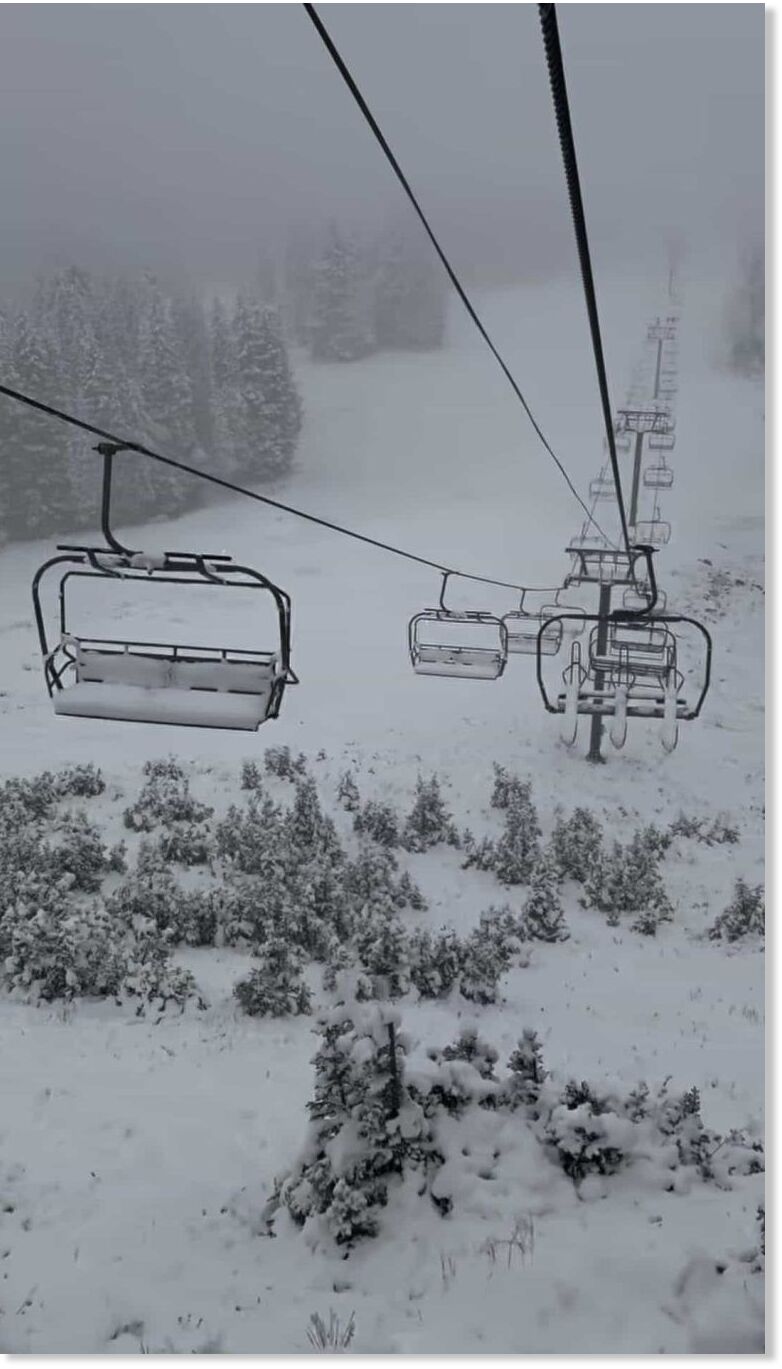
Vitosha mountain has received over half a meter of fresh snow, creating challenging conditions for movement, the Mountain Rescue Service warned. With virtually no underlying snow base, the current terrain is unstable and risky. Access for snowmobiles or ATVs is extremely difficult, and even helicopter rescues may be hampered by the weather.

The snow covers hidden obstacles such as branches, rocks, and bushes, increasing the risk of falls and injuries. Fog and poor visibility further complicate navigation, making trails hard to distinguish. Visitors are urged not to underestimate the situation. Extra warm clothing and drinks are essential, even for experienced mountaineers, and awareness of the conditions is crucial at all times.

Hikers should always inform a family member or friend of their route and any changes to their plans during the day. In case of emergency, calling 112 is essential, as calls are routed to the Central 24-hour post, where a rescuer can respond within seconds. Mountain insurance is strongly recommended to ensure assistance in case of accidents.


Snowflake

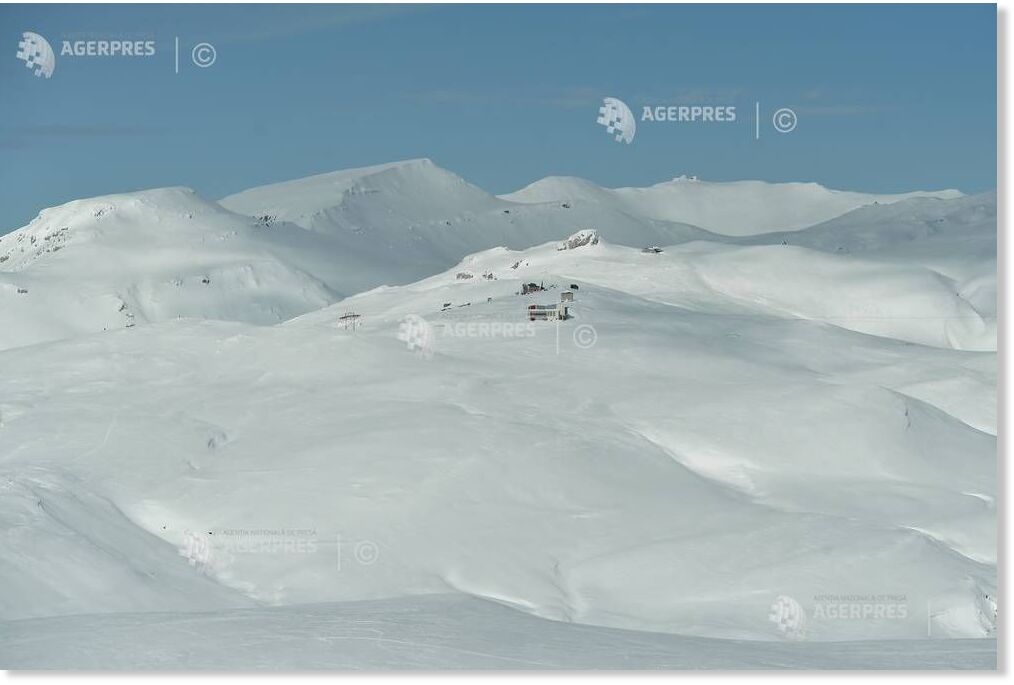
Over 40 cm (16 inches) off early snowfall on Omu Peak, Romania

mmmm
© Silviu MATEI / AGERPRES Photo
Meteorologists have measured the largest snow layer in the mountain area at 41 centimeters on Omu Peak, followed by 23 centimeters on Tarcu Peak and 15 centimeters at Balea Lake, according to the snow-meteorological bulletin issued Monday by the Transylvania South Regional Center in Sibiu.

The bulletin notes that small to medium avalanches are possible above 2,000 meters in the Fagaras and Bucegi mountains.

At over 2,000 m: in the Fagaras and Bucegi massifs, a snow layer of 20-40 cm has been recorded, wet, over which a new layer of snow will accumulate in the coming days, locally 10-30 cm and in some areas more than 30 cm near the ridges. With daytime temperatures around 0°C above 2,000 m, the layer will remain wet and unstable. In certain valleys, larger accumulations or drifts may occur. The new layer will deposit over ice crusts formed on the surface of the current layer due to overnight negative temperatures. Some small and locally medium-sized avalanches and slippages are expected, with the risk increasing where loads are heavier,' the bulletin from the Sibiu snow experts adds.


Snowflake

Up to 12″ of October snow slams Utah, Montana, and Wyoming

Brighton. | Photo: Brighton Resort
© Brighton ResortBrighton.
The first significant snowstorm of the 2025-26 season has blanketed parts of Utah, Wyoming, and Montana, bringing winter back to the northern Rockies. As forecasted by the SnowBrains weather force, the weekend of October 4-5 saw up to 12 inches of snow in some high-elevation regions.

This early snow band primarily affected the higher peaks and mountain ranges, including the Wyoming Wind Rivers, Big Horn Mountains, Tetons, and areas around Yellowstone, as well as Montana's Big Sky, Red Lodge, and Absaroka-Beartooth ranges. In Utah, the upper Wasatch peaks, from 10,000 to 11,000 feet, were among the hardest-hit areas. Snow accumulations ranged from 8 to 16 inches in the hardest-hit spots, according to reports.

Impressive snow levels were seen Sunday at the Long Lake road-closed gate on U.S. 212 (Beartooth Highway) between Cooke City, MT, and Red Lodge, MT, which includes 22 miles of highway inside Wyoming. Road crews are clearing snow with no time yet set for reopening.


Cloud Precipitation

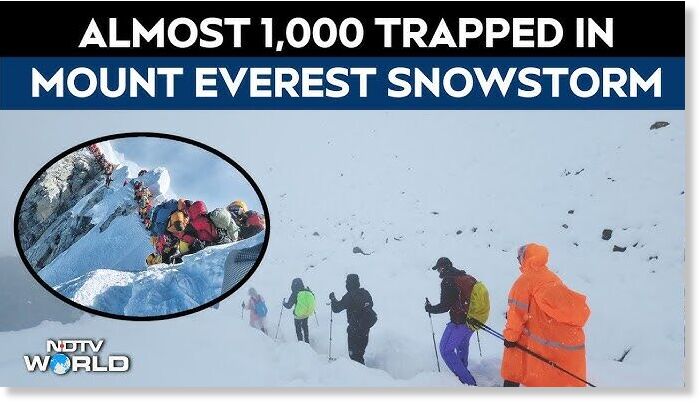
Almost 1,000 trapped on Tibetan side of Mount Everest by blizzard

mmmmm
Rescue efforts were underway on Oct 5 to clear access to campsites on Tibet's eastern slope of Mount Everest, where nearly 1,000 people have been trapped by a blizzard that blocked roads, according to Chinese state media reports.

Hundreds of villagers and rescue teams have been deployed to help remove snow blocking access to the area, which sits at an altitude above 4,900m, said a report in Jimu News.

Some tourists on the mountain have already been brought down, it added.

The snowfall began on the evening of Oct 3 and continued throughout Oct 4, according to notices on the official WeChat accounts of the Tingri County Tourism Company, which said ticket sales and entry to the Everest Scenic Area were suspended from late Oct 4.


Snowflake Cold

Best of the Web: Heavy early snowfall hits the Western Balkans in Europe - thousands left without power - over half a meter of snow

A car drives along a road during an unexpected snowfall on mountain Jahorina near Sarajevo, Bosnia, Thursday, Oct. 2, 2025.
© Armin DurgutA car drives along a road during an unexpected snowfall on mountain Jahorina near Sarajevo, Bosnia, Thursday, Oct. 2, 2025.
Thousands of people have been left without electricity across the Western Balkans after early snowfall brought widespread disruption on Friday.

Heavy, wet snow blanketed hilly and mountainous regions of Serbia and Bosnia this week, felling power distribution lines and trees. Meanwhile, persistent rainfall in lower areas has raised concerns of potential floods and mudslides.

More than half a metre of snow has already accumulated at higher altitudes, with meteorologist Slobodan Sovilj from the state Hydrometeorological Service suggesting it could reach record levels for October.

"We have a number of areas without electricity because of broken trees and branches that fell on power lines," Aleksandar Mitrovic, head of the Ivanjica municipality in central Serbia, said.


Snowflake

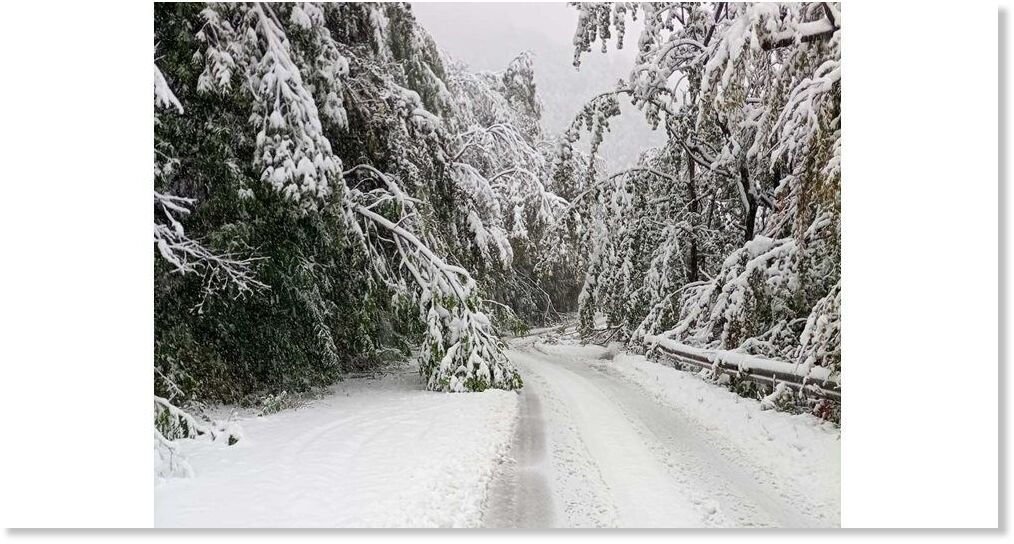
Early heavy snowfall in Bulgaria shuts down Petrohan Pass - up to a foot of snow

mmmmm
The Petrohan Pass has once again been closed due to severe winter conditions. According to the regional governor of Montana, Kalin Haitov, the snow cover in the area has already reached around 25 to 30 centimeters, accompanied by numerous fallen branches scattered across the road. Although large trees have not yet collapsed, the fallen debris has created significant obstacles. Cleaning operations are underway, carried out jointly by the road maintenance company, firefighting teams, and forestry units that have been mobilized in the higher parts of the pass.

Snowfall has also affected other high-altitude areas in the Montana region since the previous night. Haitov confirmed that several municipalities, including Chiprovtsi and Georgi Damyanovo, are experiencing power outages. Entire villages in these areas remain without electricity due to fallen trees damaging the network. Crews are currently working to restore supply and clear the damage. Despite the challenges, the regional governor emphasized that there are no reports of stranded or endangered people in Montana district at this stage.